Coffee Roaster
SOC 51-3092.00 · ESCO 7514 · OSCA 831133
Role snapshot
Overview
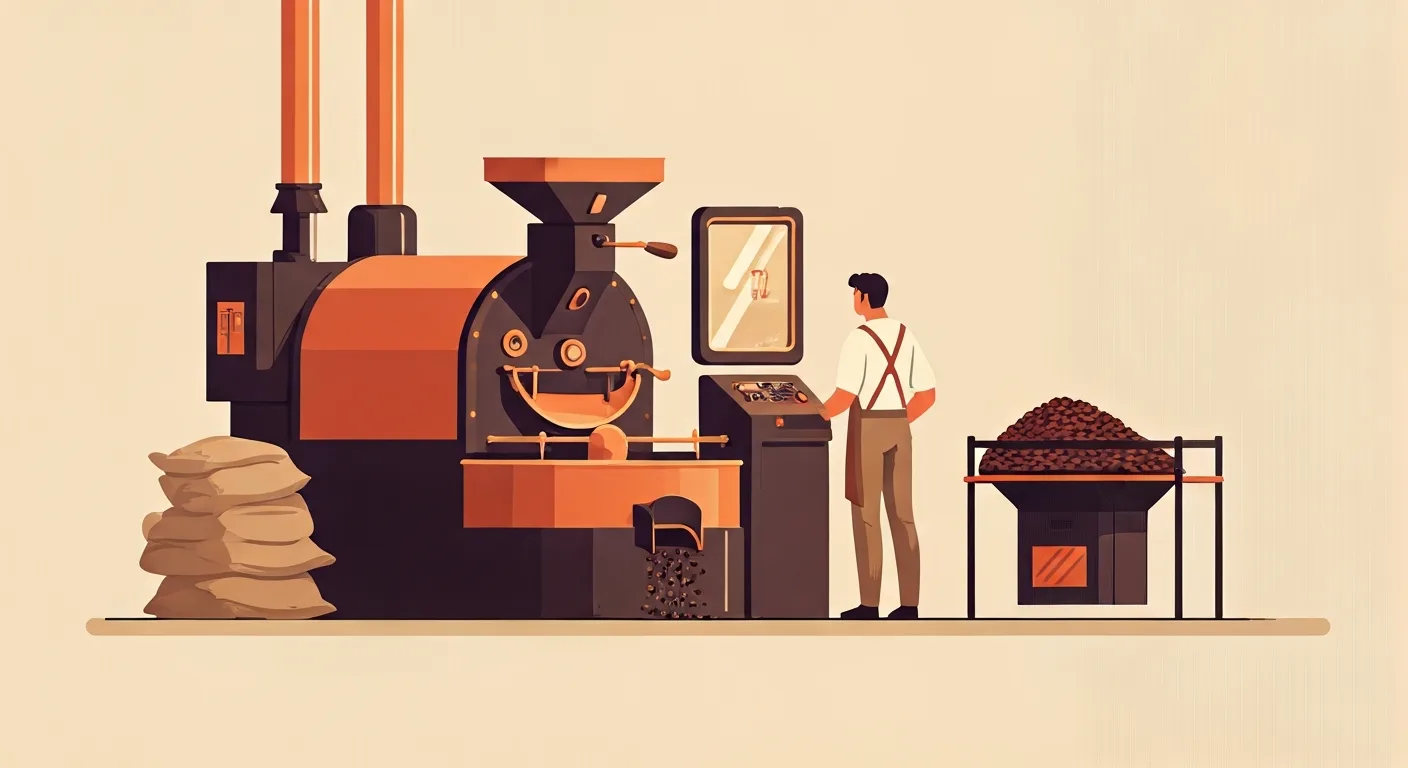
Roasts green coffee beans by precisely controlling time and temperature profiles, evaluating aroma, colour, and taste to achieve consistent flavour across batches. This role is central to developing and maintaining the unique taste characteristics of a coffee brand.
Ensures the quality, consistency, and unique flavor profiles of roasted coffee, directly influencing customer satisfaction and brand reputation for coffee businesses.
On the job
- Operate and maintain commercial coffee roasting equipment, including loading, monitoring, and unloading beans.
- Develop, adjust, and execute roast profiles based on green bean characteristics, desired flavor, and customer specifications.
- Conduct quality control checks, including sensory evaluation (cupping) and visual inspection of roasted coffee.
- Manage green bean inventory, ensuring proper storage, rotation, and traceability.
- Perform routine cleaning and preventative maintenance on roasting machinery and the production area.
Tools & technology
Average salary
Job outlook
StableDemand is steady. This is an established role with consistent hiring across sectors.
Education & training
Typically requires vocational training, a specialized certificate or diploma in coffee roasting, or significant on-the-job experience.
AI impact outlook
Note — this is our current view. AI is moving fast, so we revisit these ratings.
Show how this was assessed Hide the detail
Note — this is our current view. AI is moving fast, so we revisit these ratings.
Show how this was assessed Hide the detailWhy this role received this rating
Core task exposure
moderate
How much of the role’s important work could AI perform?
AI can optimize roast profiles based on bean characteristics, manage inventory, and perform objective visual quality checks on roasted beans.
End-to-end automation
moderate
Can AI complete the work without substantial human involvement?
While AI can automate significant portions of the roasting process, human sensory evaluation and creative profile development remain critical and difficult to fully automate.
Adoption pressure
high
How likely are employers to introduce AI into this work?
The competitive coffee industry has high incentives for consistency, efficiency, and data-driven quality improvements, driving adoption of AI for process optimization.
Human dependence
strong
How much does success depend on human judgement, relationships and accountability?
Success critically depends on human sensory judgement (cupping), creative development of unique flavor profiles, and adapting to natural variations in green beans.
Protective — a higher rating lowers the overall score.
Role adaptability
strong
How easily can the role evolve as AI takes on more tasks?
The role can evolve into a strategic position focusing on advanced sensory analysis, green bean sourcing, and new product innovation, leveraging AI for process execution.
Shown for context — not part of the score.
What AI may take on
These are the parts of the role most likely to be automated or significantly accelerated.
- Optimize roast profiles based on green bean characteristics and desired flavor outcomes
- Process sensor data from roasters to ensure consistent batch quality
- Manage green bean inventory, including rotation and traceability
- Perform visual quality checks on roasted coffee using image recognition
Where people remain essential
These parts continue to depend heavily on human judgement, relationships and accountability.
- Conducting sensory evaluation (cupping) to assess nuanced flavor, aroma, and mouthfeel
- Developing entirely new roast profiles or innovative coffee blends
- Adapting roasting techniques for rare or unique green bean lots with variable properties
- Troubleshooting complex roasting equipment malfunctions requiring hands-on expertise
- Building relationships with green bean suppliers and understanding origin characteristics
How the role may evolve
Less manual monitoring, more sensory artistry and strategic green bean sourcing.
The role will shift from primarily operating machinery to a greater emphasis on sensory expertise, creative profile development, and strategic material management.
Strengthen your future fit
- Advanced sensory evaluation and cupping techniques
- Proficiency in data analysis and roasting software optimization
- Deep knowledge of green coffee bean sourcing and characteristics
- Creative product development and blending skills
- Mechanical aptitude for advanced equipment maintenance
- Assessment horizon
- 3–7 years
- Confidence
- Medium
- Last reviewed
- August 2026
- Methodology
- v1.0
This assessment reflects current AI capabilities and expected adoption patterns. Actual impacts will vary by industry, employer and the way each role is performed.
Career pathways
WHERE YOU COULD GO
CURRENT ROLE
Coffee Roaster
Manufacturing & Production
ADJACENT MOVES
STARTING POINTS
Who thrives here
Interest profile
realistic · RCE
Individuals who enjoy hands-on work with machinery, precise procedures, and a systematic approach to crafting a tangible product often thrive in this role.
Personality characteristics
Conscientious
Demonstrates high attention to detail and a methodical approach, crucial for consistent roast quality and precision.
Practical
Enjoys working with physical equipment and materials, with a focus on tangible results.
Experimentative
Curious about new techniques and willing to test different roast profiles to achieve optimal flavors.
Composed
Maintains calm and focus under pressure, especially when monitoring delicate roasting processes.
Analytical
Applies logical thinking to analyze roast data, sensory feedback, and troubleshoot issues.
Best for
- Individuals who enjoy a blend of technical operation, sensory evaluation, and creative product development.
- Those who thrive in a structured environment where precision and consistency are paramount.
- People passionate about coffee and dedicated to perfecting its flavor.
Watch out for
- The work environment can be hot and noisy, requiring tolerance for industrial conditions.
- Production schedules may sometimes require occasional weekend work or early starts.
A week in the life
A representative working week for a Coffee Roaster — where the deep work, meetings, and admin actually land.
Real people. Real results.
Thousands of people
can't be wrong.


Frequently asked questions about Coffee Roaster roles
What does a Coffee Roaster do?
A Coffee Roaster roasts green coffee beans by precisely controlling time and temperature profiles, evaluating aroma, colour, and taste to achieve consistent flavour across batches. This role is central to developing and maintaining the unique taste characteristics of a coffee brand. Ensures the quality, consistency, and unique flavor profiles of roasted coffee, directly influencing customer satisfaction and brand reputation for coffee businesses.
How much does a Coffee Roaster earn?
A Coffee Roaster earns a median of $55,000 per year in the US, typically ranging from $40,000 to $70,000.
What qualifications do you need to become a Coffee Roaster?
To become a Coffee Roaster, typically requires vocational training, a specialized certificate or diploma in coffee roasting, or significant on-the-job experience.
What personality suits a Coffee Roaster?
Coffee Roaster roles tend to suit people who are highly conscientious — precise, organised and strong on follow-through (Conscientiousness 80/100) and steady under pressure — deadlines and setbacks do not rattle them easily (Emotional Stability 70/100). The traits that matter most in the role are Conscientious, Practical, Experimentative and Composed. Demonstrates high attention to detail and a methodical approach, crucial for consistent roast quality and precision. On interests, Coffee Roaster maps to a RCE Holland Code profile — individuals who enjoy hands-on work with machinery, precise procedures, and a systematic approach to crafting a tangible product often thrive in this role.
Who does a Coffee Roaster role suit?
A Coffee Roaster role is usually a strong fit for these reasons. Strong Realistic (R) and Conventional (C) alignment: the role is hands-on, detail-oriented, and follows precise procedures. A significant portion of the week is dedicated to deep work, focused on production and profile development. Requires high conscientiousness for consistent quality, aligning with individuals who value precision and reliability.
What are the downsides of being a Coffee Roaster?
Coffee Roaster roles come with trade-offs worth weighing up. The work environment can be hot and noisy, requiring tolerance for industrial conditions. Production schedules may sometimes require occasional weekend work or early starts.
What is the work environment like for a Coffee Roaster?
Work as a Coffee Roaster is mostly workshop-based with onsite arrangements common, semi-structured — a mix of set processes and self-directed work, a moderate pace and low exposure to clients or stakeholders. Around 73% of the week is focused deep work.
What skills do you need to be a Coffee Roaster?
Core skills for a Coffee Roaster include Roast profiling and development, Sensory evaluation (cupping), Roasting equipment operation and maintenance, Green bean management and quality assessment and Quality control procedures.
How do you become a Coffee Roaster?
Common entry routes into Coffee Roaster roles include Production Assistant, Barista and Coffee Quality Control Technician.
What career progression is there for a Coffee Roaster?
From a Coffee Roaster role, common next steps include Lead Roaster and Roastery Manager; lateral moves include Green Coffee Buyer.
What is the job outlook for Coffee Roaster roles?
The outlook for Coffee Roaster roles is currently rated stable. Demand is steady. This is an established role with consistent hiring across sectors.
Will AI replace Coffee Roaster roles?
Traitstack rates automation risk for Coffee Roaster roles at 55 out of 100, which is moderate. AI could refine roast profiles and manage inventory, yet the craft of developing unique flavors and discerning subtle sensory qualities remains a deeply human endeavor. AI is most likely to take on optimize roast profiles based on green bean characteristics and desired flavor outcomes, process sensor data from roasters to ensure consistent batch quality and manage green bean inventory, including rotation and traceability. Conducting sensory evaluation (cupping) to assess nuanced flavor, aroma, and mouthfeel, developing entirely new roast profiles or innovative coffee blends and adapting roasting techniques for rare or unique green bean lots with variable properties stay with people. Less manual monitoring, more sensory artistry and strategic green bean sourcing. That score measures how much of the work could change, not the likelihood the job disappears. It is Traitstack's current view, revisited as AI capability moves.