Barista
SOC 35-3023.01 · ESCO 5132 · OSCA 471231
Role snapshot
Overview
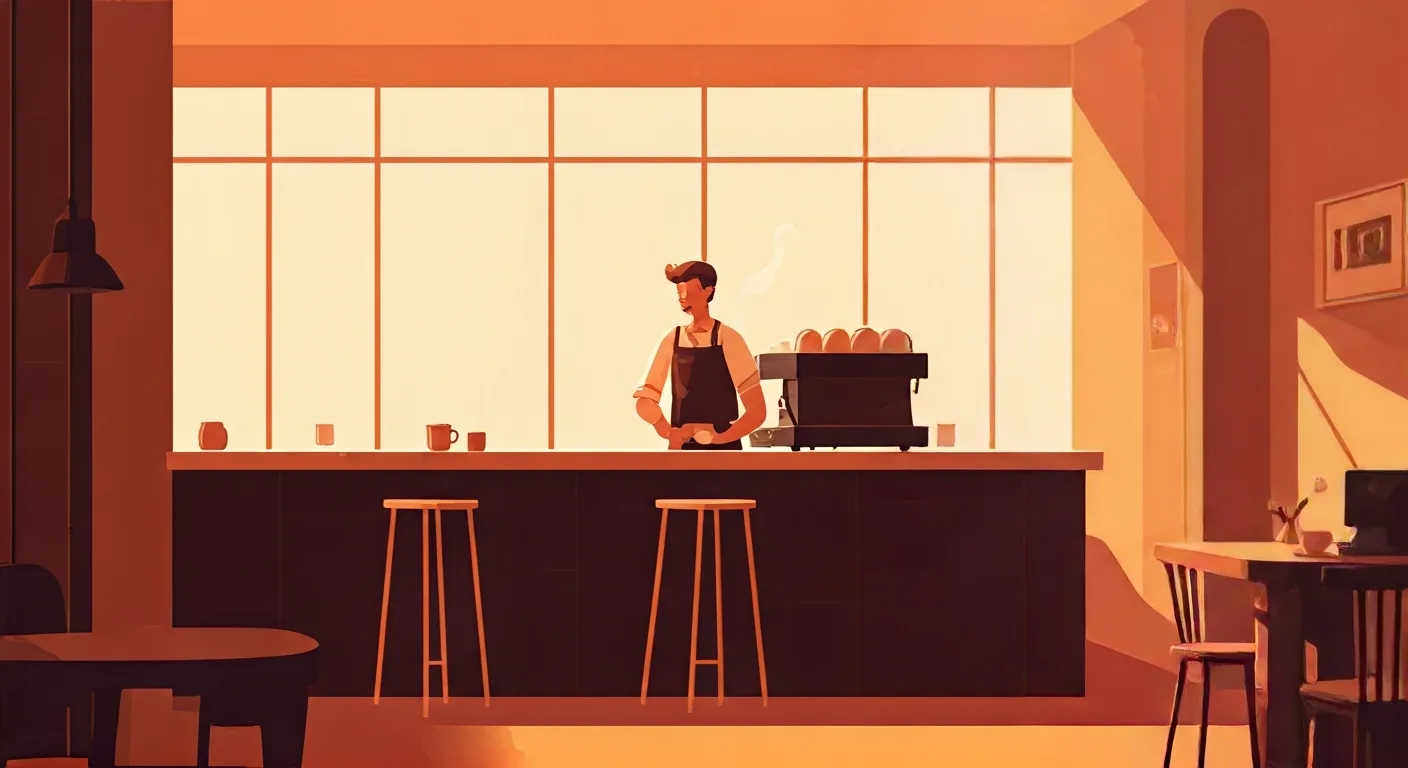
Prepares espresso drinks, brewed coffee, and specialty beverages to order while maintaining a fast, friendly service pace. Operates and cleans coffee machines, manages inventory, and creates a welcoming atmosphere for regulars and newcomers alike. This role requires precision in drink preparation, efficient service, and strong customer interaction skills.
Provides essential customer service and high-quality beverage experiences, contributing significantly to customer satisfaction, loyalty, and the overall success and atmosphere of a cafe or coffee shop.
On the job
- Prepare and serve a variety of coffee, tea, and specialty beverages according to recipes and customer preferences
- Operate and maintain espresso machines, grinders, blenders, and other coffee equipment
- Take customer orders accurately, handle cash and card transactions, and provide friendly, efficient service
- Ensure cleanliness of work areas, equipment, and customer spaces, adhering to health and safety standards
- Monitor and replenish inventory of coffee beans, milk, syrups, and other supplies
Tools & technology
Average salary
Job outlook
StableDemand is steady. This is an established role with consistent hiring across sectors.
Education & training
Typically requires a high school diploma or equivalent, with on-the-job training or vocational certifications being beneficial.
AI impact outlook
Note — this is our current view. AI is moving fast, so we revisit these ratings.
Show how this was assessed Hide the detail
Note — this is our current view. AI is moving fast, so we revisit these ratings.
Show how this was assessed Hide the detailWhy this role received this rating
Core task exposure
moderate
How much of the role’s important work could AI perform?
Order taking and inventory management are moderately exposed to AI, but the skilled physical preparation of drinks and direct customer engagement are less exposed.
End-to-end automation
low
Can AI complete the work without substantial human involvement?
AI cannot fully automate the craft of coffee making, equipment maintenance, or the nuanced customer service required in a cafe setting.
Adoption pressure
moderate
How likely are employers to introduce AI into this work?
Self-ordering kiosks and inventory optimization are attractive, but the sensory experience, human craft, and welcoming atmosphere maintain a strong human presence.
Human dependence
moderate
How much does success depend on human judgement, relationships and accountability?
Success depends significantly on the barista's ability to provide efficient, friendly customer service, and the skilled preparation of high-quality beverages.
Protective — a higher rating lowers the overall score.
Role adaptability
moderate
How easily can the role evolve as AI takes on more tasks?
The role can adapt by specializing in complex coffee artistry, enhancing customer loyalty through personal connection, or transitioning to supervisory positions.
Shown for context — not part of the score.
What AI may take on
These are the parts of the role most likely to be automated or significantly accelerated.
- Process customer orders via self-service kiosks
- Forecast inventory needs for beans, milk, and supplies
- Recommend beverages based on customer preferences or sales trends
- Automate basic reporting for sales and waste management
Where people remain essential
These parts continue to depend heavily on human judgement, relationships and accountability.
- Precisely operating and maintaining espresso machines and grinders
- Crafting latte art and ensuring consistent drink quality through sensory evaluation
- Providing personalized recommendations and engaging in friendly customer interactions
- Troubleshooting equipment malfunctions and performing detailed cleaning
- Handling cash and card transactions with accuracy and security
- Creating a welcoming and efficient atmosphere in the cafe
How the role may evolve
Elevating the craft. Enhancing the connection.
Baristas will increasingly focus on the artistry of coffee making and cultivating stronger customer relationships, while AI handles more of the transactional and inventory tasks.
Strengthen your future fit
- Advanced coffee preparation techniques and sensory evaluation
- Exceptional customer service and relationship building
- Proactive equipment maintenance and troubleshooting
- Efficient workflow management in a fast-paced environment
- Adaptability to new technologies and menu items
- Assessment horizon
- 3–7 years
- Confidence
- High
- Last reviewed
- August 2026
- Methodology
- v1.0
This assessment reflects current AI capabilities and expected adoption patterns. Actual impacts will vary by industry, employer and the way each role is performed.
Career pathways
WHERE YOU COULD GO
CURRENT ROLE
Barista
Hospitality & Food Service
ADJACENT MOVES
STARTING POINTS
Who thrives here
Interest profile
social · SCR
People who enjoy hands-on work with equipment, interacting with customers, and following established procedures to create a consistent product often thrive as baristas.
Personality characteristics
Engaging
Enjoys interacting with a diverse range of customers and creating a positive, friendly atmosphere.
Detail-oriented
Pays close attention to drink recipes, presentation, and cleanliness standards.
Customer-focused
Naturally empathetic and strives to ensure every customer has a pleasant experience.
Calm under pressure
Maintains composure and efficiency during busy periods and handles occasional difficult customers professionally.
Best for
- Individuals who enjoy a blend of hands-on work, customer service, and a lively atmosphere
- Those who appreciate the craft of coffee making and take pride in delivering a quality product
- People looking for an entry-level role with opportunities to develop customer service and hospitality skills
Watch out for
- The role requires regular weekend work and can involve early mornings or late evenings
- Fast-paced environments can be demanding, requiring sustained energy and quick problem-solving
A week in the life
A representative working week for a Barista — where the deep work, meetings, and admin actually land.
Real people. Real results.
Thousands of people
can't be wrong.

Frequently asked questions about Barista roles
What does a Barista do?
A Barista prepares espresso drinks, brewed coffee, and specialty beverages to order while maintaining a fast, friendly service pace. Operates and cleans coffee machines, manages inventory, and creates a welcoming atmosphere for regulars and newcomers alike. This role requires precision in drink preparation, efficient service, and strong customer interaction skills. Provides essential customer service and high-quality beverage experiences, contributing significantly to customer satisfaction, loyalty, and the overall success and atmosphere of a cafe or coffee shop.
How much does a Barista earn?
A Barista earns a median of $31,000 per year in the US, typically ranging from $24,000 to $38,000.
What qualifications do you need to become a Barista?
To become a Barista, typically requires a high school diploma or equivalent, with on-the-job training or vocational certifications being beneficial.
What personality suits a Barista?
Barista roles tend to suit people who are outgoing — energised by people, visibility and quick social contact (Extraversion 78/100) and warm and cooperative — tuned in to the people around them (Agreeableness 75/100). The traits that matter most in the role are Engaging, Detail-oriented, Customer-focused and Calm under pressure. Enjoys interacting with a diverse range of customers and creating a positive, friendly atmosphere. On interests, Barista maps to a SCR Holland Code profile — people who enjoy hands-on work with equipment, interacting with customers, and following established procedures to create a consistent product often thrive as baristas.
Who does a Barista role suit?
A Barista role is usually a strong fit for these reasons. Strong Social (S) and Realistic (R) affinity, perfectly matching the customer interaction and hands-on nature of the role. High Extraversion and Agreeableness aligns with the need for friendly and engaging customer service. A significant portion of the week involves focused drink preparation and customer interaction, appealing to those who thrive in dynamic social environments.
What are the downsides of being a Barista?
Barista roles come with trade-offs worth weighing up. The role requires regular weekend work and can involve early mornings or late evenings. Fast-paced environments can be demanding, requiring sustained energy and quick problem-solving.
What is the work environment like for a Barista?
Work as a Barista is mostly retail-based with onsite arrangements common, semi-structured — a mix of set processes and self-directed work and high exposure to clients or stakeholders. Around 70% of the week is focused deep work.
What skills do you need to be a Barista?
Core skills for a Barista include Beverage preparation, Customer service, Cash handling, Equipment operation and maintenance and Inventory management.
How do you become a Barista?
Common entry routes into Barista roles include Food Service Worker, Cashier and Customer Service Representative.
What career progression is there for a Barista?
From a Barista role, common next steps include Lead Barista and Cafe Manager; lateral moves include Roaster Apprentice and Bartender.
What is the job outlook for Barista roles?
The outlook for Barista roles is currently rated stable. Demand is steady. This is an established role with consistent hiring across sectors.
Will AI replace Barista roles?
Traitstack rates automation risk for Barista roles at 40 out of 100, which is low. Order taking and inventory management are susceptible to AI, but the craft of coffee preparation and personal customer interaction stays with the barista. AI is most likely to take on process customer orders via self-service kiosks, forecast inventory needs for beans, milk, and supplies and recommend beverages based on customer preferences or sales trends. Precisely operating and maintaining espresso machines and grinders, crafting latte art and ensuring consistent drink quality through sensory evaluation and providing personalized recommendations and engaging in friendly customer interactions stay with people. Elevating the craft. Enhancing the connection. That score measures how much of the work could change, not the likelihood the job disappears. It is Traitstack's current view, revisited as AI capability moves.