Railway Signal Operator
SOC 53-4021 · ESCO 8312 · OSCA 732935
Role snapshot
Overview
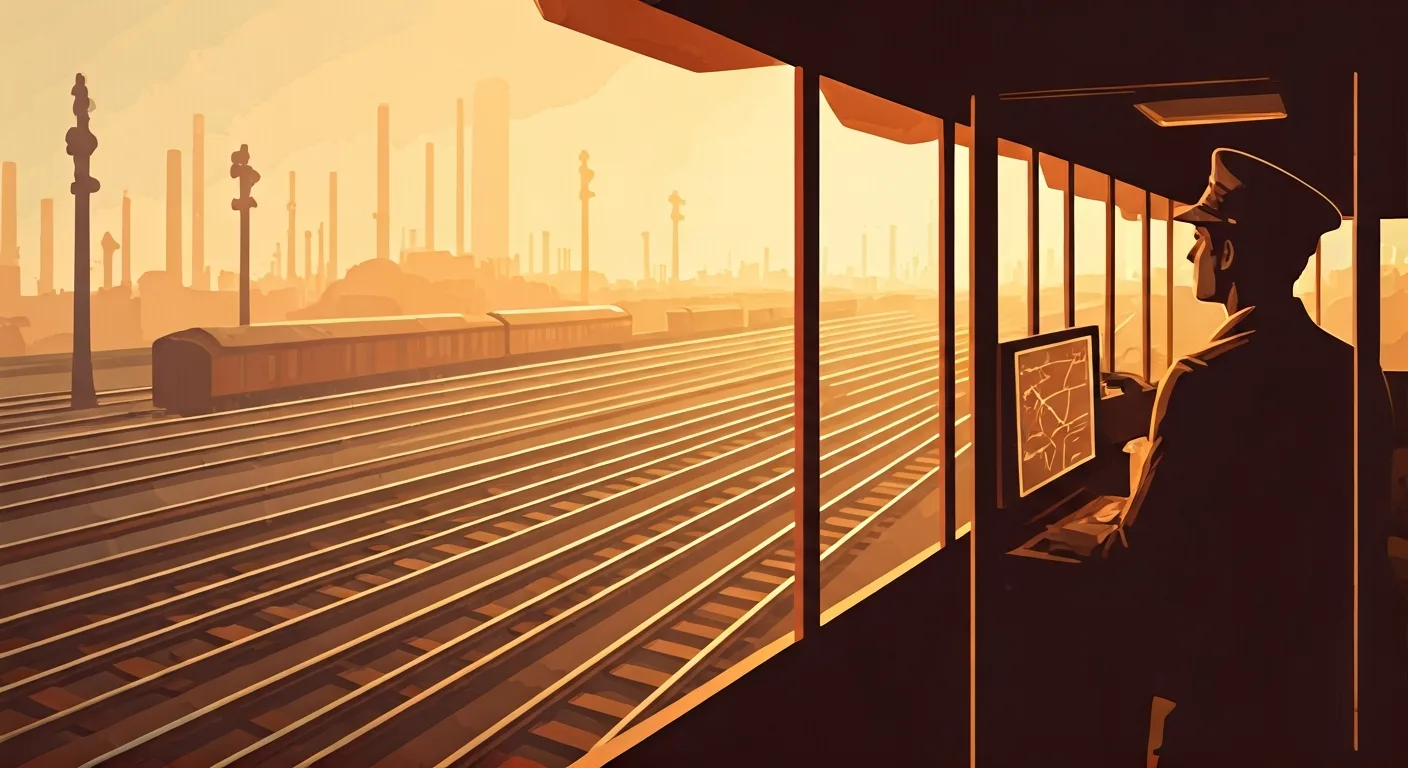
Railway Signal Operators are crucial for the safe and efficient movement of trains. They control rail signals and points from a signal box or control room, directing train movements through junctions and stations. This role requires constant communication with train drivers, strict adherence to operating procedures, and the ability to respond quickly and effectively to any incidents or emergencies.
Ensures the safety of train passengers and cargo, prevents collisions, and maintains the smooth flow of rail traffic, which is vital for transportation and logistics networks.
On the job
- Operate signals and points to route trains safely according to timetables and traffic conditions
- Monitor train movements via display screens, track diagrams, and communication systems
- Communicate critical instructions and information to train drivers, other signal operators, and maintenance crews
- Respond to emergencies, equipment failures, and unusual operating conditions by implementing established protocols
- Maintain accurate logs and records of train movements, signal operations, and incidents
Tools & technology
Average salary
Job outlook
StableDemand is steady. This is an established role with consistent hiring across sectors.
Education & training
High school diploma or equivalent, often followed by specialized vocational training or an apprenticeship in railway operations and signal control.
AI impact outlook
Note — this is our current view. AI is moving fast, so we revisit these ratings.
Show how this was assessed Hide the detail
Note — this is our current view. AI is moving fast, so we revisit these ratings.
Show how this was assessed Hide the detailWhy this role received this rating
Core task exposure
high
How much of the role’s important work could AI perform?
Many core tasks, such as operating signals, monitoring train movements, and maintaining logs, are highly structured and amenable to AI execution.
End-to-end automation
moderate
Can AI complete the work without substantial human involvement?
While routine operations could be largely automated, critical incident response and ultimate safety accountability mean a person remains in the loop.
Adoption pressure
high
How likely are employers to introduce AI into this work?
Given the drive for efficiency and safety in rail networks, adoption of AI to optimize traffic management and routine operations is highly likely.
Human dependence
low
How much does success depend on human judgement, relationships and accountability?
Success critically depends on human judgement for complex emergencies and the ultimate accountability for passenger and operational safety.
Protective — a higher rating lowers the overall score.
Role adaptability
moderate
How easily can the role evolve as AI takes on more tasks?
The role can adapt by shifting from direct operational control to supervising AI systems and managing complex, unforeseen scenarios.
Shown for context — not part of the score.
What AI may take on
These are the parts of the role most likely to be automated or significantly accelerated.
- Operate signals and points to route trains according to timetables
- Monitor train movements via display screens and track diagrams
- Communicate routine instructions to train drivers
- Maintain accurate logs and records of train movements
- Propose optimal train routing to minimize delays
Where people remain essential
These parts continue to depend heavily on human judgement, relationships and accountability.
- Exercising critical judgement during complex emergencies or equipment failures
- Communicating nuanced instructions and coordinating during non-routine events
- Assuming ultimate accountability for safety and operational decisions
- Interfacing with diverse human stakeholders (drivers, maintenance, passengers indirectly)
- Adapting to unforeseen circumstances not covered by protocols
How the role may evolve
Focus shifts from direct control to monitoring and critical intervention.
The role will increasingly involve monitoring advanced AI systems and intervening only for anomalies or emergencies, demanding higher-level problem-solving skills.
Strengthen your future fit
- Advanced system monitoring and diagnostic skills
- Crisis management and rapid decision-making
- Understanding of AI logic and potential failure modes
- Effective communication under pressure
- Regulatory compliance and risk assessment
- Assessment horizon
- 3–7 years
- Confidence
- High
- Last reviewed
- August 2026
- Methodology
- v1.0
This assessment reflects current AI capabilities and expected adoption patterns. Actual impacts will vary by industry, employer and the way each role is performed.
Career pathways
WHERE YOU COULD GO
CURRENT ROLE
Railway Signal Operator
Transport & Aviation
ADJACENT MOVES
STARTING POINTS
Who thrives here
Interest profile
realistic · RCI
Individuals who thrive on practical, hands-on tasks, enjoy analytical problem-solving, and excel in structured environments with clear rules and procedures are well-suited for this role.
Personality characteristics
Conscientious
Exhibits exceptional attention to detail, strong adherence to rules, and a high sense of duty for safety and operational protocols.
Calm under pressure
Maintains composure and makes clear decisions even during high-stress situations or emergencies.
Routine-oriented
Prefers established procedures and predictable work environments, finding comfort in structured tasks and clear guidelines.
Analytical
Enjoys dissecting problems, understanding complex systems, and applying logical reasoning to manage train movements.
Reserved
Focuses on the task at hand and prefers to work independently or with small, focused interactions rather than large social settings.
Best for
- Individuals who thrive in rule-bound, safety-critical environments and enjoy technical problem-solving
- People who are highly responsible, detail-oriented, and can remain calm and focused under pressure
Watch out for
- Work often involves shift patterns, including nights, weekends, and holidays, due to 24/7 operations
- The environment is highly structured with little room for improvisation, which may not suit those who prefer creative freedom
A week in the life
A representative working week for a Railway Signal Operator — where the deep work, meetings, and admin actually land.
Real people. Real results.
Thousands of people
can't be wrong.





Frequently asked questions about Railway Signal Operator roles
What does a Railway Signal Operator do?
A Railway Signal Operator railway Signal Operators are crucial for the safe and efficient movement of trains. They control rail signals and points from a signal box or control room, directing train movements through junctions and stations. This role requires constant communication with train drivers, strict adherence to operating procedures, and the ability to respond quickly and effectively to any incidents or emergencies. Ensures the safety of train passengers and cargo, prevents collisions, and maintains the smooth flow of rail traffic, which is vital for transportation and logistics networks.
How much does a Railway Signal Operator earn?
A Railway Signal Operator earns a median of $75,000 per year in the US, typically ranging from $55,000 to $95,000.
What qualifications do you need to become a Railway Signal Operator?
To become a Railway Signal Operator, high school diploma or equivalent, often followed by specialized vocational training or an apprenticeship in railway operations and signal control. Must pass specific operational tests and certifications required by railway authorities and employers.
What personality suits a Railway Signal Operator?
Railway Signal Operator roles tend to suit people who are highly conscientious — precise, organised and strong on follow-through (Conscientiousness 90/100) and steady under pressure — deadlines and setbacks do not rattle them easily (Emotional Stability 78/100). The traits that matter most in the role are Conscientious, Calm under pressure, Routine-oriented and Analytical. Exhibits exceptional attention to detail, strong adherence to rules, and a high sense of duty for safety and operational protocols. On interests, Railway Signal Operator maps to a RCI Holland Code profile — individuals who thrive on practical, hands-on tasks, enjoy analytical problem-solving, and excel in structured environments with clear rules and procedures are well-suited for this role.
Who does a Railway Signal Operator role suit?
A Railway Signal Operator role is usually a strong fit for these reasons. High Realistic affinity: the role is hands-on with equipment and critical infrastructure. Strong Conventional affinity: requires strict adherence to rules and established procedures for safety. Significant deep work focus on monitoring and control operations, ideal for concentrated effort.
What are the downsides of being a Railway Signal Operator?
Railway Signal Operator roles come with trade-offs worth weighing up. Work often involves shift patterns, including nights, weekends, and holidays, due to 24/7 operations. The environment is highly structured with little room for improvisation, which may not suit those who prefer creative freedom.
What is the work environment like for a Railway Signal Operator?
Work as a Railway Signal Operator is mostly office-based with onsite arrangements common, highly structured, with set processes and deadlines, a moderate pace and medium exposure to clients or stakeholders. Around 65% of the week is focused deep work.
What skills do you need to be a Railway Signal Operator?
Core skills for a Railway Signal Operator include Operational awareness, Decision-making under pressure, Clear communication (verbal & written), Adherence to safety protocols and Problem-solving and incident management.
How do you become a Railway Signal Operator?
Common entry routes into Railway Signal Operator roles include Rail Operations Trainee, Assistant Signal Operator and Track Maintenance Worker.
What career progression is there for a Railway Signal Operator?
From a Railway Signal Operator role, common next steps include Senior Railway Signal Operator and Operations Manager (Rail); lateral moves include Train Conductor.
What is the job outlook for Railway Signal Operator roles?
The outlook for Railway Signal Operator roles is currently rated stable. Demand is steady. This is an established role with consistent hiring across sectors.
Will AI replace Railway Signal Operator roles?
Traitstack rates automation risk for Railway Signal Operator roles at 77 out of 100, which is strong. AI could soon automate routine signal operations and traffic management, shifting human focus to critical incident response and regulatory oversight. AI is most likely to take on operate signals and points to route trains according to timetables, monitor train movements via display screens and track diagrams and communicate routine instructions to train drivers. Exercising critical judgement during complex emergencies or equipment failures, communicating nuanced instructions and coordinating during non-routine events and assuming ultimate accountability for safety and operational decisions stay with people. Focus shifts from direct control to monitoring and critical intervention. That score measures how much of the work could change, not the likelihood the job disappears. It is Traitstack's current view, revisited as AI capability moves.