Power Distributor and Dispatcher
SOC 51-8012.00 · ESCO 3131 · OSCA 399132
Role snapshot
Overview
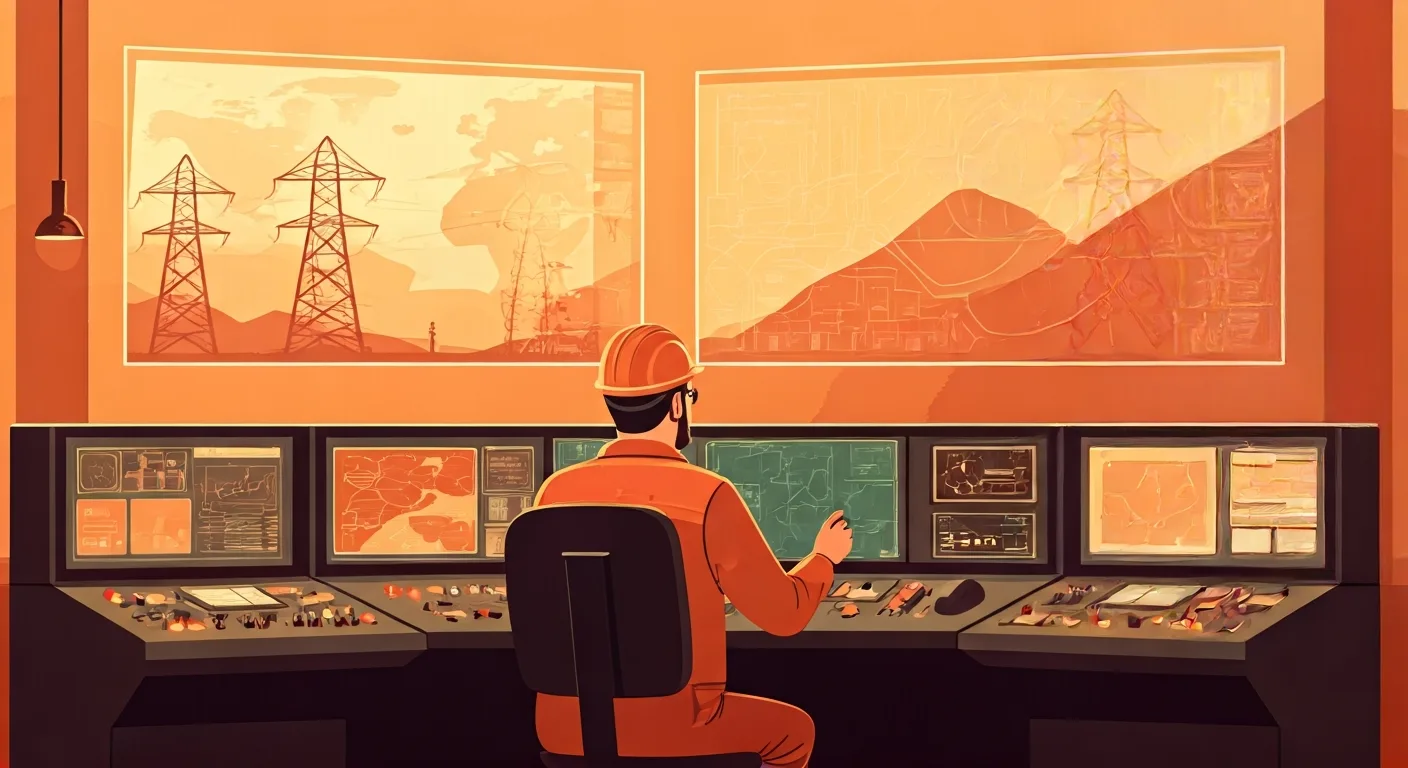
Monitors and controls the flow of electricity through transmission and distribution networks from a control centre. Coordinates with power plants and field crews to balance supply and demand and restore service during outages. Ensures the reliable and safe operation of the electrical grid.
Crucial for maintaining the stability and reliability of the electrical grid, preventing blackouts, and ensuring that power is safely and efficiently delivered to consumers and industries.
On the job
- Monitor real-time data from SCADA systems to assess grid conditions and anticipate potential issues
- Dispatch instructions to power plants to adjust generation output to match demand
- Direct field crews to switch lines, isolate faults, and restore service during outages
- Implement emergency procedures during system disturbances or natural disasters
- Maintain detailed logs of system operations, incidents, and communications
Tools & technology
Average salary
Job outlook
StableDemand is steady. This is an established role with consistent hiring across sectors.
Education & training
Typically requires an associate's degree in electrical power technology, energy management, or a related field, or extensive on-the-job training and certifications.
AI impact outlook
Note — this is our current view. AI is moving fast, so we revisit these ratings.
Show how this was assessed Hide the detail
Note — this is our current view. AI is moving fast, so we revisit these ratings.
Show how this was assessed Hide the detailWhy this role received this rating
Core task exposure
high
How much of the role’s important work could AI perform?
Monitoring real-time data, balancing supply and demand, and dispatching routine instructions are highly data-driven tasks suitable for AI optimization.
End-to-end automation
high
Can AI complete the work without substantial human involvement?
AI can optimize grid operations and manage common incidents, but human judgment is crucial for complex emergencies, unforeseen failures, and coordinating field crews.
Adoption pressure
high
How likely are employers to introduce AI into this work?
Grid stability, efficiency, and resilience are paramount, driving high investment in AI for optimizing power flow, predicting issues, and accelerating restoration.
Human dependence
moderate
How much does success depend on human judgement, relationships and accountability?
Success hinges on human judgment for high-stakes decisions during system disturbances, ensuring public safety, and effectively coordinating human field crews.
Protective — a higher rating lowers the overall score.
Role adaptability
strong
How easily can the role evolve as AI takes on more tasks?
Dispatchers will adapt by supervising AI-driven grid management systems, validating recommendations, and managing exceptional circumstances requiring nuanced human decisions.
Shown for context — not part of the score.
What AI may take on
These are the parts of the role most likely to be automated or significantly accelerated.
- Optimizing power flow and voltage levels across the grid
- Predicting demand fluctuations and adjusting generation output automatically
- Detecting and isolating faults within the transmission network
- Automating routine switching operations and load shedding
- Synthesizing vast amounts of real-time grid data for anomaly detection
- Generating detailed operational logs and incident reports
Where people remain essential
These parts continue to depend heavily on human judgement, relationships and accountability.
- Making critical decisions during widespread outages or natural disasters
- Interpreting ambiguous system data that AI cannot definitively resolve
- Coordinating and directing human field crews for repairs and interventions
- Exercising judgment in novel or unprecedented grid events
- Maintaining regulatory compliance and accountability for grid stability
- Communicating effectively with multiple stakeholders during crises
How the role may evolve
Less manual balancing. More high-stakes decision support.
The dispatcher's role will evolve from direct control manipulation to a supervisory and decision-making capacity, where they leverage AI tools to manage normal operations and concentrate on critical, non-routine events.
Strengthen your future fit
- Proficiency in advanced energy management and AI-driven SCADA systems
- Expertise in complex problem-solving under extreme pressure
- Strong leadership and communication skills for emergency coordination
- Understanding of cybersecurity risks in critical infrastructure
- Ability to validate and override AI recommendations when necessary
- Assessment horizon
- 3–7 years
- Confidence
- High
- Last reviewed
- August 2026
- Methodology
- v1.0
This assessment reflects current AI capabilities and expected adoption patterns. Actual impacts will vary by industry, employer and the way each role is performed.
Career pathways
WHERE YOU COULD GO
CURRENT ROLE
Power Distributor and Dispatcher
Utilities & Energy
ADJACENT MOVES
STARTING POINTS
Who thrives here
Interest profile
realistic · RCE
Individuals who thrive on operating complex systems, following established procedures precisely, and making critical decisions to ensure essential services are often a good fit for this role.
Personality characteristics
Conscientious
Exhibits exceptional attention to detail, precision, and adherence to complex operational protocols.
Calm under pressure
Maintains composure and makes rational decisions during high-stress emergencies and critical incidents.
Methodical
Prefers working with established systems, clear procedures, and tangible equipment.
Communicative
Effectively conveys critical information and instructions to diverse teams and stakeholders during rapidly evolving situations.
Reliable
Takes personal responsibility for the continuous and safe operation of vital infrastructure.
Best for
- Individuals who thrive in a structured, procedure-driven environment with clear responsibilities
- Those who are adept at technical problem-solving and enjoy working with complex systems
- People who can remain calm and decisive when faced with critical, time-sensitive challenges
Watch out for
- The job involves irregular shift work, including nights, weekends, and holidays, which can impact work-life balance
- High-stress environment, particularly during grid emergencies or natural disasters, requiring constant vigilance
A week in the life
A representative working week for a Power Distributor and Dispatcher — where the deep work, meetings, and admin actually land.
Real people. Real results.
Thousands of people
can't be wrong.


Frequently asked questions about Power Distributor and Dispatcher roles
What does a Power Distributor and Dispatcher do?
A Power Distributor and Dispatcher monitors and controls the flow of electricity through transmission and distribution networks from a control centre. Coordinates with power plants and field crews to balance supply and demand and restore service during outages. Ensures the reliable and safe operation of the electrical grid. Crucial for maintaining the stability and reliability of the electrical grid, preventing blackouts, and ensuring that power is safely and efficiently delivered to consumers and industries.
How much does a Power Distributor and Dispatcher earn?
A Power Distributor and Dispatcher earns a median of $95,000 per year in the US, typically ranging from $75,000 to $120,000.
What qualifications do you need to become a Power Distributor and Dispatcher?
To become a Power Distributor and Dispatcher, typically requires an associate's degree in electrical power technology, energy management, or a related field, or extensive on-the-job training and certifications. North American Electric Reliability Corporation (NERC) System Operator Certification (e.g., Reliability Coordinator, Transmission Operator).
What personality suits a Power Distributor and Dispatcher?
Power Distributor and Dispatcher roles tend to suit people who are highly conscientious — precise, organised and strong on follow-through (Conscientiousness 88/100) and steady under pressure — deadlines and setbacks do not rattle them easily (Emotional Stability 75/100). The traits that matter most in the role are Conscientious, Calm under pressure, Methodical and Communicative. Exhibits exceptional attention to detail, precision, and adherence to complex operational protocols. On interests, Power Distributor and Dispatcher maps to a RCE Holland Code profile — individuals who thrive on operating complex systems, following established procedures precisely, and making critical decisions to ensure essential services are often a good fit for this role.
Who does a Power Distributor and Dispatcher role suit?
A Power Distributor and Dispatcher role is usually a strong fit for these reasons. High Realistic (R) and Conventional (C) alignment: the role demands precision, technical operation, and strict adherence to protocols. Significant responsibility for critical infrastructure, appealing to those who value impact and public safety. The role requires maintaining composure and making quick, accurate decisions in high-stakes situations.
What are the downsides of being a Power Distributor and Dispatcher?
Power Distributor and Dispatcher roles come with trade-offs worth weighing up. The job involves irregular shift work, including nights, weekends, and holidays, which can impact work-life balance. High-stress environment, particularly during grid emergencies or natural disasters, requiring constant vigilance.
What is the work environment like for a Power Distributor and Dispatcher?
Work as a Power Distributor and Dispatcher is mostly office-based with onsite arrangements common, highly structured, with set processes and deadlines, a moderate pace and high exposure to clients or stakeholders. Around 50% of the week is focused deep work.
What skills do you need to be a Power Distributor and Dispatcher?
Core skills for a Power Distributor and Dispatcher include Power system operations, Critical thinking and problem-solving, Emergency response protocols, Communication and coordination and Data analysis and interpretation.
How do you become a Power Distributor and Dispatcher?
Common entry routes into Power Distributor and Dispatcher roles include Power Plant Operator, Substation Operator and Utility Technician.
What career progression is there for a Power Distributor and Dispatcher?
From a Power Distributor and Dispatcher role, common next steps include Senior Power System Operator and Grid Operations Manager; lateral moves include Energy Trader and Electrical Engineer (Operations).
What is the job outlook for Power Distributor and Dispatcher roles?
The outlook for Power Distributor and Dispatcher roles is currently rated stable. Demand is steady. This is an established role with consistent hiring across sectors.
Will AI replace Power Distributor and Dispatcher roles?
Traitstack rates automation risk for Power Distributor and Dispatcher roles at 72 out of 100, which is strong. Grid management and demand balancing are increasingly AI-optimized; human dispatchers will focus on complex emergency response and coordinating field crews. AI is most likely to take on optimizing power flow and voltage levels across the grid, predicting demand fluctuations and adjusting generation output automatically and detecting and isolating faults within the transmission network. Making critical decisions during widespread outages or natural disasters, interpreting ambiguous system data that ai cannot definitively resolve and coordinating and directing human field crews for repairs and interventions stay with people. Less manual balancing. More high-stakes decision support. That score measures how much of the work could change, not the likelihood the job disappears. It is Traitstack's current view, revisited as AI capability moves.