Postal Service Mail Carrier
SOC 43-5052.00 · ESCO 4412 · OSCA 561531
Role snapshot
Overview
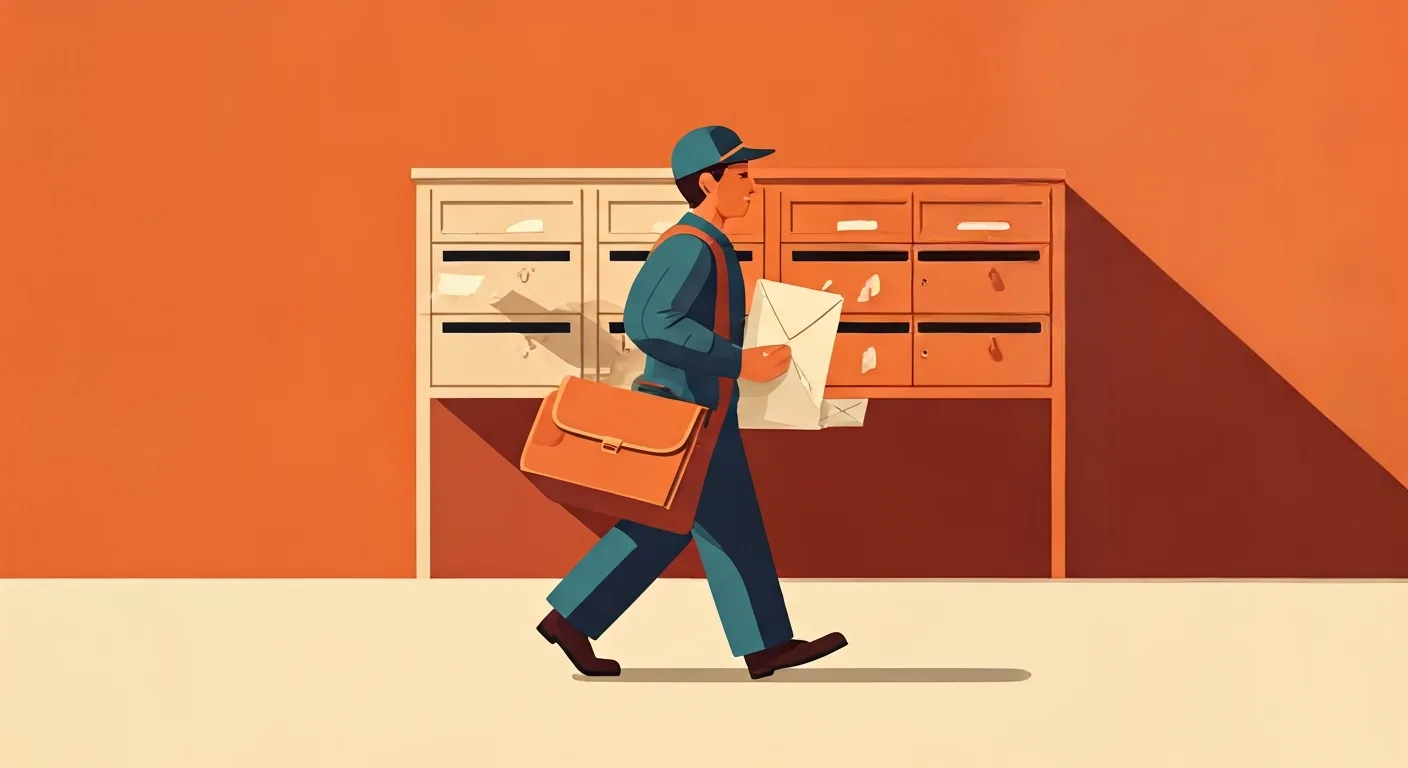
Sorts and delivers mail and packages along established routes on foot or by vehicle, collecting outgoing mail and obtaining signatures for registered items. Works in all weather conditions and interacts briefly with residents and businesses. Requires physical stamina, attention to detail, and adherence to strict schedules to ensure timely and accurate delivery.
Ensures essential communication and goods reach homes and businesses efficiently and reliably, connecting communities and supporting commerce through consistent and accurate delivery services.
On the job
- Sort mail and packages for delivery along a designated route, ensuring accuracy and proper sequencing.
- Deliver mail and parcels on foot or by vehicle, adhering to a precise route and schedule.
- Collect outgoing mail from residential and business mailboxes during daily rounds.
- Obtain signatures for registered, certified, or insured mail, and deliver special services as required.
- Handle customer inquiries and resolve minor delivery issues encountered on the route.
Tools & technology
Average salary
Job outlook
StableDemand is steady. This is an established role with consistent hiring across sectors.
Education & training
High school diploma or GED equivalent is typically required. A valid driver's license and passing a written exam are essential.
AI impact outlook
Note — this is our current view. AI is moving fast, so we revisit these ratings.
Show how this was assessed Hide the detail
Note — this is our current view. AI is moving fast, so we revisit these ratings.
Show how this was assessed Hide the detailWhy this role received this rating
Core task exposure
moderate
How much of the role’s important work could AI perform?
AI can optimize route planning, package sequencing, and even predict delivery windows, but the physical act of navigating varied environments and direct customer interaction are not AI-performable tasks.
End-to-end automation
low
Can AI complete the work without substantial human involvement?
Full automation is hindered by the need for physical placement of mail, interaction for tracked items, and human judgment in handling unforeseen situations on a diverse range of routes and recipient types.
Adoption pressure
high
How likely are employers to introduce AI into this work?
Postal services are under constant pressure to improve efficiency and reduce operational costs, making AI-driven route optimization and logistical planning highly attractive for adoption.
Human dependence
strong
How much does success depend on human judgement, relationships and accountability?
Success relies heavily on human judgment for safe navigation in varied conditions, problem-solving in real-time, accurate handling of sensitive mail, and maintaining positive public relations.
Protective — a higher rating lowers the overall score.
Role adaptability
moderate
How easily can the role evolve as AI takes on more tasks?
The role can adapt by focusing on more complex delivery challenges, providing enhanced customer service, or becoming a local logistics hub for specialized items and services.
Shown for context — not part of the score.
What AI may take on
These are the parts of the role most likely to be automated or significantly accelerated.
- Automating the sorting and sequencing of mail for individual routes
- Optimizing daily delivery and collection routes for efficiency
- Predicting optimal times for mail collection from public boxes
- Digital verification of delivery for tracked items
Where people remain essential
These parts continue to depend heavily on human judgement, relationships and accountability.
- Physically delivering mail and parcels on foot or by vehicle
- Obtaining signatures for registered or certified mail
- Collecting outgoing mail from residential and business mailboxes
- Handling customer inquiries and resolving minor delivery issues on the route
- Navigating unexpected route changes, detours, or dangerous situations
How the role may evolve
Less rote delivery, more on-the-ground customer service and problem solving.
Mail carriers will increasingly manage AI-optimized routes and focus on the human aspects of delivery, such as complex customer interactions and adapting to unique on-route challenges.
Strengthen your future fit
- Proficiency with advanced navigation and scanning technologies
- Enhanced problem-solving and adaptability on the route
- Strong interpersonal and customer service skills
- Knowledge of local community needs and safety protocols
- Assessment horizon
- 3–7 years
- Confidence
- High
- Last reviewed
- August 2026
- Methodology
- v1.0
This assessment reflects current AI capabilities and expected adoption patterns. Actual impacts will vary by industry, employer and the way each role is performed.
Career pathways
WHERE YOU COULD GO
CURRENT ROLE
Postal Service Mail Carrier
Logistics & Supply Chain
ADJACENT MOVES
STARTING POINTS
Who thrives here
Interest profile
conventional · CRE
Individuals who enjoy structured, practical work, involving physical activity and independent routes, often thrive as mail carriers. They appreciate clear procedures and contributing to a reliable service for the community.
Personality characteristics
Reliable
Consistently delivers mail on time, following established procedures and routes with high dependability.
Methodical
Prefers structured tasks and adheres to strict sorting and delivery sequences to maintain efficiency.
Resilient
Handles challenging weather conditions and demanding physical work without undue stress or emotional reactivity.
Service-oriented
Interacts politely and efficiently with the public, ensuring their mail needs are met with a helpful attitude.
Practical
Focuses on the immediate, tangible task of getting mail to its destination, valuing efficiency over abstract concepts.
Best for
- Individuals who enjoy physical work and being outdoors, rather than desk-bound roles.
- People who thrive on routine, structure, and independent task completion.
- Those who value providing a reliable, essential service to their community and enjoy a clear set of responsibilities.
Watch out for
- Requires working independently for long periods with minimal direct team interaction during the day.
- Demanding physical conditions, including walking extensively and lifting, in all types of weather.
- Repetitive tasks and strict adherence to schedules and procedures can be challenging for those who prefer variety.
A week in the life
A representative working week for a Postal Service Mail Carrier — where the deep work, meetings, and admin actually land.
Real people. Real results.
Thousands of people
can't be wrong.


Frequently asked questions about Postal Service Mail Carrier roles
What does a Postal Service Mail Carrier do?
A Postal Service Mail Carrier sorts and delivers mail and packages along established routes on foot or by vehicle, collecting outgoing mail and obtaining signatures for registered items. Works in all weather conditions and interacts briefly with residents and businesses. Requires physical stamina, attention to detail, and adherence to strict schedules to ensure timely and accurate delivery. Ensures essential communication and goods reach homes and businesses efficiently and reliably, connecting communities and supporting commerce through consistent and accurate delivery services.
How much does a Postal Service Mail Carrier earn?
A Postal Service Mail Carrier earns a median of $58,000 per year in the US, typically ranging from $45,000 to $75,000.
What qualifications do you need to become a Postal Service Mail Carrier?
To become a Postal Service Mail Carrier, high school diploma or GED equivalent is typically required. A valid driver's license and passing a written exam are essential. Valid state driver's license.
What personality suits a Postal Service Mail Carrier?
Postal Service Mail Carrier roles tend to suit people who are highly conscientious — precise, organised and strong on follow-through (Conscientiousness 82/100) and steady under pressure — deadlines and setbacks do not rattle them easily (Emotional Stability 72/100). The traits that matter most in the role are Reliable, Methodical, Resilient and Service-oriented. Consistently delivers mail on time, following established procedures and routes with high dependability. On interests, Postal Service Mail Carrier maps to a CRE Holland Code profile — individuals who enjoy structured, practical work, involving physical activity and independent routes, often thrive as mail carriers. They appreciate clear procedures and contributing to a reliable service for the community.
Who does a Postal Service Mail Carrier role suit?
A Postal Service Mail Carrier role is usually a strong fit for these reasons. Strong Conventional affinity: the role requires high organization, adherence to procedures, and attention to detail in sorting and delivery. High Realistic affinity: involves significant physical activity, working outdoors, and operating vehicles as a core part of the job. Structured work environment with clear daily tasks and established routes, appealing to those who thrive on routine.
What are the downsides of being a Postal Service Mail Carrier?
Postal Service Mail Carrier roles come with trade-offs worth weighing up. Requires working independently for long periods with minimal direct team interaction during the day. Demanding physical conditions, including walking extensively and lifting, in all types of weather. Repetitive tasks and strict adherence to schedules and procedures can be challenging for those who prefer variety.
What is the work environment like for a Postal Service Mail Carrier?
Work as a Postal Service Mail Carrier is mostly outdoors-based with onsite arrangements common, highly structured, with set processes and deadlines and medium exposure to clients or stakeholders. Around 19% of the week is focused deep work.
What skills do you need to be a Postal Service Mail Carrier?
Core skills for a Postal Service Mail Carrier include Route planning and navigation, Physical stamina and endurance, Customer service interaction, Attention to detail, Time management and Safe driving practices.
How do you become a Postal Service Mail Carrier?
Common entry routes into Postal Service Mail Carrier roles include Delivery Driver, Warehouse Associate and General Laborer.
What career progression is there for a Postal Service Mail Carrier?
From a Postal Service Mail Carrier role, common next steps include Supervisor of Mail Delivery and Postal Operations Manager; lateral moves include Postal Clerk.
What is the job outlook for Postal Service Mail Carrier roles?
The outlook for Postal Service Mail Carrier roles is currently rated stable. Demand is steady. This is an established role with consistent hiring across sectors.
Will AI replace Postal Service Mail Carrier roles?
Traitstack rates automation risk for Postal Service Mail Carrier roles at 46 out of 100, which is moderate. Route optimization and package sequencing are susceptible to AI, yet the physical delivery, customer interaction, and problem-solving on the ground are still human tasks. AI is most likely to take on automating the sorting and sequencing of mail for individual routes, optimizing daily delivery and collection routes for efficiency and predicting optimal times for mail collection from public boxes. Physically delivering mail and parcels on foot or by vehicle, obtaining signatures for registered or certified mail and collecting outgoing mail from residential and business mailboxes stay with people. Less rote delivery, more on-the-ground customer service and problem solving. That score measures how much of the work could change, not the likelihood the job disappears. It is Traitstack's current view, revisited as AI capability moves.