Logistics Analyst
SOC 13-1081.02 · ESCO 4323 · OSCA 571131
Role snapshot
Overview
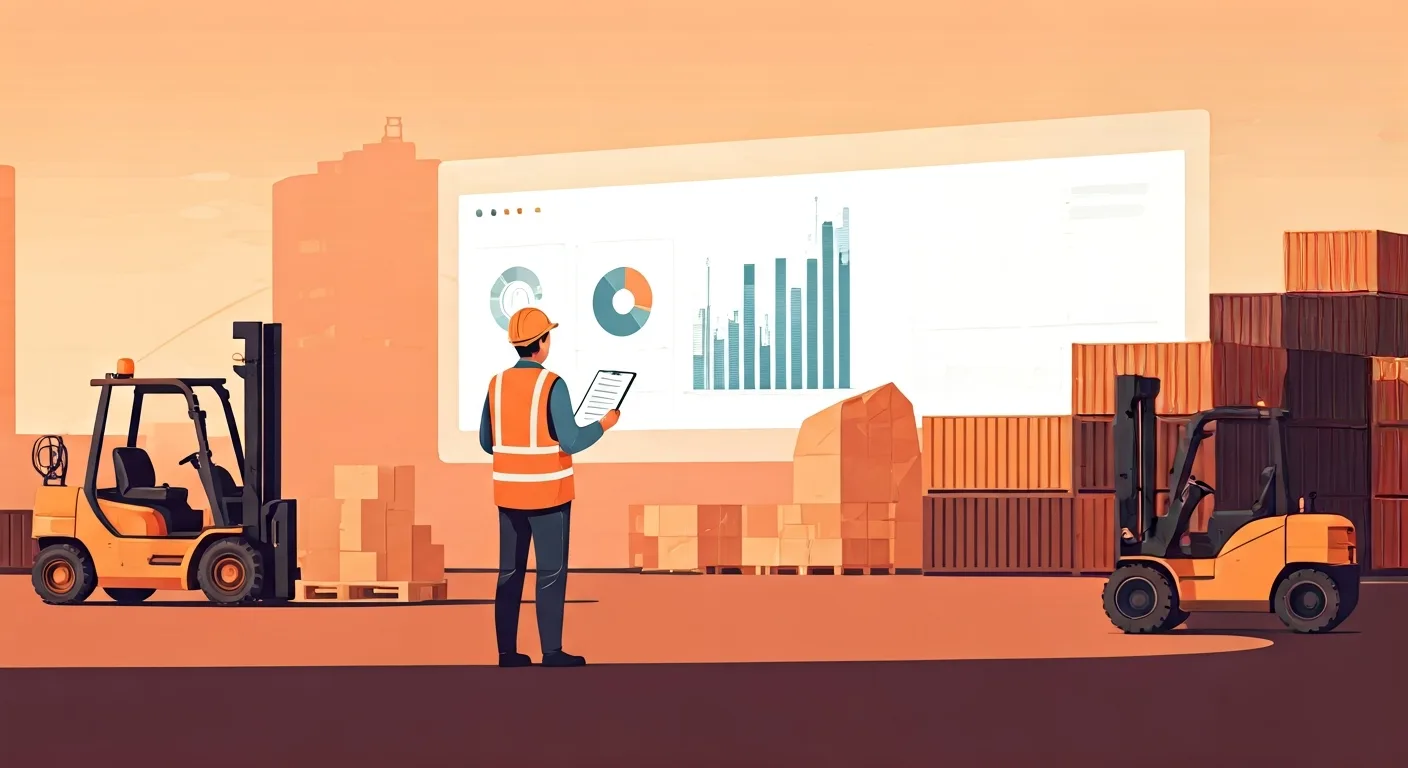
Logistics Analysts examine supply chain data such as shipping costs, delivery times, and inventory levels to find inefficiencies and identify areas for improvement. They build reports and analytical models that help organizations make smarter purchasing, warehousing, and distribution decisions, optimizing the flow of goods from origin to consumption.
Improves efficiency and cost-effectiveness of supply chains, reduces waste, optimizes inventory, and enhances customer satisfaction by ensuring timely and accurate delivery of goods.
On the job
- Collect and analyze supply chain data from various sources, including transportation, inventory, and warehousing
- Identify trends, patterns, and potential bottlenecks in logistics operations
- Develop and implement analytical models to forecast demand, optimize routes, and manage inventory levels
- Prepare detailed reports and presentations for management, outlining findings and recommending solutions
- Collaborate with operations, procurement, and sales teams to implement logistics improvements

Tools & technology
Average salary
Job outlook
GrowingJob growth is expected to be above average over the next five years.
Education & training
Bachelor's degree in Supply Chain Management, Logistics, Business Analytics, or a related field is typically required.
AI impact outlook
Note — this is our current view. AI is moving fast, so we revisit these ratings.
Show how this was assessed Hide the detail
Note — this is our current view. AI is moving fast, so we revisit these ratings.
Show how this was assessed Hide the detailWhy this role received this rating
Core task exposure
high
How much of the role’s important work could AI perform?
Data collection, trend identification, model development, and report generation are highly exposed to AI automation.
End-to-end automation
high
Can AI complete the work without substantial human involvement?
AI could complete entire analytical workflows from data ingestion to generating draft recommendations, but human interpretation and strategic application are still needed.
Adoption pressure
high
How likely are employers to introduce AI into this work?
The massive value in optimizing supply chains drives extremely high employer pressure to adopt AI for analytical tasks.
Human dependence
low
How much does success depend on human judgement, relationships and accountability?
Success depends on human interpretation of complex insights, strategic problem-solving, and collaboration to implement solutions rather than just generating data.
Protective — a higher rating lowers the overall score.
Role adaptability
strong
How easily can the role evolve as AI takes on more tasks?
The role will adapt by shifting from routine data processing to validating AI outputs, asking strategic questions, and driving the implementation of insights.
Shown for context — not part of the score.
What AI may take on
These are the parts of the role most likely to be automated or significantly accelerated.
- Collecting and aggregating supply chain data from multiple sources.
- Identifying trends, patterns, and anomalies in logistics operations.
- Developing predictive models for demand forecasting and route optimization.
- Generating detailed reports and visual dashboards.
- Drafting initial recommendations for process improvements.
Where people remain essential
These parts continue to depend heavily on human judgement, relationships and accountability.
- Interpreting complex analytical findings in business context.
- Translating data insights into actionable strategic recommendations.
- Collaborating with cross-functional teams to implement improvements.
- Presenting findings and influencing management decisions.
- Designing novel analytical approaches for new business challenges.
- Validating AI-generated models and ensuring data integrity.
How the role may evolve
The shift from data generation to interpreting insights for action.
Logistics Analysts will evolve from crunching numbers to becoming strategic advisors, leveraging AI for data processing to focus on human-centric problem-solving and influencing organizational change.
Strengthen your future fit
- Developing advanced critical thinking and problem-solving skills.
- Mastering data storytelling and communication to diverse audiences.
- Cultivating strong cross-functional collaboration and influence.
- Gaining expertise in specific supply chain domains.
- Learning to validate and refine AI-generated models and insights.
- Assessment horizon
- 3–7 years
- Confidence
- High
- Last reviewed
- August 2026
- Methodology
- v1.0
This assessment reflects current AI capabilities and expected adoption patterns. Actual impacts will vary by industry, employer and the way each role is performed.
Career pathways
WHERE YOU COULD GO
CURRENT ROLE
Logistics Analyst
Logistics & Supply Chain
ADJACENT MOVES
STARTING POINTS
Who thrives here
Interest profile
conventional · CEI
Individuals who enjoy analyzing data, identifying patterns, and developing systematic solutions to improve operational efficiency, often thrive in this role. They appreciate structured environments and the practical application of their analytical skills.
Personality characteristics
Organized
Highly methodical and detail-oriented in managing data and processes, ensuring accuracy and efficiency.
Analytical
Enjoys deep dives into data to uncover insights, identify root causes, and solve complex problems.
Pragmatic
Focuses on practical solutions and measurable results that directly improve logistics operations.
Composed
Maintains a calm and steady approach when facing data discrepancies or operational challenges.
Collaborative
Works effectively with cross-functional teams to implement improvements and share findings.
Best for
- Individuals who thrive on using data to identify inefficiencies and optimize systems
- Those who enjoy structured problem-solving and seeing the direct impact of their analytical work
- People who are methodical, accurate, and enjoy communicating insights to stakeholders
Watch out for
- Requires high attention to detail and patience for working with large datasets
- Can involve routine tasks of data collection and report updating alongside more complex analysis
A week in the life
A representative working week for a Logistics Analyst — where the deep work, meetings, and admin actually land.
Real people. Real results.
Thousands of people
can't be wrong.




Frequently asked questions about Logistics Analyst roles
What does a Logistics Analyst do?
A Logistics Analyst logistics Analysts examine supply chain data such as shipping costs, delivery times, and inventory levels to find inefficiencies and identify areas for improvement. They build reports and analytical models that help organizations make smarter purchasing, warehousing, and distribution decisions, optimizing the flow of goods from origin to consumption. Improves efficiency and cost-effectiveness of supply chains, reduces waste, optimizes inventory, and enhances customer satisfaction by ensuring timely and accurate delivery of goods.
How much does a Logistics Analyst earn?
A Logistics Analyst earns a median of $80,000 per year in the US, typically ranging from $55,000 to $110,000.
What qualifications do you need to become a Logistics Analyst?
To become a Logistics Analyst, bachelor's degree in Supply Chain Management, Logistics, Business Analytics, or a related field is typically required.
What personality suits a Logistics Analyst?
Logistics Analyst roles tend to suit people who are highly conscientious — precise, organised and strong on follow-through (Conscientiousness 88/100) and steady under pressure — deadlines and setbacks do not rattle them easily (Emotional Stability 75/100). The traits that matter most in the role are Organized, Analytical, Pragmatic and Composed. Highly methodical and detail-oriented in managing data and processes, ensuring accuracy and efficiency. On interests, Logistics Analyst maps to a CEI Holland Code profile — individuals who enjoy analyzing data, identifying patterns, and developing systematic solutions to improve operational efficiency, often thrive in this role. They appreciate structured environments and the practical application of their analytical skills.
Who does a Logistics Analyst role suit?
A Logistics Analyst role is usually a strong fit for these reasons. Strong Investigative and Conventional alignment: the role is centered on data analysis, problem-solving, and systematic process improvement. A significant portion of the week involves deep work focused on analytical tasks and report generation. Opportunities to influence business decisions through data, appealing to those with Enterprising interests.
What are the downsides of being a Logistics Analyst?
Logistics Analyst roles come with trade-offs worth weighing up. Requires high attention to detail and patience for working with large datasets. Can involve routine tasks of data collection and report updating alongside more complex analysis.
What is the work environment like for a Logistics Analyst?
Work as a Logistics Analyst is mostly office-based with hybrid arrangements common, semi-structured — a mix of set processes and self-directed work, a moderate pace and high exposure to clients or stakeholders. Around 65% of the week is focused deep work.
What skills do you need to be a Logistics Analyst?
Core skills for a Logistics Analyst include Data analysis, Supply chain optimization, Problem-solving, Statistical modeling, Report generation and Communication.
How do you become a Logistics Analyst?
Common entry routes into Logistics Analyst roles include Logistics Coordinator, Inventory Specialist, Data Entry Clerk and Junior Analyst.
What career progression is there for a Logistics Analyst?
From a Logistics Analyst role, common next steps include Senior Logistics Analyst, Logistics Manager and Supply Chain Manager; lateral moves include Business Intelligence Analyst and Operations Research Analyst.
What is the job outlook for Logistics Analyst roles?
The outlook for Logistics Analyst roles is currently rated growing. Job growth is expected to be above average over the next five years.
Will AI replace Logistics Analyst roles?
Traitstack rates automation risk for Logistics Analyst roles at 77 out of 100, which is strong. Much data analysis and report generation could be automated, prompting analysts to focus on interpreting complex insights and driving strategic implementation across teams. AI is most likely to take on collecting and aggregating supply chain data from multiple sources., identifying trends, patterns, and anomalies in logistics operations. and developing predictive models for demand forecasting and route optimization.. Interpreting complex analytical findings in business context., translating data insights into actionable strategic recommendations. and collaborating with cross-functional teams to implement improvements. stay with people. The shift from data generation to interpreting insights for action. That score measures how much of the work could change, not the likelihood the job disappears. It is Traitstack's current view, revisited as AI capability moves.