Freight Forwarder
SOC 43-5011.01 · ESCO 3331 · OSCA 571931
Role snapshot
Overview
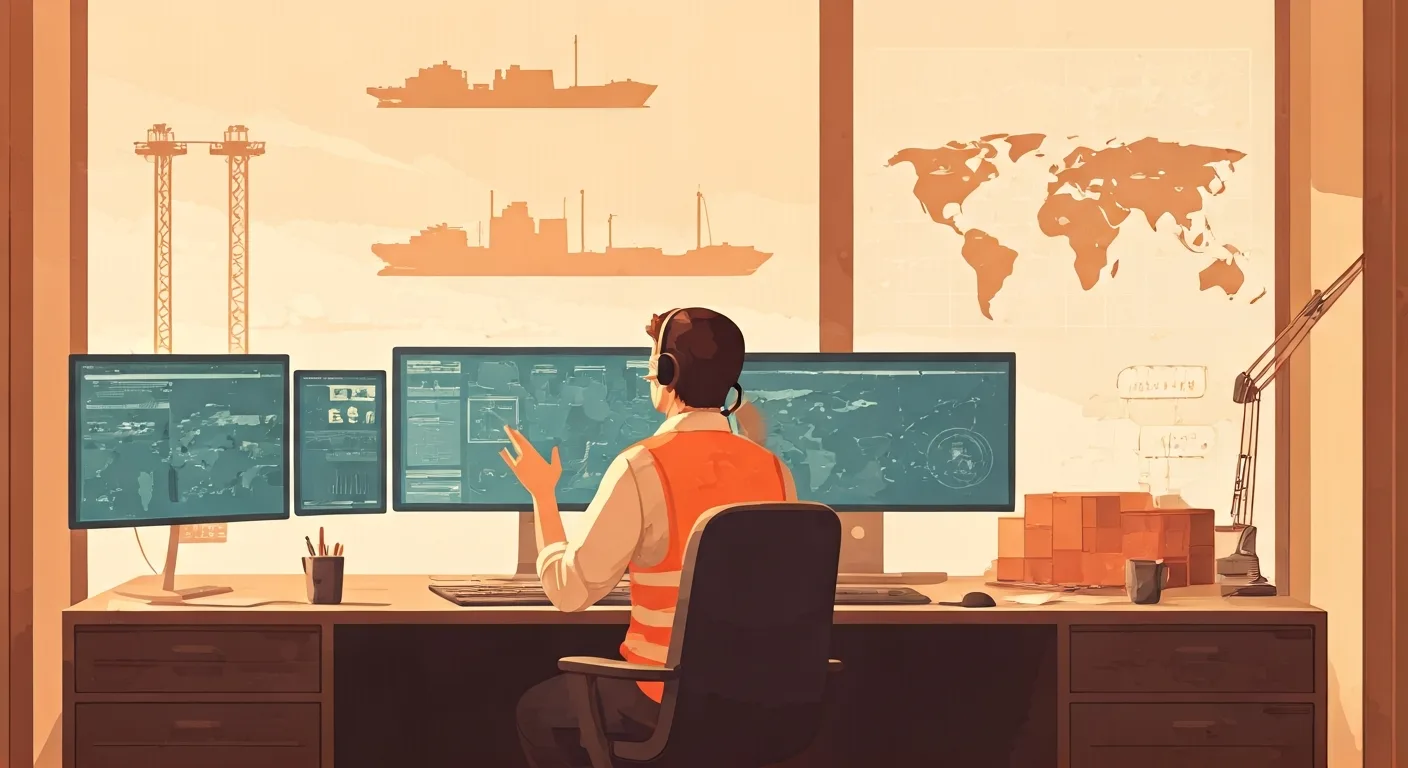
Coordinates the shipment of goods across international borders by arranging carriers, customs documentation, and delivery schedules. Negotiates rates and resolves delays to keep cargo moving on time, ensuring efficient and compliant transportation of goods.
Ensures the smooth and timely movement of goods across global supply chains, facilitating international trade, reducing costs, and minimizing disruptions for businesses and consumers.
On the job
- Arrange transportation with various carriers (air, sea, road, rail) based on client needs and budget.
- Prepare and manage all necessary customs documentation, permits, and declarations for international shipments.
- Negotiate freight rates and service terms with carriers and logistics partners.
- Track and monitor shipments, providing real-time updates to clients and resolving any transit issues or delays.
- Ensure compliance with international shipping regulations, customs laws, and trade agreements.
Tools & technology
Average salary
Job outlook
StableDemand is steady. This is an established role with consistent hiring across sectors.
Education & training
Certificate, diploma, or bachelor’s degree in logistics, supply chain management, or international business is often preferred.
AI impact outlook
Note — this is our current view. AI is moving fast, so we revisit these ratings.
Show how this was assessed Hide the detail
Note — this is our current view. AI is moving fast, so we revisit these ratings.
Show how this was assessed Hide the detailWhy this role received this rating
Core task exposure
high
How much of the role’s important work could AI perform?
Arranging routine transport, preparing standard customs documentation, tracking shipments, and initial rate negotiation are highly exposed to AI optimization.
End-to-end automation
moderate
Can AI complete the work without substantial human involvement?
AI can automate much of the workflow, but complex problem resolution, high-stakes negotiation, and client relationship management require human interaction.
Adoption pressure
high
How likely are employers to introduce AI into this work?
High, as AI offers significant efficiency gains, error reduction, and cost savings for complex international logistics operations.
Human dependence
low
How much does success depend on human judgement, relationships and accountability?
Success depends on sophisticated negotiation, rapid problem-solving in dynamic environments, building client relationships, and navigating ambiguous international regulations.
Protective — a higher rating lowers the overall score.
Role adaptability
strong
How easily can the role evolve as AI takes on more tasks?
The role can adapt by becoming a strategic logistics consultant, a specialist in complex trade routes, or a manager of AI-driven platforms, focusing on client relations.
Shown for context — not part of the score.
What AI may take on
These are the parts of the role most likely to be automated or significantly accelerated.
- Arranging routine transportation with various carriers
- Preparing and managing standard customs documentation and permits
- Tracking and monitoring shipments with real-time updates
- Initial negotiation of freight rates and service terms
Where people remain essential
These parts continue to depend heavily on human judgement, relationships and accountability.
- Resolving complex transit issues and unexpected delays
- Ensuring compliance with evolving and ambiguous international shipping regulations
- Negotiating favorable rates and terms for high-value or complex shipments
- Building and maintaining strong client relationships and trust
- Providing expert advice on complex trade agreements and global logistics strategies
- Managing and mitigating risks in volatile international environments
How the role may evolve
Human negotiation and client relations amplified by AI-driven efficiency.
Freight forwarders will increasingly leverage AI for operational efficiency, freeing them to concentrate on the strategic elements of negotiation, complex problem-solving, and cultivating deep client partnerships.
Strengthen your future fit
- Mastery of advanced TMS and customs brokerage software
- Expertise in global trade regulations and geopolitics
- High-level negotiation and diplomatic communication skills
- Strategic problem-solving for complex supply chain disruptions
- Building and maintaining strong client and carrier relationships
- Assessment horizon
- 3–7 years
- Confidence
- High
- Last reviewed
- August 2026
- Methodology
- v1.0
This assessment reflects current AI capabilities and expected adoption patterns. Actual impacts will vary by industry, employer and the way each role is performed.
Career pathways
WHERE YOU COULD GO
CURRENT ROLE
Freight Forwarder
Logistics & Supply Chain
ADJACENT MOVES
STARTING POINTS
Who thrives here
Interest profile
conventional · CER
People who enjoy organizing complex details, negotiating effectively, and practically solving logistical problems tend to thrive in this role.
Personality characteristics
Organized
Thrives on managing complex documentation and detailed processes with precision.
Persuasive
Comfortable negotiating rates and terms with carriers and other stakeholders.
Reliable
Dedicated to ensuring shipments reach their destination on time and without issues.
Practical problem-solver
Adept at finding solutions to unexpected logistical challenges and delays.
Calm under pressure
Maintains composure and efficiency when facing tight deadlines or urgent issues.
Best for
- Individuals who enjoy managing complex logistical processes and ensuring compliance.
- Those who are skilled negotiators and thrive in dynamic, detail-oriented environments.
- People who like solving practical problems and connecting global trade.
Watch out for
- The role can be fast-paced with unexpected issues requiring quick resolution.
- Requires constant communication with various parties, which may involve dealing with difficult situations.
A week in the life
A representative working week for a Freight Forwarder — where the deep work, meetings, and admin actually land.
Real people. Real results.
Thousands of people
can't be wrong.


Frequently asked questions about Freight Forwarder roles
What does a Freight Forwarder do?
A Freight Forwarder coordinates the shipment of goods across international borders by arranging carriers, customs documentation, and delivery schedules. Negotiates rates and resolves delays to keep cargo moving on time, ensuring efficient and compliant transportation of goods. Ensures the smooth and timely movement of goods across global supply chains, facilitating international trade, reducing costs, and minimizing disruptions for businesses and consumers.
How much does a Freight Forwarder earn?
A Freight Forwarder earns a median of $62,000 per year in the US, typically ranging from $45,000 to $85,000.
What qualifications do you need to become a Freight Forwarder?
To become a Freight Forwarder, certificate, diploma, or bachelor’s degree in logistics, supply chain management, or international business is often preferred.
What personality suits a Freight Forwarder?
Freight Forwarder roles tend to suit people who are highly conscientious — precise, organised and strong on follow-through (Conscientiousness 82/100) and steady under pressure — deadlines and setbacks do not rattle them easily (Emotional Stability 70/100). The traits that matter most in the role are Organized, Persuasive, Reliable and Practical problem-solver. Thrives on managing complex documentation and detailed processes with precision. On interests, Freight Forwarder maps to a CER Holland Code profile — people who enjoy organizing complex details, negotiating effectively, and practically solving logistical problems tend to thrive in this role.
Who does a Freight Forwarder role suit?
A Freight Forwarder role is usually a strong fit for these reasons. High Conventional alignment, rewarding meticulous organization and adherence to procedures. Requires strong Enterprising traits for effective negotiation and client management. The practical and problem-solving nature of the role aligns well with Realistic interests.
What are the downsides of being a Freight Forwarder?
Freight Forwarder roles come with trade-offs worth weighing up. The role can be fast-paced with unexpected issues requiring quick resolution. Requires constant communication with various parties, which may involve dealing with difficult situations.
What is the work environment like for a Freight Forwarder?
Work as a Freight Forwarder is mostly office-based with hybrid arrangements common, semi-structured — a mix of set processes and self-directed work and high exposure to clients or stakeholders. Around 50% of the week is focused deep work.
What skills do you need to be a Freight Forwarder?
Core skills for a Freight Forwarder include Logistics coordination, Customs compliance, Negotiation, Problem-solving, Client communication and Supply chain management.
How do you become a Freight Forwarder?
Common entry routes into Freight Forwarder roles include Logistics Assistant, Shipping Clerk and Customs Broker Assistant.
What career progression is there for a Freight Forwarder?
From a Freight Forwarder role, common next steps include Senior Freight Forwarder and Logistics Manager; lateral moves include Supply Chain Analyst.
What is the job outlook for Freight Forwarder roles?
The outlook for Freight Forwarder roles is currently rated stable. Demand is steady. This is an established role with consistent hiring across sectors.
Will AI replace Freight Forwarder roles?
Traitstack rates automation risk for Freight Forwarder roles at 74 out of 100, which is strong. AI is set to optimize documentation and routine bookings, shifting human effort toward strategic client relationships and resolving intricate global supply chain disruptions. AI is most likely to take on arranging routine transportation with various carriers, preparing and managing standard customs documentation and permits and tracking and monitoring shipments with real-time updates. Resolving complex transit issues and unexpected delays, ensuring compliance with evolving and ambiguous international shipping regulations and negotiating favorable rates and terms for high-value or complex shipments stay with people. Human negotiation and client relations amplified by AI-driven efficiency. That score measures how much of the work could change, not the likelihood the job disappears. It is Traitstack's current view, revisited as AI capability moves.