First Aid Trainer
SOC 25-3099 · ESCO 5169 · OSCA 461933
Role snapshot
Overview
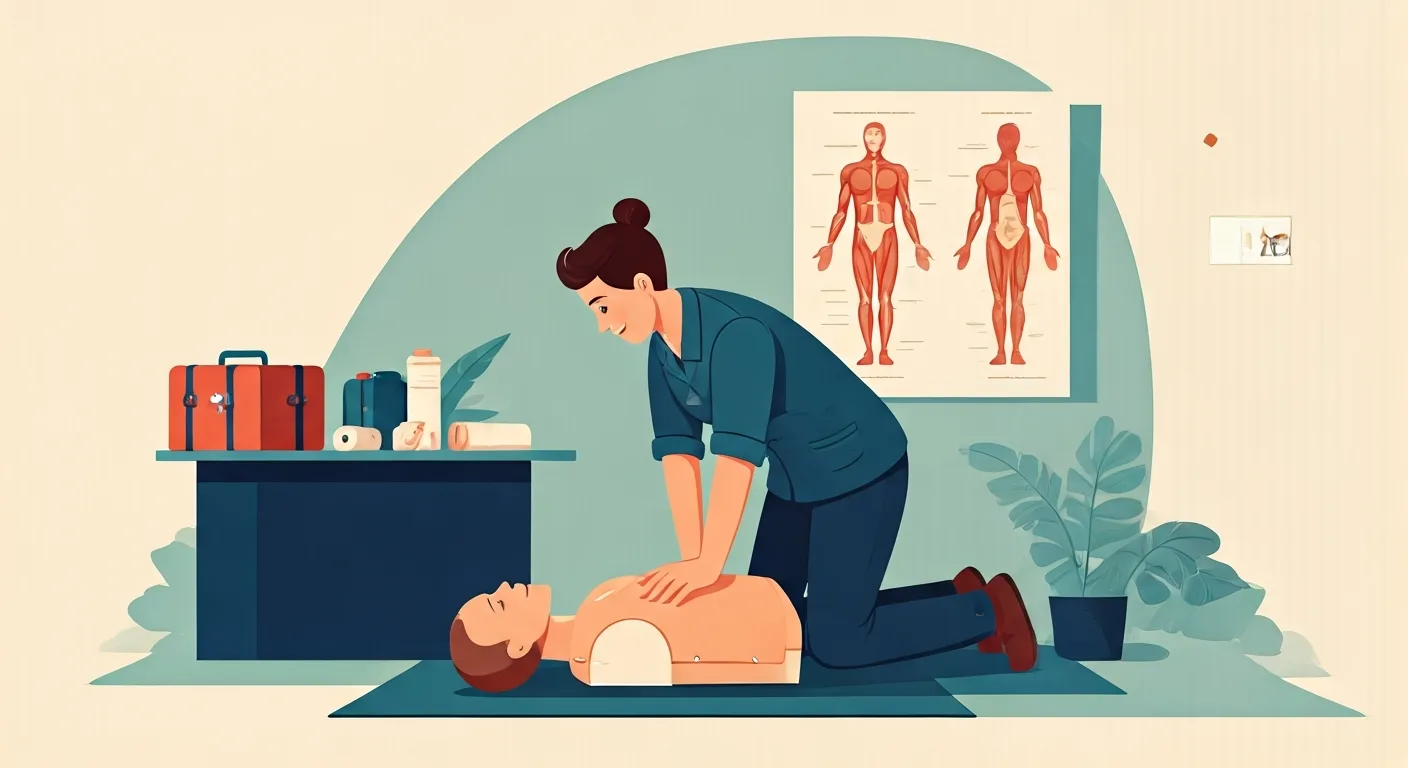
Teaches individuals and groups how to respond to medical emergencies, demonstrating CPR, wound care, and other life-saving techniques through hands-on practice sessions. This role involves preparing engaging course materials, delivering practical demonstrations, assessing student competency, and ensuring compliance with current emergency care guidelines.
Empowers individuals with life-saving skills, contributing to community safety and preparedness. Helps organizations meet safety compliance standards and reduces risks associated with medical emergencies.
On the job
- Prepare and deliver engaging First Aid, CPR, and AED training courses to diverse audiences.
- Demonstrate critical life-saving techniques using manikins and other training equipment.
- Evaluate participant understanding and practical skills, providing constructive feedback.
- Maintain up-to-date knowledge of emergency medical protocols, guidelines, and instructional methods.
- Manage training logistics, including equipment setup, material distribution, and record-keeping.
Tools & technology
Average salary
Job outlook
StableDemand is steady. This is an established role with consistent hiring across sectors.
Education & training
Requires specific certifications in First Aid and CPR instruction, often paired with experience in emergency services or healthcare.
AI impact outlook
Note — this is our current view. AI is moving fast, so we revisit these ratings.
Show how this was assessed Hide the detail
Note — this is our current view. AI is moving fast, so we revisit these ratings.
Show how this was assessed Hide the detailWhy this role received this rating
Core task exposure
low
How much of the role’s important work could AI perform?
AI could assist in material preparation and theoretical assessment, but the core is hands-on demonstration and observation of critical skills.
End-to-end automation
low
Can AI complete the work without substantial human involvement?
AI cannot physically demonstrate techniques, provide hands-on correction, or evaluate practical skills for safety-critical tasks.
Adoption pressure
moderate
How likely are employers to introduce AI into this work?
Safety-critical training is often regulated and slow to fully automate, though digital theory components see high adoption pressure.
Human dependence
strong
How much does success depend on human judgement, relationships and accountability?
Success relies heavily on the trainer's ability to demonstrate, observe, correct, build confidence, and make real-time safety judgments.
Protective — a higher rating lowers the overall score.
Role adaptability
strong
How easily can the role evolve as AI takes on more tasks?
The role can readily adapt to new emergency protocols, equipment, and blended learning models, maintaining its core human-led practical instruction.
Shown for context — not part of the score.
What AI may take on
These are the parts of the role most likely to be automated or significantly accelerated.
- Prepare and update course materials based on latest guidelines
- Generate multiple-choice quizzes and theoretical assessments
- Manage training logistics and scheduling
- Provide initial information on emergency protocols
- Track participant progress on theoretical components
Where people remain essential
These parts continue to depend heavily on human judgement, relationships and accountability.
- Demonstrating critical life-saving techniques with precision
- Providing hands-on assistance and physical feedback during practice
- Evaluating practical skills and ensuring competency in real-time scenarios
- Building confidence and managing participant anxiety in high-stakes training
- Responding to unexpected situations during live training sessions
- Ensuring compliance with evolving safety regulations and liability standards
How the role may evolve
From material preparation to direct, hands-on instructional leadership.
The trainer's time will shift from administrative tasks and content curation to focusing on the irreplaceable human elements of physical demonstration, safety oversight, and confidence building during practical sessions.
Strengthen your future fit
- Mastering advanced practical demonstration techniques
- Developing nuanced observational and corrective feedback skills
- Cultivating strong interpersonal and confidence-building abilities
- Staying current with evolving emergency care protocols
- Integrating and leveraging AI tools for administrative and theoretical support
- Assessment horizon
- 3–7 years
- Confidence
- High
- Last reviewed
- August 2026
- Methodology
- v1.0
This assessment reflects current AI capabilities and expected adoption patterns. Actual impacts will vary by industry, employer and the way each role is performed.
Career pathways
WHERE YOU COULD GO
CURRENT ROLE
First Aid Trainer
Teaching & Instruction
ADJACENT MOVES
STARTING POINTS
Who thrives here
Interest profile
social · SAR
Individuals who thrive on teaching practical, life-saving skills, enjoy dynamic interaction with diverse groups, and appreciate hands-on, realistic applications of knowledge will find this role highly rewarding.
Personality characteristics
Conscientious
Highly organized and meticulous in following safety protocols and curriculum guidelines.
Engaging
Energetic and charismatic, able to hold the attention of a room and make learning interactive.
Empathetic
Patient and understanding with learners of all backgrounds and skill levels, fostering a supportive environment.
Calm under pressure
Maintains composure and clarity when demonstrating emergency procedures or handling unexpected situations.
Practical
Focuses on hands-on application and realistic scenarios to ensure skills are transferrable to real-life emergencies.
Best for
- People who are passionate about teaching life-saving skills and empowering others.
- Individuals who thrive in dynamic, interactive instructional environments.
- Those who enjoy a blend of structured curriculum delivery and hands-on practical demonstrations.
Watch out for
- Requires constant vigilance to stay updated on ever-evolving medical guidelines and procedures.
- May involve occasional weekend or evening work to accommodate diverse client schedules.
A week in the life
A representative working week for a First Aid Trainer — where the deep work, meetings, and admin actually land.
Real people. Real results.
Thousands of people
can't be wrong.





Frequently asked questions about First Aid Trainer roles
What does a First Aid Trainer do?
A First Aid Trainer teaches individuals and groups how to respond to medical emergencies, demonstrating CPR, wound care, and other life-saving techniques through hands-on practice sessions. This role involves preparing engaging course materials, delivering practical demonstrations, assessing student competency, and ensuring compliance with current emergency care guidelines. Empowers individuals with life-saving skills, contributing to community safety and preparedness. Helps organizations meet safety compliance standards and reduces risks associated with medical emergencies.
How much does a First Aid Trainer earn?
A First Aid Trainer earns a median of $55,000 per year in the US, typically ranging from $40,000 to $75,000.
What qualifications do you need to become a First Aid Trainer?
To become a First Aid Trainer, requires specific certifications in First Aid and CPR instruction, often paired with experience in emergency services or healthcare. Current First Aid Instructor certification (e.g., American Red Cross, American Heart Association).
What personality suits a First Aid Trainer?
First Aid Trainer roles tend to suit people who are highly conscientious — precise, organised and strong on follow-through (Conscientiousness 75/100) and warm and cooperative — tuned in to the people around them (Agreeableness 72/100). The traits that matter most in the role are Conscientious, Engaging, Empathetic and Calm under pressure. Highly organized and meticulous in following safety protocols and curriculum guidelines. On interests, First Aid Trainer maps to a SAR Holland Code profile — individuals who thrive on teaching practical, life-saving skills, enjoy dynamic interaction with diverse groups, and appreciate hands-on, realistic applications of knowledge will find this role highly rewarding.
Who does a First Aid Trainer role suit?
A First Aid Trainer role is usually a strong fit for these reasons. Strong Social (S) and Realistic (R) alignment, ideal for those who enjoy teaching practical skills and helping others. High stakeholder exposure and engaging demonstrations align well with Extraverted (E) and Artistic (A) tendencies. The role's emphasis on following protocols and thorough preparation suits individuals with high Conscientiousness (C).
What are the downsides of being a First Aid Trainer?
First Aid Trainer roles come with trade-offs worth weighing up. Requires constant vigilance to stay updated on ever-evolving medical guidelines and procedures. May involve occasional weekend or evening work to accommodate diverse client schedules.
What is the work environment like for a First Aid Trainer?
Work as a First Aid Trainer is mostly mixed-based with onsite arrangements common, semi-structured — a mix of set processes and self-directed work, a moderate pace and high exposure to clients or stakeholders. Around 28% of the week is focused deep work.
What skills do you need to be a First Aid Trainer?
Core skills for a First Aid Trainer include Instructional design, Public speaking, Emergency medical response, Demonstration techniques, Participant assessment and Curriculum delivery.
How do you become a First Aid Trainer?
Common entry routes into First Aid Trainer roles include Emergency Medical Technician, Paramedic, Registered Nurse and Health And Safety Coordinator.
What career progression is there for a First Aid Trainer?
From a First Aid Trainer role, common next steps include Lead First Aid Instructor and Safety Manager; lateral moves include Emergency Medical Technician (EMT) and Healthcare Educator.
What is the job outlook for First Aid Trainer roles?
The outlook for First Aid Trainer roles is currently rated stable. Demand is steady. This is an established role with consistent hiring across sectors.
Will AI replace First Aid Trainer roles?
Traitstack rates automation risk for First Aid Trainer roles at 31 out of 100, which is low. AI can streamline curriculum updates and theoretical assessments, yet the crucial hands-on demonstration and real-time safety judgment remain firmly human responsibilities. AI is most likely to take on prepare and update course materials based on latest guidelines, generate multiple-choice quizzes and theoretical assessments and manage training logistics and scheduling. Demonstrating critical life-saving techniques with precision, providing hands-on assistance and physical feedback during practice and evaluating practical skills and ensuring competency in real-time scenarios stay with people. From material preparation to direct, hands-on instructional leadership. That score measures how much of the work could change, not the likelihood the job disappears. It is Traitstack's current view, revisited as AI capability moves.