Delivery Person
SOC 53-3031.00 · ESCO 8321 · OSCA 712231
Role snapshot
Overview
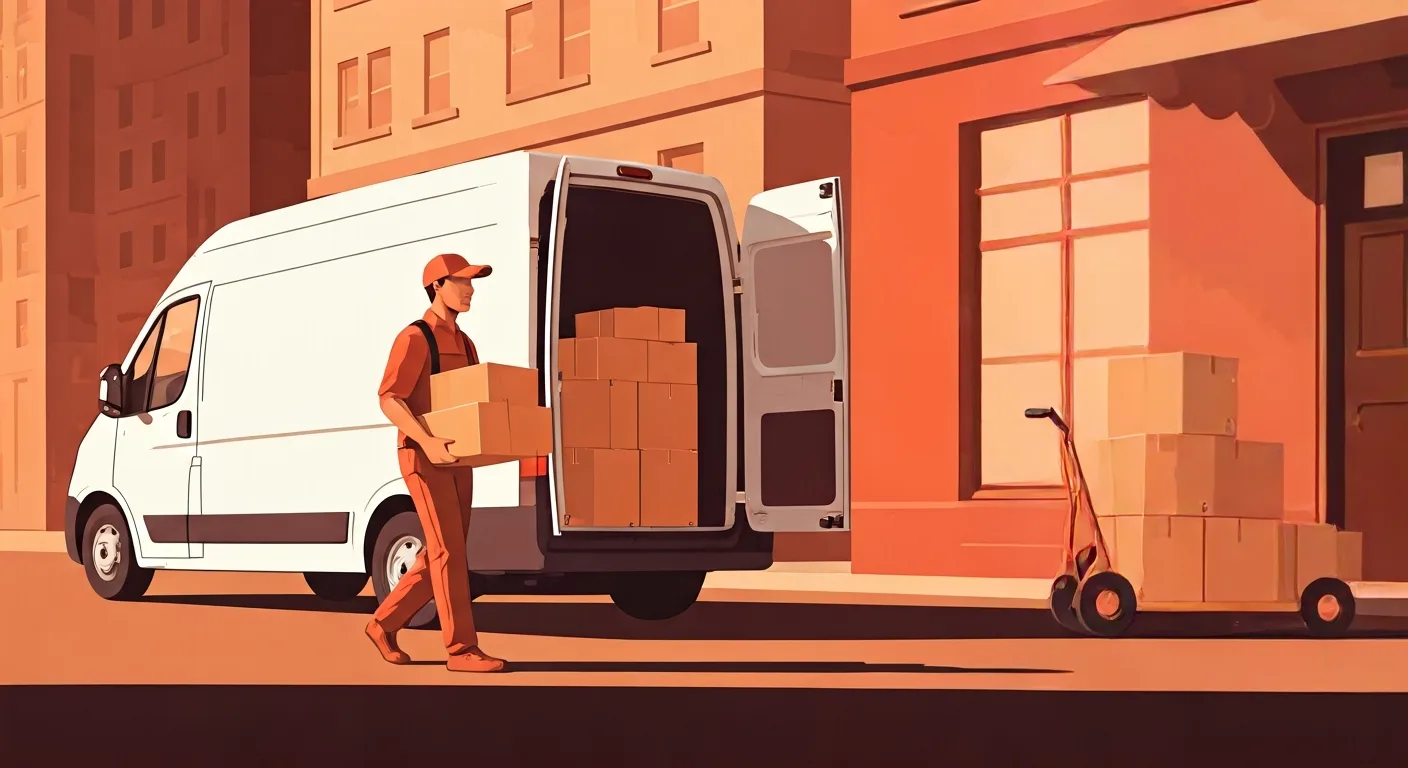
A Delivery Person is responsible for the timely and safe transport of goods, including parcels, food, and other items, to customers' homes or businesses. This role involves meticulous route planning, efficient loading and unloading, and ensuring items are delivered in perfect condition. They interact directly with customers, obtain necessary proofs of delivery, and often manage digital delivery logs.
Ensures timely and accurate delivery of goods, directly impacting customer satisfaction, business reputation, and the smooth flow of commerce and daily life.
On the job
- Plan and optimize daily delivery routes using navigation tools to ensure efficiency and timeliness.
- Load and unload vehicles with parcels, packages, or food orders, ensuring proper handling and securing of items.
- Drive company vehicles or personal vehicles safely and in compliance with all traffic laws.
- Interact professionally with customers, confirm deliveries, and obtain signatures or other proof of receipt.
- Perform routine vehicle checks and maintenance to ensure operational safety and report any issues.
Tools & technology
Average salary
Job outlook
StableDemand is steady. This is an established role with consistent hiring across sectors.
Education & training
High school diploma or equivalent, often with a valid driver's license.
AI impact outlook
Note — this is our current view. AI is moving fast, so we revisit these ratings.
Show how this was assessed Hide the detail
Note — this is our current view. AI is moving fast, so we revisit these ratings.
Show how this was assessed Hide the detailWhy this role received this rating
Core task exposure
high
How much of the role’s important work could AI perform?
Route optimization, navigation, and digital proof of delivery are highly exposed to current AI capabilities.
End-to-end automation
moderate
Can AI complete the work without substantial human involvement?
While autonomous vehicles can manage transport, the complex, variable nature of last-mile human interaction and package handling limits full unaided automation.
Adoption pressure
high
How likely are employers to introduce AI into this work?
The logistics industry is heavily invested in efficiency and cost reduction, driving high adoption of automation where possible.
Human dependence
moderate
How much does success depend on human judgement, relationships and accountability?
Success often hinges on human judgment for unexpected delivery issues, direct customer communication, and careful physical handling of diverse items.
Protective — a higher rating lowers the overall score.
Role adaptability
moderate
How easily can the role evolve as AI takes on more tasks?
The role can adapt towards customer service, specialized delivery, or oversight of automated delivery systems, leveraging human interaction skills.
Shown for context — not part of the score.
What AI may take on
These are the parts of the role most likely to be automated or significantly accelerated.
- Planning and optimizing daily delivery routes
- Real-time navigation adjustments based on traffic
- Scanning and processing proofs of delivery digitally
- Predicting delivery times with high accuracy
- Automated communication updates to customers
- Basic vehicle diagnostics and reporting
Where people remain essential
These parts continue to depend heavily on human judgement, relationships and accountability.
- Loading and unloading diverse packages safely and efficiently
- Navigating complex, unmapped last-mile environments (e.g., apartment buildings, gates)
- Interacting professionally with customers and resolving issues on site
- Handling sensitive or fragile items with care
- Making real-time judgment calls on delivery exceptions (e.g., no safe drop-off)
- Performing vehicle safety checks and basic maintenance
- Absorbing blame and maintaining customer satisfaction
How the role may evolve
From route executor to last-mile problem solver and customer liaison.
The role will shift from simply following a pre-planned route to focusing on the nuanced, human-centric aspects of delivery, requiring more problem-solving and interpersonal skills.
Strengthen your future fit
- Enhanced customer service and communication skills
- Proficiency with advanced logistics and navigation software
- Adaptability to new delivery technologies (e.g., autonomous vehicles, drones)
- Strong physical dexterity and careful package handling
- Problem-solving for unexpected delivery challenges
- Assessment horizon
- 3–7 years
- Confidence
- High
- Last reviewed
- August 2026
- Methodology
- v1.0
This assessment reflects current AI capabilities and expected adoption patterns. Actual impacts will vary by industry, employer and the way each role is performed.
Career pathways
WHERE YOU COULD GO
CURRENT ROLE
Delivery Person
Logistics & Supply Chain
STARTING POINTS
Who thrives here
Interest profile
realistic · RCE
People who enjoy hands-on work, driving, following established procedures, and interacting with customers in a structured environment tend to thrive in this role.
Personality characteristics
Disciplined
Consistently follows delivery schedules and established routes, ensuring punctuality and order.
Reliable
Can be counted on to safely transport and deliver goods as promised, upholding trust.
Calm under pressure
Manages traffic, tight deadlines, and unexpected issues on the road without becoming overly stressed.
Polite
Interacts respectfully and courteously with customers during deliveries.
Practical
Prefers clear tasks and established procedures, focusing on efficient execution rather than abstract problem-solving.
Best for
- Individuals who enjoy working independently and are comfortable with a routine.
- Those who thrive in a fast-paced environment and take pride in reliable service.
- People with good navigational skills and a strong sense of responsibility.
Watch out for
- Can involve long periods of driving and exposure to varying weather conditions.
- Requires managing tight schedules and unexpected delays, which can be stressful.
- Limited opportunities for highly social or creative work.
A week in the life
A representative working week for a Delivery Person — where the deep work, meetings, and admin actually land.
Real people. Real results.
Thousands of people
can't be wrong.



Frequently asked questions about Delivery Person roles
What does a Delivery Person do?
A Delivery Person a Delivery Person is responsible for the timely and safe transport of goods, including parcels, food, and other items, to customers' homes or businesses. This role involves meticulous route planning, efficient loading and unloading, and ensuring items are delivered in perfect condition. They interact directly with customers, obtain necessary proofs of delivery, and often manage digital delivery logs. Ensures timely and accurate delivery of goods, directly impacting customer satisfaction, business reputation, and the smooth flow of commerce and daily life.
How much does a Delivery Person earn?
A Delivery Person earns a median of $45,000 per year in the US, typically ranging from $30,000 to $60,000.
What qualifications do you need to become a Delivery Person?
To become a Delivery Person, high school diploma or equivalent, often with a valid driver's license. Valid Driver's License (Class D or equivalent).
What personality suits a Delivery Person?
Delivery Person roles tend to suit people who are highly conscientious — precise, organised and strong on follow-through (Conscientiousness 72/100) and practical and grounded — happier with proven methods than experimentation (Openness 30/100). The traits that matter most in the role are Disciplined, Reliable, Calm under pressure and Polite. Consistently follows delivery schedules and established routes, ensuring punctuality and order. On interests, Delivery Person maps to a RCE Holland Code profile — people who enjoy hands-on work, driving, following established procedures, and interacting with customers in a structured environment tend to thrive in this role.
Who does a Delivery Person role suit?
A Delivery Person role is usually a strong fit for these reasons. Strong Realistic (R) alignment: involves hands-on work, driving, and operating equipment. High Conscientiousness (C): rewards adherence to schedules, routes, and careful handling of items. Opportunity for independence and working on the road, appealing to self-directed individuals.
What are the downsides of being a Delivery Person?
Delivery Person roles come with trade-offs worth weighing up. Can involve long periods of driving and exposure to varying weather conditions. Requires managing tight schedules and unexpected delays, which can be stressful. Limited opportunities for highly social or creative work.
What is the work environment like for a Delivery Person?
Work as a Delivery Person is mostly field-based with onsite arrangements common, semi-structured — a mix of set processes and self-directed work and high exposure to clients or stakeholders. Around 95% of the week is focused deep work.
What skills do you need to be a Delivery Person?
Core skills for a Delivery Person include Route Planning, Safe Driving, Customer Service, Time Management and Attention to Detail.
How do you become a Delivery Person?
Common entry routes into Delivery Person roles include General Laborer, Warehouse Worker and Customer Service Representative.
What career progression is there for a Delivery Person?
From a Delivery Person role, common next steps include Senior Delivery Driver, Logistics Coordinator and Route Supervisor.
What is the job outlook for Delivery Person roles?
The outlook for Delivery Person roles is currently rated stable. Demand is steady. This is an established role with consistent hiring across sectors.
Will AI replace Delivery Person roles?
Traitstack rates automation risk for Delivery Person roles at 66 out of 100, which is strong. While AI will increasingly optimize routes and assist with digital proof of delivery, the physical act of transporting items and interacting directly with customers remains a human-led activity. AI is most likely to take on planning and optimizing daily delivery routes, real-time navigation adjustments based on traffic and scanning and processing proofs of delivery digitally. Loading and unloading diverse packages safely and efficiently, navigating complex, unmapped last-mile environments (e.g., apartment buildings, gates) and interacting professionally with customers and resolving issues on site stay with people. From route executor to last-mile problem solver and customer liaison. That score measures how much of the work could change, not the likelihood the job disappears. It is Traitstack's current view, revisited as AI capability moves.