Cardiologist
SOC 29-1212.00 · ESCO 2212 · OSCA 264332
Role snapshot
Overview
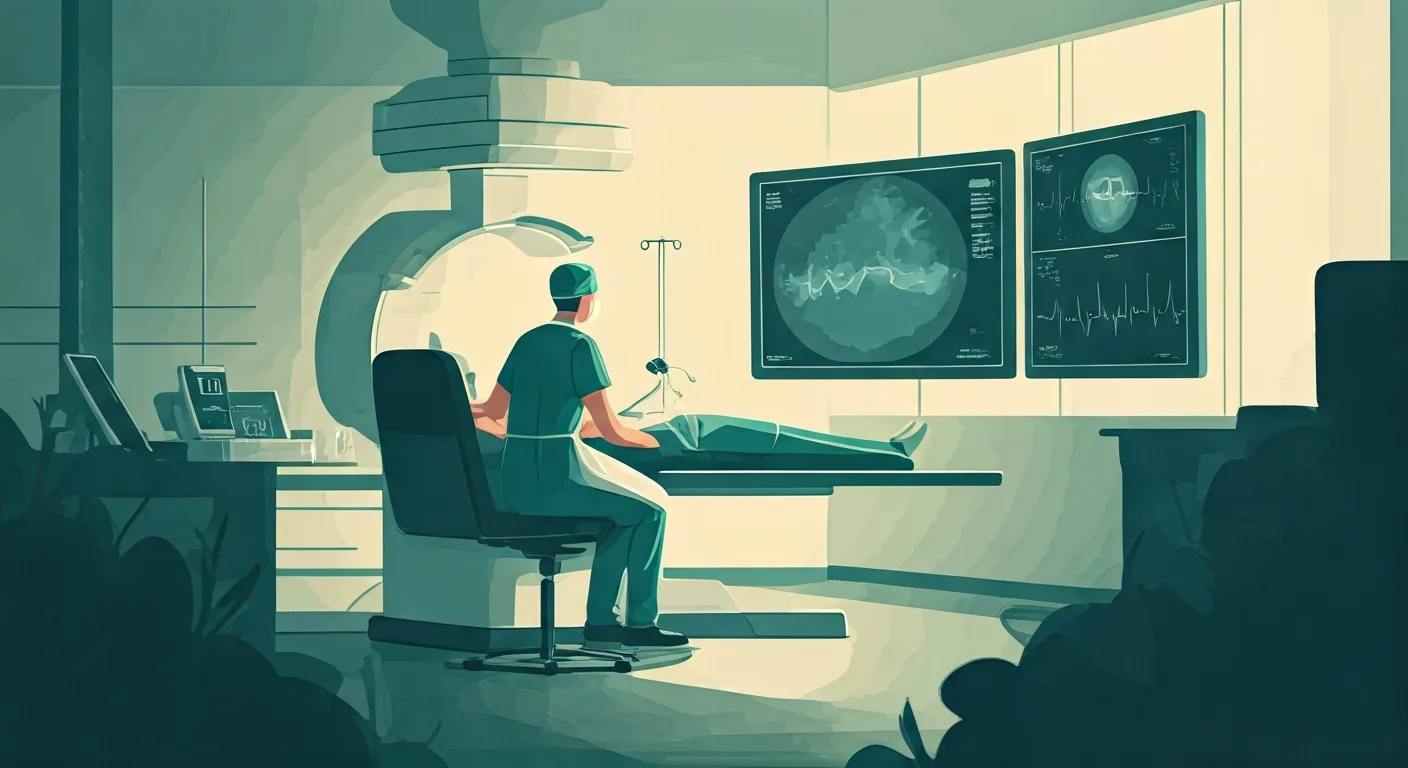
A Cardiologist diagnoses and treats a wide range of heart and vascular conditions. This involves using advanced imaging techniques, performing diagnostic and interventional catheterisation procedures, and managing patient medication. They interpret complex diagnostic tests such as echocardiograms and stress tests, perform life-saving interventions, and provide comprehensive counseling to patients on long-term cardiovascular health and lifestyle modifications.
Cardiologists play a critical role in preventing, diagnosing, and treating heart disease, which is a leading cause of mortality. Their work directly improves patient outcomes, extends lives, and enhances the quality of life for individuals with cardiovascular conditions.
On the job
- Conduct thorough patient examinations, review medical histories, and order diagnostic tests.
- Interpret echocardiograms, electrocardiograms (ECGs), and cardiac stress test results.
- Perform interventional procedures such as angioplasty, stenting, and pacemaker implantation.
- Develop and manage comprehensive treatment plans, including medication and lifestyle recommendations.
- Collaborate with cardiac surgeons, general practitioners, and other specialists to provide holistic patient care.
Tools & technology
Average salary
Job outlook
GrowingJob growth is expected to be above average over the next five years.
Education & training
Requires a Doctor of Medicine (MD) or Doctor of Osteopathic Medicine (DO) degree, followed by extensive residency and specialized cardiology fellowship training.
AI impact outlook
Note — this is our current view. AI is moving fast, so we revisit these ratings.
Show how this was assessed Hide the detail
Note — this is our current view. AI is moving fast, so we revisit these ratings.
Show how this was assessed Hide the detailWhy this role received this rating
Core task exposure
moderate
How much of the role’s important work could AI perform?
AI can significantly aid in interpreting complex cardiac imaging and diagnostic test results, and in personalizing medication and treatment plans based on patient data.
End-to-end automation
low
Can AI complete the work without substantial human involvement?
While data analysis and treatment suggestions can be AI-supported, the performance of invasive procedures, nuanced patient communication, and final clinical judgment prevent full automation.
Adoption pressure
high
How likely are employers to introduce AI into this work?
High for AI tools that enhance diagnostic accuracy and treatment efficacy, particularly given the high volume of data in cardiology and critical nature of outcomes.
Human dependence
strong
How much does success depend on human judgement, relationships and accountability?
The role demands precise interventional skills, complex diagnostic reasoning, and empathetic patient counseling for critical, long-term conditions.
Protective — a higher rating lowers the overall score.
Role adaptability
strong
How easily can the role evolve as AI takes on more tasks?
Cardiology is a rapidly evolving field, constantly integrating new diagnostic technologies, surgical techniques, and pharmacological treatments.
Shown for context — not part of the score.
What AI may take on
These are the parts of the role most likely to be automated or significantly accelerated.
- Automated analysis of echocardiograms and ECGs for anomalies
- Predictive modeling for cardiovascular disease risk assessment
- Optimizing medication dosages and regimens based on patient profiles
- Generating initial diagnostic summaries from patient data
- Identifying suitable patients for specific interventional procedures
Where people remain essential
These parts continue to depend heavily on human judgement, relationships and accountability.
- Performing complex interventional procedures like angioplasty and stenting
- Making definitive diagnostic decisions based on comprehensive clinical assessment
- Communicating sensitive prognoses and treatment options to patients
- Managing life-threatening cardiac emergencies and complications
- Leading multidisciplinary teams for comprehensive patient care
- Building long-term trust and rapport with patients and their families
- Adapting treatment plans to individual patient responses and comorbidities
How the role may evolve
The role evolves from data crunching to advanced procedural mastery and patient partnership.
Cardiologists will leverage AI for data interpretation, freeing them to focus more on sophisticated interventional techniques, holistic patient management, and collaborative care.
Strengthen your future fit
- Mastering advanced interventional cardiology techniques and robotic assistance
- Developing expertise in AI-driven diagnostic and predictive tools
- Enhancing patient communication and shared decision-making skills
- Leading multidisciplinary teams in complex cardiovascular care
- Continuous learning to integrate novel therapies and technologies
- Assessment horizon
- 3–7 years
- Confidence
- High
- Last reviewed
- August 2026
- Methodology
- v1.0
This assessment reflects current AI capabilities and expected adoption patterns. Actual impacts will vary by industry, employer and the way each role is performed.
Career pathways
WHERE YOU COULD GO
CURRENT ROLE
Cardiologist
Medical & Clinical
ADJACENT MOVES
STARTING POINTS
Who thrives here
Interest profile
investigative · IRS
Individuals who are highly investigative, enjoy hands-on practical applications, and possess strong social skills for patient care are well-suited for a career as a Cardiologist.
Personality characteristics
Curious
Possesses a strong desire to understand complex physiological processes and stay updated on medical advancements.
Meticulous
Demonstrates exceptional attention to detail in diagnosis, procedures, and patient record-keeping, where precision is critical.
Empathetic
Connects with patients on a human level, showing compassion and understanding during challenging health situations.
Resilient
Maintains composure and effectiveness under high-pressure situations, such as medical emergencies or demanding schedules.
Communicative
Clearly explains complex medical information to patients and effectively collaborates with multidisciplinary medical teams.
Best for
- Individuals driven by a desire to save lives and significantly improve patient health.
- Those who thrive in intellectually challenging environments requiring constant learning and critical thinking.
- Professionals who are comfortable with high-stakes decision-making and performing intricate medical procedures.
Watch out for
- The role demands regular weekend work and on-call duties, requiring significant personal time commitment.
- It can be emotionally demanding due to the serious nature of cardiac conditions and patient outcomes.
A week in the life
A representative working week for a Cardiologist — where the deep work, meetings, and admin actually land.
Real people. Real results.
Thousands of people
can't be wrong.




Frequently asked questions about Cardiologist roles
What does a Cardiologist do?
A Cardiologist a Cardiologist diagnoses and treats a wide range of heart and vascular conditions. This involves using advanced imaging techniques, performing diagnostic and interventional catheterisation procedures, and managing patient medication. They interpret complex diagnostic tests such as echocardiograms and stress tests, perform life-saving interventions, and provide comprehensive counseling to patients on long-term cardiovascular health and lifestyle modifications. Cardiologists play a critical role in preventing, diagnosing, and treating heart disease, which is a leading cause of mortality. Their work directly improves patient outcomes, extends lives, and enhances the quality of life for individuals with cardiovascular conditions.
How much does a Cardiologist earn?
A Cardiologist earns a median of $400,000 per year in the US, typically ranging from $250,000 to $650,000.
What qualifications do you need to become a Cardiologist?
To become a Cardiologist, requires a Doctor of Medicine (MD) or Doctor of Osteopathic Medicine (DO) degree, followed by extensive residency and specialized cardiology fellowship training. State medical license.
What personality suits a Cardiologist?
Cardiologist roles tend to suit people who are highly conscientious — precise, organised and strong on follow-through (Conscientiousness 88/100) and warm and cooperative — tuned in to the people around them (Agreeableness 70/100). The traits that matter most in the role are Curious, Meticulous, Empathetic and Resilient. Possesses a strong desire to understand complex physiological processes and stay updated on medical advancements. On interests, Cardiologist maps to an IRS Holland Code profile — individuals who are highly investigative, enjoy hands-on practical applications, and possess strong social skills for patient care are well-suited for a career as a Cardiologist.
Who does a Cardiologist role suit?
A Cardiologist role is usually a strong fit for these reasons. The role strongly aligns with Investigative interests, requiring continuous learning, diagnosis, and problem-solving. High Social interaction is essential for patient care, counseling, and working effectively within medical teams. Realistic skills are paramount for performing precise medical procedures and operating specialized equipment.
What are the downsides of being a Cardiologist?
Cardiologist roles come with trade-offs worth weighing up. The role demands regular weekend work and on-call duties, requiring significant personal time commitment. It can be emotionally demanding due to the serious nature of cardiac conditions and patient outcomes.
What is the work environment like for a Cardiologist?
Work as a Cardiologist is mostly clinical-based with hybrid arrangements common, semi-structured — a mix of set processes and self-directed work and high exposure to clients or stakeholders. Around 20% of the week is focused deep work.
What skills do you need to be a Cardiologist?
Core skills for a Cardiologist include Diagnostic interpretation, Advanced cardiac procedures, Patient management, Critical decision-making, Medical ethics and Interventional cardiology.
How do you become a Cardiologist?
Common entry routes into Cardiologist roles include Medical Student, Internal Medicine Resident and Cardiology Fellow.
What career progression is there for a Cardiologist?
From a Cardiologist role, common next steps include Chief of Cardiology and Director of Interventional Cardiology; lateral moves include Medical Educator / Professor.
What is the job outlook for Cardiologist roles?
The outlook for Cardiologist roles is currently rated growing. Job growth is expected to be above average over the next five years.
Will AI replace Cardiologist roles?
Traitstack rates automation risk for Cardiologist roles at 42 out of 100, which is moderate. Interpreting complex cardiac imaging and optimizing medication regimens will see increasing AI assistance, but the critical interventional skills, diagnostic accountability, and patient engagement remain solely within human purview. AI is most likely to take on automated analysis of echocardiograms and ecgs for anomalies, predictive modeling for cardiovascular disease risk assessment and optimizing medication dosages and regimens based on patient profiles. Performing complex interventional procedures like angioplasty and stenting, making definitive diagnostic decisions based on comprehensive clinical assessment and communicating sensitive prognoses and treatment options to patients stay with people. The role evolves from data crunching to advanced procedural mastery and patient partnership. That score measures how much of the work could change, not the likelihood the job disappears. It is Traitstack's current view, revisited as AI capability moves.