Prosthodontist
SOC 29-1024.00 · ESCO 2261 · OSCA 264132
Role snapshot
Overview
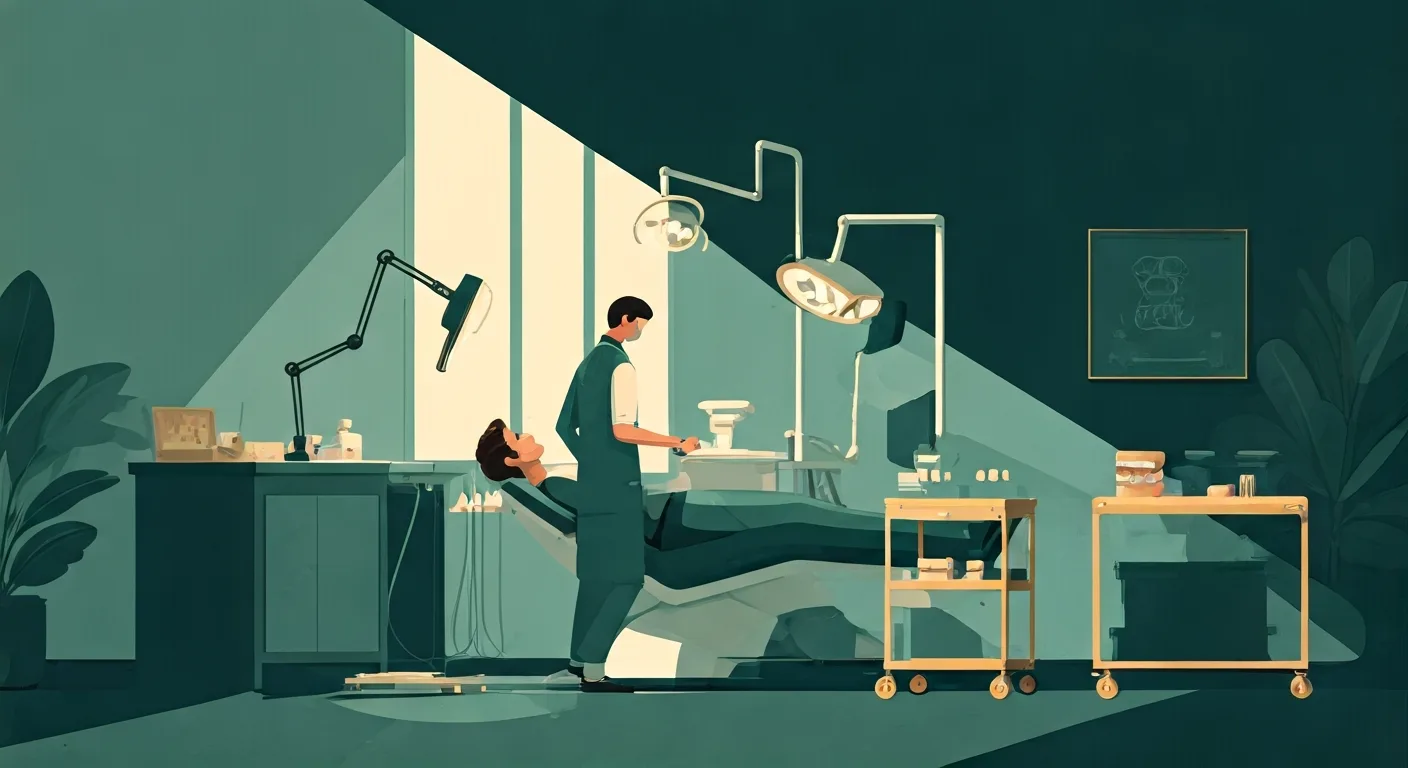
A prosthodontist is a dental specialist focused on the diagnosis, treatment planning, rehabilitation, and maintenance of the oral function, comfort, appearance, and health of patients with clinical conditions associated with missing or deficient teeth and/or oral and maxillofacial tissues. They design and fit artificial replacements for teeth and oral structures, working closely with patients to restore function and appearance using crowns, bridges, dentures, and dental implants.
Significantly improves patients' quality of life by restoring their ability to chew, speak, and smile confidently, addressing complex oral health challenges and enhancing overall well-being.
On the job
- Diagnose and develop comprehensive treatment plans for complex oral rehabilitation cases.
- Design and fabricate custom crowns, bridges, veneers, and complete/partial dentures.
- Perform dental implant procedures and restore implants with prostheses.
- Manage temporomandibular joint (TMJ) disorders and other oral pain conditions.
- Collaborate with other dental specialists and lab technicians to ensure optimal patient outcomes.
Tools & technology
Average salary
Job outlook
StableDemand is steady. This is an established role with consistent hiring across sectors.
Education & training
Requires a Doctor of Dental Surgery (DDS) or Doctor of Dental Medicine (DMD) degree, followed by a 3-year advanced specialty residency program in prosthodontics.
AI impact outlook
Note — this is our current view. AI is moving fast, so we revisit these ratings.
Show how this was assessed Hide the detail
Note — this is our current view. AI is moving fast, so we revisit these ratings.
Show how this was assessed Hide the detailWhy this role received this rating
Core task exposure
moderate
How much of the role’s important work could AI perform?
AI can significantly assist with the design phase of prosthetics from scan data, generating treatment plan options, and predictive analytics for prosthetic longevity.
End-to-end automation
low
Can AI complete the work without substantial human involvement?
While AI can design prosthetics, the crucial steps of diagnosis of complex oral conditions, aesthetic judgment, manual fitting, and patient-specific adjustments require human skill.
Adoption pressure
moderate
How likely are employers to introduce AI into this work?
There is moderate-high commercial pressure for AI-driven design tools and treatment planning software in dentistry to improve efficiency and precision in prosthetic work.
Human dependence
strong
How much does success depend on human judgement, relationships and accountability?
Success relies heavily on aesthetic judgment, understanding patient comfort and function, managing complex oral rehabilitation, and building patient trust through communication.
Protective — a higher rating lowers the overall score.
Role adaptability
strong
How easily can the role evolve as AI takes on more tasks?
The role can adapt by focusing on advanced diagnostics, complex case management, and overseeing AI-driven design, rather than manual fabrication tasks.
Shown for context — not part of the score.
What AI may take on
These are the parts of the role most likely to be automated or significantly accelerated.
- Generating optimal prosthetic designs (crowns, bridges) from intraoral scan data
- Proposing comprehensive treatment plans for complex oral rehabilitation cases
- Predicting the long-term success and potential complications of different prosthetics
- Analyzing occlusal forces and recommending adjustments for optimal bite
- Assisting with diagnosis of temporomandibular joint (TMJ) disorders
Where people remain essential
These parts continue to depend heavily on human judgement, relationships and accountability.
- Diagnosing complex oral and maxillofacial conditions requiring prosthetics
- Applying advanced aesthetic judgment to ensure natural-looking results
- Performing precise intraoral fitting, adjustments, and cementation of prostheses
- Managing patient expectations and ensuring comfort and function
- Treating temporomandibular joint (TMJ) disorders and other oral pain
- Collaborating with dental laboratories and other specialists
How the role may evolve
Design support grows. Patient-specific aesthetics and function endure.
Prosthodontists will increasingly leverage AI for efficient prosthetic design and treatment planning, allowing them to dedicate more time to advanced diagnostics, aesthetic refinement, and complex patient rehabilitation.
Strengthen your future fit
- Proficiency in using AI-powered CAD/CAM software for prosthetic design
- Advanced clinical judgment for complex diagnostic challenges
- Refined aesthetic sense and ability to communicate design nuances
- Strong patient communication and empathy for long-term care
- Interdisciplinary collaboration with dental technicians and specialists
- Assessment horizon
- 3–7 years
- Confidence
- High
- Last reviewed
- August 2026
- Methodology
- v1.0
This assessment reflects current AI capabilities and expected adoption patterns. Actual impacts will vary by industry, employer and the way each role is performed.
Career pathways
WHERE YOU COULD GO
CURRENT ROLE
Prosthodontist
Medical & Clinical
ADJACENT MOVES
STARTING POINTS
Who thrives here
Interest profile
realistic · RIS
Individuals who enjoy precise, hands-on work, solving complex medical puzzles, and interacting with patients to improve their oral health often excel in this specialized field.
Personality characteristics
Detail-oriented
Exhibits meticulous attention to minute details and precision, crucial for fabricating and fitting oral prostheses.
Patient-focused
Demonstrates empathy and excellent communication skills to understand patient needs and explain complex treatments.
Analytical Thinker
Applies scientific reasoning and problem-solving skills to diagnose conditions and develop effective treatment plans.
Steady Hands
Possesses exceptional manual dexterity and fine motor skills necessary for delicate dental procedures and craftsmanship.
Calm Under Pressure
Maintains composure and focus when performing intricate procedures or managing challenging patient cases.
Best for
- Individuals who thrive on solving complex anatomical and functional challenges in oral health.
- Professionals who enjoy combining scientific knowledge with artistic skill to create lasting solutions.
- Those committed to continuous learning and application of advanced dental technologies.
Watch out for
- Requires extensive and continuous education, demanding a lifelong commitment to learning.
- Can be physically demanding, requiring long periods of precise, fine motor skill work.
A week in the life
A representative working week for a Prosthodontist — where the deep work, meetings, and admin actually land.
Real people. Real results.
Thousands of people
can't be wrong.





Frequently asked questions about Prosthodontist roles
What does a Prosthodontist do?
A Prosthodontist a prosthodontist is a dental specialist focused on the diagnosis, treatment planning, rehabilitation, and maintenance of the oral function, comfort, appearance, and health of patients with clinical conditions associated with missing or deficient teeth and/or oral and maxillofacial tissues. They design and fit artificial replacements for teeth and oral structures, working closely with patients to restore function and appearance using crowns, bridges, dentures, and dental implants. Significantly improves patients' quality of life by restoring their ability to chew, speak, and smile confidently, addressing complex oral health challenges and enhancing overall well-being.
How much does a Prosthodontist earn?
A Prosthodontist earns a median of $200,000 per year in the US, typically ranging from $150,000 to $250,000.
What qualifications do you need to become a Prosthodontist?
To become a Prosthodontist, requires a Doctor of Dental Surgery (DDS) or Doctor of Dental Medicine (DMD) degree, followed by a 3-year advanced specialty residency program in prosthodontics. State dental license.
What personality suits a Prosthodontist?
Prosthodontist roles tend to suit people who are highly conscientious — precise, organised and strong on follow-through (Conscientiousness 88/100) and warm and cooperative — tuned in to the people around them (Agreeableness 70/100). The traits that matter most in the role are Detail-oriented, Patient-focused, Analytical Thinker and Steady Hands. Exhibits meticulous attention to minute details and precision, crucial for fabricating and fitting oral prostheses. On interests, Prosthodontist maps to a RIS Holland Code profile — individuals who enjoy precise, hands-on work, solving complex medical puzzles, and interacting with patients to improve their oral health often excel in this specialized field.
Who does a Prosthodontist role suit?
A Prosthodontist role is usually a strong fit for these reasons. Strong Realistic and Investigative alignment: the role demands high precision, technical skill, and complex problem-solving. High Agreeableness and Conscientiousness are crucial for patient care, ethical practice, and meticulous work. The work involves restoring function and appearance, offering a deep sense of patient impact and satisfaction.
What are the downsides of being a Prosthodontist?
Prosthodontist roles come with trade-offs worth weighing up. Requires extensive and continuous education, demanding a lifelong commitment to learning. Can be physically demanding, requiring long periods of precise, fine motor skill work.
What is the work environment like for a Prosthodontist?
Work as a Prosthodontist is mostly clinical-based with onsite arrangements common, semi-structured — a mix of set processes and self-directed work, a moderate pace and high exposure to clients or stakeholders. Around 18% of the week is focused deep work.
What skills do you need to be a Prosthodontist?
Core skills for a Prosthodontist include Advanced restorative dentistry, Dental implantology, Occlusion and TMJ analysis, Digital dentistry workflows, Patient communication and Treatment planning.
How do you become a Prosthodontist?
Common entry routes into Prosthodontist roles include General Dentist and Dental Resident.
What career progression is there for a Prosthodontist?
From a Prosthodontist role, common next steps include Clinical Director (Prosthodontics) and Private Practice Owner (Prosthodontics); lateral moves include Academic Educator (Prosthodontics).
What is the job outlook for Prosthodontist roles?
The outlook for Prosthodontist roles is currently rated stable. Demand is steady. This is an established role with consistent hiring across sectors.
Will AI replace Prosthodontist roles?
Traitstack rates automation risk for Prosthodontist roles at 37 out of 100, which is low. Automated design tools offer efficiency in creating prosthetics; critical diagnostic acumen, aesthetic judgment, and hands-on fitting remain central to the prosthodontist's expertise. AI is most likely to take on generating optimal prosthetic designs (crowns, bridges) from intraoral scan data, proposing comprehensive treatment plans for complex oral rehabilitation cases and predicting the long-term success and potential complications of different prosthetics. Diagnosing complex oral and maxillofacial conditions requiring prosthetics, applying advanced aesthetic judgment to ensure natural-looking results and performing precise intraoral fitting, adjustments, and cementation of prostheses stay with people. Design support grows. Patient-specific aesthetics and function endure. That score measures how much of the work could change, not the likelihood the job disappears. It is Traitstack's current view, revisited as AI capability moves.