Registered Nurse (Acute Care)
SOC 29-1141.00 · ESCO 2221 · OSCA 265432
Role snapshot
Overview
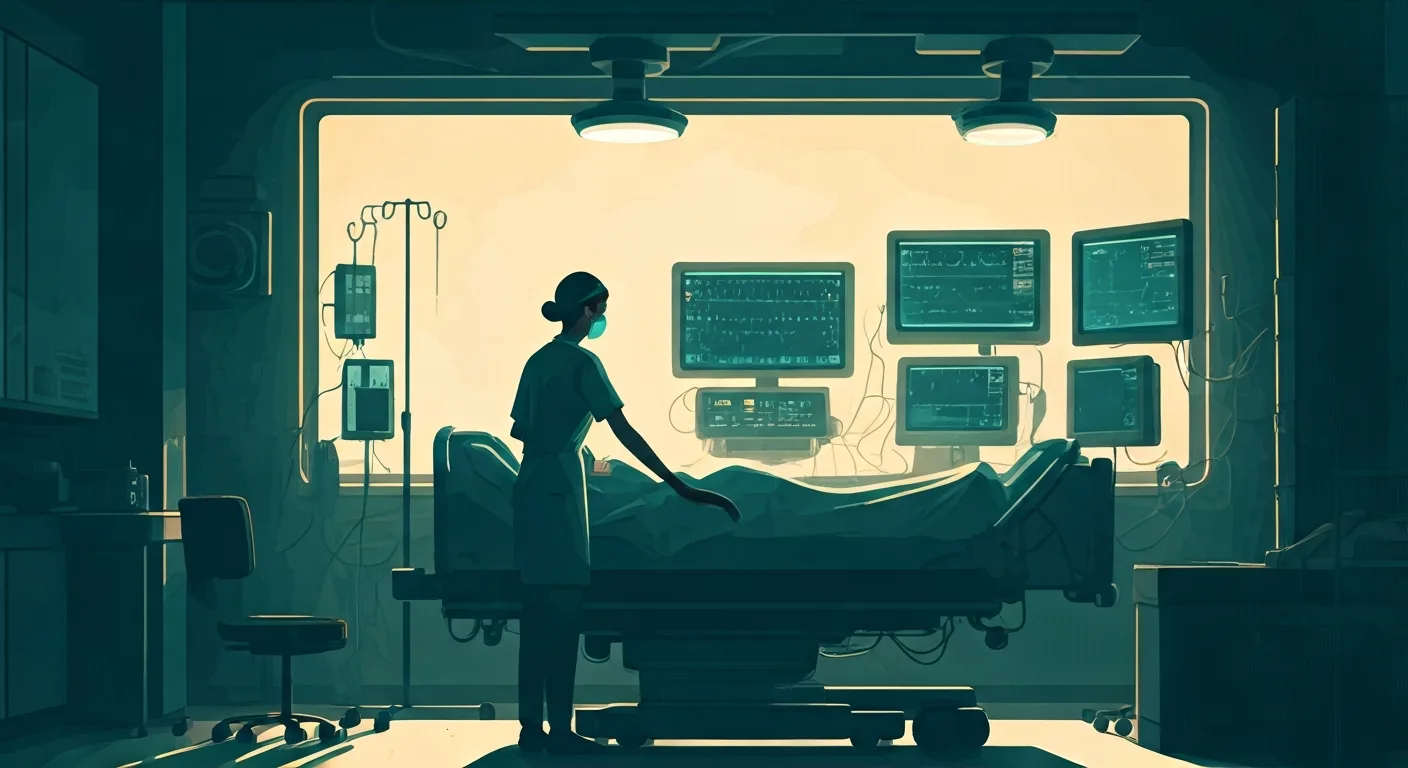
A Registered Nurse (Acute Care) provides round-the-clock nursing care to patients with serious, complex, or rapidly changing conditions in hospital settings. This critical role involves continuously monitoring vital signs, administering medications and treatments, responding swiftly to patient deterioration or emergencies, and coordinating care with physicians and other healthcare professionals to stabilize and improve patient outcomes.
Acute care nurses are essential for saving lives and improving health outcomes for critically ill or injured patients. They provide direct, compassionate care during patients' most vulnerable moments, ensuring safety, comfort, and effective treatment, thereby contributing significantly to patient recovery and hospital efficiency.
On the job
- Assess patient health status, interpret diagnostic tests, and develop individualized care plans
- Administer medications, intravenous fluids, and treatments as prescribed by physicians
- Continuously monitor vital signs, patient progress, and respond to changes in condition or medical emergencies
- Operate and maintain medical equipment such as ventilators, IV pumps, and cardiac monitors
- Educate patients and their families about health conditions, treatment plans, and post-discharge care
- Document patient care, observations, and interventions accurately in electronic health records
Tools & technology
Average salary
Job outlook
GrowingJob growth is expected to be above average over the next five years.
Education & training
Acute Care Registered Nurses typically require an Associate Degree in Nursing (ADN), a Bachelor of Science in Nursing (BSN), or a diploma from an approved nursing program, followed by passing the NCLEX-RN examination.
AI impact outlook
Note — this is our current view. AI is moving fast, so we revisit these ratings.
Show how this was assessed Hide the detail
Note — this is our current view. AI is moving fast, so we revisit these ratings.
Show how this was assessed Hide the detailWhy this role received this rating
Core task exposure
moderate
How much of the role’s important work could AI perform?
Charting and documentation are under heavy automation pressure, yet direct clinical assessment and intervention in rapidly changing conditions are not.
End-to-end automation
low
Can AI complete the work without substantial human involvement?
AI cannot fully automate critical bedside care, emergency response, or complex patient interactions, due to liability and the unpredictable nature of acute illness.
Adoption pressure
high
How likely are employers to introduce AI into this work?
High, as hospitals aim to increase efficiency and data accuracy by automating documentation and monitoring, which are often well-funded initiatives.
Human dependence
strong
How much does success depend on human judgement, relationships and accountability?
Success depends on critical clinical judgment, rapid response to emergencies, empathetic communication with patients, and ethical decision-making in high-stakes situations.
Protective — a higher rating lowers the overall score.
Role adaptability
moderate
How easily can the role evolve as AI takes on more tasks?
The role is highly adaptable to new medical technologies and treatment protocols, constantly evolving to meet the demands of complex patient care.
Shown for context — not part of the score.
What AI may take on
These are the parts of the role most likely to be automated or significantly accelerated.
- Automated charting and documentation of patient observations
- Continuous monitoring and analysis of vital signs for anomalies
- Administering medications via smart dispensing systems
- Predicting patient deterioration based on aggregated data
- Generating basic patient education materials
Where people remain essential
These parts continue to depend heavily on human judgement, relationships and accountability.
- Assessing complex patient health status through physical examination
- Interpreting nuanced diagnostic tests in context
- Developing individualized care plans based on critical thinking
- Responding swiftly and effectively to medical emergencies
- Operating and maintaining life-sustaining medical equipment
- Educating patients and families with compassion and clarity
- Collaborating with multidisciplinary teams for holistic care
How the role may evolve
The paperwork shrinks. The bedside hours do not.
Acute care nurses will spend less time on routine documentation, allowing them to intensify their focus on high-acuity clinical assessment, rapid intervention, and direct patient support during critical moments.
Strengthen your future fit
- Expertise in interpreting AI-generated patient data
- Advanced critical thinking and rapid decision-making
- Proficiency in complex medical equipment operation
- Enhanced communication and crisis management skills
- Patient advocacy and ethical care navigation
- Assessment horizon
- 3–7 years
- Confidence
- High
- Last reviewed
- August 2026
- Methodology
- v1.0
This assessment reflects current AI capabilities and expected adoption patterns. Actual impacts will vary by industry, employer and the way each role is performed.
Career pathways
WHERE YOU COULD GO
CURRENT ROLE
Registered Nurse (Acute Care)
Nursing & Midwifery
ADJACENT MOVES
STARTING POINTS
Who thrives here
Interest profile
social · SCI
People who are drawn to helping others in a direct, hands-on way, enjoy structured environments requiring precise attention to detail, and are motivated by understanding complex medical conditions tend to thrive as acute care nurses.
Personality characteristics
Detail-oriented
Meticulous in following protocols, administering medication, and documenting patient care to ensure safety and accuracy.
Compassionate
Demonstrates empathy and provides supportive care to patients and their families during vulnerable and often critical times.
Problem-solver
Enjoys analyzing complex patient data, identifying issues, and determining the best course of action under pressure.
Resilient
Able to handle high-stress situations, patient deterioration, and emotional demands without excessive personal distress.
Adaptive
Willing to consider new treatment protocols or adapt to rapidly changing patient needs and hospital environments.
Best for
- Individuals who are calm under pressure and can make quick, sound decisions in emergencies.
- Those who are highly organized, detail-oriented, and committed to following precise medical procedures.
- People with a strong desire to provide direct care and support to patients during their most challenging health moments.
Watch out for
- The role involves regular weekend work and potentially rotating shifts, which can impact personal life.
- High-stress situations and exposure to critical illness or death require significant emotional resilience.
- The fast-paced environment and constant need for critical decision-making can be demanding.
A week in the life
A representative working week for a Registered Nurse (Acute Care) — where the deep work, meetings, and admin actually land.
Real people. Real results.
Thousands of people
can't be wrong.


Frequently asked questions about Registered Nurse (Acute Care) roles
What does a Registered Nurse (Acute Care) do?
A Registered Nurse (Acute Care) a Registered Nurse (Acute Care) provides round-the-clock nursing care to patients with serious, complex, or rapidly changing conditions in hospital settings. This critical role involves continuously monitoring vital signs, administering medications and treatments, responding swiftly to patient deterioration or emergencies, and coordinating care with physicians and other healthcare professionals to stabilize and improve patient outcomes. Acute care nurses are essential for saving lives and improving health outcomes for critically ill or injured patients. They provide direct, compassionate care during patients' most vulnerable moments, ensuring safety, comfort, and effective treatment, thereby contributing significantly to patient recovery and hospital efficiency.
How much does a Registered Nurse (Acute Care) earn?
A Registered Nurse (Acute Care) earns a median of $85,000 per year in the US, typically ranging from $65,000 to $105,000.
What qualifications do you need to become a Registered Nurse (Acute Care)?
To become a Registered Nurse (Acute Care), acute Care Registered Nurses typically require an Associate Degree in Nursing (ADN), a Bachelor of Science in Nursing (BSN), or a diploma from an approved nursing program, followed by passing the NCLEX-RN examination. Registered Nurse (RN) license in the state of practice.
What personality suits a Registered Nurse (Acute Care)?
Registered Nurse (Acute Care) roles tend to suit people who are highly conscientious — precise, organised and strong on follow-through (Conscientiousness 84/100) and warm and cooperative — tuned in to the people around them (Agreeableness 78/100). The traits that matter most in the role are Detail-oriented, Compassionate, Problem-solver and Resilient. Meticulous in following protocols, administering medication, and documenting patient care to ensure safety and accuracy. On interests, Registered Nurse (Acute Care) maps to a SCI Holland Code profile — people who are drawn to helping others in a direct, hands-on way, enjoy structured environments requiring precise attention to detail, and are motivated by understanding complex medical conditions tend to thrive as acute care nurses.
Who does a Registered Nurse (Acute Care) role suit?
A Registered Nurse (Acute Care) role is usually a strong fit for these reasons. High Social (S) affinity: the role is centered around directly helping and caring for others. Strong Conventional (C) and Investigative (I) traits: requires adherence to strict protocols while also demanding critical analysis of complex medical situations. The fast-paced, highly structured clinical environment suits individuals who thrive under clear guidelines and immediate action.
What are the downsides of being a Registered Nurse (Acute Care)?
Registered Nurse (Acute Care) roles come with trade-offs worth weighing up. The role involves regular weekend work and potentially rotating shifts, which can impact personal life. High-stress situations and exposure to critical illness or death require significant emotional resilience. The fast-paced environment and constant need for critical decision-making can be demanding.
What is the work environment like for a Registered Nurse (Acute Care)?
Work as a Registered Nurse (Acute Care) is mostly clinical-based with onsite arrangements common, highly structured, with set processes and deadlines and high exposure to clients or stakeholders. Around 55% of the week is focused deep work.
What skills do you need to be a Registered Nurse (Acute Care)?
Core skills for a Registered Nurse (Acute Care) include Critical thinking and clinical judgment, Patient assessment and monitoring, Medication administration and safety, Emergency response and crisis management, Interdisciplinary team collaboration and Electronic health record documentation.
How do you become a Registered Nurse (Acute Care)?
Common entry routes into Registered Nurse (Acute Care) roles include Graduate Registered Nurse, Registered Nurse and Licensed Practical Nurse.
What career progression is there for a Registered Nurse (Acute Care)?
From a Registered Nurse (Acute Care) role, common next steps include Clinical Nurse Specialist (CNS), Nurse Practitioner (NP) and Nurse Manager; lateral moves include Emergency Room Nurse.
What is the job outlook for Registered Nurse (Acute Care) roles?
The outlook for Registered Nurse (Acute Care) roles is currently rated growing. Job growth is expected to be above average over the next five years.
Will AI replace Registered Nurse (Acute Care) roles?
Traitstack rates automation risk for Registered Nurse (Acute Care) roles at 35 out of 100, which is low. Documentation and vital sign monitoring are primary targets for AI, shifting human focus towards critical clinical judgment, patient advocacy, and hands-on care in emergencies. AI is most likely to take on automated charting and documentation of patient observations, continuous monitoring and analysis of vital signs for anomalies and administering medications via smart dispensing systems. Assessing complex patient health status through physical examination, interpreting nuanced diagnostic tests in context and developing individualized care plans based on critical thinking stay with people. The paperwork shrinks. The bedside hours do not. That score measures how much of the work could change, not the likelihood the job disappears. It is Traitstack's current view, revisited as AI capability moves.