Clinical Nurse Specialist
SOC 29-1141.04 · ESCO 2221 · OSCA 263131
Role snapshot
Overview
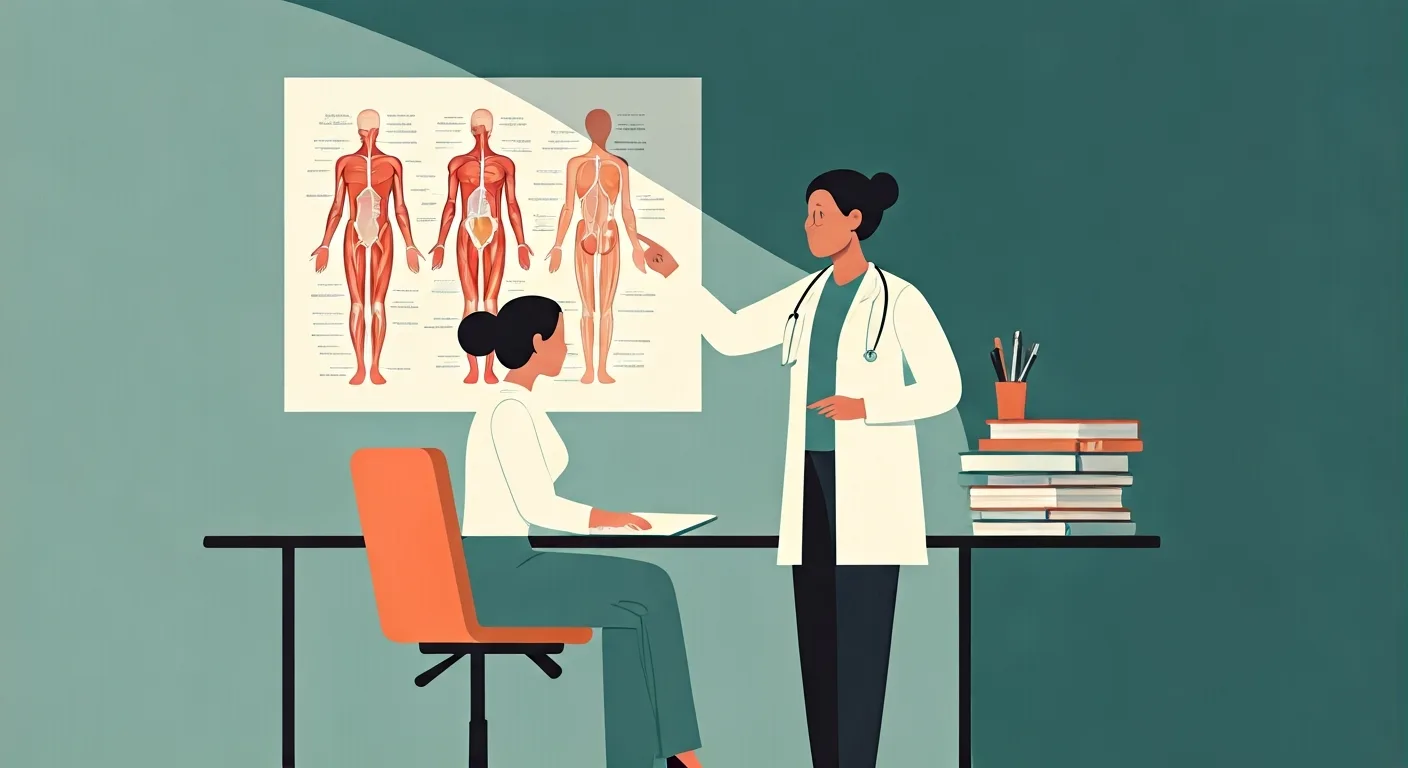
Provides advanced nursing care in a clinical specialty, mentors ward staff, and develops evidence-based protocols to improve patient outcomes. Conducts comprehensive health assessments, diagnoses and manages acute and chronic conditions, prescribes treatments within scope, and leads quality-improvement initiatives to enhance patient care delivery.
Significantly improves patient outcomes by integrating advanced clinical expertise, evidence-based practices, and leadership to optimize care delivery within specialized areas of nursing.
On the job
- Conduct advanced health assessments, diagnose, and manage complex patient conditions within a specialty area.
- Develop and implement evidence-based practice guidelines and protocols to enhance patient care.
- Provide clinical leadership, mentorship, and education to nursing staff and interdisciplinary teams.
- Lead quality improvement projects and participate in research to advance clinical practice and patient safety.
- Consult with healthcare teams on complex patient cases, care planning, and resource utilization.
Tools & technology
Average salary
Job outlook
GrowingJob growth is expected to be above average over the next five years.
Education & training
Master's degree in Nursing (MSN) with a specialization in a clinical area, often leading to advanced practice licensure.
AI impact outlook
Note — this is our current view. AI is moving fast, so we revisit these ratings.
Show how this was assessed Hide the detail
Note — this is our current view. AI is moving fast, so we revisit these ratings.
Show how this was assessed Hide the detailWhy this role received this rating
Core task exposure
moderate
How much of the role’s important work could AI perform?
AI can assist in synthesizing evidence for protocol development and analyzing health assessment data, exposing these aspects of the core work.
End-to-end automation
low
Can AI complete the work without substantial human involvement?
The role's emphasis on advanced clinical judgment, complex patient management, and mentorship prevents AI from completing entire workflows unaided.
Adoption pressure
moderate
How likely are employers to introduce AI into this work?
While AI tools can support clinical decisions, the high-stakes nature of advanced practice nursing and strict regulations will moderate adoption speed.
Human dependence
strong
How much does success depend on human judgement, relationships and accountability?
Success is heavily dependent on expert clinical judgment, building patient trust, providing mentorship, and accountability for complex patient outcomes.
Protective — a higher rating lowers the overall score.
Role adaptability
strong
How easily can the role evolve as AI takes on more tasks?
As an advanced practice role focused on leadership and quality improvement, it readily adapts to new medical knowledge and evolving patient needs.
Shown for context — not part of the score.
What AI may take on
These are the parts of the role most likely to be automated or significantly accelerated.
- Synthesizing evidence for developing practice guidelines
- Analyzing comprehensive health assessment data for patterns
- Identifying patients who fit specific clinical trial criteria
- Drafting initial quality improvement reports
- Providing quick access to medical reference information
Where people remain essential
These parts continue to depend heavily on human judgement, relationships and accountability.
- Diagnosing complex patient conditions with nuanced judgment
- Providing clinical leadership and mentorship to nursing staff
- Consulting with healthcare teams on intricate patient cases
- Leading and implementing quality improvement projects
- Communicating sensitive diagnoses and treatment plans to patients
- Adapting protocols to unique patient circumstances
- Accountability for patient care decisions
How the role may evolve
Enhanced clinical decision support, amplified mentorship.
The CNS will leverage AI for rapid information synthesis, allowing more time for complex patient management, interdisciplinary collaboration, and the critical mentorship of junior staff.
Strengthen your future fit
- Advanced critical thinking and diagnostic reasoning
- Leadership and interprofessional collaboration skills
- Proficiency in evidence-based practice implementation
- Mentorship and education of clinical staff
- Ethical decision-making in complex healthcare scenarios
- Assessment horizon
- 3–7 years
- Confidence
- High
- Last reviewed
- August 2026
- Methodology
- v1.0
This assessment reflects current AI capabilities and expected adoption patterns. Actual impacts will vary by industry, employer and the way each role is performed.
Career pathways
WHERE YOU COULD GO
CURRENT ROLE
Clinical Nurse Specialist
Nursing & Midwifery
ADJACENT MOVES
STARTING POINTS
Who thrives here
Interest profile
social · SIC
People who are driven by helping others, enjoy investigating complex health problems, and appreciate structured, evidence-based approaches to care often thrive in this role.
Personality characteristics
Curious learner
Continuously seeks new knowledge and evidence to improve clinical practice and patient outcomes.
Conscientious
Exhibits meticulous attention to detail in patient assessment, care planning, and protocol adherence.
Influential
Effectively communicates and persuades colleagues and stakeholders to adopt best practices and quality initiatives.
Compassionate
Demonstrates deep empathy and a strong commitment to the well-being of patients and their families.
Resilient
Maintains composure and effectiveness in high-stress clinical environments and when facing challenging patient situations.
Best for
- Nurses seeking to specialize, lead, and advance clinical practice through evidence and education.
- Individuals who thrive in complex clinical environments and enjoy mentoring others.
- Professionals committed to continuous quality improvement in patient care.
Watch out for
- The work environment can be fast-paced and emotionally demanding, requiring high resilience.
- Requires continuous learning and adaptation to new evidence-based practices and technologies.
A week in the life
A representative working week for a Clinical Nurse Specialist — where the deep work, meetings, and admin actually land.
Real people. Real results.
Thousands of people
can't be wrong.




Frequently asked questions about Clinical Nurse Specialist roles
What does a Clinical Nurse Specialist do?
A Clinical Nurse Specialist provides advanced nursing care in a clinical specialty, mentors ward staff, and develops evidence-based protocols to improve patient outcomes. Conducts comprehensive health assessments, diagnoses and manages acute and chronic conditions, prescribes treatments within scope, and leads quality-improvement initiatives to enhance patient care delivery. Significantly improves patient outcomes by integrating advanced clinical expertise, evidence-based practices, and leadership to optimize care delivery within specialized areas of nursing.
How much does a Clinical Nurse Specialist earn?
A Clinical Nurse Specialist earns a median of $110,000 per year in the US, typically ranging from $85,000 to $145,000.
What qualifications do you need to become a Clinical Nurse Specialist?
To become a Clinical Nurse Specialist, master's degree in Nursing (MSN) with a specialization in a clinical area, often leading to advanced practice licensure. Registered Nurse (RN) license.
What personality suits a Clinical Nurse Specialist?
Clinical Nurse Specialist roles tend to suit people who are highly conscientious — precise, organised and strong on follow-through (Conscientiousness 85/100) and warm and cooperative — tuned in to the people around them (Agreeableness 78/100). The traits that matter most in the role are Curious learner, Conscientious, Influential and Compassionate. Continuously seeks new knowledge and evidence to improve clinical practice and patient outcomes. On interests, Clinical Nurse Specialist maps to a SIC Holland Code profile — people who are driven by helping others, enjoy investigating complex health problems, and appreciate structured, evidence-based approaches to care often thrive in this role.
Who does a Clinical Nurse Specialist role suit?
A Clinical Nurse Specialist role is usually a strong fit for these reasons. Strong Social and Investigative interests align with patient care, mentorship, and clinical problem-solving. The role requires high Conscientiousness and Agreeableness for meticulous care and collaborative team-based work. Opportunities to lead quality improvement and educate staff satisfy an enterprising drive.
What are the downsides of being a Clinical Nurse Specialist?
Clinical Nurse Specialist roles come with trade-offs worth weighing up. The work environment can be fast-paced and emotionally demanding, requiring high resilience. Requires continuous learning and adaptation to new evidence-based practices and technologies.
What is the work environment like for a Clinical Nurse Specialist?
Work as a Clinical Nurse Specialist is mostly clinical-based with onsite arrangements common, semi-structured — a mix of set processes and self-directed work and high exposure to clients or stakeholders. Around 50% of the week is focused deep work.
What skills do you need to be a Clinical Nurse Specialist?
Core skills for a Clinical Nurse Specialist include Advanced clinical assessment, Diagnostic reasoning, Pharmacology and therapeutics, Evidence-based practice, Clinical leadership and Patient education.
How do you become a Clinical Nurse Specialist?
Common entry routes into Clinical Nurse Specialist roles include Registered Nurse, Staff Nurse and Specialty Nurse.
What career progression is there for a Clinical Nurse Specialist?
From a Clinical Nurse Specialist role, common next steps include Nurse Manager and Director of Nursing / Midwifery; lateral moves include Nurse Practitioner (NP) and Clinical Educator.
What is the job outlook for Clinical Nurse Specialist roles?
The outlook for Clinical Nurse Specialist roles is currently rated growing. Job growth is expected to be above average over the next five years.
Will AI replace Clinical Nurse Specialist roles?
Traitstack rates automation risk for Clinical Nurse Specialist roles at 40 out of 100, which is low. While AI can aid in protocol development and data synthesis for diagnosis, advanced clinical judgment and mentorship remain firmly within human purview. AI is most likely to take on synthesizing evidence for developing practice guidelines, analyzing comprehensive health assessment data for patterns and identifying patients who fit specific clinical trial criteria. Diagnosing complex patient conditions with nuanced judgment, providing clinical leadership and mentorship to nursing staff and consulting with healthcare teams on intricate patient cases stay with people. Enhanced clinical decision support, amplified mentorship. That score measures how much of the work could change, not the likelihood the job disappears. It is Traitstack's current view, revisited as AI capability moves.