Radiologist
SOC 29-1224.00 · ESCO 2212 · OSCA 264937
Role snapshot
Overview
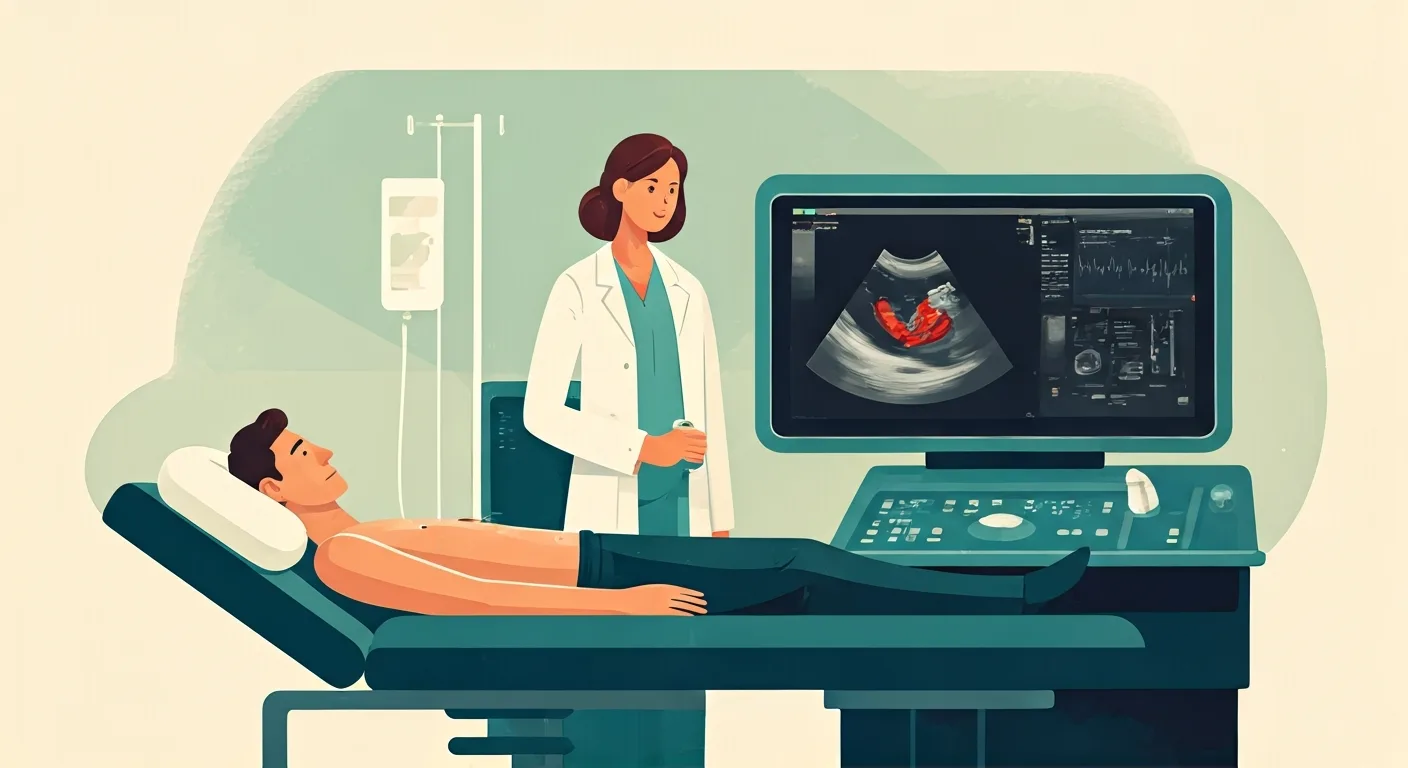
Interprets medical images from X-rays, CT scans, MRIs, and ultrasounds to diagnose disease and injury. Dictates detailed reports for referring clinicians, performs image-guided procedures, and consults on complex or urgent cases. Radiologists play a critical role in patient diagnosis and treatment planning across a wide range of medical conditions.
Provides crucial diagnostic information that guides patient treatment, prevents unnecessary surgeries, and identifies diseases early, significantly impacting patient outcomes and healthcare efficiency.
On the job
- Analyze and interpret diagnostic images (X-rays, CT, MRI, ultrasound, PET) to identify abnormalities.
- Dictate comprehensive radiology reports for referring physicians, outlining findings, impressions, and recommendations.
- Perform image-guided procedures such as biopsies, drainages, and vascular access.
- Consult with referring clinicians on complex cases, discussing optimal imaging protocols and diagnostic pathways.
- Participate in multidisciplinary team meetings to present imaging findings and contribute to treatment plans.
Tools & technology
Average salary
Job outlook
GrowingJob growth is expected to be above average over the next five years.
Education & training
Completion of medical school (MD or DO), followed by a 4-5 year residency in diagnostic radiology, and often a 1-2 year fellowship in a subspecialty.
AI impact outlook
Note — this is our current view. AI is moving fast, so we revisit these ratings.
Show how this was assessed Hide the detail
Note — this is our current view. AI is moving fast, so we revisit these ratings.
Show how this was assessed Hide the detailWhy this role received this rating
Core task exposure
high
How much of the role’s important work could AI perform?
A significant portion of image interpretation, pattern recognition, and initial diagnosis can be performed by AI models today or soon.
End-to-end automation
high
Can AI complete the work without substantial human involvement?
While AI can offer preliminary reads and draft reports, complex cases, interventional procedures, and final diagnostic accountability still require human oversight.
Adoption pressure
high
How likely are employers to introduce AI into this work?
The potential for improved efficiency, diagnostic speed, and cost reduction drives high employer interest, despite regulatory and safety considerations in medicine.
Human dependence
strong
How much does success depend on human judgement, relationships and accountability?
Success relies heavily on nuanced clinical judgment, complex patient communication (indirectly), procedural skill, and ultimate accountability for patient outcomes.
Protective — a higher rating lowers the overall score.
Role adaptability
strong
How easily can the role evolve as AI takes on more tasks?
Radiologists can pivot towards more complex cases, interventional procedures, or consultation, leveraging their deep medical expertise beyond basic image reading.
Shown for context — not part of the score.
What AI may take on
These are the parts of the role most likely to be automated or significantly accelerated.
- Analyze and interpret diagnostic images for common abnormalities
- Draft initial radiology reports based on image findings
- Prioritize studies based on AI-detected critical findings
- Perform quantitative analysis of imaging biomarkers
Where people remain essential
These parts continue to depend heavily on human judgement, relationships and accountability.
- Perform image-guided biopsies, drainages, and vascular access procedures
- Consult with referring clinicians on optimal imaging strategies and complex cases
- Participate in multidisciplinary team meetings to integrate imaging into treatment plans
- Provide final diagnostic sign-off and assume legal accountability for patient outcomes
- Manage unexpected complications during interventional procedures
- Educate and mentor junior residents and fellows
How the role may evolve
From primary image interpreter to diagnostic and interventional consultant.
Radiologists will increasingly oversee AI-generated initial reads, focusing their expertise on advanced procedures, complex case management, and direct clinical collaboration.
Strengthen your future fit
- Mastering AI tools for image analysis and report generation
- Developing expertise in interventional radiology procedures
- Enhancing consultative and communication skills with clinicians
- Focusing on complex, ambiguous cases beyond AI capabilities
- Contributing to AI model validation and development
- Assessment horizon
- 3–7 years
- Confidence
- High
- Last reviewed
- August 2026
- Methodology
- v1.0
This assessment reflects current AI capabilities and expected adoption patterns. Actual impacts will vary by industry, employer and the way each role is performed.
Career pathways
WHERE YOU COULD GO
CURRENT ROLE
Radiologist
Medical & Clinical
ADJACENT MOVES
STARTING POINTS
Who thrives here
Interest profile
investigative · IRC
Individuals who thrive on intellectual challenge, methodical problem-solving, and precise application of scientific principles to diagnose medical conditions are well-suited for this role.
Personality characteristics
Curious
Continuously seeks to understand complex medical conditions and new imaging technologies.
Meticulous
Exhibits extreme precision and attention to detail in image interpretation and procedural work.
Analytical
Applies systematic and logical reasoning to interpret complex diagnostic images.
Composed
Maintains calm and objective judgment under pressure, especially during urgent diagnoses or procedures.
Collaborative
Works effectively with referring clinicians, technologists, and other medical staff for optimal patient care.
Best for
- Individuals passionate about scientific diagnosis and medical problem-solving.
- Those who excel in visual pattern recognition and detailed analytical work.
- Professionals who seek a critical role in patient care without direct, prolonged patient contact.
Watch out for
- High-pressure environment with constant demand for accurate and timely diagnoses.
- Requires long and demanding training, including medical school, residency, and often fellowship.
- Occasional weekend and on-call duties are common.
A week in the life
A representative working week for a Radiologist — where the deep work, meetings, and admin actually land.
Real people. Real results.
Thousands of people
can't be wrong.


Frequently asked questions about Radiologist roles
What does a Radiologist do?
A Radiologist interprets medical images from X-rays, CT scans, MRIs, and ultrasounds to diagnose disease and injury. Dictates detailed reports for referring clinicians, performs image-guided procedures, and consults on complex or urgent cases. Radiologists play a critical role in patient diagnosis and treatment planning across a wide range of medical conditions. Provides crucial diagnostic information that guides patient treatment, prevents unnecessary surgeries, and identifies diseases early, significantly impacting patient outcomes and healthcare efficiency.
How much does a Radiologist earn?
A Radiologist earns a median of $450,000 per year in the US, typically ranging from $350,000 to $600,000.
What qualifications do you need to become a Radiologist?
To become a Radiologist, completion of medical school (MD or DO), followed by a 4-5 year residency in diagnostic radiology, and often a 1-2 year fellowship in a subspecialty. State medical license.
What personality suits a Radiologist?
Radiologist roles tend to suit people who are highly conscientious — precise, organised and strong on follow-through (Conscientiousness 88/100) and open and curious — drawn to variety, ideas and new approaches (Openness 68/100). The traits that matter most in the role are Curious, Meticulous, Analytical and Composed. Continuously seeks to understand complex medical conditions and new imaging technologies. On interests, Radiologist maps to an IRC Holland Code profile — individuals who thrive on intellectual challenge, methodical problem-solving, and precise application of scientific principles to diagnose medical conditions are well-suited for this role.
Who does a Radiologist role suit?
A Radiologist role is usually a strong fit for these reasons. High Investigative affinity: the role demands deep analytical skills and continuous learning in a scientific field. Strong Conscientiousness: success hinges on meticulous attention to detail and systematic diagnostic processes. Direct impact on patient outcomes through precise diagnosis and intervention.
What are the downsides of being a Radiologist?
Radiologist roles come with trade-offs worth weighing up. High-pressure environment with constant demand for accurate and timely diagnoses. Requires long and demanding training, including medical school, residency, and often fellowship. Occasional weekend and on-call duties are common.
What is the work environment like for a Radiologist?
Work as a Radiologist is mostly clinical-based with onsite arrangements common, semi-structured — a mix of set processes and self-directed work and high exposure to clients or stakeholders. Around 61% of the week is focused deep work.
What skills do you need to be a Radiologist?
Core skills for a Radiologist include Medical image interpretation, Diagnostic reasoning, Procedural skills (biopsy, drainage), Anatomy and pathology knowledge, Clinical consultation and Report dictation.
How do you become a Radiologist?
Common entry routes into Radiologist roles include Medical Student and Medical Resident.
What career progression is there for a Radiologist?
From a Radiologist role, common next steps include Chief of Radiology, Department Director and Medical Director; lateral moves include Teleradiologist and Medical Physicist.
What is the job outlook for Radiologist roles?
The outlook for Radiologist roles is currently rated growing. Job growth is expected to be above average over the next five years.
Will AI replace Radiologist roles?
Traitstack rates automation risk for Radiologist roles at 68 out of 100, which is strong. AI can significantly assist with image interpretation and preliminary diagnostics; however, complex procedural work, clinical consultation, and ultimate diagnostic responsibility remain human-led. AI is most likely to take on analyze and interpret diagnostic images for common abnormalities, draft initial radiology reports based on image findings and prioritize studies based on ai-detected critical findings. Perform image-guided biopsies, drainages, and vascular access procedures, consult with referring clinicians on optimal imaging strategies and complex cases and participate in multidisciplinary team meetings to integrate imaging into treatment plans stay with people. From primary image interpreter to diagnostic and interventional consultant. That score measures how much of the work could change, not the likelihood the job disappears. It is Traitstack's current view, revisited as AI capability moves.