Radiation Therapist
SOC 29-1124.00 · ESCO 3211 · OSCA 263132
Role snapshot
Overview
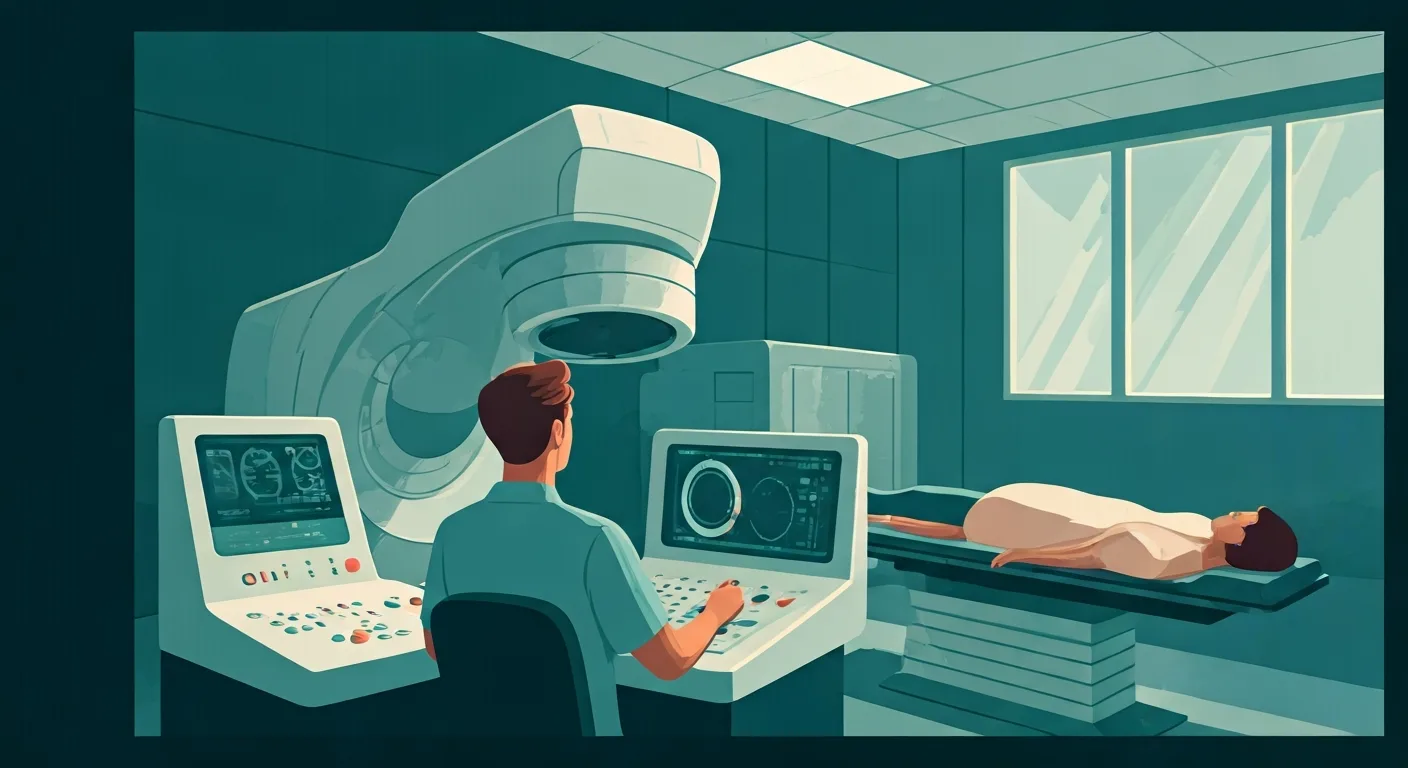
Operates specialised equipment to deliver targeted radiation treatments to cancer patients, carefully positioning patients and calibrating doses according to oncologists' plans. This role involves direct patient care, technical precision, and adherence to strict safety protocols to ensure effective and safe therapeutic outcomes.
Delivers life-saving radiation treatments that target and destroy cancerous cells, significantly contributing to patient recovery and improved quality of life for individuals battling cancer.
On the job
- Administer radiation treatments as prescribed by radiation oncologists.
- Accurately position patients for treatment, using immobilisation devices and imaging technology.
- Monitor patients closely during treatment for adverse reactions and provide emotional support.
- Maintain detailed and accurate treatment records and equipment logs.
- Perform daily quality assurance checks on radiation therapy equipment to ensure safety and functionality.
Tools & technology
Average salary
Job outlook
GrowingJob growth is expected to be above average over the next five years.
Education & training
Associate's or Bachelor's degree in radiation therapy, or a certificate from an accredited program, is typically required.
AI impact outlook
Note — this is our current view. AI is moving fast, so we revisit these ratings.
Show how this was assessed Hide the detail
Note — this is our current view. AI is moving fast, so we revisit these ratings.
Show how this was assessed Hide the detailWhy this role received this rating
Core task exposure
high
How much of the role’s important work could AI perform?
Patient positioning, dose calibration, and quality assurance checks are highly technical tasks with significant automation potential.
End-to-end automation
low
Can AI complete the work without substantial human involvement?
While many technical steps can be automated, the direct patient interaction and critical safety oversight require a human in the loop.
Adoption pressure
high
How likely are employers to introduce AI into this work?
High demand for precision, safety, and efficiency in cancer treatment drives significant investment in automation technologies.
Human dependence
strong
How much does success depend on human judgement, relationships and accountability?
Success depends on patient comfort, monitoring for immediate adverse reactions, and ensuring strict safety protocols are followed.
Protective — a higher rating lowers the overall score.
Role adaptability
moderate
How easily can the role evolve as AI takes on more tasks?
The role can shift towards supervising automated systems, troubleshooting complex equipment, and providing enhanced patient support and education.
Shown for context — not part of the score.
What AI may take on
These are the parts of the role most likely to be automated or significantly accelerated.
- Automated patient positioning using imaging guidance
- Real-time dose calculation and calibration verification
- Performing daily quality assurance checks on equipment
- Monitoring treatment delivery parameters for deviations
- Maintaining detailed treatment records and equipment logs
Where people remain essential
These parts continue to depend heavily on human judgement, relationships and accountability.
- Providing emotional support and comfort to cancer patients
- Monitoring patients closely for acute adverse reactions during treatment
- Adapting positioning for uncooperative or medically fragile patients
- Making critical decisions during equipment malfunctions
- Communicating complex treatment information clearly to patients
- Ensuring strict adherence to safety protocols and radiation hygiene
How the role may evolve
Automation in precision. Human focus on care.
Radiation therapists will transition from manual execution to supervising AI-driven precision systems, prioritizing patient well-being, safety oversight, and complex problem-solving.
Strengthen your future fit
- Expertise in operating and troubleshooting advanced LINAC systems
- Strong patient empathy and psychological support skills
- Ability to interpret and respond to AI-driven alerts
- Meticulous adherence to safety and quality assurance protocols
- Collaboration with oncologists and dosimetrists
- Assessment horizon
- 3–7 years
- Confidence
- Medium
- Last reviewed
- August 2026
- Methodology
- v1.0
This assessment reflects current AI capabilities and expected adoption patterns. Actual impacts will vary by industry, employer and the way each role is performed.
Career pathways
WHERE YOU COULD GO
CURRENT ROLE
Radiation Therapist
Allied Health
ADJACENT MOVES
STARTING POINTS
Who thrives here
Interest profile
realistic · RSI
Individuals who enjoy operating precise technical equipment, providing direct care and support to others, and applying scientific knowledge to solve practical problems often find this role fulfilling.
Personality characteristics
Conscientious
Highly attentive to detail and committed to following precise protocols for patient safety and treatment accuracy.
Empathetic
Connects with patients, providing comfort and understanding during a challenging health journey.
Composed
Maintains calm and focus under pressure, especially when dealing with complex equipment or anxious patients.
Methodical
Approaches tasks systematically, ensuring all steps are followed for consistent and effective treatment delivery.
Team-oriented
Collaborates effectively with oncologists, nurses, and other medical staff to ensure integrated patient care.
Best for
- Individuals seeking a career that combines advanced technical skills with compassionate patient interaction.
- Those who thrive in a highly structured, precise, and safety-critical medical environment.
- People motivated by making a tangible difference in the lives of cancer patients.
Watch out for
- The work environment can be emotionally demanding due to constant interaction with critically ill patients.
- Requires continuous vigilance and adherence to strict safety protocols, leaving little room for error.
- Occasional weekend or on-call shifts may be required in some clinical settings.
A week in the life
A representative working week for a Radiation Therapist — where the deep work, meetings, and admin actually land.
Real people. Real results.
Thousands of people
can't be wrong.




Frequently asked questions about Radiation Therapist roles
What does a Radiation Therapist do?
A Radiation Therapist operates specialised equipment to deliver targeted radiation treatments to cancer patients, carefully positioning patients and calibrating doses according to oncologists' plans. This role involves direct patient care, technical precision, and adherence to strict safety protocols to ensure effective and safe therapeutic outcomes. Delivers life-saving radiation treatments that target and destroy cancerous cells, significantly contributing to patient recovery and improved quality of life for individuals battling cancer.
How much does a Radiation Therapist earn?
A Radiation Therapist earns a median of $90,000 per year in the US, typically ranging from $70,000 to $115,000.
What qualifications do you need to become a Radiation Therapist?
To become a Radiation Therapist, associate's or Bachelor's degree in radiation therapy, or a certificate from an accredited program, is typically required. State licensure or certification.
What personality suits a Radiation Therapist?
Radiation Therapist roles tend to suit people who are highly conscientious — precise, organised and strong on follow-through (Conscientiousness 85/100) and warm and cooperative — tuned in to the people around them (Agreeableness 78/100). The traits that matter most in the role are Conscientious, Empathetic, Composed and Methodical. Highly attentive to detail and committed to following precise protocols for patient safety and treatment accuracy. On interests, Radiation Therapist maps to a RSI Holland Code profile — individuals who enjoy operating precise technical equipment, providing direct care and support to others, and applying scientific knowledge to solve practical problems often find this role fulfilling.
Who does a Radiation Therapist role suit?
A Radiation Therapist role is usually a strong fit for these reasons. Strong Realistic and Social inclinations, combining technical precision with direct patient care. The role involves operating advanced medical technology, appealing to those with Investigative interests. High patient interaction and multidisciplinary team collaboration align well with supportive personalities.
What are the downsides of being a Radiation Therapist?
Radiation Therapist roles come with trade-offs worth weighing up. The work environment can be emotionally demanding due to constant interaction with critically ill patients. Requires continuous vigilance and adherence to strict safety protocols, leaving little room for error. Occasional weekend or on-call shifts may be required in some clinical settings.
What is the work environment like for a Radiation Therapist?
Work as a Radiation Therapist is mostly clinical-based with onsite arrangements common, highly structured, with set processes and deadlines and high exposure to clients or stakeholders.
What skills do you need to be a Radiation Therapist?
Core skills for a Radiation Therapist include Patient positioning and immobilisation, Radiation dose calculation and verification, Oncology treatment protocols, Radiation safety and protection, Patient communication and empathy and Medical equipment operation and calibration.
How do you become a Radiation Therapist?
Common entry routes into Radiation Therapist roles include Radiation Therapy Student and Radiologic Technologist.
What career progression is there for a Radiation Therapist?
From a Radiation Therapist role, common next steps include Senior Radiation Therapist and Chief Radiation Therapist; lateral moves include Medical Dosimetrist and Radiation Therapy Educator.
What is the job outlook for Radiation Therapist roles?
The outlook for Radiation Therapist roles is currently rated growing. Job growth is expected to be above average over the next five years.
Will AI replace Radiation Therapist roles?
Traitstack rates automation risk for Radiation Therapist roles at 56 out of 100, which is moderate. Precision patient positioning and QA checks are ripe for AI assistance, allowing radiation therapists to focus more on critical patient monitoring and emotional support. AI is most likely to take on automated patient positioning using imaging guidance, real-time dose calculation and calibration verification and performing daily quality assurance checks on equipment. Providing emotional support and comfort to cancer patients, monitoring patients closely for acute adverse reactions during treatment and adapting positioning for uncooperative or medically fragile patients stay with people. Automation in precision. Human focus on care. That score measures how much of the work could change, not the likelihood the job disappears. It is Traitstack's current view, revisited as AI capability moves.