Nuclear Medicine Technologist
SOC 29-2033.00 · ESCO 3211 · OSCA 263131
Role snapshot
Overview
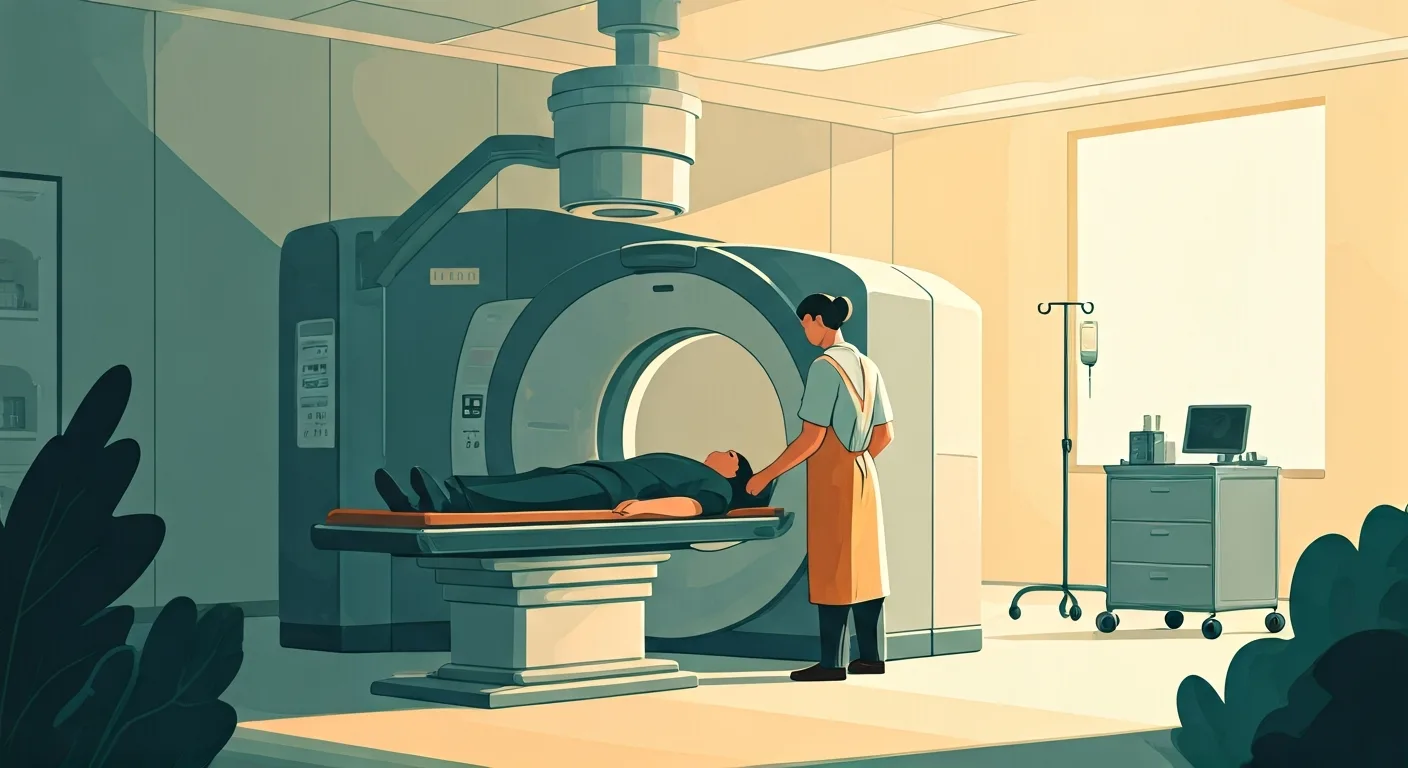
Prepares and administers small amounts of radioactive materials (radiopharmaceuticals) to patients for diagnostic imaging and therapeutic purposes. Operates highly specialized imaging equipment, such as SPECT and PET scanners, to capture detailed images that reveal how organs and tissues are functioning. These images are crucial for doctors to identify diseases, assess organ function, and monitor the effectiveness of treatments, playing a vital role in patient care and diagnosis.
Provides critical diagnostic information to physicians, enabling early detection of diseases, accurate staging of conditions, and monitoring of treatment responses, directly contributing to improved patient outcomes and quality of life.
On the job
- Prepare and calibrate radiopharmaceuticals according to physician orders and safety protocols.
- Administer radioactive tracers to patients orally, intravenously, or by inhalation.
- Operate and maintain nuclear medicine imaging equipment (e.g., SPECT, PET scanners) to acquire diagnostic images.
- Monitor patients during procedures, ensuring their comfort and safety, and respond to any adverse reactions.
- Process and enhance images, providing high-quality diagnostic data to radiologists and physicians.
Tools & technology
Average salary
Job outlook
GrowingJob growth is expected to be above average over the next five years.
Education & training
Associate's degree or certificate in nuclear medicine technology, often followed by a bachelor's degree for career advancement.
AI impact outlook
Note — this is our current view. AI is moving fast, so we revisit these ratings.
Show how this was assessed Hide the detail
Note — this is our current view. AI is moving fast, so we revisit these ratings.
Show how this was assessed Hide the detailWhy this role received this rating
Core task exposure
moderate
How much of the role’s important work could AI perform?
Initial image processing, dose calculation, and protocol optimization are the primary areas of AI exposure within this role.
End-to-end automation
low
Can AI complete the work without substantial human involvement?
While AI can optimize some steps, the physical administration of radiopharmaceuticals and operation of complex imaging equipment prevents end-to-end automation.
Adoption pressure
moderate
How likely are employers to introduce AI into this work?
Adoption pressure is moderate due to the high-stakes clinical environment, regulatory hurdles, and significant capital investment in equipment.
Human dependence
strong
How much does success depend on human judgement, relationships and accountability?
Success in this role heavily relies on precise administration, direct patient monitoring, safety protocols for radioactive materials, and ensuring patient comfort.
Protective — a higher rating lowers the overall score.
Role adaptability
strong
How easily can the role evolve as AI takes on more tasks?
The role can adapt by integrating AI tools for image analysis and dose optimization, focusing more on patient interaction and complex procedural execution.
Shown for context — not part of the score.
What AI may take on
These are the parts of the role most likely to be automated or significantly accelerated.
- Optimizing radiopharmaceutical dosage based on patient data
- Assisting in diagnostic image reconstruction and enhancement
- Automating certain quality control checks for equipment
- Suggesting optimized imaging protocols based on clinical indications
- Streamlining patient scheduling and record management
Where people remain essential
These parts continue to depend heavily on human judgement, relationships and accountability.
- Preparing and safely administering radiopharmaceuticals to patients
- Operating and calibrating highly specialized imaging equipment
- Monitoring patients during procedures for comfort and adverse reactions
- Responding to emergent patient situations and ensuring safety
- Interpreting complex diagnostic images in context with patient history
- Maintaining regulatory compliance for radioactive materials
How the role may evolve
From manual processing to overseeing intelligent systems.
Technologists will spend less time on routine image processing and data entry, shifting towards managing AI-enhanced workflows, troubleshooting equipment, and focusing intently on direct patient interaction and safety.
Strengthen your future fit
- Proficiency with advanced image analysis software and AI tools
- Enhanced patient communication and empathy skills
- Deep understanding of radiopharmaceutical properties and safety
- Critical thinking for complex imaging scenarios
- Adaptability to rapidly evolving nuclear medicine technologies
- Assessment horizon
- 3–7 years
- Confidence
- High
- Last reviewed
- August 2026
- Methodology
- v1.0
This assessment reflects current AI capabilities and expected adoption patterns. Actual impacts will vary by industry, employer and the way each role is performed.
Career pathways
WHERE YOU COULD GO
CURRENT ROLE
Nuclear Medicine Technologist
Allied Health
ADJACENT MOVES
STARTING POINTS
Who thrives here
Interest profile
realistic · RIC
Individuals who enjoy hands-on technical work, solving diagnostic puzzles, and adhering to precise protocols thrive in this role.
Personality characteristics
Precise
Demonstrates meticulous attention to detail in preparing radiopharmaceuticals and operating equipment, crucial for patient safety and diagnostic accuracy.
Reliable
Consistently follows strict safety protocols and procedures, ensuring accurate results and patient well-being.
Patient-focused
Communicates clearly and empathetically with patients, helping them feel comfortable during potentially anxiety-inducing procedures.
Analytical
Applies scientific knowledge to understand imaging principles and interpret technical data for diagnostic purposes.
Calm under pressure
Maintains composure and follows protocols precisely, even in critical or fast-paced clinical situations.
Best for
- Individuals who thrive in a structured, technical environment where precision and safety are paramount.
- Those who enjoy using advanced medical technology to make a direct impact on patient health.
- People with a strong sense of responsibility and a methodical approach to complex procedures.
Watch out for
- Requires adherence to strict protocols and safety regulations, limiting creative freedom.
- Exposure to radiation, though minimal and carefully managed, is a constant aspect of the work environment.
- Occasional weekend or on-call shifts may be required in hospital settings.
A week in the life
A representative working week for a Nuclear Medicine Technologist — where the deep work, meetings, and admin actually land.
Real people. Real results.
Thousands of people
can't be wrong.


Frequently asked questions about Nuclear Medicine Technologist roles
What does a Nuclear Medicine Technologist do?
A Nuclear Medicine Technologist prepares and administers small amounts of radioactive materials (radiopharmaceuticals) to patients for diagnostic imaging and therapeutic purposes. Operates highly specialized imaging equipment, such as SPECT and PET scanners, to capture detailed images that reveal how organs and tissues are functioning. These images are crucial for doctors to identify diseases, assess organ function, and monitor the effectiveness of treatments, playing a vital role in patient care and diagnosis. Provides critical diagnostic information to physicians, enabling early detection of diseases, accurate staging of conditions, and monitoring of treatment responses, directly contributing to improved patient outcomes and quality of life.
How much does a Nuclear Medicine Technologist earn?
A Nuclear Medicine Technologist earns a median of $86,000 per year in the US, typically ranging from $65,000 to $105,000.
What qualifications do you need to become a Nuclear Medicine Technologist?
To become a Nuclear Medicine Technologist, associate's degree or certificate in nuclear medicine technology, often followed by a bachelor's degree for career advancement. State licensure or certification (e.g., ARRT (N) or NMTCB certification).
What personality suits a Nuclear Medicine Technologist?
Nuclear Medicine Technologist roles tend to suit people who are highly conscientious — precise, organised and strong on follow-through (Conscientiousness 85/100) and warm and cooperative — tuned in to the people around them (Agreeableness 65/100). The traits that matter most in the role are Precise, Reliable, Patient-focused and Analytical. Demonstrates meticulous attention to detail in preparing radiopharmaceuticals and operating equipment, crucial for patient safety and diagnostic accuracy. On interests, Nuclear Medicine Technologist maps to a RIC Holland Code profile — individuals who enjoy hands-on technical work, solving diagnostic puzzles, and adhering to precise protocols thrive in this role.
Who does a Nuclear Medicine Technologist role suit?
A Nuclear Medicine Technologist role is usually a strong fit for these reasons. Strong Realistic and Investigative alignment: the role involves hands-on operation of advanced equipment and diagnostic problem-solving. High Conscientiousness is crucial for the precision and safety required in handling radioactive materials and patient care. Significant portion of the week dedicated to deep work on procedures and image processing.
What are the downsides of being a Nuclear Medicine Technologist?
Nuclear Medicine Technologist roles come with trade-offs worth weighing up. Requires adherence to strict protocols and safety regulations, limiting creative freedom. Exposure to radiation, though minimal and carefully managed, is a constant aspect of the work environment. Occasional weekend or on-call shifts may be required in hospital settings.
What is the work environment like for a Nuclear Medicine Technologist?
Work as a Nuclear Medicine Technologist is mostly clinical-based with onsite arrangements common, highly structured, with set processes and deadlines, a moderate pace and medium exposure to clients or stakeholders. Around 57% of the week is focused deep work.
What skills do you need to be a Nuclear Medicine Technologist?
Core skills for a Nuclear Medicine Technologist include Radiopharmaceutical handling, Patient care and positioning, Diagnostic imaging techniques, Radiation safety protocols and Image analysis.
How do you become a Nuclear Medicine Technologist?
Common entry routes into Nuclear Medicine Technologist roles include Nuclear Medicine Technology Student and Entry Level Nuclear Medicine Technologist.
What career progression is there for a Nuclear Medicine Technologist?
From a Nuclear Medicine Technologist role, common next steps include Chief Nuclear Medicine Technologist, Nuclear Medicine Educator and Radiology Department Manager; lateral moves include Radiologic Technologist, MRI Technologist and Radiation Therapist.
What is the job outlook for Nuclear Medicine Technologist roles?
The outlook for Nuclear Medicine Technologist roles is currently rated growing. Job growth is expected to be above average over the next five years.
Will AI replace Nuclear Medicine Technologist roles?
Traitstack rates automation risk for Nuclear Medicine Technologist roles at 39 out of 100, which is low. AI tools will increasingly assist with image analysis and dose optimization, yet patient care, direct radiopharmaceutical administration, and complex equipment operation remain crucial human responsibilities. AI is most likely to take on optimizing radiopharmaceutical dosage based on patient data, assisting in diagnostic image reconstruction and enhancement and automating certain quality control checks for equipment. Preparing and safely administering radiopharmaceuticals to patients, operating and calibrating highly specialized imaging equipment and monitoring patients during procedures for comfort and adverse reactions stay with people. From manual processing to overseeing intelligent systems. That score measures how much of the work could change, not the likelihood the job disappears. It is Traitstack's current view, revisited as AI capability moves.