Radiation Oncologist
SOC 29-1216.00 · ESCO 2212 · OSCA 264936
Role snapshot
Overview
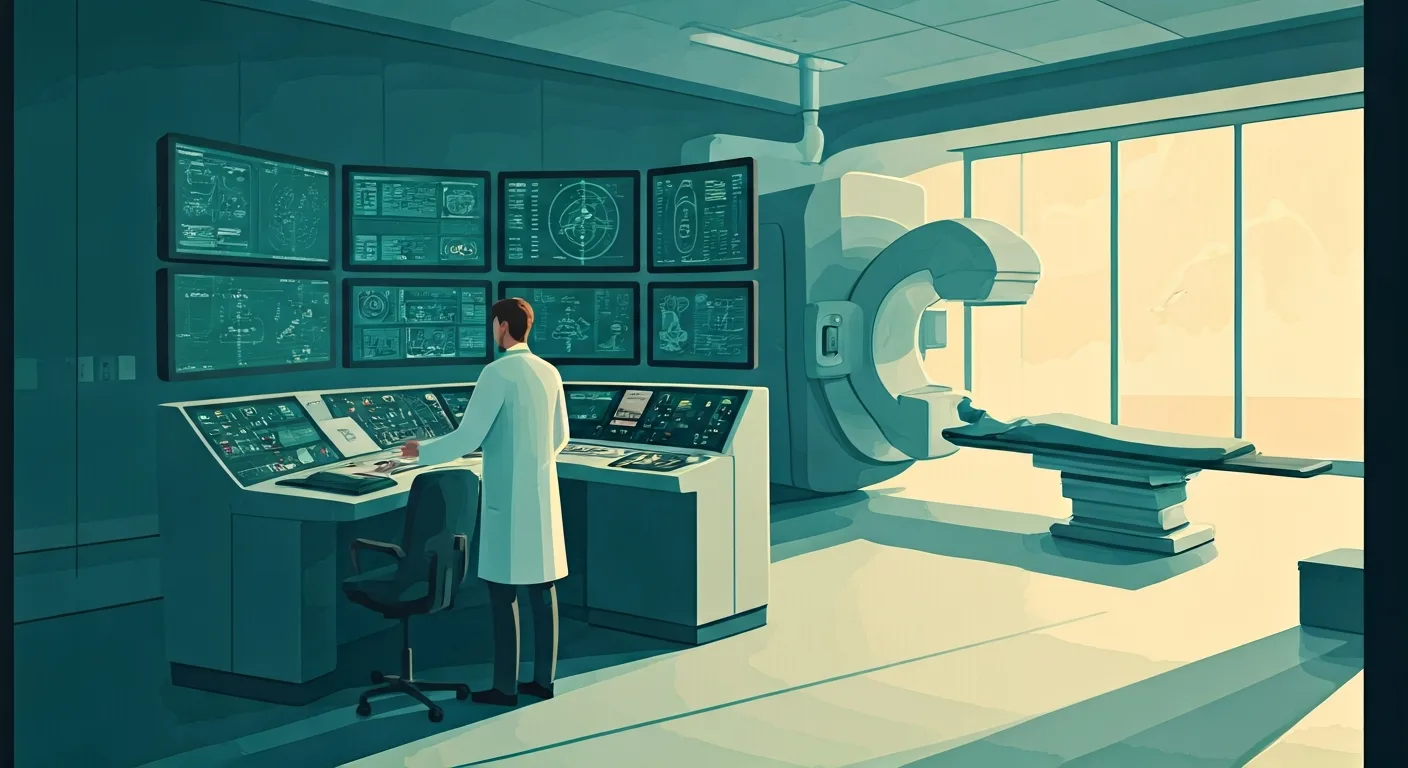
Plans and delivers radiation therapy to treat cancer, calculating precise doses to target tumours while sparing healthy tissue. Consults with patients about treatment options, monitors side effects, and adjusts plans as needed. This role involves advanced medical knowledge, precision technology, and compassionate patient care.
Provides life-saving and life-extending treatments for cancer patients, significantly improving their prognosis and quality of life. This role helps navigate complex medical decisions and offers hope during challenging times.
On the job
- Develop comprehensive radiation treatment plans for cancer patients, often using advanced imaging.
- Prescribe and oversee the precise delivery of external beam radiation and brachytherapy.
- Monitor patient response to treatment, manage acute and long-term side effects, and adjust plans as needed.
- Collaborate with multidisciplinary cancer care teams, including surgeons, medical oncologists, and dosimetrists.
- Educate patients and their families about diagnosis, treatment options, potential side effects, and prognosis.
Tools & technology
Average salary
Job outlook
GrowingJob growth is expected to be above average over the next five years.
Education & training
Requires a Doctor of Medicine (MD) or Doctor of Osteopathic Medicine (DO) degree, followed by a residency in Radiation Oncology, and often a fellowship.
AI impact outlook
Note — this is our current view. AI is moving fast, so we revisit these ratings.
Show how this was assessed Hide the detail
Note — this is our current view. AI is moving fast, so we revisit these ratings.
Show how this was assessed Hide the detailWhy this role received this rating
Core task exposure
moderate
How much of the role’s important work could AI perform?
AI excels at automating image segmentation (tumor and organ-at-risk contouring) and optimizing radiation dose distribution, which are significant parts of treatment planning.
End-to-end automation
low
Can AI complete the work without substantial human involvement?
While AI supports treatment planning, the prescription, delivery oversight, managing patient side effects, and ethical decisions in cancer care remain in the human domain.
Adoption pressure
high
How likely are employers to introduce AI into this work?
There is high commercial interest in AI for radiation treatment planning to improve precision and efficiency, though clinical risk and regulatory processes will moderate direct replacement.
Human dependence
strong
How much does success depend on human judgement, relationships and accountability?
Success relies heavily on ethical decision-making in life-and-death situations, compassionate patient communication, and ultimate accountability for complex cancer treatments.
Protective — a higher rating lowers the overall score.
Role adaptability
strong
How easily can the role evolve as AI takes on more tasks?
The role can adapt by shifting to overseeing AI-assisted planning, focusing on complex cancer cases, and leading multidisciplinary clinical trials and research.
Shown for context — not part of the score.
What AI may take on
These are the parts of the role most likely to be automated or significantly accelerated.
- Automated segmentation of tumors and organs at risk from CT/MRI images
- Optimizing radiation dose distribution to maximize tumor kill and spare healthy tissue
- Predicting patient-specific responses to radiation therapy and potential side effects
- Synthesizing complex patient data for personalized treatment recommendations
- Automating quality assurance checks for treatment plans
Where people remain essential
These parts continue to depend heavily on human judgement, relationships and accountability.
- Making ethical decisions regarding life-altering cancer treatments
- Communicating complex diagnoses, treatment options, and prognoses with empathy
- Managing acute and long-term side effects of radiation therapy
- Leading multidisciplinary tumor boards for complex cancer cases
- Bearing ultimate accountability for treatment outcomes and patient safety
- Adapting treatment plans in real-time based on patient response and new information
How the role may evolve
Planning is optimized. Ethical oversight becomes central.
Radiation oncologists will utilize AI for precision in treatment planning and dose optimization, enabling them to focus more intensely on patient-centered care, complex case management, and ethical decision-making in cancer treatment.
Strengthen your future fit
- Proficiency in validating and refining AI-generated treatment plans
- Enhanced critical thinking for complex and ambiguous cancer presentations
- Exceptional communication skills for patient and family counseling
- Strong leadership in multidisciplinary cancer care teams
- Ongoing engagement with research into novel AI applications in oncology
- Assessment horizon
- 3–7 years
- Confidence
- High
- Last reviewed
- August 2026
- Methodology
- v1.0
This assessment reflects current AI capabilities and expected adoption patterns. Actual impacts will vary by industry, employer and the way each role is performed.
Career pathways
WHERE YOU COULD GO
CURRENT ROLE
Radiation Oncologist
Medical & Clinical
STARTING POINTS
Who thrives here
Interest profile
investigative · ISR
Individuals who enjoy scientific investigation, applying technical precision, and providing compassionate care to patients will find this role highly rewarding. It combines intellectual challenge with direct human impact.
Personality characteristics
Curious and analytical
Enjoys exploring complex medical cases, staying updated with new research, and critically evaluating treatment approaches.
Meticulous and precise
Demonstrates extreme attention to detail in treatment planning, dose calculation, and delivery, adhering strictly to medical protocols.
Collaborative communicator
Effectively communicates complex information with patients, families, and multidisciplinary teams, fostering trust and shared decision-making.
Compassionate and empathetic
Builds strong rapport with patients and their families, providing supportive and understanding care during challenging times.
Calm under pressure
Maintains composure and clear judgment when dealing with critical diagnoses, complex treatment decisions, and patient emergencies.
Best for
- Individuals who thrive on intellectual challenge, scientific application, and direct patient care.
- Professionals who are highly meticulous, empathetic, and capable of working in a high-pressure environment.
- Those dedicated to continuous learning and contributing to advancements in cancer treatment.
Watch out for
- The work can be emotionally demanding due to the nature of cancer care.
- Requires long hours, including on-call duties and occasional weekend work.
- Involves significant responsibility and high-stakes decision-making.
A week in the life
A representative working week for a Radiation Oncologist — where the deep work, meetings, and admin actually land.
Real people. Real results.
Thousands of people
can't be wrong.




Frequently asked questions about Radiation Oncologist roles
What does a Radiation Oncologist do?
A Radiation Oncologist plans and delivers radiation therapy to treat cancer, calculating precise doses to target tumours while sparing healthy tissue. Consults with patients about treatment options, monitors side effects, and adjusts plans as needed. This role involves advanced medical knowledge, precision technology, and compassionate patient care. Provides life-saving and life-extending treatments for cancer patients, significantly improving their prognosis and quality of life. This role helps navigate complex medical decisions and offers hope during challenging times.
How much does a Radiation Oncologist earn?
A Radiation Oncologist earns a median of $350,000 per year in the US, typically ranging from $250,000 to $500,000.
What qualifications do you need to become a Radiation Oncologist?
To become a Radiation Oncologist, requires a Doctor of Medicine (MD) or Doctor of Osteopathic Medicine (DO) degree, followed by a residency in Radiation Oncology, and often a fellowship. Medical license in the state of practice.
What personality suits a Radiation Oncologist?
Radiation Oncologist roles tend to suit people who are highly conscientious — precise, organised and strong on follow-through (Conscientiousness 88/100) and open and curious — drawn to variety, ideas and new approaches (Openness 68/100). The traits that matter most in the role are Curious and analytical, Meticulous and precise, Collaborative communicator and Compassionate and empathetic. Enjoys exploring complex medical cases, staying updated with new research, and critically evaluating treatment approaches. On interests, Radiation Oncologist maps to an ISR Holland Code profile — individuals who enjoy scientific investigation, applying technical precision, and providing compassionate care to patients will find this role highly rewarding. It combines intellectual challenge with direct human impact.
Who does a Radiation Oncologist role suit?
A Radiation Oncologist role is usually a strong fit for these reasons. High Investigative and Social affinity, aligning with diagnostic precision and patient interaction. The role demands exceptional Conscientiousness for meticulous treatment planning and execution. Offers the chance to make a profound, life-saving impact on individuals and their families.
What are the downsides of being a Radiation Oncologist?
Radiation Oncologist roles come with trade-offs worth weighing up. The work can be emotionally demanding due to the nature of cancer care. Requires long hours, including on-call duties and occasional weekend work. Involves significant responsibility and high-stakes decision-making.
What is the work environment like for a Radiation Oncologist?
Work as a Radiation Oncologist is mostly clinical-based with onsite arrangements common, highly structured, with set processes and deadlines and high exposure to clients or stakeholders. Around 63% of the week is focused deep work.
What skills do you need to be a Radiation Oncologist?
Core skills for a Radiation Oncologist include Radiation oncology treatment planning, Oncology patient management, Medical imaging interpretation, Multidisciplinary team collaboration and Patient communication and counselling.
How do you become a Radiation Oncologist?
Common entry routes into Radiation Oncologist roles include Medical Resident and Oncology Fellow.
What career progression is there for a Radiation Oncologist?
From a Radiation Oncologist role, common next steps include Chief of Radiation Oncology, Medical Director (Oncology) and Academic Researcher (Oncology).
What is the job outlook for Radiation Oncologist roles?
The outlook for Radiation Oncologist roles is currently rated growing. Job growth is expected to be above average over the next five years.
Will AI replace Radiation Oncologist roles?
Traitstack rates automation risk for Radiation Oncologist roles at 34 out of 100, which is low. AI is set to revolutionize treatment planning and tumor segmentation, but the ethical oversight, patient counseling, and ultimate accountability for cancer treatment remain with the oncologist. AI is most likely to take on automated segmentation of tumors and organs at risk from ct/mri images, optimizing radiation dose distribution to maximize tumor kill and spare healthy tissue and predicting patient-specific responses to radiation therapy and potential side effects. Making ethical decisions regarding life-altering cancer treatments, communicating complex diagnoses, treatment options, and prognoses with empathy and managing acute and long-term side effects of radiation therapy stay with people. Planning is optimized. Ethical oversight becomes central. That score measures how much of the work could change, not the likelihood the job disappears. It is Traitstack's current view, revisited as AI capability moves.