Photographic Print Processor
SOC 51-5113.00 · ESCO 5329 · OSCA 731936
Role snapshot
Overview
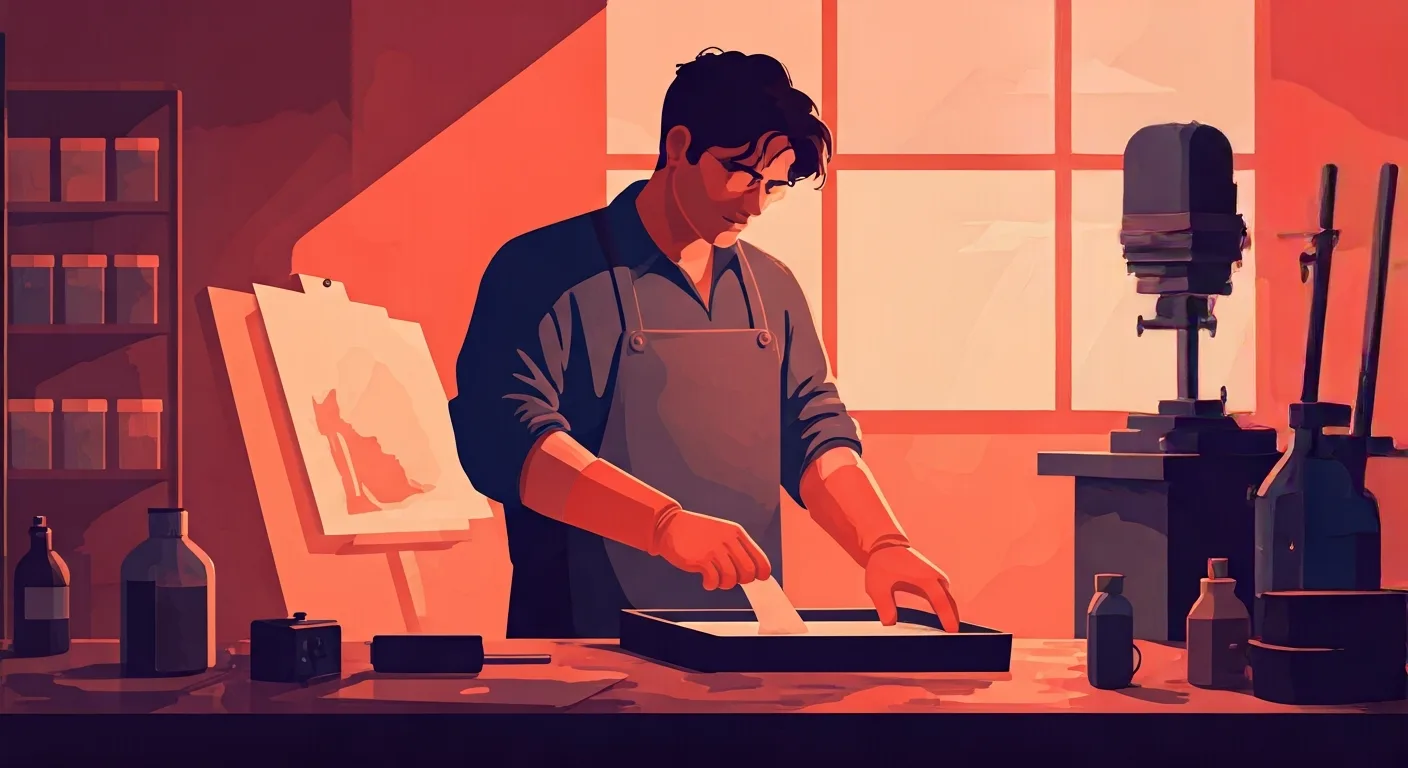
Operates digital and chemical printing equipment to produce photographic prints from image files or negatives. Adjusts colour balance, exposure, and cropping, and ensures prints meet quality standards before delivery. Maintains equipment and manages supplies.
Ensures visual memories and artistic visions are accurately and beautifully translated into physical prints, preserving moments and creating tangible art.
On the job
- Operate and maintain digital photo printers, minilabs, and darkroom equipment.
- Perform color correction, exposure adjustments, and image retouching using photo editing software.
- Mix and monitor chemical solutions for traditional photographic processes.
- Conduct quality control checks to ensure prints meet client specifications and industry standards.
- Manage inventory of paper, inks, chemicals, and other photographic supplies.
Tools & technology
Average salary
Job outlook
DecliningEmployment in this field is projected to decrease as automation and structural shifts take effect.
Education & training
Vocational training, certificate, or associate's degree in photography, digital imaging, or graphic arts.
AI impact outlook
Note — this is our current view. AI is moving fast, so we revisit these ratings.
Show how this was assessed Hide the detail
Note — this is our current view. AI is moving fast, so we revisit these ratings.
Show how this was assessed Hide the detailWhy this role received this rating
Core task exposure
moderate
How much of the role’s important work could AI perform?
Digital color correction, exposure adjustments, and image retouching are highly exposed, but physical machine operation, chemical handling, and inventory are less so for AI.
End-to-end automation
low
Can AI complete the work without substantial human involvement?
AI can automate digital image processing, but it cannot physically operate and maintain complex printing equipment, mix chemicals, load media, or troubleshoot physical malfunctions.
Adoption pressure
high
How likely are employers to introduce AI into this work?
Strong incentive exists for efficiency in digital processing and automated equipment, but the physical handling and maintenance aspects have different automation drivers.
Human dependence
moderate
How much does success depend on human judgement, relationships and accountability?
Success depends on human judgment for aesthetic quality control, precise chemical handling, and troubleshooting complex mechanical and digital systems.
Protective — a higher rating lowers the overall score.
Role adaptability
low
How easily can the role evolve as AI takes on more tasks?
The role is heavily process-driven and tied to specific equipment, making it less adaptable to shifting away from core operational tasks.
Shown for context — not part of the score.
What AI may take on
These are the parts of the role most likely to be automated or significantly accelerated.
- Perform automated color correction and exposure adjustments
- Apply image retouching for common imperfections
- Monitor and optimize chemical solution parameters
- Automate print queuing and job management
- Conduct initial digital quality control checks
Where people remain essential
These parts continue to depend heavily on human judgement, relationships and accountability.
- Operate and physically maintain digital and traditional printing equipment
- Manually mix and monitor chemical solutions for specific processes
- Conduct final aesthetic quality control checks on physical prints
- Troubleshoot complex equipment malfunctions and print errors
- Manage inventory of physical paper, inks, and chemicals
- Handle delicate prints and packaging for delivery
How the role may evolve
From manual operation to sophisticated oversight of automated printing systems.
Print processors will increasingly oversee and manage highly automated digital printing workflows, intervening for complex issues, physical maintenance, and final quality assurance of tangible outputs.
Strengthen your future fit
- Master advanced digital image processing software
- Develop expertise in printing equipment maintenance and repair
- Cultivate a discerning eye for print quality and color accuracy
- Manage complex chemical processes safely and effectively
- Adapt to evolving digital printing technologies and materials
- Assessment horizon
- 3–7 years
- Confidence
- High
- Last reviewed
- August 2026
- Methodology
- v1.0
This assessment reflects current AI capabilities and expected adoption patterns. Actual impacts will vary by industry, employer and the way each role is performed.
Career pathways
WHERE YOU COULD GO
CURRENT ROLE
Photographic Print Processor
Design & Visual Arts
ADJACENT MOVES
STARTING POINTS
Who thrives here
Interest profile
conventional · CRA
Individuals who thrive on precision, technical work, and artistic output, enjoying the structured processes of creating high-quality photographic prints.
Personality characteristics
Diligent
Follows precise instructions and maintains rigorous quality standards in all printing processes.
Observant
Notices subtle details in color, exposure, and composition to ensure print accuracy.
Methodical
Enjoys working with established procedures and maintaining equipment for optimal performance.
Calm under pressure
Handles technical glitches or tight deadlines without becoming flustered, maintaining focus on the task.
Independent
Comfortable working autonomously for extended periods, focusing on individual tasks.
Best for
- People who enjoy detailed, hands-on technical work with a focus on visual output.
- Individuals who appreciate structured environments and mastery of specific equipment and processes.
- Those who are meticulous and derive satisfaction from producing high-quality physical products.
Watch out for
- Can be repetitive with standardized tasks and process adherence.
- Limited opportunities for direct social interaction or client-facing roles.
- The industry is undergoing significant changes with digital advancements, requiring continuous learning.
A week in the life
A representative working week for a Photographic Print Processor — where the deep work, meetings, and admin actually land.
Real people. Real results.
Thousands of people
can't be wrong.



Frequently asked questions about Photographic Print Processor roles
What does a Photographic Print Processor do?
A Photographic Print Processor operates digital and chemical printing equipment to produce photographic prints from image files or negatives. Adjusts colour balance, exposure, and cropping, and ensures prints meet quality standards before delivery. Maintains equipment and manages supplies. Ensures visual memories and artistic visions are accurately and beautifully translated into physical prints, preserving moments and creating tangible art.
How much does a Photographic Print Processor earn?
A Photographic Print Processor earns a median of $45,000 per year in the US, typically ranging from $30,000 to $60,000.
What qualifications do you need to become a Photographic Print Processor?
To become a Photographic Print Processor, vocational training, certificate, or associate's degree in photography, digital imaging, or graphic arts.
What personality suits a Photographic Print Processor?
Photographic Print Processor roles tend to suit people who are highly conscientious — precise, organised and strong on follow-through (Conscientiousness 72/100) and reserved — comfortable with long independent focus rather than constant social contact (Extraversion 30/100). The traits that matter most in the role are Diligent, Observant, Methodical and Calm under pressure. Follows precise instructions and maintains rigorous quality standards in all printing processes. On interests, Photographic Print Processor maps to a CRA Holland Code profile — individuals who thrive on precision, technical work, and artistic output, enjoying the structured processes of creating high-quality photographic prints.
Who does a Photographic Print Processor role suit?
A Photographic Print Processor role is usually a strong fit for these reasons. Strong Conventional and Realistic alignment: the role requires precision, technical skill, and adherence to processes. High emphasis on quality control and meticulous execution for tangible results. Offers a significant amount of focused, hands-on work with specialized equipment.
What are the downsides of being a Photographic Print Processor?
Photographic Print Processor roles come with trade-offs worth weighing up. Can be repetitive with standardized tasks and process adherence. Limited opportunities for direct social interaction or client-facing roles. The industry is undergoing significant changes with digital advancements, requiring continuous learning.
What is the work environment like for a Photographic Print Processor?
Work as a Photographic Print Processor is mostly workshop-based with onsite arrangements common, highly structured, with set processes and deadlines, a moderate pace and low exposure to clients or stakeholders. Around 81% of the week is focused deep work.
What skills do you need to be a Photographic Print Processor?
Core skills for a Photographic Print Processor include Color management, Photo editing software, Darkroom techniques, Equipment maintenance and Quality control.
How do you become a Photographic Print Processor?
Common entry routes into Photographic Print Processor roles include Photo Lab Assistant, Entry Level Photographer and Print Production Assistant.
What career progression is there for a Photographic Print Processor?
From a Photographic Print Processor role, common next steps include Senior Print Processor and Lab Manager; lateral moves include Photographer and Digital Retoucher.
What is the job outlook for Photographic Print Processor roles?
The outlook for Photographic Print Processor roles is currently rated declining. Employment in this field is projected to decrease as automation and structural shifts take effect.
Will AI replace Photographic Print Processor roles?
Traitstack rates automation risk for Photographic Print Processor roles at 51 out of 100, which is moderate. Digital image processing is highly exposed to AI, yet human oversight remains critical for physical machine operation, chemical handling, and nuanced quality control of tangible prints. AI is most likely to take on perform automated color correction and exposure adjustments, apply image retouching for common imperfections and monitor and optimize chemical solution parameters. Operate and physically maintain digital and traditional printing equipment, manually mix and monitor chemical solutions for specific processes and conduct final aesthetic quality control checks on physical prints stay with people. From manual operation to sophisticated oversight of automated printing systems. That score measures how much of the work could change, not the likelihood the job disappears. It is Traitstack's current view, revisited as AI capability moves.