Merchandise Displayer
SOC 27-1026.00 · ESCO 3432 · OSCA 222531
Role snapshot
Overview
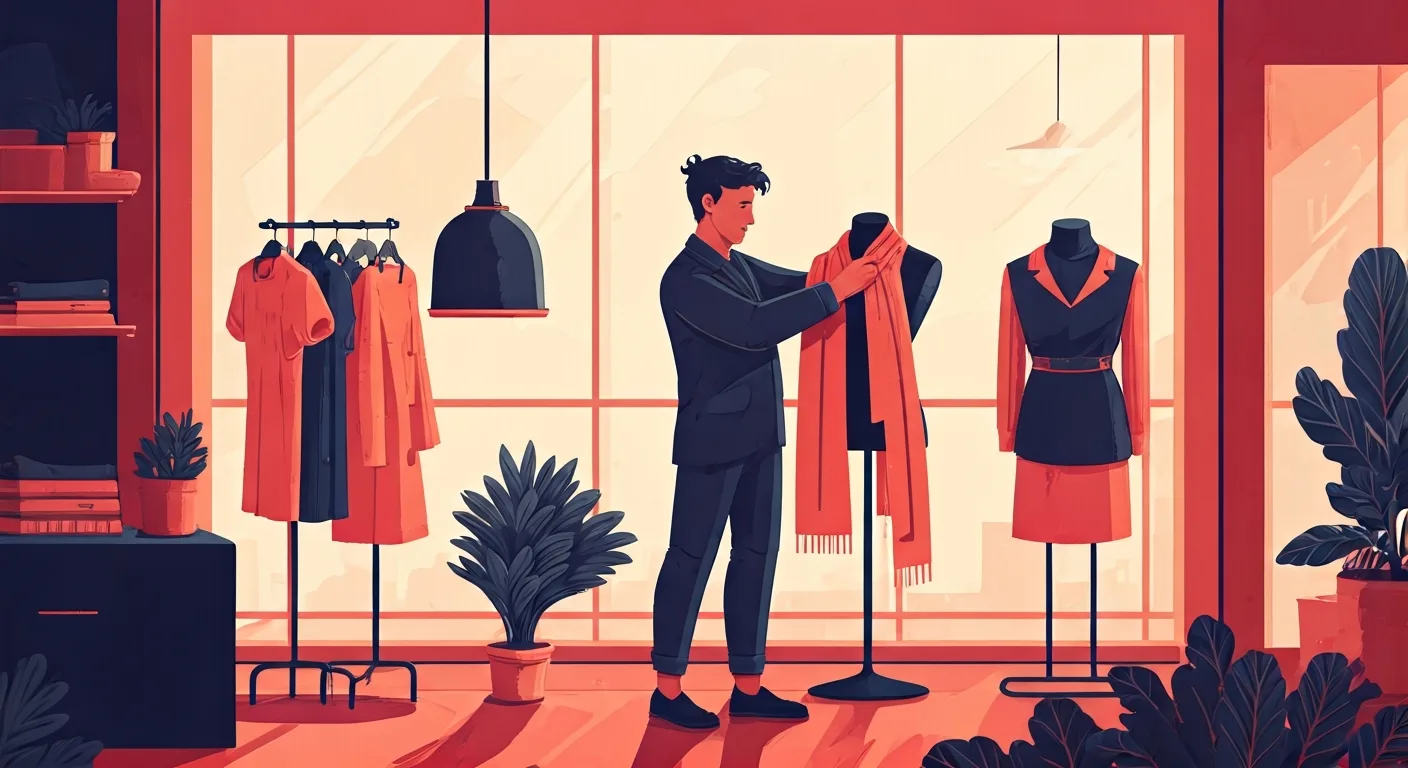
Plans and arranges product displays in retail stores and showrooms to attract customers and boost sales. Uses colour, lighting, signage, and spatial layout to tell a visual story that highlights featured merchandise.
Enhances the customer shopping experience, drives product visibility and sales, and reinforces brand identity through compelling visual storytelling and appealing displays.
On the job
- Design and implement eye-catching window and in-store displays according to marketing strategies.
- Select and arrange merchandise, props, and signage to create cohesive and attractive presentations.
- Utilize lighting techniques to highlight products, create focal points, and set desired moods.
- Maintain and update displays regularly to reflect new inventory, seasonal themes, or promotional campaigns.
- Collaborate with store management, marketing, and sales teams on display concepts and execution.
Tools & technology
Average salary
Job outlook
StableDemand is steady. This is an established role with consistent hiring across sectors.
Education & training
Certificate or associate's degree in visual merchandising, retail design, or a related creative field. A strong portfolio showcasing design skills is often more valued than formal credentials.
AI impact outlook
Note — this is our current view. AI is moving fast, so we revisit these ratings.
Show how this was assessed Hide the detail
Note — this is our current view. AI is moving fast, so we revisit these ratings.
Show how this was assessed Hide the detailWhy this role received this rating
Core task exposure
high
How much of the role’s important work could AI perform?
AI can design optimal layouts, suggest product placements, and optimize lighting schemes based on sales data, highly exposing the conceptual and planning aspects of display.
End-to-end automation
low
Can AI complete the work without substantial human involvement?
While design can be automated, the physical arrangement of products, mannequins, and props in dynamic retail environments remains a highly manual task, limiting end-to-end automation.
Adoption pressure
high
How likely are employers to introduce AI into this work?
The retail industry is keen on efficiency and sales optimization, driving moderate to high pressure for AI tools in design planning and inventory display management.
Human dependence
moderate
How much does success depend on human judgement, relationships and accountability?
Success requires aesthetic judgment, understanding consumer psychology, physical dexterity in arranging goods, and adapting displays to real-world store conditions and customer flow.
Protective — a higher rating lowers the overall score.
Role adaptability
strong
How easily can the role evolve as AI takes on more tasks?
The role can adapt by focusing on experiential design, omnichannel integration, or consulting for complex retail environments, leveraging new technologies for strategic impact.
Shown for context — not part of the score.
What AI may take on
These are the parts of the role most likely to be automated or significantly accelerated.
- Designing optimal window and in-store display layouts
- Suggesting product placements to maximize sales and visibility
- Utilizing virtual reality to preview display concepts
- Analyzing sales data to inform display strategies
- Automating digital signage content and updates
Where people remain essential
These parts continue to depend heavily on human judgement, relationships and accountability.
- Physically arranging merchandise, mannequins, and props in stores
- Utilizing lighting techniques to highlight products effectively
- Adapting displays in real-time to store conditions and customer flow
- Collaborating with store management and marketing teams
- Troubleshooting physical setup challenges and ensuring safety
- Ensuring displays tell a compelling visual story that attracts customers
How the role may evolve
Automating layout strategy, enhancing physical presence.
The role will evolve to use AI for strategic design and planning, freeing displayers to focus on the hands-on execution, creative problem-solving, and ensuring engaging physical customer experiences.
Strengthen your future fit
- Master AI-powered visual merchandising and layout software
- Enhance skills in consumer psychology and sales-driven design
- Strengthen physical setup and problem-solving abilities
- Develop expertise in experiential retail and omnichannel strategies
- Improve collaboration with marketing and sales teams
- Assessment horizon
- 3–7 years
- Confidence
- High
- Last reviewed
- August 2026
- Methodology
- v1.0
This assessment reflects current AI capabilities and expected adoption patterns. Actual impacts will vary by industry, employer and the way each role is performed.
Career pathways
WHERE YOU COULD GO
CURRENT ROLE
Merchandise Displayer
Design & Visual Arts
ADJACENT MOVES
STARTING POINTS
Who thrives here
Interest profile
artistic · ARE
Individuals who thrive on creative expression, hands-on work, and influencing others through visual appeal often find satisfaction in this role.
Personality characteristics
Creative Visionary
Enjoys conceptualizing unique and impactful visual stories for products and brands, constantly seeking new ideas and approaches.
Detail-Oriented
Pays close attention to the smallest elements of a display, ensuring precision, aesthetic balance, and consistency with brand guidelines.
Hands-on
Prefers practical, physical work involved in setting up, arranging, and adjusting displays, often requiring manual dexterity and physical stamina.
Persuasive
Aims to create displays that subtly guide customer attention, communicate product value, and encourage purchasing decisions.
Adaptable
Comfortable with frequent changes in campaigns, products, and retail environments, and able to adjust plans quickly.
Best for
- People who enjoy combining artistic flair with practical, hands-on work in a retail setting.
- Individuals who are motivated by creating visually appealing environments that drive commercial success.
- Those who thrive on variety, constantly refreshing displays and adapting to new products and campaigns.
Watch out for
- The role often involves physical labor, including lifting, bending, and standing for long periods.
- Occasional weekend or evening work may be required for display changes or special events.
- Creative ideas must often align with strict brand guidelines and marketing objectives, limiting complete artistic freedom.
A week in the life
A representative working week for a Merchandise Displayer — where the deep work, meetings, and admin actually land.
Real people. Real results.
Thousands of people
can't be wrong.



Frequently asked questions about Merchandise Displayer roles
What does a Merchandise Displayer do?
A Merchandise Displayer plans and arranges product displays in retail stores and showrooms to attract customers and boost sales. Uses colour, lighting, signage, and spatial layout to tell a visual story that highlights featured merchandise. Enhances the customer shopping experience, drives product visibility and sales, and reinforces brand identity through compelling visual storytelling and appealing displays.
How much does a Merchandise Displayer earn?
A Merchandise Displayer earns a median of $48,000 per year in the US, typically ranging from $35,000 to $65,000.
What qualifications do you need to become a Merchandise Displayer?
To become a Merchandise Displayer, certificate or associate's degree in visual merchandising, retail design, or a related creative field. A strong portfolio showcasing design skills is often more valued than formal credentials.
What personality suits a Merchandise Displayer?
Merchandise Displayer roles tend to suit people who are open and curious — drawn to variety, ideas and new approaches (Openness 85/100). The traits that matter most in the role are Creative Visionary, Detail-Oriented, Hands-on and Persuasive. Enjoys conceptualizing unique and impactful visual stories for products and brands, constantly seeking new ideas and approaches. On interests, Merchandise Displayer maps to an ARE Holland Code profile — individuals who thrive on creative expression, hands-on work, and influencing others through visual appeal often find satisfaction in this role.
Who does a Merchandise Displayer role suit?
A Merchandise Displayer role is usually a strong fit for these reasons. Strong Artistic (A) alignment: the role rewards visual creativity, aesthetic judgment, and concept development for displays. Requires Realistic (R) skills for hands-on installation, arrangement, and use of tools. Involves Enterprise (E) aspects through influencing customer behavior and contributing to sales goals.
What are the downsides of being a Merchandise Displayer?
Merchandise Displayer roles come with trade-offs worth weighing up. The role often involves physical labor, including lifting, bending, and standing for long periods. Occasional weekend or evening work may be required for display changes or special events. Creative ideas must often align with strict brand guidelines and marketing objectives, limiting complete artistic freedom.
What is the work environment like for a Merchandise Displayer?
Work as a Merchandise Displayer is mostly retail-based with onsite arrangements common, semi-structured — a mix of set processes and self-directed work, a moderate pace and medium exposure to clients or stakeholders. Around 65% of the week is focused deep work.
What skills do you need to be a Merchandise Displayer?
Core skills for a Merchandise Displayer include Visual merchandising, Spatial arrangement, Colour theory, Prop styling and Retail marketing principles.
How do you become a Merchandise Displayer?
Common entry routes into Merchandise Displayer roles include Retail Sales Associate, Visual Display Assistant and Fashion Stylist Assistant.
What career progression is there for a Merchandise Displayer?
From a Merchandise Displayer role, common next steps include Visual Merchandising Manager; lateral moves include Store Design Specialist and Retail Marketing Specialist.
What is the job outlook for Merchandise Displayer roles?
The outlook for Merchandise Displayer roles is currently rated stable. Demand is steady. This is an established role with consistent hiring across sectors.
Will AI replace Merchandise Displayer roles?
Traitstack rates automation risk for Merchandise Displayer roles at 55 out of 100, which is moderate. AI will drive efficiency in visual planning and layout suggestions, allowing displayers to concentrate on the physical implementation and real-world customer engagement. AI is most likely to take on designing optimal window and in-store display layouts, suggesting product placements to maximize sales and visibility and utilizing virtual reality to preview display concepts. Physically arranging merchandise, mannequins, and props in stores, utilizing lighting techniques to highlight products effectively and adapting displays in real-time to store conditions and customer flow stay with people. Automating layout strategy, enhancing physical presence. That score measures how much of the work could change, not the likelihood the job disappears. It is Traitstack's current view, revisited as AI capability moves.