Fine Artist
SOC 27-1013.00 · ESCO 2651
Role snapshot
Overview
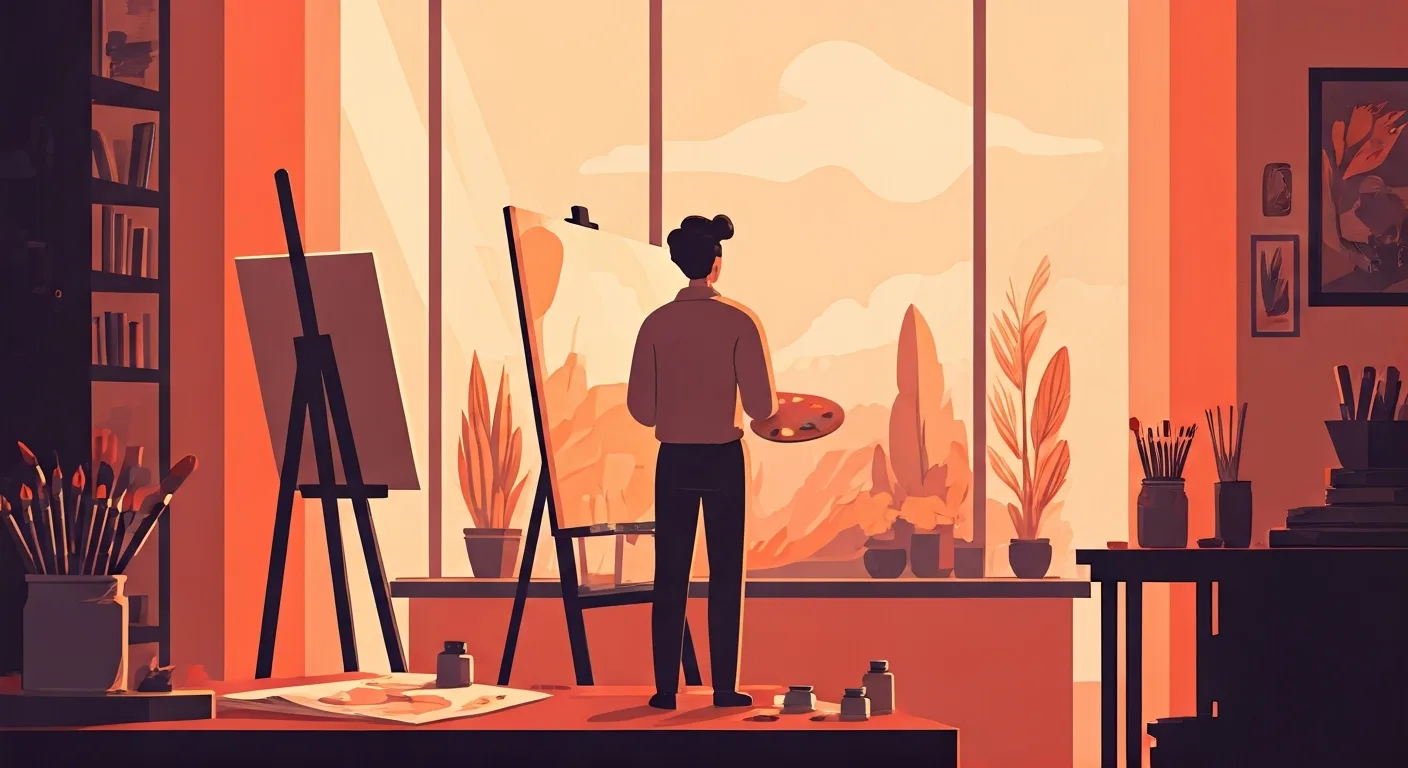
Fine Artists create original paintings, sculptures, or mixed-media works driven by personal vision and creative exploration. Their practice involves long hours of solitary studio work, alongside the strategic efforts of exhibiting in galleries, applying for grants, and building a public portfolio. They are deeply involved in the conceptualization, creation, and presentation of their unique artistic expressions.
Enriches cultural landscapes by creating original works that provoke thought, evoke emotion, and reflect societal conditions or personal experiences. They contribute to artistic discourse and preserve cultural heritage.
On the job
- Develop and refine artistic concepts and themes for new projects
- Experiment with various materials, techniques, and artistic styles to achieve desired effects
- Create original artworks such as paintings, sculptures, installations, or digital art
- Prepare, frame, or install artworks for exhibitions, galleries, or private commissions
- Market their work, manage studio operations, and seek funding or grant opportunities
Tools & technology
Average salary
Job outlook
StableDemand is steady. This is an established role with consistent hiring across sectors.
Education & training
A certificate, diploma, or bachelor's degree in fine arts, visual arts, or a related field is common, though a strong portfolio and artistic vision are often more crucial than formal credentials.
AI impact outlook
Note — this is our current view. AI is moving fast, so we revisit these ratings.
Show how this was assessed Hide the detail
Note — this is our current view. AI is moving fast, so we revisit these ratings.
Show how this was assessed Hide the detailWhy this role received this rating
Core task exposure
high
How much of the role’s important work could AI perform?
AI can generate a vast array of images, explore artistic styles, and assist in concept development, exposing the visual generation aspect of art creation.
End-to-end automation
low
Can AI complete the work without substantial human involvement?
While AI can create complete digital artworks, the human hand in material experimentation, unique artistic signature, and conceptual depth of fine art currently prevent full automation.
Adoption pressure
low
How likely are employers to introduce AI into this work?
The fine art market values human originality and provenance, leading to slower adoption of AI for core creation, though assistive tools may find niche uses.
Human dependence
strong
How much does success depend on human judgement, relationships and accountability?
The intrinsic value of fine art is deeply rooted in the artist's unique vision, emotional expression, and intellectual interpretation, making human judgment paramount.
Protective — a higher rating lowers the overall score.
Role adaptability
strong
How easily can the role evolve as AI takes on more tasks?
Fine artists are inherently adaptable, constantly experimenting with new materials, techniques, and conceptual frameworks to evolve their practice.
Shown for context — not part of the score.
What AI may take on
These are the parts of the role most likely to be automated or significantly accelerated.
- Generating preliminary sketches and studies for new projects
- Experimenting with various artistic styles and visual effects digitally
- Creating digital art pieces or variations based on text prompts
- Assisting in the conceptualization of themes and narratives
- Producing visual mock-ups for installations or sculptures
Where people remain essential
These parts continue to depend heavily on human judgement, relationships and accountability.
- Developing deeply personal artistic concepts and themes
- Mastering physical materials and traditional artistic techniques
- Imbuing artworks with unique human emotion and philosophical depth
- Presenting and articulating the meaning behind their creations
- Building a public portfolio and engaging with galleries and patrons
- Managing studio operations and securing funding for their practice
How the role may evolve
Less on technical execution. More on unique vision and market strategy.
The artist's role will increasingly emphasize distinct conceptualization and strategic market engagement, rather than solely the manual production of every artistic element.
Strengthen your future fit
- Refine a distinctive artistic voice and conceptual framework
- Explore mixed-media approaches combining traditional and digital
- Develop strong storytelling and communication skills for their art
- Master exhibition strategies and grant writing
- Engage with digital platforms for audience building and sales
- Assessment horizon
- 3–7 years
- Confidence
- High
- Last reviewed
- August 2026
- Methodology
- v1.0
This assessment reflects current AI capabilities and expected adoption patterns. Actual impacts will vary by industry, employer and the way each role is performed.
Career pathways
CURRENT ROLE
Fine Artist
Design & Visual Arts
ADJACENT MOVES
STARTING POINTS
Who thrives here
Interest profile
artistic · ARI
People who thrive on creative expression, working hands-on with materials, and engaging in intellectual exploration of ideas often find deep satisfaction as a Fine Artist.
Personality characteristics
Visionary
Continuously seeks new ideas, styles, and forms of expression, embracing novelty and pushing creative boundaries.
Dedicated
Maintains a consistent studio practice, diligently working on projects and seeing them through to completion, despite potential setbacks.
Engaged
Connects with the art community, engaging in discussions and presenting their work with conviction, even if introverted.
Receptive
Open to feedback and constructive criticism from peers, mentors, or critics, using it to refine and improve their artistic practice.
Resilient
Manages the emotional challenges of creative block, rejection, and the often uncertain path of an artist without becoming overly discouraged.
Best for
- Individuals driven by a strong inner creative vision and a passion for artistic expression
- Those who enjoy hands-on creation and the mastery of artistic materials and techniques
- People comfortable with independence and self-directed work, including the business aspects of art
Watch out for
- Income can be inconsistent, requiring strong financial management and resilience to market fluctuations
- Requires significant self-discipline and motivation due to the autonomous and often solitary nature of the work
- Rejection of work by galleries or critics can be common and requires a thick skin
A week in the life
A representative working week for a Fine Artist — where the deep work, meetings, and admin actually land.
Real people. Real results.
Thousands of people
can't be wrong.
Frequently asked questions about Fine Artist roles
What does a Fine Artist do?
A Fine Artist fine Artists create original paintings, sculptures, or mixed-media works driven by personal vision and creative exploration. Their practice involves long hours of solitary studio work, alongside the strategic efforts of exhibiting in galleries, applying for grants, and building a public portfolio. They are deeply involved in the conceptualization, creation, and presentation of their unique artistic expressions. Enriches cultural landscapes by creating original works that provoke thought, evoke emotion, and reflect societal conditions or personal experiences. They contribute to artistic discourse and preserve cultural heritage.
How much does a Fine Artist earn?
A Fine Artist earns a median of $55,000 per year in the US, typically ranging from $35,000 to $90,000.
What qualifications do you need to become a Fine Artist?
To become a Fine Artist, a certificate, diploma, or bachelor's degree in fine arts, visual arts, or a related field is common, though a strong portfolio and artistic vision are often more crucial than formal credentials.
What personality suits a Fine Artist?
Fine Artist roles tend to suit people who are open and curious — drawn to variety, ideas and new approaches (Openness 95/100). The traits that matter most in the role are Visionary, Dedicated, Engaged and Receptive. Continuously seeks new ideas, styles, and forms of expression, embracing novelty and pushing creative boundaries. On interests, Fine Artist maps to an ARI Holland Code profile — people who thrive on creative expression, working hands-on with materials, and engaging in intellectual exploration of ideas often find deep satisfaction as a Fine Artist.
Who does a Fine Artist role suit?
A Fine Artist role is usually a strong fit for these reasons. Strong Artistic alignment: the role is fundamentally about personal expression and visual creation. A large portion of time is dedicated to deep, solitary studio work, allowing for focused creative flow. Offers significant autonomy in project selection and creative direction, appealing to independent spirits.
What are the downsides of being a Fine Artist?
Fine Artist roles come with trade-offs worth weighing up. Income can be inconsistent, requiring strong financial management and resilience to market fluctuations. Requires significant self-discipline and motivation due to the autonomous and often solitary nature of the work. Rejection of work by galleries or critics can be common and requires a thick skin.
What is the work environment like for a Fine Artist?
Work as a Fine Artist is mostly workshop-based with onsite arrangements common, largely self-directed, with little imposed structure, a moderate pace and medium exposure to clients or stakeholders. Around 75% of the week is focused deep work.
What skills do you need to be a Fine Artist?
Core skills for a Fine Artist include Conceptual art development, Material mastery, Composition and color theory, Exhibition planning and execution and Art market knowledge and self-promotion.
How do you become a Fine Artist?
Common entry routes into Fine Artist roles include Art Student, Apprentice Artist and Emerging Artist.
What career progression is there for a Fine Artist?
From a Fine Artist role, lateral moves include Art Educator, Curator and Illustrator.
What is the job outlook for Fine Artist roles?
The outlook for Fine Artist roles is currently rated stable. Demand is steady. This is an established role with consistent hiring across sectors.
Will AI replace Fine Artist roles?
Traitstack rates automation risk for Fine Artist roles at 42 out of 100, which is moderate. The unique human vision and material experimentation remain central, as AI takes on iterative artistic concept generation and stylistic exploration. AI is most likely to take on generating preliminary sketches and studies for new projects, experimenting with various artistic styles and visual effects digitally and creating digital art pieces or variations based on text prompts. Developing deeply personal artistic concepts and themes, mastering physical materials and traditional artistic techniques and imbuing artworks with unique human emotion and philosophical depth stay with people. Less on technical execution. More on unique vision and market strategy. That score measures how much of the work could change, not the likelihood the job disappears. It is Traitstack's current view, revisited as AI capability moves.