Floral Designer
SOC 27-1023.00 · ESCO 3432
Role snapshot
Overview
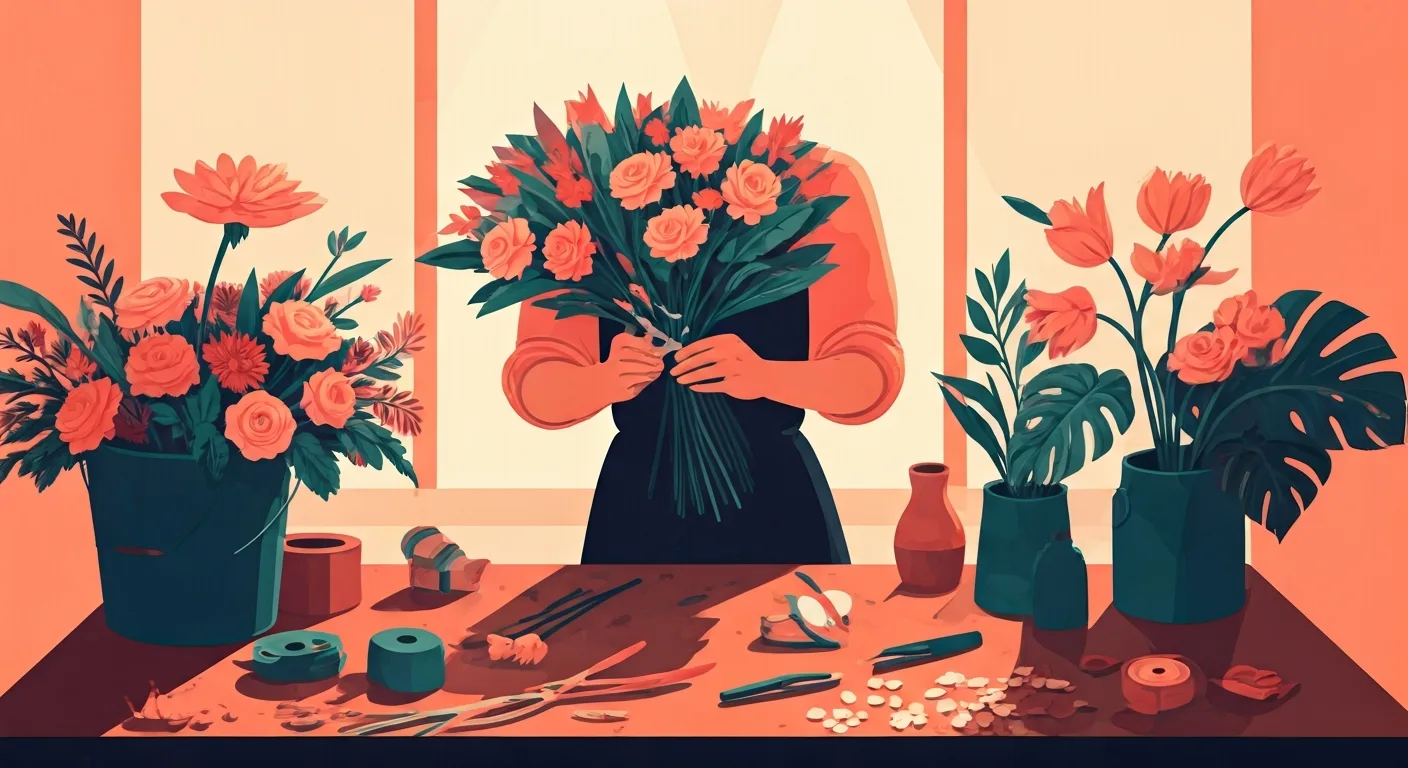
Creates arrangements of flowers, foliage, and decorative elements for events, retail displays, and personal orders. Selects colors, textures, and seasonal blooms to match client preferences and occasions, often working in a fast-paced retail or studio environment.
Brings beauty and emotional expression to special occasions and everyday life, enhancing environments and conveying messages through the art of floral arrangement. Contributes to memorable events and meaningful gestures.
On the job
- Consult with clients to understand their vision, budget, and occasion for floral needs
- Select and procure fresh flowers, foliage, and decorative materials from suppliers
- Design and create custom floral arrangements, bouquets, centerpieces, and installations
- Condition flowers, maintain inventory, and ensure proper care for longevity
- Manage delivery logistics and setup for events, ensuring timely and secure transport
Tools & technology
Average salary
Job outlook
StableDemand is steady. This is an established role with consistent hiring across sectors.
Education & training
Typically requires a certificate or associate's degree in floral design, or extensive on-the-job training and apprenticeship.
AI impact outlook
Note — this is our current view. AI is moving fast, so we revisit these ratings.
Show how this was assessed Hide the detail
Note — this is our current view. AI is moving fast, so we revisit these ratings.
Show how this was assessed Hide the detailWhy this role received this rating
Core task exposure
low
How much of the role’s important work could AI perform?
Design ideation, material selection, and logistical planning can be AI-assisted, but the physical creation and delicate handling of perishable arrangements are not exposed.
End-to-end automation
low
Can AI complete the work without substantial human involvement?
AI cannot physically assemble arrangements, condition flowers, or perform on-site installations; delicate physical manipulation of perishable goods is the binding constraint.
Adoption pressure
moderate
How likely are employers to introduce AI into this work?
Some incentive exists for AI in inventory and scheduling, but direct automation of the hands-on, creative core with perishable materials faces significant practical hurdles.
Human dependence
strong
How much does success depend on human judgement, relationships and accountability?
Success relies on artistic judgment, precise physical dexterity with delicate materials, and empathetic client consultation to fulfill unique visions.
Protective — a higher rating lowers the overall score.
Role adaptability
moderate
How easily can the role evolve as AI takes on more tasks?
The role can adapt by emphasizing unique, bespoke designs, focusing on high-end client relationships, and managing complex event installations.
Shown for context — not part of the score.
What AI may take on
These are the parts of the role most likely to be automated or significantly accelerated.
- Generate design concepts and mood boards based on client input
- Suggest material palettes and seasonal bloom combinations
- Optimize procurement and inventory management of flowers
- Schedule delivery logistics and route planning
- Analyze past sales data for trend forecasting
Where people remain essential
These parts continue to depend heavily on human judgement, relationships and accountability.
- Consult with clients to understand their vision and budget
- Physically select and procure fresh flowers and materials
- Design and create custom floral arrangements by hand
- Condition flowers and maintain their longevity with care
- Manage on-site setup and installation for events
- Troubleshoot issues with perishable materials in real-time
How the role may evolve
Focusing more on unique artistic expression and client connection, less on routine material selection.
Floral designers will leverage AI for background tasks like inventory and basic design ideas, allowing them to concentrate on the hands-on artistry, client consultation, and complex installation work.
Strengthen your future fit
- Cultivate advanced artistic design and composition skills
- Master delicate handling and care of perishable materials
- Develop strong client communication and vision translation
- Specialize in complex, large-scale event installations
- Integrate sustainable and ethical sourcing practices
- Assessment horizon
- 3–7 years
- Confidence
- High
- Last reviewed
- August 2026
- Methodology
- v1.0
This assessment reflects current AI capabilities and expected adoption patterns. Actual impacts will vary by industry, employer and the way each role is performed.
Career pathways
WHERE YOU COULD GO
CURRENT ROLE
Floral Designer
Design & Visual Arts
ADJACENT MOVES
STARTING POINTS
Who thrives here
Interest profile
artistic · RAC
People who enjoy working with their hands to create beautiful objects, express creativity through design, and organize materials and processes tend to thrive in this role.
Personality characteristics
Creative
Enjoys exploring new ideas, artistic styles, and innovative ways to arrange flowers and materials.
Detail-oriented
Pays close attention to the small elements and precision required to create polished and aesthetically pleasing arrangements.
Client-focused
Comfortable interacting with clients, understanding their needs, and ensuring their satisfaction with the final product.
Cooperative
Works well with suppliers, team members, and clients to achieve shared goals and deliver successful projects.
Practical
Enjoys hands-on work, manipulating physical materials, and solving practical problems in a tangible way.
Best for
- Individuals who love working with natural materials and expressing creativity
- Those who enjoy a blend of artistic design and practical, hands-on tasks
- People who thrive in a client-facing role where they can directly impact special occasions
Watch out for
- Work can be physically demanding, involving standing for long periods and lifting
- Seasonal peaks and events may require longer hours, including occasional weekends
A week in the life
A representative working week for a Floral Designer — where the deep work, meetings, and admin actually land.
Real people. Real results.
Thousands of people
can't be wrong.
Frequently asked questions about Floral Designer roles
What does a Floral Designer do?
A Floral Designer creates arrangements of flowers, foliage, and decorative elements for events, retail displays, and personal orders. Selects colors, textures, and seasonal blooms to match client preferences and occasions, often working in a fast-paced retail or studio environment. Brings beauty and emotional expression to special occasions and everyday life, enhancing environments and conveying messages through the art of floral arrangement. Contributes to memorable events and meaningful gestures.
How much does a Floral Designer earn?
A Floral Designer earns a median of $48,000 per year in the US, typically ranging from $32,000 to $65,000.
What qualifications do you need to become a Floral Designer?
To become a Floral Designer, typically requires a certificate or associate's degree in floral design, or extensive on-the-job training and apprenticeship.
What personality suits a Floral Designer?
Floral Designer roles tend to suit people who are open and curious — drawn to variety, ideas and new approaches (Openness 85/100) and warm and cooperative — tuned in to the people around them (Agreeableness 65/100). The traits that matter most in the role are Creative, Detail-oriented, Client-focused and Cooperative. Enjoys exploring new ideas, artistic styles, and innovative ways to arrange flowers and materials. On interests, Floral Designer maps to a RAC Holland Code profile — people who enjoy working with their hands to create beautiful objects, express creativity through design, and organize materials and processes tend to thrive in this role.
Who does a Floral Designer role suit?
A Floral Designer role is usually a strong fit for these reasons. High Artistic and Realistic affinity: the role combines hands-on creation with aesthetic design. Opportunity for direct client interaction and bringing their visions to life. A significant portion of the week is dedicated to deep, creative work and material handling.
What are the downsides of being a Floral Designer?
Floral Designer roles come with trade-offs worth weighing up. Work can be physically demanding, involving standing for long periods and lifting. Seasonal peaks and events may require longer hours, including occasional weekends.
What is the work environment like for a Floral Designer?
Work as a Floral Designer is mostly retail-based with onsite arrangements common, semi-structured — a mix of set processes and self-directed work, a moderate pace and high exposure to clients or stakeholders. Around 52% of the week is focused deep work.
What skills do you need to be a Floral Designer?
Core skills for a Floral Designer include Floral arrangement techniques, Color theory and design principles, Plant and flower identification, Customer service and consultation and Inventory management and procurement.
How do you become a Floral Designer?
Common entry routes into Floral Designer roles include Florist Assistant, Horticulturist and Visual Merchandising Assistant.
What career progression is there for a Floral Designer?
From a Floral Designer role, common next steps include Senior Floral Designer and Floral Studio Owner; lateral moves include Event Designer and Horticulturist.
What is the job outlook for Floral Designer roles?
The outlook for Floral Designer roles is currently rated stable. Demand is steady. This is an established role with consistent hiring across sectors.
Will AI replace Floral Designer roles?
Traitstack rates automation risk for Floral Designer roles at 33 out of 100, which is low. The physical creation of bespoke arrangements and delicate material handling stays human, with AI supporting design ideation and inventory management. AI is most likely to take on generate design concepts and mood boards based on client input, suggest material palettes and seasonal bloom combinations and optimize procurement and inventory management of flowers. Consult with clients to understand their vision and budget, physically select and procure fresh flowers and materials and design and create custom floral arrangements by hand stay with people. Focusing more on unique artistic expression and client connection, less on routine material selection. That score measures how much of the work could change, not the likelihood the job disappears. It is Traitstack's current view, revisited as AI capability moves.