Nurse Anesthetist
SOC 29-1151.00 · ESCO 2221 · OSCA 265432
Role snapshot
Overview
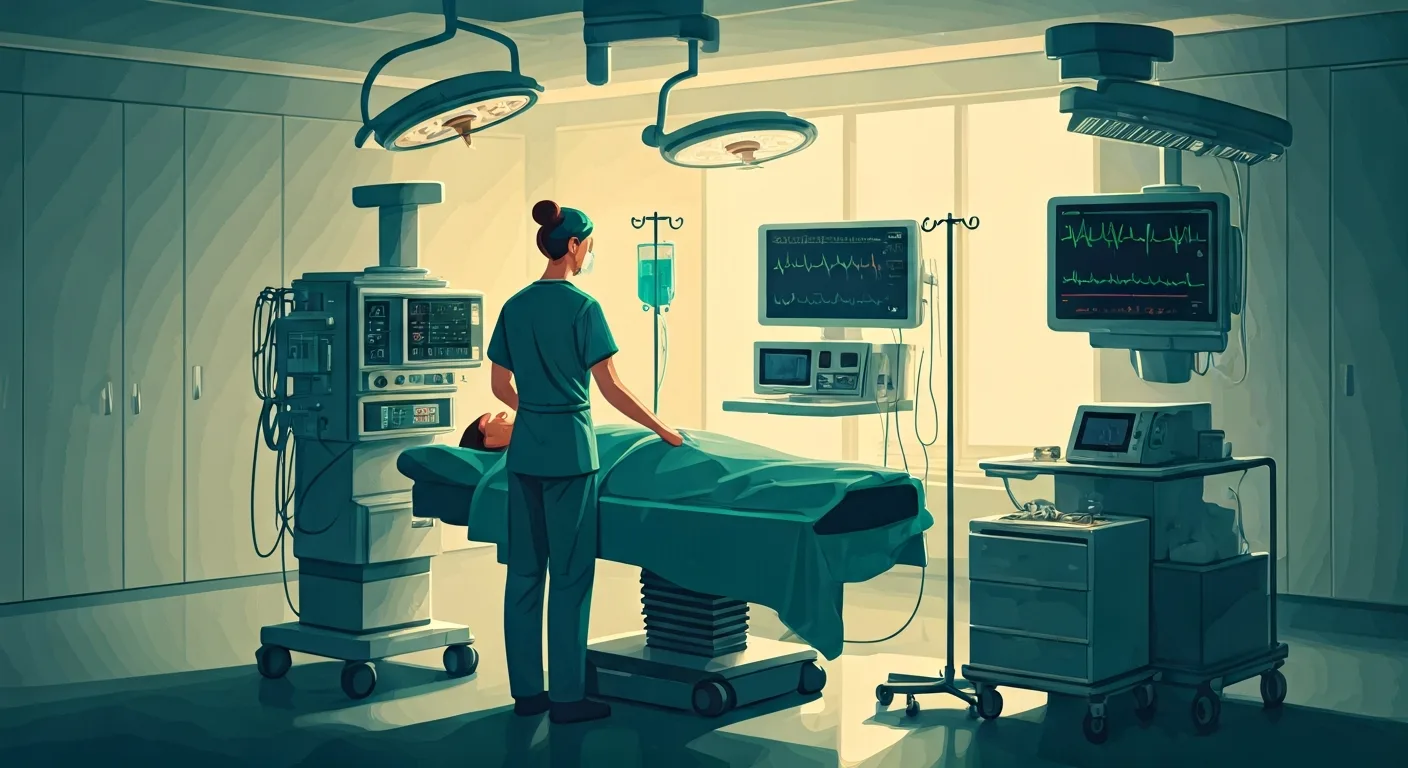
Administers anaesthesia and manages patients' pain before, during, and after surgical procedures. Assesses patient health, selects appropriate anaesthetic agents, and monitors vital signs throughout operations. This advanced practice nursing role requires extensive clinical expertise, critical thinking, and independent judgment to ensure patient safety and optimal outcomes in various healthcare settings.
Provides critical care in surgical and procedural settings, ensuring patient comfort, safety, and stable physiological function during anaesthesia. Their expertise directly contributes to positive surgical outcomes and effective pain management.
On the job
- Conduct pre-anesthetic assessments, including patient history review, physical examination, and analysis of diagnostic tests.
- Develop and implement individualized anesthesia care plans for diverse patient populations and surgical procedures.
- Administer general, regional, and local anesthesia, including intubation, monitoring, and precise medication titration.
- Continuously monitor patient vital signs, physiological responses, and anesthesia depth, making real-time adjustments as needed.
- Manage post-anesthesia recovery, acute pain control, and potential complications in the post-operative period.
Tools & technology
Average salary
Job outlook
ExcellentNew job opportunities are highly likely. Demand significantly outpaces supply in most markets.
Education & training
A doctoral degree in nurse anesthesia, such as a Doctor of Nursing Practice (DNP) or Doctor of Nurse Anesthesia Practice (DNAP), is typically required, building upon a master's degree and extensive critical care nursing experience.
AI impact outlook
Note — this is our current view. AI is moving fast, so we revisit these ratings.
Show how this was assessed Hide the detail
Note — this is our current view. AI is moving fast, so we revisit these ratings.
Show how this was assessed Hide the detailWhy this role received this rating
Core task exposure
low
How much of the role’s important work could AI perform?
Pre-anesthetic assessments (data analysis) and continuous vital sign monitoring can be significantly assisted by AI.
End-to-end automation
low
Can AI complete the work without substantial human involvement?
Administering anesthesia requires continuous real-time human judgment, precise physical intervention, and ultimate accountability for life-critical care.
Adoption pressure
low
How likely are employers to introduce AI into this work?
The extreme risk to patient life associated with anesthesia means automation will be very slow, highly regulated, and primarily assist rather than replace.
Human dependence
strong
How much does success depend on human judgement, relationships and accountability?
Success depends on highly specialized clinical expertise, rapid critical thinking, precise physical execution, and ultimate accountability for patient safety during surgery.
Protective — a higher rating lowers the overall score.
Role adaptability
strong
How easily can the role evolve as AI takes on more tasks?
The role requires continuous adaptation to new surgical techniques, anesthetic agents, patient populations, and technological advancements in monitoring.
Shown for context — not part of the score.
What AI may take on
These are the parts of the role most likely to be automated or significantly accelerated.
- Analyzing patient history and diagnostic tests for pre-anesthetic assessments
- Continuously monitoring and interpreting patient vital signs
- Predicting patient responses to anesthetic agents based on data
- Optimizing medication titration schedules and infusion rates
- Generating detailed documentation of anesthesia administered
Where people remain essential
These parts continue to depend heavily on human judgement, relationships and accountability.
- Developing individualized anesthesia care plans for diverse procedures
- Administering general, regional, and local anesthesia with physical precision
- Making real-time adjustments to anesthesia depth and patient physiology
- Managing acute pain control and potential complications post-operatively
- Performing emergency interventions like intubation and resuscitation
- Interacting with surgical teams and making critical decisions under pressure
- Providing direct, continuous patient observation beyond data feeds
How the role may evolve
Real-time data synthesis, precision human intervention.
Nurse Anesthetists will utilize AI for advanced patient data synthesis and predictive insights, allowing them to focus on highly precise physical interventions and nuanced, real-time clinical decision-making during surgery.
Strengthen your future fit
- Advanced pharmacology and physiological management
- High-precision technical skills in anesthesia administration
- Critical thinking and rapid decision-making under pressure
- Proficiency with advanced patient monitoring technologies
- Effective communication with surgical teams
- Assessment horizon
- 3–7 years
- Confidence
- High
- Last reviewed
- August 2026
- Methodology
- v1.0
This assessment reflects current AI capabilities and expected adoption patterns. Actual impacts will vary by industry, employer and the way each role is performed.
Career pathways
WHERE YOU COULD GO
CURRENT ROLE
Nurse Anesthetist
Nursing & Midwifery
ADJACENT MOVES
STARTING POINTS
Who thrives here
Interest profile
social · SIR
People who are socially oriented, enjoy investigating complex medical problems, and are hands-on in their practice tend to thrive in this role.
Personality characteristics
Conscientious
Highly organized, disciplined, and meticulous in following protocols and procedures to ensure patient safety and precise outcomes.
Agreeable
Collaborates effectively with surgical teams and communicates empathetically with patients and their families, fostering trust and cooperation.
Emotionally Stable
Maintains composure and performs effectively under intense pressure, even during critical medical emergencies.
Open-minded
Continuously learns new techniques, adapts to evolving medical guidelines, and embraces complex clinical challenges with a desire for knowledge.
Reserved
Prefers focused, task-oriented work within the operating room, prioritizing clinical execution over extensive social interaction.
Best for
- Individuals who thrive in high-stakes clinical environments and are deeply committed to patient advocacy and safety.
- Those with a strong scientific aptitude, excellent problem-solving skills, and a desire for continuous professional development.
- Professionals seeking an autonomous yet highly collaborative role within the surgical and healthcare team.
Watch out for
- High-pressure environment with potential for life-or-death decision-making and rapid response to emergencies.
- Demanding schedule, often including on-call duties, nights, weekends, and holidays.
- Requires extreme conscientiousness, emotional resilience, and the ability to manage stress effectively.
A week in the life
A representative working week for a Nurse Anesthetist — where the deep work, meetings, and admin actually land.
Real people. Real results.
Thousands of people
can't be wrong.



Frequently asked questions about Nurse Anesthetist roles
What does a Nurse Anesthetist do?
A Nurse Anesthetist administers anaesthesia and manages patients' pain before, during, and after surgical procedures. Assesses patient health, selects appropriate anaesthetic agents, and monitors vital signs throughout operations. This advanced practice nursing role requires extensive clinical expertise, critical thinking, and independent judgment to ensure patient safety and optimal outcomes in various healthcare settings. Provides critical care in surgical and procedural settings, ensuring patient comfort, safety, and stable physiological function during anaesthesia. Their expertise directly contributes to positive surgical outcomes and effective pain management.
How much does a Nurse Anesthetist earn?
A Nurse Anesthetist earns a median of $200,000 per year in the US, typically ranging from $160,000 to $250,000.
What qualifications do you need to become a Nurse Anesthetist?
To become a Nurse Anesthetist, a doctoral degree in nurse anesthesia, such as a Doctor of Nursing Practice (DNP) or Doctor of Nurse Anesthesia Practice (DNAP), is typically required, building upon a master's degree and extensive critical care nursing experience. Registered Nurse (RN) license.
What personality suits a Nurse Anesthetist?
Nurse Anesthetist roles tend to suit people who are highly conscientious — precise, organised and strong on follow-through (Conscientiousness 88/100) and warm and cooperative — tuned in to the people around them (Agreeableness 70/100). The traits that matter most in the role are Conscientious, Agreeable, Emotionally Stable and Open-minded. Highly organized, disciplined, and meticulous in following protocols and procedures to ensure patient safety and precise outcomes. On interests, Nurse Anesthetist maps to a SIR Holland Code profile — people who are socially oriented, enjoy investigating complex medical problems, and are hands-on in their practice tend to thrive in this role.
Who does a Nurse Anesthetist role suit?
A Nurse Anesthetist role is usually a strong fit for these reasons. A critical and highly responsible role that demands precision, meticulous attention to detail, and advanced clinical judgment. Offers a strong sense of purpose by directly contributing to patient safety, comfort, and positive outcomes during vulnerable times. Requires continuous learning and the application of advanced medical knowledge, appealing to investigative and intellectual interests.
What are the downsides of being a Nurse Anesthetist?
Nurse Anesthetist roles come with trade-offs worth weighing up. High-pressure environment with potential for life-or-death decision-making and rapid response to emergencies. Demanding schedule, often including on-call duties, nights, weekends, and holidays. Requires extreme conscientiousness, emotional resilience, and the ability to manage stress effectively.
What is the work environment like for a Nurse Anesthetist?
Work as a Nurse Anesthetist is mostly clinical-based with onsite arrangements common, highly structured, with set processes and deadlines and high exposure to clients or stakeholders. Around 60% of the week is focused deep work.
What skills do you need to be a Nurse Anesthetist?
Core skills for a Nurse Anesthetist include Anesthesia administration, Physiological monitoring, Pain management, Emergency response, Critical thinking and Patient assessment.
How do you become a Nurse Anesthetist?
Common entry routes into Nurse Anesthetist roles include Registered Nurse Critical Care, Registered Nurse Emergency and Registered Nurse Intensive Care.
What career progression is there for a Nurse Anesthetist?
From a Nurse Anesthetist role, common next steps include Chief Nurse Anesthetist and Director of Anesthesia Services; lateral moves include Anesthesia Educator and Pain Management Specialist.
What is the job outlook for Nurse Anesthetist roles?
The outlook for Nurse Anesthetist roles is currently rated excellent. New job opportunities are highly likely. Demand significantly outpaces supply in most markets.
Will AI replace Nurse Anesthetist roles?
Traitstack rates automation risk for Nurse Anesthetist roles at 21 out of 100, which is low. Patient assessment data can be AI-processed for efficiency, but the precise administration of anesthesia and real-time management of patient physiology are human-led. AI is most likely to take on analyzing patient history and diagnostic tests for pre-anesthetic assessments, continuously monitoring and interpreting patient vital signs and predicting patient responses to anesthetic agents based on data. Developing individualized anesthesia care plans for diverse procedures, administering general, regional, and local anesthesia with physical precision and making real-time adjustments to anesthesia depth and patient physiology stay with people. Real-time data synthesis, precision human intervention. That score measures how much of the work could change, not the likelihood the job disappears. It is Traitstack's current view, revisited as AI capability moves.