Musical Instrument Maker
SOC 51-7011.00 · ESCO 7312 · OSCA 391933
Role snapshot
Overview
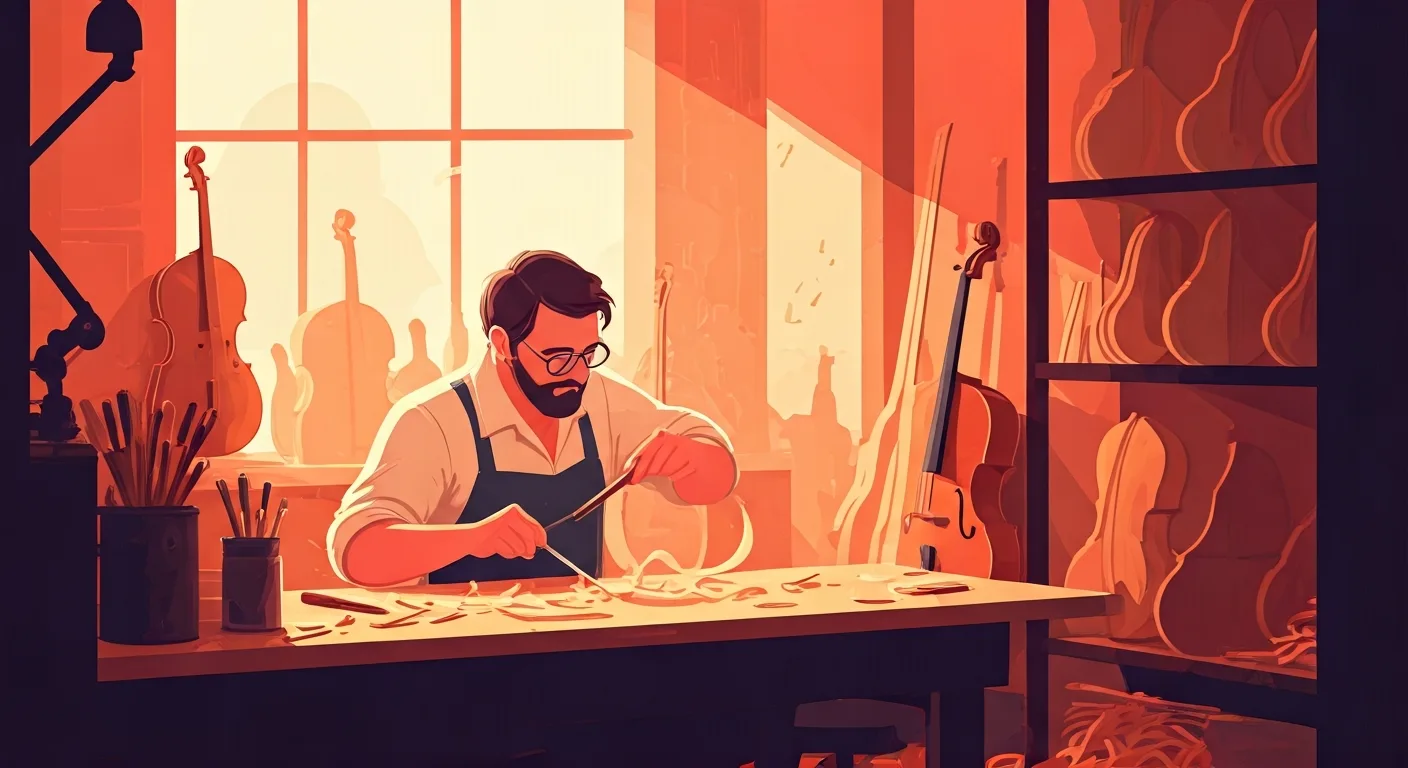
Handcrafts and repairs instruments such as guitars, violins, or pianos using traditional woodworking and metalworking techniques. This role involves selecting appropriate tonewoods, fabricating components, assembling instruments, and fine-tuning them to achieve the desired sound quality and playability. Musical Instrument Makers combine precision craftsmanship with an understanding of acoustics and musical aesthetics.
Preserves traditional craftsmanship, creates high-quality musical instruments that inspire musicians, and ensures the longevity and playability of existing instruments through skilled repair.
On the job
- Select and prepare raw materials, such as tonewoods, for instrument construction.
- Perform precision woodworking, carving, and shaping of instrument components.
- Assemble instruments, ensuring structural integrity and acoustic performance.
- Conduct intricate repairs, restorations, and adjustments to various musical instruments.
- Test and fine-tune instruments to achieve optimal sound quality, intonation, and playability.
Tools & technology
Average salary
Job outlook
StableDemand is steady. This is an established role with consistent hiring across sectors.
Education & training
Vocational training, apprenticeship, or formal education in lutherie, instrument repair, or fine woodworking is typically required.
AI impact outlook
Note — this is our current view. AI is moving fast, so we revisit these ratings.
Show how this was assessed Hide the detail
Note — this is our current view. AI is moving fast, so we revisit these ratings.
Show how this was assessed Hide the detailWhy this role received this rating
Core task exposure
low
How much of the role’s important work could AI perform?
The core craft, including material selection, precision shaping for tone, and acoustic fine-tuning, relies heavily on human judgment and sensory skill, with minimal AI exposure.
End-to-end automation
low
Can AI complete the work without substantial human involvement?
The artistic, creative, and sensory aspects of instrument making make full end-to-end automation without human intervention virtually impossible.
Adoption pressure
low
How likely are employers to introduce AI into this work?
Employers are unlikely to adopt AI for automating this craft profession, though AI might assist with design blueprints or material sourcing in limited ways.
Human dependence
strong
How much does success depend on human judgement, relationships and accountability?
Success is almost entirely dependent on artistic judgment, deep craft knowledge, sensory evaluation of sound and feel, and personalized client relationships.
Protective — a higher rating lowers the overall score.
Role adaptability
moderate
How easily can the role evolve as AI takes on more tasks?
The role adapts to new materials and designs, but the fundamental craft techniques and artistic principles remain deeply traditional.
Shown for context — not part of the score.
What AI may take on
These are the parts of the role most likely to be automated or significantly accelerated.
- Generate CAD models for instrument components
- Suggest optimal material pairings based on acoustic properties
- Assist with inventory management for specialized woods and parts
- Provide historical data on instrument designs and specifications
- Simulate acoustic properties of design changes
Where people remain essential
These parts continue to depend heavily on human judgement, relationships and accountability.
- Selecting and preparing raw materials based on tactile and visual assessment
- Performing precision woodworking and carving with artistic intent
- Assembling instruments with structural integrity and acoustic performance in mind
- Conducting intricate repairs and restorations on unique pieces
- Fine-tuning instruments for optimal sound quality, intonation, and playability
- Engaging with clients for custom designs and personal preferences
- Applying advanced understanding of acoustics and craftsmanship
How the role may evolve
Preserving tradition with modern tools. The craft deepens; the tools evolve.
While AI might offer some assistance in initial design or material analysis, the instrument maker's role will remain focused on masterful craftsmanship, artistic expression, and the sensory refinement of sound.
Strengthen your future fit
- Advanced woodworking and metalworking craftsmanship
- Deep understanding of acoustics and material science
- Artistic judgment for aesthetic and tonal quality
- Client consultation and communication for custom work
- Dexterity and precision for intricate repairs and assembly
- Assessment horizon
- 3–7 years
- Confidence
- Medium
- Last reviewed
- August 2026
- Methodology
- v1.0
This assessment reflects current AI capabilities and expected adoption patterns. Actual impacts will vary by industry, employer and the way each role is performed.
Career pathways
WHERE YOU COULD GO
CURRENT ROLE
Musical Instrument Maker
Skilled Trades
ADJACENT MOVES
STARTING POINTS
Who thrives here
Interest profile
realistic · RCA
People who enjoy hands-on, practical work combined with artistic expression and meticulous attention to detail often find satisfaction in musical instrument making.
Personality characteristics
Meticulous
Pays extremely close attention to detail, ensuring precision in every cut, joint, and component of an instrument.
Creative
Enjoys experimenting with different materials, designs, and acoustic properties to achieve unique sounds and aesthetics.
Patient
Possesses the endurance to spend significant time on intricate tasks, understanding that quality craftsmanship cannot be rushed.
Independent
Comfortable working autonomously for extended periods on complex projects, focusing on the craft.
Perceptive
Has a keen ear and eye for subtle nuances in sound, form, and finish, crucial for fine-tuning instruments.
Problem-solver
Systematically diagnoses and resolves structural, acoustic, or playability issues during construction or repair.
Best for
- Individuals who are passionate about music and derive satisfaction from creating tangible, high-quality objects.
- Craftspeople who enjoy combining traditional techniques with an understanding of science and art.
- Those who thrive in an environment where precision, patience, and creativity are paramount.
Watch out for
- Work can be solitary, requiring comfort with extended periods of independent focus.
- Requires high patience and meticulousness, as tasks are often intricate and time-consuming.
A week in the life
A representative working week for a Musical Instrument Maker — where the deep work, meetings, and admin actually land.
Real people. Real results.
Thousands of people
can't be wrong.




Frequently asked questions about Musical Instrument Maker roles
What does a Musical Instrument Maker do?
A Musical Instrument Maker handcrafts and repairs instruments such as guitars, violins, or pianos using traditional woodworking and metalworking techniques. This role involves selecting appropriate tonewoods, fabricating components, assembling instruments, and fine-tuning them to achieve the desired sound quality and playability. Musical Instrument Makers combine precision craftsmanship with an understanding of acoustics and musical aesthetics. Preserves traditional craftsmanship, creates high-quality musical instruments that inspire musicians, and ensures the longevity and playability of existing instruments through skilled repair.
How much does a Musical Instrument Maker earn?
A Musical Instrument Maker earns a median of $65,000 per year in the US, typically ranging from $45,000 to $90,000.
What qualifications do you need to become a Musical Instrument Maker?
To become a Musical Instrument Maker, vocational training, apprenticeship, or formal education in lutherie, instrument repair, or fine woodworking is typically required.
What personality suits a Musical Instrument Maker?
Musical Instrument Maker roles tend to suit people who are open and curious — drawn to variety, ideas and new approaches (Openness 82/100) and highly conscientious — precise, organised and strong on follow-through (Conscientiousness 75/100). The traits that matter most in the role are Meticulous, Creative, Patient and Independent. Pays extremely close attention to detail, ensuring precision in every cut, joint, and component of an instrument. On interests, Musical Instrument Maker maps to a RCA Holland Code profile — people who enjoy hands-on, practical work combined with artistic expression and meticulous attention to detail often find satisfaction in musical instrument making.
Who does a Musical Instrument Maker role suit?
A Musical Instrument Maker role is usually a strong fit for these reasons. High Realistic and Artistic alignment, emphasizing hands-on creation and aesthetic design. A significant portion of the week is dedicated to deep, focused craftsmanship and technical work. The role requires precision and systematic problem-solving, appealing to conscientious individuals.
What are the downsides of being a Musical Instrument Maker?
Musical Instrument Maker roles come with trade-offs worth weighing up. Work can be solitary, requiring comfort with extended periods of independent focus. Requires high patience and meticulousness, as tasks are often intricate and time-consuming.
What is the work environment like for a Musical Instrument Maker?
Work as a Musical Instrument Maker is mostly workshop-based with onsite arrangements common, largely self-directed, with little imposed structure, a moderate pace and medium exposure to clients or stakeholders. Around 78% of the week is focused deep work.
What skills do you need to be a Musical Instrument Maker?
Core skills for a Musical Instrument Maker include Precision woodworking, Acoustic principles, Material selection, Instrument repair techniques, Attention to detail and Fine motor skills.
How do you become a Musical Instrument Maker?
Common entry routes into Musical Instrument Maker roles include Apprentice Instrument Maker, Woodworking Apprentice and Fine Carpenter.
What career progression is there for a Musical Instrument Maker?
From a Musical Instrument Maker role, common next steps include Master Luthier; lateral moves include Instrument Design Engineer and Music Conservator.
What is the job outlook for Musical Instrument Maker roles?
The outlook for Musical Instrument Maker roles is currently rated stable. Demand is steady. This is an established role with consistent hiring across sectors.
Will AI replace Musical Instrument Maker roles?
Traitstack rates automation risk for Musical Instrument Maker roles at 15 out of 100, which is low. The artistic craft of instrument making, including material selection and acoustic fine-tuning, remains deeply human-centered, with minimal AI automation pressure. AI is most likely to take on generate cad models for instrument components, suggest optimal material pairings based on acoustic properties and assist with inventory management for specialized woods and parts. Selecting and preparing raw materials based on tactile and visual assessment, performing precision woodworking and carving with artistic intent and assembling instruments with structural integrity and acoustic performance in mind stay with people. Preserving tradition with modern tools. The craft deepens; the tools evolve. That score measures how much of the work could change, not the likelihood the job disappears. It is Traitstack's current view, revisited as AI capability moves.