Medical Laboratory Technician
SOC 29-2012.00 · ESCO 3212 · OSCA 311233
Role snapshot
Overview
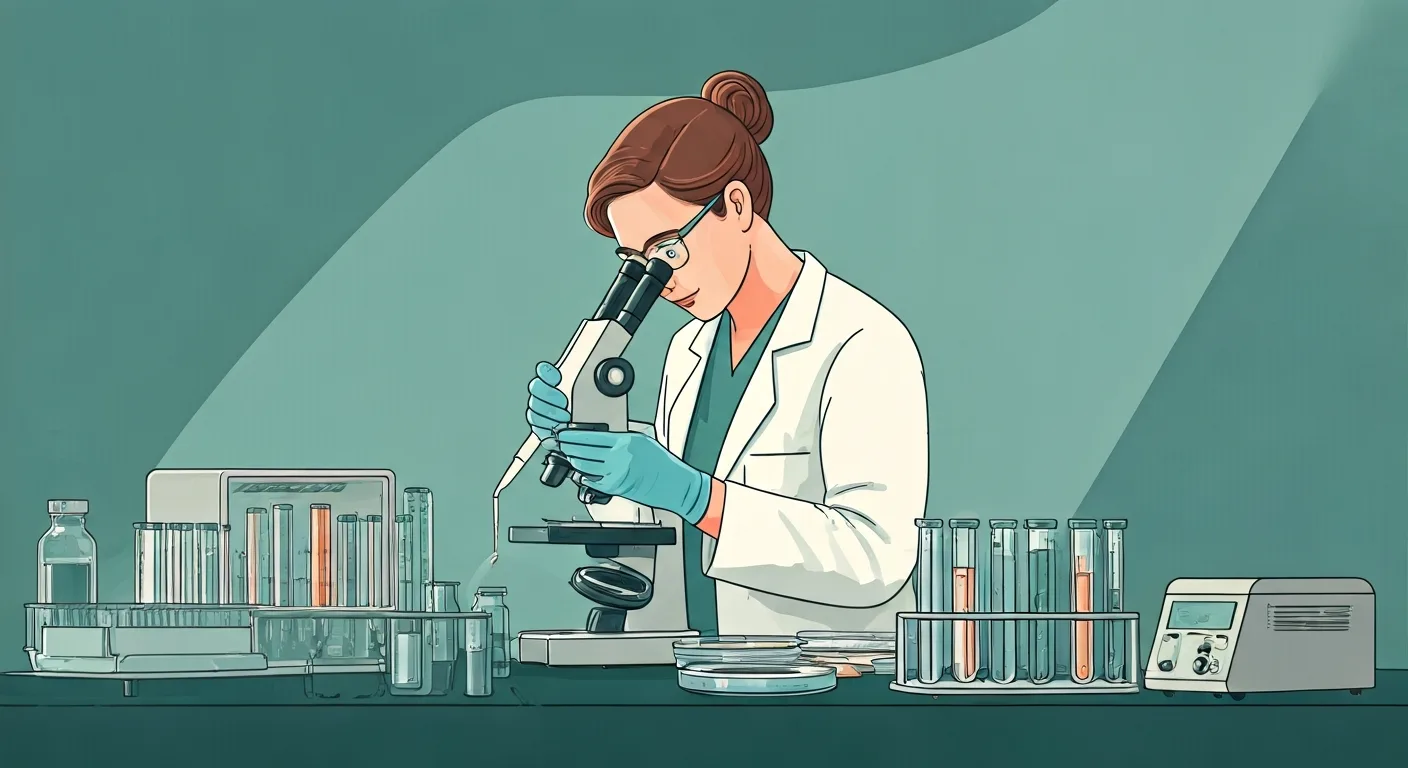
Medical Laboratory Technicians (MLTs) are vital members of healthcare teams, performing a wide range of laboratory tests on patient samples such as blood, urine, tissue, and other body fluids. They operate and maintain sophisticated diagnostic equipment, ensuring the accuracy and reliability of test results. Their precise work provides critical information to physicians for diagnosing diseases, monitoring treatment effectiveness, and preventing health issues.
Provides crucial diagnostic information to physicians, directly influencing patient care, disease diagnosis, treatment planning, and public health initiatives.
On the job
- Collect and process patient samples, including blood, urine, and tissue, for laboratory analysis.
- Perform chemical, hematological, immunologic, microscopic, and bacteriological tests using specialized instruments.
- Operate, calibrate, and maintain laboratory equipment and instruments to ensure proper functioning and accuracy.
- Analyze and interpret test results, ensuring accuracy, identifying abnormalities, and reporting findings to medical staff.
- Adhere to strict quality control and safety guidelines, maintaining a sterile and compliant laboratory environment.
Tools & technology
Average salary
Job outlook
GrowingJob growth is expected to be above average over the next five years.
Education & training
Associate's degree in Medical Laboratory Technology (MLT) or a postsecondary certificate. Some roles may require a Bachelor's degree in Medical Technology or Clinical Laboratory Science.
AI impact outlook
Note — this is our current view. AI is moving fast, so we revisit these ratings.
Show how this was assessed Hide the detail
Note — this is our current view. AI is moving fast, so we revisit these ratings.
Show how this was assessed Hide the detailWhy this role received this rating
Core task exposure
moderate
How much of the role’s important work could AI perform?
AI can assist in flagging abnormalities and generating preliminary reports from test results, but physical sample handling and equipment operation remain manual.
End-to-end automation
low
Can AI complete the work without substantial human involvement?
While AI can streamline parts of data analysis and reporting, the full workflow from patient sample collection to final validated results requires human oversight and intervention.
Adoption pressure
high
How likely are employers to introduce AI into this work?
There is significant employer interest in AI for efficiency in data interpretation and LIS integration, balanced by high regulatory and patient safety concerns.
Human dependence
strong
How much does success depend on human judgement, relationships and accountability?
Success in this role relies heavily on human precision in sample processing, critical judgment in quality control, and effective communication with medical staff.
Protective — a higher rating lowers the overall score.
Role adaptability
strong
How easily can the role evolve as AI takes on more tasks?
The role can adapt by focusing more on complex diagnostic analysis, troubleshooting advanced equipment, and ensuring overall laboratory quality assurance.
Shown for context — not part of the score.
What AI may take on
These are the parts of the role most likely to be automated or significantly accelerated.
- Analyzing test results to flag potential abnormalities
- Drafting preliminary reports for physician review
- Managing and integrating data within Laboratory Information Systems (LIS)
- Identifying patterns in large datasets of patient results
Where people remain essential
These parts continue to depend heavily on human judgement, relationships and accountability.
- Collecting and processing patient samples with precision
- Operating and calibrating complex laboratory equipment
- Performing manual microscopy for detailed cellular analysis
- Ensuring strict adherence to quality control and safety guidelines
- Interpreting ambiguous results requiring clinical judgment
- Communicating findings and collaborating with medical staff
How the role may evolve
From manual analysis to validating AI-flagged insights.
The role will shift from extensive manual analysis to validating AI-generated insights and focusing on complex cases or technical challenges, demanding higher critical thinking skills.
Strengthen your future fit
- Developing expertise in interpreting complex diagnostic data
- Mastering advanced laboratory instrumentation and troubleshooting
- Strengthening critical thinking and problem-solving abilities
- Improving communication skills for interdisciplinary collaboration
- Staying current with evolving laboratory technologies and AI applications
- Assessment horizon
- 3–7 years
- Confidence
- High
- Last reviewed
- August 2026
- Methodology
- v1.0
This assessment reflects current AI capabilities and expected adoption patterns. Actual impacts will vary by industry, employer and the way each role is performed.
Career pathways
WHERE YOU COULD GO
CURRENT ROLE
Medical Laboratory Technician
Allied Health
ADJACENT MOVES
STARTING POINTS
Who thrives here
Interest profile
investigative · RIC
Individuals who enjoy scientific investigation, working with precision equipment, and adhering to established procedures to solve problems and contribute to healthcare.
Personality characteristics
Methodical
Approaches tasks with a systematic and organized mindset, essential for accurate lab procedures.
Inquisitive
Possesses a natural curiosity for scientific principles and enjoys investigating samples for diagnostic clues.
Reserved
Prefers focusing on detailed tasks and working independently or within a small team rather than extensive social interaction.
Cooperative
Works effectively as part of a laboratory team, sharing responsibilities and communicating findings clearly.
Calm under pressure
Maintains composure and precision when handling urgent samples or critical test results.
Best for
- Individuals who thrive in a structured, scientific environment with clear protocols and a focus on accuracy.
- Those who find satisfaction in precise, technical work that directly supports medical diagnosis and patient care.
- People who prefer working independently or within a small team in a laboratory setting rather than extensive direct patient interaction.
Watch out for
- The work environment can be fast-paced and demanding, especially in hospital settings, requiring constant vigilance and attention to detail.
- Routine exposure to potentially infectious materials and hazardous chemicals necessitates strict adherence to safety protocols and procedures.
A week in the life
A representative working week for a Medical Laboratory Technician — where the deep work, meetings, and admin actually land.
Real people. Real results.
Thousands of people
can't be wrong.





Frequently asked questions about Medical Laboratory Technician roles
What does a Medical Laboratory Technician do?
A Medical Laboratory Technician medical Laboratory Technicians (MLTs) are vital members of healthcare teams, performing a wide range of laboratory tests on patient samples such as blood, urine, tissue, and other body fluids. They operate and maintain sophisticated diagnostic equipment, ensuring the accuracy and reliability of test results. Their precise work provides critical information to physicians for diagnosing diseases, monitoring treatment effectiveness, and preventing health issues. Provides crucial diagnostic information to physicians, directly influencing patient care, disease diagnosis, treatment planning, and public health initiatives.
How much does a Medical Laboratory Technician earn?
A Medical Laboratory Technician earns a median of $55,000 per year in the US, typically ranging from $40,000 to $70,000.
What qualifications do you need to become a Medical Laboratory Technician?
To become a Medical Laboratory Technician, associate's degree in Medical Laboratory Technology (MLT) or a postsecondary certificate. Some roles may require a Bachelor's degree in Medical Technology or Clinical Laboratory Science. Certification by ASCP (American Society for Clinical Pathology) or AMT (American Medical Technologists) is often required or preferred.
What personality suits a Medical Laboratory Technician?
Medical Laboratory Technician roles tend to suit people who are highly conscientious — precise, organised and strong on follow-through (Conscientiousness 88/100) and reserved — comfortable with long independent focus rather than constant social contact (Extraversion 30/100). The traits that matter most in the role are Methodical, Inquisitive, Reserved and Cooperative. Approaches tasks with a systematic and organized mindset, essential for accurate lab procedures. On interests, Medical Laboratory Technician maps to a RIC Holland Code profile — individuals who enjoy scientific investigation, working with precision equipment, and adhering to established procedures to solve problems and contribute to healthcare.
Who does a Medical Laboratory Technician role suit?
A Medical Laboratory Technician role is usually a strong fit for these reasons. High Investigative alignment: involves scientific analysis and problem-solving through testing. Strong Conventional and Realistic aspects: requires adherence to strict protocols, precision in operating equipment, and systematic data handling. Directly contributes to patient health outcomes without requiring extensive direct patient contact, appealing to those who prefer task-oriented work.
What are the downsides of being a Medical Laboratory Technician?
Medical Laboratory Technician roles come with trade-offs worth weighing up. The work environment can be fast-paced and demanding, especially in hospital settings, requiring constant vigilance and attention to detail. Routine exposure to potentially infectious materials and hazardous chemicals necessitates strict adherence to safety protocols and procedures.
What is the work environment like for a Medical Laboratory Technician?
Work as a Medical Laboratory Technician is mostly lab-based with onsite arrangements common, highly structured, with set processes and deadlines and low exposure to clients or stakeholders. Around 65% of the week is focused deep work.
What skills do you need to be a Medical Laboratory Technician?
Core skills for a Medical Laboratory Technician include Clinical laboratory testing, Instrument operation and maintenance, Quality control, Sample collection and processing and Data analysis and reporting.
How do you become a Medical Laboratory Technician?
Common entry routes into Medical Laboratory Technician roles include Phlebotomist and Laboratory Assistant.
What career progression is there for a Medical Laboratory Technician?
From a Medical Laboratory Technician role, common next steps include Medical Technologist, Laboratory Supervisor and Pathologist Assistant; lateral moves include Research Assistant.
What is the job outlook for Medical Laboratory Technician roles?
The outlook for Medical Laboratory Technician roles is currently rated growing. Job growth is expected to be above average over the next five years.
Will AI replace Medical Laboratory Technician roles?
Traitstack rates automation risk for Medical Laboratory Technician roles at 48 out of 100, which is moderate. While AI will aid in initial data interpretation and reporting, core tasks like sample handling, equipment calibration, and critical quality control remain firmly human. AI is most likely to take on analyzing test results to flag potential abnormalities, drafting preliminary reports for physician review and managing and integrating data within laboratory information systems (lis). Collecting and processing patient samples with precision, operating and calibrating complex laboratory equipment and performing manual microscopy for detailed cellular analysis stay with people. From manual analysis to validating AI-flagged insights. That score measures how much of the work could change, not the likelihood the job disappears. It is Traitstack's current view, revisited as AI capability moves.