Phlebotomist
SOC 31-9097.00 · ESCO 5329 · OSCA 311431
Role snapshot
Overview
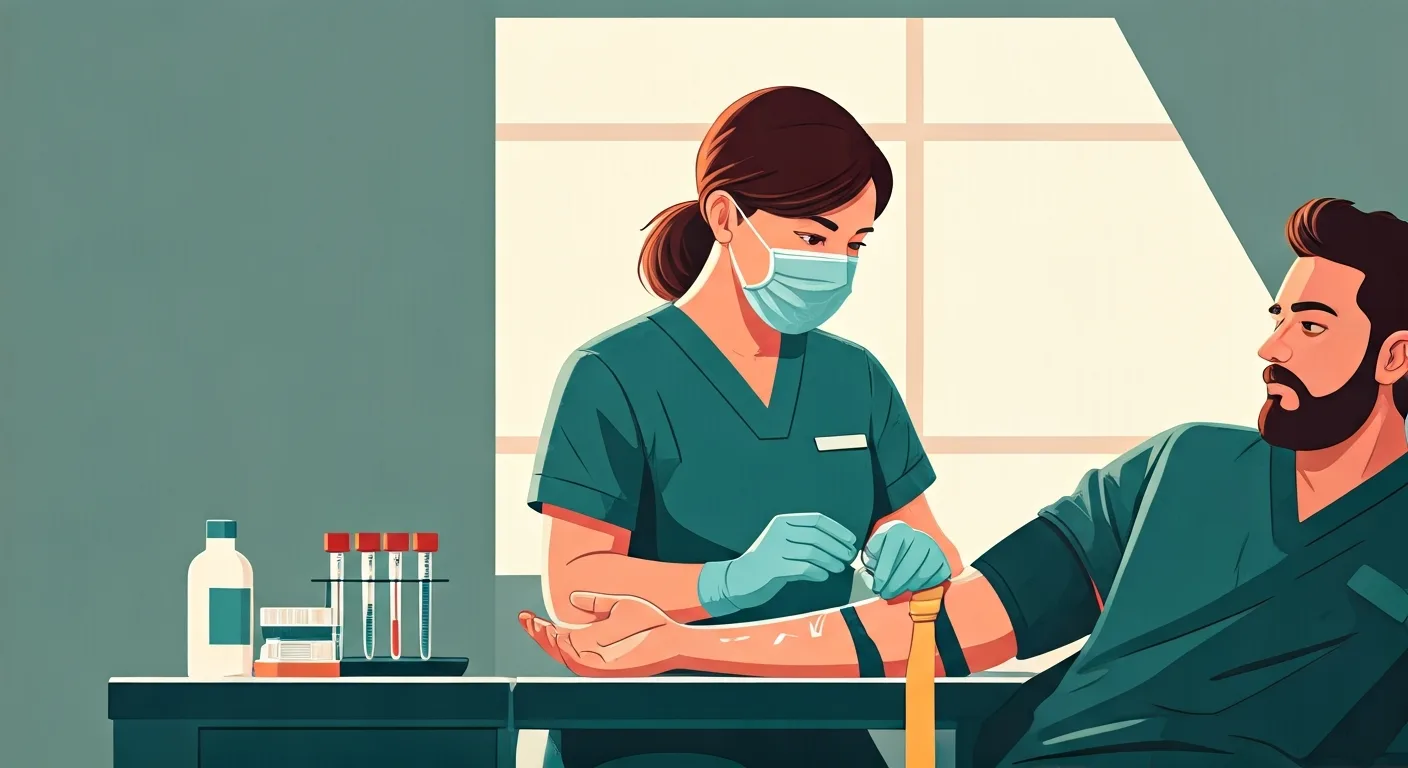
A phlebotomist is a skilled healthcare professional responsible for drawing blood from patients and donors for diagnostic testing, transfusions, and research purposes. This involves performing venipuncture and other collection methods with precision, maintaining strict sterile techniques, and accurately labeling specimens. A key aspect of the role is providing compassionate care, helping to calm anxious patients, and ensuring their comfort and safety throughout the blood collection process.
Provides essential diagnostic data for patient care, disease monitoring, and medical research, directly contributing to accurate diagnoses and effective treatment plans.
On the job
- Perform venipuncture and capillary punctures to collect blood samples from patients of all ages.
- Verify patient identification, specimen requirements, and label tubes accurately.
- Maintain sterile field and adhere to infection control protocols.
- Provide post-puncture care, observe patients for adverse reactions, and ensure their comfort.
- Transport specimens to the laboratory, ensuring proper handling and temperature control.
Tools & technology
Average salary
Job outlook
GrowingJob growth is expected to be above average over the next five years.
Education & training
Completion of a phlebotomy training program, typically a certificate or diploma, is required. Some roles may prefer an Associate's degree.
AI impact outlook
Note — this is our current view. AI is moving fast, so we revisit these ratings.
Show how this was assessed Hide the detail
Note — this is our current view. AI is moving fast, so we revisit these ratings.
Show how this was assessed Hide the detailWhy this role received this rating
Core task exposure
moderate
How much of the role’s important work could AI perform?
The identification, verification, labeling, and logistical aspects of blood collection are highly susceptible to AI automation, while the physical venipuncture is less so.
End-to-end automation
low
Can AI complete the work without substantial human involvement?
The critical physical act of drawing blood, coupled with the need for patient comfort and monitoring for adverse reactions, prevents AI from completing the full workflow unaided.
Adoption pressure
high
How likely are employers to introduce AI into this work?
High volumes of repetitive tasks, combined with a drive for accuracy and efficiency in healthcare, create strong incentives for adopting AI-assisted phlebotomy tools.
Human dependence
strong
How much does success depend on human judgement, relationships and accountability?
Success relies heavily on human dexterity, empathetic patient interaction to calm anxieties, and the ability to adapt to individual physiological variations during blood draws.
Protective — a higher rating lowers the overall score.
Role adaptability
moderate
How easily can the role evolve as AI takes on more tasks?
The role can adapt by integrating AI-guided vein visualization tools and focusing on complex cases, patient support, and managing automated specimen handling systems.
Shown for context — not part of the score.
What AI may take on
These are the parts of the role most likely to be automated or significantly accelerated.
- Verifying patient identification and specimen requirements automatically.
- Accurate labeling of blood collection tubes.
- Optimizing specimen transport routes and handling conditions.
- AI-guided vein visualization and selection for venipuncture.
- Automated tracking of collected samples within the laboratory system.
Where people remain essential
These parts continue to depend heavily on human judgement, relationships and accountability.
- Performing the delicate physical act of venipuncture and capillary punctures.
- Calming anxious patients and providing empathetic bedside care.
- Adapting to difficult or unusual venipuncture cases (e.g., fragile veins, pediatric patients).
- Recognizing and responding to patient adverse reactions during and after blood collection.
- Maintaining strict sterile technique during physical interaction with the patient.
- Making on-the-spot judgments about patient comfort and safety.
- Educating patients about the procedure and post-collection care.
How the role may evolve
Precision and efficiency in collection increase. Human empathy centralizes.
Phlebotomists will increasingly rely on AI for verification and logistical support, allowing them to focus more intensely on the skillful execution of venipuncture and providing compassionate, reassuring patient interactions.
Strengthen your future fit
- Proficiency in using AI-powered vein visualization and guidance systems.
- Enhanced communication and de-escalation skills for anxious patients.
- Advanced problem-solving for complex venipuncture challenges.
- Knowledge of automated lab systems and specimen management.
- Continuous development of clinical observation and patient assessment skills.
- Assessment horizon
- 3–7 years
- Confidence
- High
- Last reviewed
- August 2026
- Methodology
- v1.0
This assessment reflects current AI capabilities and expected adoption patterns. Actual impacts will vary by industry, employer and the way each role is performed.
Career pathways
WHERE YOU COULD GO
CURRENT ROLE
Phlebotomist
Allied Health
ADJACENT MOVES
STARTING POINTS
Who thrives here
Interest profile
conventional · CRI
Individuals who are practical, enjoy working with their hands, follow established procedures, and have an interest in medical diagnostics tend to excel in this role.
Personality characteristics
Detail-oriented
Meticulous in following procedures and ensuring accuracy in specimen collection and labeling.
Empathetic
Able to put anxious patients at ease and provide a comfortable experience.
Calm under pressure
Remains composed and steady even with difficult patients or urgent situations.
Observant
Pays close attention to patient reactions and subtle cues during blood draws.
Practical
Enjoys hands-on tasks and precise execution of medical procedures.
Best for
- Individuals who thrive in structured environments with clear procedures.
- Those who enjoy direct patient interaction and providing comfort.
- People seeking a vital, hands-on role in healthcare.
Watch out for
- Limited scope for creative or unstructured problem-solving.
- Requires comfort with bodily fluids and patient discomfort.
A week in the life
A representative working week for a Phlebotomist — where the deep work, meetings, and admin actually land.
Real people. Real results.
Thousands of people
can't be wrong.




Frequently asked questions about Phlebotomist roles
What does a Phlebotomist do?
A Phlebotomist a phlebotomist is a skilled healthcare professional responsible for drawing blood from patients and donors for diagnostic testing, transfusions, and research purposes. This involves performing venipuncture and other collection methods with precision, maintaining strict sterile techniques, and accurately labeling specimens. A key aspect of the role is providing compassionate care, helping to calm anxious patients, and ensuring their comfort and safety throughout the blood collection process. Provides essential diagnostic data for patient care, disease monitoring, and medical research, directly contributing to accurate diagnoses and effective treatment plans.
How much does a Phlebotomist earn?
A Phlebotomist earns a median of $42,000 per year in the US, typically ranging from $35,000 to $50,000.
What qualifications do you need to become a Phlebotomist?
To become a Phlebotomist, completion of a phlebotomy training program, typically a certificate or diploma, is required. Some roles may prefer an Associate's degree. National Phlebotomy Certification (e.g., ASCP, NHA).
What personality suits a Phlebotomist?
Phlebotomist roles tend to suit people who are highly conscientious — precise, organised and strong on follow-through (Conscientiousness 80/100) and warm and cooperative — tuned in to the people around them (Agreeableness 72/100). The traits that matter most in the role are Detail-oriented, Empathetic, Calm under pressure and Observant. Meticulous in following procedures and ensuring accuracy in specimen collection and labeling. On interests, Phlebotomist maps to a CRI Holland Code profile — individuals who are practical, enjoy working with their hands, follow established procedures, and have an interest in medical diagnostics tend to excel in this role.
Who does a Phlebotomist role suit?
A Phlebotomist role is usually a strong fit for these reasons. High Conventional affinity: the role demands strict adherence to protocols and meticulous detail. Strong Realistic component: involves hands-on procedures and practical application of skills. High Agreeableness: success often comes from empathetic patient interaction and teamwork.
What are the downsides of being a Phlebotomist?
Phlebotomist roles come with trade-offs worth weighing up. Limited scope for creative or unstructured problem-solving. Requires comfort with bodily fluids and patient discomfort.
What is the work environment like for a Phlebotomist?
Work as a Phlebotomist is mostly clinical-based with onsite arrangements common, highly structured, with set processes and deadlines, a moderate pace and high exposure to clients or stakeholders. Around 86% of the week is focused deep work.
What skills do you need to be a Phlebotomist?
Core skills for a Phlebotomist include Venipuncture technique, Specimen handling and labeling, Infection control, Patient communication and Attention to detail.
How do you become a Phlebotomist?
Common entry routes into Phlebotomist roles include Medical Assistant Entry and Healthcare Support Worker.
What career progression is there for a Phlebotomist?
From a Phlebotomist role, common next steps include Lead Phlebotomist, Phlebotomy Supervisor and Medical Laboratory Technician; lateral moves include Medical Assistant and ECG Technician.
What is the job outlook for Phlebotomist roles?
The outlook for Phlebotomist roles is currently rated growing. Job growth is expected to be above average over the next five years.
Will AI replace Phlebotomist roles?
Traitstack rates automation risk for Phlebotomist roles at 43 out of 100, which is moderate. AI could significantly streamline specimen verification and logistics; however, the precise physical act of venipuncture and empathetic patient care remains firmly human. AI is most likely to take on verifying patient identification and specimen requirements automatically., accurate labeling of blood collection tubes. and optimizing specimen transport routes and handling conditions.. Performing the delicate physical act of venipuncture and capillary punctures., calming anxious patients and providing empathetic bedside care. and adapting to difficult or unusual venipuncture cases (e.g., fragile veins, pediatric patients). stay with people. Precision and efficiency in collection increase. Human empathy centralizes. That score measures how much of the work could change, not the likelihood the job disappears. It is Traitstack's current view, revisited as AI capability moves.