Magnetic Resonance Imaging Technologist
SOC 29-2035.00 · ESCO 3211
Role snapshot
Overview
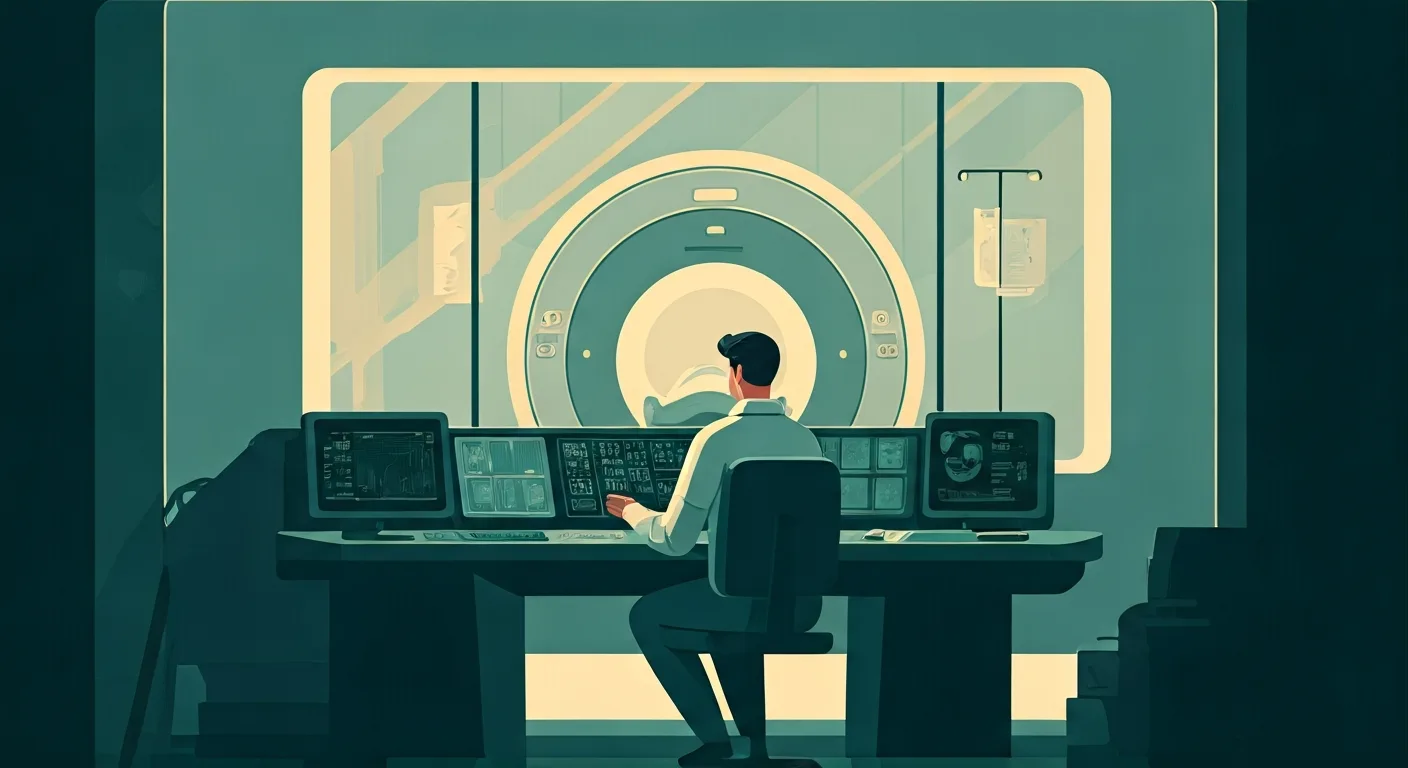
Operates MRI scanners to produce detailed images of patients' internal organs, bones, and tissues. This involves positioning patients, selecting appropriate scanning protocols, and ensuring optimal image quality while prioritizing patient comfort, safety, and adherence to strict magnetic safety guidelines.
Provides critical diagnostic images that assist physicians in detecting, diagnosing, and monitoring a wide range of medical conditions, significantly contributing to patient treatment plans and health outcomes.
On the job
- Prepare patients for MRI procedures, including explaining the process, screening for contraindications, and ensuring comfort.
- Operate MRI equipment, adjusting scanning parameters and sequences to obtain high-quality diagnostic images.
- Monitor patients during scans, ensuring their safety and responding to any concerns or adverse reactions.
- Administer contrast agents intravenously under physician supervision when required for enhanced imaging.
- Maintain accurate patient records, imaging logs, and ensure proper functioning and calibration of MRI equipment.
Tools & technology
Average salary
Job outlook
GrowingJob growth is expected to be above average over the next five years.
Education & training
Typically requires an Associate's degree in Radiologic Technology or a related field, followed by specialized training and certification in Magnetic Resonance Imaging.
AI impact outlook
Note — this is our current view. AI is moving fast, so we revisit these ratings.
Show how this was assessed Hide the detail
Note — this is our current view. AI is moving fast, so we revisit these ratings.
Show how this was assessed Hide the detailWhy this role received this rating
Core task exposure
moderate
How much of the role’s important work could AI perform?
Selecting scanning protocols, optimizing parameters, and initial image quality checks are significantly exposed to AI automation.
End-to-end automation
low
Can AI complete the work without substantial human involvement?
Patient preparation, monitoring for safety, administering contrast, and responding to distress require a human in the loop, preventing full automation.
Adoption pressure
high
How likely are employers to introduce AI into this work?
High demand for efficiency, standardization, and image quality in costly imaging centers drives strong employer interest in AI tools.
Human dependence
strong
How much does success depend on human judgement, relationships and accountability?
Success depends on precise patient positioning, real-time safety monitoring, empathetic communication, and immediate response to patient needs.
Protective — a higher rating lowers the overall score.
Role adaptability
moderate
How easily can the role evolve as AI takes on more tasks?
The role can adapt by focusing on advanced imaging techniques, patient advocacy, and complex troubleshooting of equipment.
Shown for context — not part of the score.
What AI may take on
These are the parts of the role most likely to be automated or significantly accelerated.
- Selecting appropriate scanning protocols based on patient data
- Adjusting scanning parameters and sequences for optimal image quality
- Screening patients for contraindications using rule-based systems
- Monitoring equipment function and flagging maintenance needs
- Performing initial quality control checks on acquired images
Where people remain essential
These parts continue to depend heavily on human judgement, relationships and accountability.
- Preparing patients for MRI procedures and ensuring their comfort
- Positioning patients precisely for diagnostic accuracy
- Monitoring patients during scans for safety and adverse reactions
- Administering contrast agents intravenously under supervision
- Responding empathetically to patient concerns and anxiety
- Maintaining accurate patient records and imaging logs
How the role may evolve
Greater emphasis on patient safety, comfort, and direct procedural care.
As AI streamlines protocol selection and image optimization, MRI technologists will shift their focus from technical parameter adjustments to ensuring an optimal and safe patient experience, managing complex cases, and maintaining vigilance during scans.
Strengthen your future fit
- Proficiency in AI-integrated MRI systems and advanced protocols
- Enhanced patient communication and empathetic care
- Critical thinking for problem-solving during scans
- Advanced knowledge of MRI safety and contraindications
- Troubleshooting equipment malfunctions
- Assessment horizon
- 3–7 years
- Confidence
- High
- Last reviewed
- August 2026
- Methodology
- v1.0
This assessment reflects current AI capabilities and expected adoption patterns. Actual impacts will vary by industry, employer and the way each role is performed.
Career pathways
WHERE YOU COULD GO
CURRENT ROLE
Magnetic Resonance Imaging Technologist
Allied Health
ADJACENT MOVES
STARTING POINTS
Who thrives here
Interest profile
realistic · RCI
Individuals who enjoy hands-on technical work, solving diagnostic puzzles, and adhering to precise procedures while caring for patients often thrive as MRI Technologists.
Personality characteristics
Meticulous
Exhibits high attention to detail and precision, critical for accurate image acquisition and patient safety.
Empathetic
Demonstrates genuine concern for patient comfort and well-being, especially during potentially stressful procedures.
Calm under pressure
Maintains composure and effectiveness when faced with patient anxiety or unexpected technical issues.
Technical aptitude
Enjoys working with complex machinery and understanding the technical principles behind medical imaging.
Analytical thinker
Applies diagnostic reasoning and problem-solving skills to optimize image quality and interpret scanner data.
Procedure-oriented
Adheres strictly to established protocols and safety guidelines to ensure consistent and reliable results.
Best for
- Individuals who are detail-oriented, technically adept, and committed to patient safety and comfort.
- Professionals who thrive in a clinical setting and enjoy operating sophisticated medical equipment.
- Those who find satisfaction in contributing directly to medical diagnosis through precise imaging.
Watch out for
- The work environment can be fast-paced and require continuous focus, which might be challenging for those preferring highly flexible or less structured roles.
- Requires frequent patient interaction, including those who may be anxious or in pain, demanding high levels of empathy and resilience.
A week in the life
A representative working week for a Magnetic Resonance Imaging Technologist — where the deep work, meetings, and admin actually land.
Real people. Real results.
Thousands of people
can't be wrong.




Frequently asked questions about Magnetic Resonance Imaging Technologist roles
What does a Magnetic Resonance Imaging Technologist do?
A Magnetic Resonance Imaging Technologist operates MRI scanners to produce detailed images of patients' internal organs, bones, and tissues. This involves positioning patients, selecting appropriate scanning protocols, and ensuring optimal image quality while prioritizing patient comfort, safety, and adherence to strict magnetic safety guidelines. Provides critical diagnostic images that assist physicians in detecting, diagnosing, and monitoring a wide range of medical conditions, significantly contributing to patient treatment plans and health outcomes.
How much does a Magnetic Resonance Imaging Technologist earn?
A Magnetic Resonance Imaging Technologist earns a median of $85,000 per year in the US, typically ranging from $65,000 to $105,000.
What qualifications do you need to become a Magnetic Resonance Imaging Technologist?
To become a Magnetic Resonance Imaging Technologist, typically requires an Associate's degree in Radiologic Technology or a related field, followed by specialized training and certification in Magnetic Resonance Imaging. Certification by the American Registry of Radiologic Technologists (ARRT) in Radiography (R) and Magnetic Resonance (MR).
What personality suits a Magnetic Resonance Imaging Technologist?
Magnetic Resonance Imaging Technologist roles tend to suit people who are highly conscientious — precise, organised and strong on follow-through (Conscientiousness 82/100) and warm and cooperative — tuned in to the people around them (Agreeableness 72/100). The traits that matter most in the role are Meticulous, Empathetic, Calm under pressure and Technical aptitude. Exhibits high attention to detail and precision, critical for accurate image acquisition and patient safety. On interests, Magnetic Resonance Imaging Technologist maps to a RCI Holland Code profile — individuals who enjoy hands-on technical work, solving diagnostic puzzles, and adhering to precise procedures while caring for patients often thrive as MRI Technologists.
Who does a Magnetic Resonance Imaging Technologist role suit?
A Magnetic Resonance Imaging Technologist role is usually a strong fit for these reasons. Strong Realistic and Conventional interests align with the hands-on, technical, and protocol-driven nature of the role. High Conscientiousness and Agreeableness are crucial for patient safety, precise work, and effective team collaboration. The role offers a clear path to contribute to diagnostic medicine, appealing to those motivated by direct impact on patient health.
What are the downsides of being a Magnetic Resonance Imaging Technologist?
Magnetic Resonance Imaging Technologist roles come with trade-offs worth weighing up. The work environment can be fast-paced and require continuous focus, which might be challenging for those preferring highly flexible or less structured roles. Requires frequent patient interaction, including those who may be anxious or in pain, demanding high levels of empathy and resilience.
What is the work environment like for a Magnetic Resonance Imaging Technologist?
Work as a Magnetic Resonance Imaging Technologist is mostly clinical-based with onsite arrangements common, semi-structured — a mix of set processes and self-directed work, a moderate pace and high exposure to clients or stakeholders. Around 77% of the week is focused deep work.
What skills do you need to be a Magnetic Resonance Imaging Technologist?
Core skills for a Magnetic Resonance Imaging Technologist include MRI scanner operation, Patient care and communication, Anatomy and physiology, Medical imaging protocols and Magnetic safety procedures.
How do you become a Magnetic Resonance Imaging Technologist?
Common entry routes into Magnetic Resonance Imaging Technologist roles include Radiologic Technologist and X-Ray Technician.
What career progression is there for a Magnetic Resonance Imaging Technologist?
From a Magnetic Resonance Imaging Technologist role, common next steps include Lead MRI Technologist and MRI Clinical Instructor; lateral moves include Radiologic Technologist (CT) and Diagnostic Medical Sonographer.
What is the job outlook for Magnetic Resonance Imaging Technologist roles?
The outlook for Magnetic Resonance Imaging Technologist roles is currently rated growing. Job growth is expected to be above average over the next five years.
Will AI replace Magnetic Resonance Imaging Technologist roles?
Traitstack rates automation risk for Magnetic Resonance Imaging Technologist roles at 50 out of 100, which is moderate. Scan protocol optimization and image quality assessment can be AI-assisted, freeing technologists to prioritize patient safety, comfort, and direct procedural care. AI is most likely to take on selecting appropriate scanning protocols based on patient data, adjusting scanning parameters and sequences for optimal image quality and screening patients for contraindications using rule-based systems. Preparing patients for mri procedures and ensuring their comfort, positioning patients precisely for diagnostic accuracy and monitoring patients during scans for safety and adverse reactions stay with people. Greater emphasis on patient safety, comfort, and direct procedural care. That score measures how much of the work could change, not the likelihood the job disappears. It is Traitstack's current view, revisited as AI capability moves.