Machinist
SOC 51-4041.00 · ESCO 7223
Role snapshot
Overview
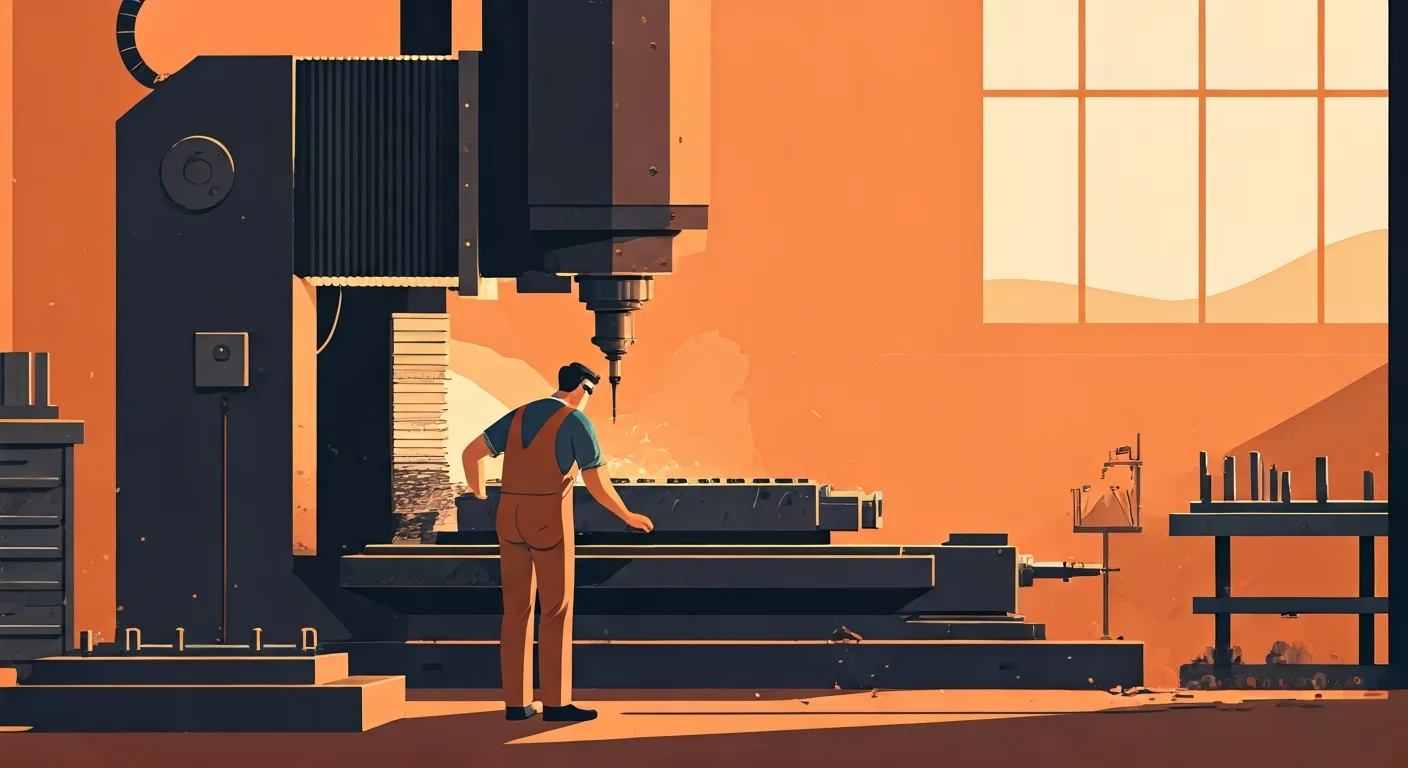
Sets up and operates lathes, milling machines, and grinders to shape metal parts to precise specifications. Reads technical drawings, selects cutting tools, and measures finished pieces with micrometres and gauges. Machinists are critical for manufacturing components across various industries, ensuring high accuracy and quality in production.
Produces essential components and parts for a wide range of industries, from aerospace to medical devices, directly enabling the manufacturing of complex machinery and products.
On the job
- Read and interpret blueprints, technical drawings, and specifications to determine machining operations.
- Set up and operate conventional and computer numerically controlled (CNC) machine tools, such as lathes, milling machines, and grinders.
- Select appropriate cutting tools, attachments, and materials for each job.
- Monitor machine operations, detect malfunctions, and make necessary adjustments to ensure product quality.
- Measure, examine, and test completed units to ensure compliance with precise specifications using precision instruments.
Tools & technology
Average salary
Job outlook
StableDemand is steady. This is an established role with consistent hiring across sectors.
Education & training
Vocational training, apprenticeship, or an associate's degree in machining technology or a related field is typically required.
AI impact outlook
Note — this is our current view. AI is moving fast, so we revisit these ratings.
Show how this was assessed Hide the detail
Note — this is our current view. AI is moving fast, so we revisit these ratings.
Show how this was assessed Hide the detailWhy this role received this rating
Core task exposure
moderate
How much of the role’s important work could AI perform?
AI can assist with CAD/CAM program optimization, process monitoring, and predictive maintenance analyses for machine operation.
End-to-end automation
low
Can AI complete the work without substantial human involvement?
AI can generate programs and monitor, but human intervention for physical setup, adjustments, and final quality control remains essential.
Adoption pressure
moderate
How likely are employers to introduce AI into this work?
Manufacturing embraces efficiency; AI for optimization and error detection will be adopted where feasible, though large-scale displacement is limited.
Human dependence
strong
How much does success depend on human judgement, relationships and accountability?
Expert judgment for complex machine setups, material behavior, tool selection, and critical inspection of bespoke parts is highly dependent on human skill.
Protective — a higher rating lowers the overall score.
Role adaptability
moderate
How easily can the role evolve as AI takes on more tasks?
Machinists can readily adapt to new advanced materials, integrated software systems, and increasingly sophisticated manufacturing processes.
Shown for context — not part of the score.
What AI may take on
These are the parts of the role most likely to be automated or significantly accelerated.
- Generate optimized CAM programs from complex CAD models
- Monitor machine performance and predict maintenance needs
- Analyze sensor data to detect anomalies during machining processes
- Suggest optimal cutting parameters for various materials
- Automate initial quality checks through vision systems
Where people remain essential
These parts continue to depend heavily on human judgement, relationships and accountability.
- Interpreting complex engineering blueprints and specifications
- Performing precise physical machine setup and tooling changes
- Troubleshooting unexpected material reactions or machine malfunctions
- Making critical in-process adjustments to maintain tight tolerances
- Conducting final, meticulous quality inspection with precision instruments
- Ensuring safety protocols and machine integrity
How the role may evolve
Less routine programming, more complex problem-solving and quality assurance.
The role shifts from purely manual programming and operation to overseeing AI-assisted systems, requiring deeper diagnostic skills and a focus on quality control and complex, non-standard tasks.
Strengthen your future fit
- Mastering advanced CAD/CAM software and AI integration
- Developing strong diagnostic and troubleshooting abilities
- Specializing in complex materials and multi-axis machining
- Enhancing metrology and precision quality control expertise
- Understanding data analytics for process optimization
- Assessment horizon
- 3–7 years
- Confidence
- Medium
- Last reviewed
- August 2026
- Methodology
- v1.0
This assessment reflects current AI capabilities and expected adoption patterns. Actual impacts will vary by industry, employer and the way each role is performed.
Career pathways
WHERE YOU COULD GO
CURRENT ROLE
Machinist
Skilled Trades
ADJACENT MOVES
STARTING POINTS
Who thrives here
Interest profile
realistic · RCI
Individuals who enjoy hands-on work, solving practical problems, and operating machinery with precision often thrive as machinists.
Personality characteristics
Precise
Possesses meticulous attention to detail, ensuring parts meet exact specifications and tolerates minimal error.
Mechanical Aptitude
Enjoys working with tools and machinery, understanding how mechanical systems function and can be optimized.
Problem-solver
Analyzes issues with machinery or parts, diagnoses causes, and devises effective solutions.
Focused
Maintains concentration on complex tasks for extended periods, even with repetitive operations, to ensure quality.
Steady
Remains calm and composed when troubleshooting equipment or facing production deadlines, handling stress effectively.
Best for
- Individuals who enjoy working with their hands to create tangible, highly accurate products.
- Those who thrive in structured environments where precision and problem-solving are key.
- People who appreciate the satisfaction of seeing raw materials transformed into finished components.
Watch out for
- Can be physically demanding, requiring standing for long periods and lifting materials.
- Work environment may involve noise, dust, and exposure to coolants or lubricants.
- Tasks can sometimes be repetitive, requiring sustained focus and patience.
A week in the life
A representative working week for a Machinist — where the deep work, meetings, and admin actually land.
Real people. Real results.
Thousands of people
can't be wrong.



Frequently asked questions about Machinist roles
What does a Machinist do?
A Machinist sets up and operates lathes, milling machines, and grinders to shape metal parts to precise specifications. Reads technical drawings, selects cutting tools, and measures finished pieces with micrometres and gauges. Machinists are critical for manufacturing components across various industries, ensuring high accuracy and quality in production. Produces essential components and parts for a wide range of industries, from aerospace to medical devices, directly enabling the manufacturing of complex machinery and products.
How much does a Machinist earn?
A Machinist earns a median of $55,000 per year in the US, typically ranging from $40,000 to $70,000.
What qualifications do you need to become a Machinist?
To become a Machinist, vocational training, apprenticeship, or an associate's degree in machining technology or a related field is typically required.
What personality suits a Machinist?
Machinist roles tend to suit people who are highly conscientious — precise, organised and strong on follow-through (Conscientiousness 85/100) and steady under pressure — deadlines and setbacks do not rattle them easily (Emotional Stability 75/100). The traits that matter most in the role are Precise, Mechanical Aptitude, Problem-solver and Focused. Possesses meticulous attention to detail, ensuring parts meet exact specifications and tolerates minimal error. On interests, Machinist maps to a RCI Holland Code profile — individuals who enjoy hands-on work, solving practical problems, and operating machinery with precision often thrive as machinists.
Who does a Machinist role suit?
A Machinist role is usually a strong fit for these reasons. High Realistic affinity: the role demands hands-on, practical work with tools and machinery. Strong Conscientiousness: precision, attention to detail, and adherence to specifications are paramount. Consistent problem-solving: requires analytical thinking to troubleshoot and optimize processes.
What are the downsides of being a Machinist?
Machinist roles come with trade-offs worth weighing up. Can be physically demanding, requiring standing for long periods and lifting materials. Work environment may involve noise, dust, and exposure to coolants or lubricants. Tasks can sometimes be repetitive, requiring sustained focus and patience.
What is the work environment like for a Machinist?
Work as a Machinist is mostly workshop-based with onsite arrangements common, highly structured, with set processes and deadlines, a moderate pace and low exposure to clients or stakeholders. Around 50% of the week is focused deep work.
What skills do you need to be a Machinist?
Core skills for a Machinist include Blueprint reading, Precision measurement, Machine tool operation, CNC programming (G-code, M-code), Material selection and Quality control.
How do you become a Machinist?
Common entry routes into Machinist roles include Machine Operator, Apprentice Machinist and Manufacturing Technician.
What career progression is there for a Machinist?
From a Machinist role, common next steps include Senior Machinist, CNC Programmer and Shop Supervisor; lateral moves include Tool and Die Maker.
What is the job outlook for Machinist roles?
The outlook for Machinist roles is currently rated stable. Demand is steady. This is an established role with consistent hiring across sectors.
Will AI replace Machinist roles?
Traitstack rates automation risk for Machinist roles at 39 out of 100, which is low. AI will increasingly optimize programming and monitoring, but the machinist's expert judgment in setups, troubleshooting, and precision measurement remains indispensable. AI is most likely to take on generate optimized cam programs from complex cad models, monitor machine performance and predict maintenance needs and analyze sensor data to detect anomalies during machining processes. Interpreting complex engineering blueprints and specifications, performing precise physical machine setup and tooling changes and troubleshooting unexpected material reactions or machine malfunctions stay with people. Less routine programming, more complex problem-solving and quality assurance. That score measures how much of the work could change, not the likelihood the job disappears. It is Traitstack's current view, revisited as AI capability moves.