Fire Protection Plumber
SOC 47-2152.00 · ESCO 7126 · OSCA 363932
Role snapshot
Overview
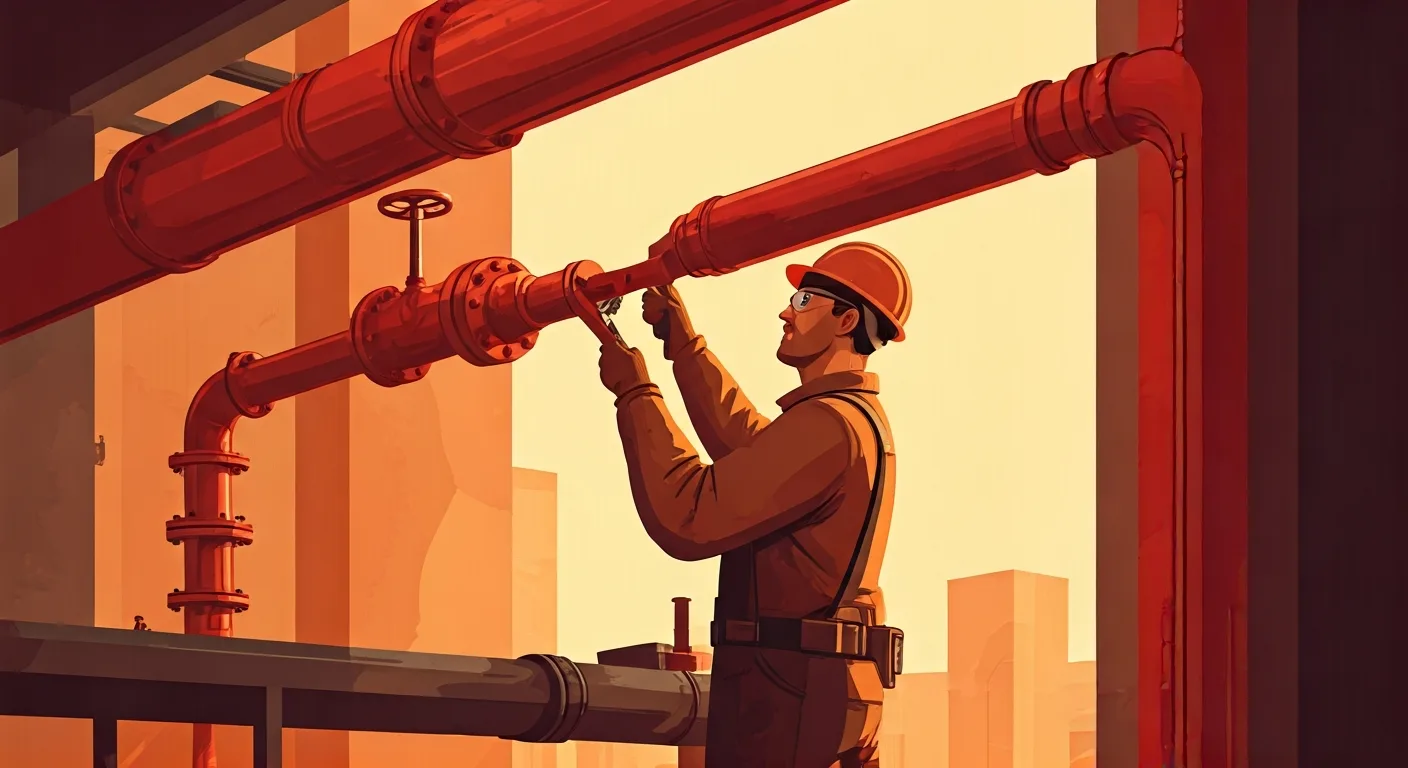
Installs, inspects, and maintains fire sprinkler systems, hydrants, and hose reels in commercial, industrial, and residential buildings. This role involves meticulous adherence to blueprints, building codes, and safety regulations to ensure that fire suppression systems are fully functional and activate reliably during emergencies, protecting lives and property.
Ensures the safety of building occupants and minimizes property damage by installing and maintaining critical fire suppression infrastructure that can rapidly contain and extinguish fires.
On the job
- Read and interpret blueprints, schematics, and specifications for fire suppression systems
- Install, repair, and maintain various types of fire sprinkler systems, including wet, dry, pre-action, and deluge systems
- Cut, thread, and connect pipes and fittings using hand and power tools
- Test fire sprinkler systems for leaks, proper pressure, and functionality
- Conduct routine inspections and perform preventative maintenance on fire protection equipment
Tools & technology
Average salary
Job outlook
StableDemand is steady. This is an established role with consistent hiring across sectors.
Education & training
Completion of a plumbing or fire protection apprenticeship program, often leading to journeyman certification or a specialized license.
AI impact outlook
Note — this is our current view. AI is moving fast, so we revisit these ratings.
Show how this was assessed Hide the detail
Note — this is our current view. AI is moving fast, so we revisit these ratings.
Show how this was assessed Hide the detailWhy this role received this rating
Core task exposure
low
How much of the role’s important work could AI perform?
AI can assist with interpreting blueprints, optimizing pipe layouts, calculating material needs, and automating initial system testing parameters.
End-to-end automation
low
Can AI complete the work without substantial human involvement?
The complex physical installation, cutting, threading, and welding of pipes in varied building environments prevent end-to-end automation for this safety-critical role.
Adoption pressure
moderate
How likely are employers to introduce AI into this work?
Strict safety regulations, immense liability, and the life-saving nature of fire suppression systems will ensure cautious and incremental AI adoption for planning and diagnostics.
Human dependence
strong
How much does success depend on human judgement, relationships and accountability?
Success depends on precise physical installation skills, expert judgment for code compliance, and direct accountability for the functional integrity of life-safety systems.
Protective — a higher rating lowers the overall score.
Role adaptability
low
How easily can the role evolve as AI takes on more tasks?
Fire protection plumbers must continually adapt to diverse building designs, evolving fire codes, and specialized system configurations.
Shown for context — not part of the score.
What AI may take on
These are the parts of the role most likely to be automated or significantly accelerated.
- Reading and interpreting blueprints and specifications for system design
- Optimizing pipe routing and material take-offs for efficiency
- Calculating hydraulic properties and pressure requirements for systems
- Generating digital models and simulations of fire suppression layouts
- Automating initial leak detection and pressure testing protocols
- Documenting compliance checks and system specifications for regulatory bodies
Where people remain essential
These parts continue to depend heavily on human judgement, relationships and accountability.
- Physically installing and connecting various types of fire sprinkler systems
- Cutting, threading, and welding pipes and fittings on-site
- Troubleshooting complex installation challenges in confined or difficult spaces
- Performing detailed physical inspections and maintenance of systems
- Ensuring meticulous adherence to local and national fire safety codes
- Conducting final, critical system tests and commissioning
- Accountability for the flawless operation of life-saving fire suppression systems
How the role may evolve
Integrating digital design with high-stakes physical installation.
AI will enhance design and pre-fabrication, allowing plumbers to focus their highly specialized physical skills on complex installations, meticulous compliance, and critical on-site problem-solving.
Strengthen your future fit
- Proficiency in CAD software for system design and layout
- Expertise in various pipe joining techniques (welding, threading)
- Deep understanding of hydraulic principles and fire codes
- Problem-solving for complex installation and routing challenges
- Certification in specialized fire suppression systems
- Assessment horizon
- 3–7 years
- Confidence
- High
- Last reviewed
- August 2026
- Methodology
- v1.0
This assessment reflects current AI capabilities and expected adoption patterns. Actual impacts will vary by industry, employer and the way each role is performed.
Career pathways
WHERE YOU COULD GO
CURRENT ROLE
Fire Protection Plumber
Skilled Trades
ADJACENT MOVES
STARTING POINTS
Who thrives here
Interest profile
realistic · RCI
Individuals who enjoy hands-on, practical work, meticulously following procedures, and solving technical problems tend to excel in this role.
Personality characteristics
Conscientious
Demonstrates a strong sense of duty and attention to detail, crucial for following complex safety codes and blueprints.
Practical
Prefers concrete tasks and applying established techniques to solve problems, rather than abstract or theoretical approaches.
Stable
Maintains composure under pressure and remains calm when facing unexpected challenges or emergencies.
Investigative
Enjoys diagnosing technical issues and understanding how mechanical systems work to ensure proper function.
Cooperative
Works well with a team, following instructions and contributing to a shared goal on job sites.
Best for
- Individuals who thrive in structured, hands-on environments and enjoy working with mechanical systems
- Those who are precise, detail-oriented, and committed to high safety standards
- People who prefer practical problem-solving over abstract thinking
Watch out for
- Requires meticulous attention to detail and adherence to strict regulations, leaving little room for improvisation
- Involves frequent travel to different job sites and can include occasional weekend or emergency call-out work
A week in the life
A representative working week for a Fire Protection Plumber — where the deep work, meetings, and admin actually land.
Real people. Real results.
Thousands of people
can't be wrong.




Frequently asked questions about Fire Protection Plumber roles
What does a Fire Protection Plumber do?
A Fire Protection Plumber installs, inspects, and maintains fire sprinkler systems, hydrants, and hose reels in commercial, industrial, and residential buildings. This role involves meticulous adherence to blueprints, building codes, and safety regulations to ensure that fire suppression systems are fully functional and activate reliably during emergencies, protecting lives and property. Ensures the safety of building occupants and minimizes property damage by installing and maintaining critical fire suppression infrastructure that can rapidly contain and extinguish fires.
How much does a Fire Protection Plumber earn?
A Fire Protection Plumber earns a median of $72,000 per year in the US, typically ranging from $55,000 to $95,000.
What qualifications do you need to become a Fire Protection Plumber?
To become a Fire Protection Plumber, completion of a plumbing or fire protection apprenticeship program, often leading to journeyman certification or a specialized license. State or local plumbing license.
What personality suits a Fire Protection Plumber?
Fire Protection Plumber roles tend to suit people who are highly conscientious — precise, organised and strong on follow-through (Conscientiousness 85/100) and steady under pressure — deadlines and setbacks do not rattle them easily (Emotional Stability 75/100). The traits that matter most in the role are Conscientious, Practical, Stable and Investigative. Demonstrates a strong sense of duty and attention to detail, crucial for following complex safety codes and blueprints. On interests, Fire Protection Plumber maps to a RCI Holland Code profile — individuals who enjoy hands-on, practical work, meticulously following procedures, and solving technical problems tend to excel in this role.
Who does a Fire Protection Plumber role suit?
A Fire Protection Plumber role is usually a strong fit for these reasons. High Realistic (R) affinity, emphasizing hands-on work with tools and machinery. Strong Conventional (C) and Investigative (I) aspects align with strict code adherence and technical problem-solving. A significant portion of the week is dedicated to deep, focused work on installations and maintenance.
What are the downsides of being a Fire Protection Plumber?
Fire Protection Plumber roles come with trade-offs worth weighing up. Requires meticulous attention to detail and adherence to strict regulations, leaving little room for improvisation. Involves frequent travel to different job sites and can include occasional weekend or emergency call-out work.
What is the work environment like for a Fire Protection Plumber?
Work as a Fire Protection Plumber is mostly mixed-based with onsite arrangements common, semi-structured — a mix of set processes and self-directed work, a moderate pace and medium exposure to clients or stakeholders. Around 65% of the week is focused deep work.
What skills do you need to be a Fire Protection Plumber?
Core skills for a Fire Protection Plumber include Pipefitting and assembly, Blueprint reading, System testing and diagnostics, Code compliance (NFPA, local codes) and Troubleshooting fire suppression systems.
How do you become a Fire Protection Plumber?
Common entry routes into Fire Protection Plumber roles include Plumbing Apprentice, Pipefitter Helper and General Laborer Construction.
What career progression is there for a Fire Protection Plumber?
From a Fire Protection Plumber role, common next steps include Lead Fire Protection Plumber and Fire Protection Supervisor; lateral moves include Fire Protection System Designer and Building Inspector (Fire Systems).
What is the job outlook for Fire Protection Plumber roles?
The outlook for Fire Protection Plumber roles is currently rated stable. Demand is steady. This is an established role with consistent hiring across sectors.
Will AI replace Fire Protection Plumber roles?
Traitstack rates automation risk for Fire Protection Plumber roles at 25 out of 100, which is low. Blueprint interpretation and material optimization can be AI-supported; however, the physically demanding installation, precise pipe fitting, and critical testing of fire sprinkler systems remain human responsibilities. AI is most likely to take on reading and interpreting blueprints and specifications for system design, optimizing pipe routing and material take-offs for efficiency and calculating hydraulic properties and pressure requirements for systems. Physically installing and connecting various types of fire sprinkler systems, cutting, threading, and welding pipes and fittings on-site and troubleshooting complex installation challenges in confined or difficult spaces stay with people. Integrating digital design with high-stakes physical installation. That score measures how much of the work could change, not the likelihood the job disappears. It is Traitstack's current view, revisited as AI capability moves.