Lighting Technician
SOC 27-4015.00 · ESCO 3435 · OSCA 391234
Role snapshot
Overview
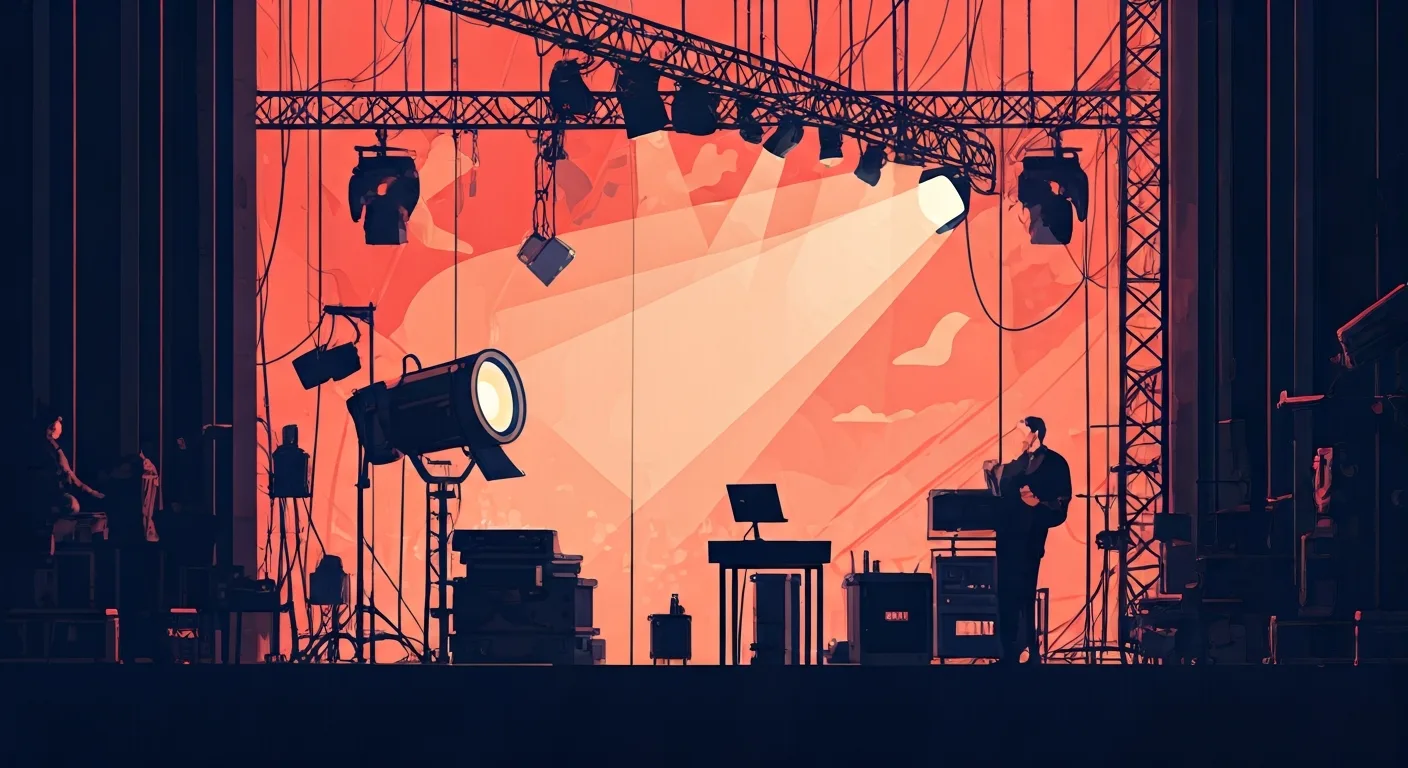
Sets up, operates, and maintains lighting equipment for film, television, theatre, or live events. Rigs fixtures, adjusts colour and intensity, and collaborates with directors and designers to create the desired visual atmosphere and achieve artistic vision.
Crucial for shaping the visual mood, enhancing storytelling, and ensuring visibility and safety in productions. Directly influences audience engagement and the aesthetic quality of an event or production.
On the job
- Interpret lighting plots and designs to determine equipment needs and placement.
- Install, focus, and gel various lighting fixtures, ensuring proper rigging and safety protocols.
- Operate lighting consoles and control systems during rehearsals and live performances/shoots.
- Troubleshoot and repair lighting equipment failures on set or during events.
- Collaborate with directors, cinematographers, and stage managers to achieve specific visual effects and cues.
Tools & technology
Average salary
Job outlook
StableDemand is steady. This is an established role with consistent hiring across sectors.
Education & training
Certificate or diploma in technical theatre, film production, or live event technology. Practical experience and a strong portfolio are often valued above formal degrees.
AI impact outlook
Note — this is our current view. AI is moving fast, so we revisit these ratings.
Show how this was assessed Hide the detail
Note — this is our current view. AI is moving fast, so we revisit these ratings.
Show how this was assessed Hide the detailWhy this role received this rating
Core task exposure
moderate
How much of the role’s important work could AI perform?
AI can assist with interpreting lighting plots, generating optimal DMX sequences, and pre-visualizing effects, but physical rigging and real-time artistic adjustments are human tasks.
End-to-end automation
low
Can AI complete the work without substantial human involvement?
The physical installation of lighting fixtures, intricate focusing, and adaptive operation for dynamic live events cannot be fully automated without human intervention.
Adoption pressure
moderate
How likely are employers to introduce AI into this work?
There is a moderate pressure to adopt AI for efficiency in pre-production programming and sequence generation, but less for the physical aspects of the job.
Human dependence
strong
How much does success depend on human judgement, relationships and accountability?
Success requires human artistic interpretation, precise physical installation, real-time adaptation to performance dynamics, and crucial safety oversight during rigging and operation.
Protective — a higher rating lowers the overall score.
Role adaptability
strong
How easily can the role evolve as AI takes on more tasks?
Technicians can adapt by specializing in complex system integration, advanced lighting console programming, and supervising AI-assisted design and execution.
Shown for context — not part of the score.
What AI may take on
These are the parts of the role most likely to be automated or significantly accelerated.
- Interpreting lighting plots and generating DMX programming sequences
- Pre-visualizing lighting effects and simulations in virtual environments
- Automated fault diagnosis for lighting fixtures and control systems
- Suggesting optimal fixture placement and beam angles for desired effects
Where people remain essential
These parts continue to depend heavily on human judgement, relationships and accountability.
- Physically installing, rigging, and focusing diverse lighting fixtures safely
- Operating lighting consoles and control systems during live events with artistic nuance
- Troubleshooting and repairing technical failures of lighting equipment on site
- Collaborating with directors and designers to achieve specific visual artistic visions
- Making real-time adjustments to lighting cues to adapt to performance changes
How the role may evolve
Less programming, more focused artistry.
The role will shift from manual programming to supervising AI-generated sequences, with a heightened focus on the artistic application of light, complex system integration, and hands-on physical problem-solving during live production.
Strengthen your future fit
- Mastery of advanced lighting consoles and AI-assisted programming software
- Deepening artistic understanding of color, light, and visual storytelling
- Enhancing physical rigging and electrical safety expertise
- Developing strong troubleshooting and repair skills for complex systems
- Improving collaboration and communication with creative teams
- Assessment horizon
- 3–7 years
- Confidence
- High
- Last reviewed
- August 2026
- Methodology
- v1.0
This assessment reflects current AI capabilities and expected adoption patterns. Actual impacts will vary by industry, employer and the way each role is performed.
Career pathways
WHERE YOU COULD GO
CURRENT ROLE
Lighting Technician
Entertainment & Media
ADJACENT MOVES
STARTING POINTS
Who thrives here
Interest profile
realistic · RCA
Individuals who enjoy hands-on technical work, systematic problem-solving, and contributing to a creative visual outcome often thrive in this role.
Personality characteristics
Curious
Eager to learn new lighting technologies and creative techniques to enhance productions.
Methodical
Able to meticulously plan rigging, wiring, and console programming for complex setups.
Composed under pressure
Maintains calm and focus during live events or unexpected technical challenges.
Collaborative
Works effectively with directors, designers, and other crew members to achieve a unified vision.
Practical
Enjoys hands-on problem-solving and building functional, safe lighting systems.
Artistic eye
Possesses a keen sense of aesthetics, color, and composition to create compelling visual moods.
Best for
- Individuals who enjoy a mix of technical challenge, creative input, and dynamic work environments.
- Those who thrive on bringing visual concepts to life and seeing their work directly impact an audience.
- People who are reliable, safety-conscious, and adept at troubleshooting technical issues.
Watch out for
- Irregular hours, including evenings and weekends, are common due to event schedules.
- Can involve physically demanding work, including lifting and working at heights.
- Requires quick problem-solving and adaptability in fast-paced, high-pressure environments.
A week in the life
A representative working week for a Lighting Technician — where the deep work, meetings, and admin actually land.
Real people. Real results.
Thousands of people
can't be wrong.

Frequently asked questions about Lighting Technician roles
What does a Lighting Technician do?
A Lighting Technician sets up, operates, and maintains lighting equipment for film, television, theatre, or live events. Rigs fixtures, adjusts colour and intensity, and collaborates with directors and designers to create the desired visual atmosphere and achieve artistic vision. Crucial for shaping the visual mood, enhancing storytelling, and ensuring visibility and safety in productions. Directly influences audience engagement and the aesthetic quality of an event or production.
How much does a Lighting Technician earn?
A Lighting Technician earns a median of $65,000 per year in the US, typically ranging from $45,000 to $90,000.
What qualifications do you need to become a Lighting Technician?
To become a Lighting Technician, certificate or diploma in technical theatre, film production, or live event technology. Practical experience and a strong portfolio are often valued above formal degrees.
What personality suits a Lighting Technician?
Lighting Technician roles tend to suit people who are open and curious — drawn to variety, ideas and new approaches (Openness 78/100). The traits that matter most in the role are Curious, Methodical, Composed under pressure and Collaborative. Eager to learn new lighting technologies and creative techniques to enhance productions. On interests, Lighting Technician maps to a RCA Holland Code profile — individuals who enjoy hands-on technical work, systematic problem-solving, and contributing to a creative visual outcome often thrive in this role.
Who does a Lighting Technician role suit?
A Lighting Technician role is usually a strong fit for these reasons. Strong Realistic and Artistic components, blending technical skills with creative execution. Significant portion of the week involves hands-on technical setup and live operation. High team interaction and collaboration, requiring good communication skills.
What are the downsides of being a Lighting Technician?
Lighting Technician roles come with trade-offs worth weighing up. Irregular hours, including evenings and weekends, are common due to event schedules. Can involve physically demanding work, including lifting and working at heights. Requires quick problem-solving and adaptability in fast-paced, high-pressure environments.
What is the work environment like for a Lighting Technician?
Work as a Lighting Technician is mostly mixed-based with onsite arrangements common, semi-structured — a mix of set processes and self-directed work and high exposure to clients or stakeholders. Around 23% of the week is focused deep work.
What skills do you need to be a Lighting Technician?
Core skills for a Lighting Technician include Lighting design interpretation, Electrical safety and rigging, Lighting console operation, Troubleshooting and repair and Collaboration and communication.
How do you become a Lighting Technician?
Common entry routes into Lighting Technician roles include Stagehand, Lighting Apprentice and Grip.
What career progression is there for a Lighting Technician?
From a Lighting Technician role, common next steps include Lighting Designer, Master Electrician and Production Manager; lateral moves include Broadcast Engineer.
What is the job outlook for Lighting Technician roles?
The outlook for Lighting Technician roles is currently rated stable. Demand is steady. This is an established role with consistent hiring across sectors.
Will AI replace Lighting Technician roles?
Traitstack rates automation risk for Lighting Technician roles at 41 out of 100, which is moderate. AI can streamline plot interpretation and DMX programming, but the physical rigging, real-time artistic adjustments, and troubleshooting on set or during live performances require human hands and eyes. AI is most likely to take on interpreting lighting plots and generating dmx programming sequences, pre-visualizing lighting effects and simulations in virtual environments and automated fault diagnosis for lighting fixtures and control systems. Physically installing, rigging, and focusing diverse lighting fixtures safely, operating lighting consoles and control systems during live events with artistic nuance and troubleshooting and repairing technical failures of lighting equipment on site stay with people. Less programming, more focused artistry. That score measures how much of the work could change, not the likelihood the job disappears. It is Traitstack's current view, revisited as AI capability moves.