Jewellery Designer
SOC 27-1029 · ESCO 2163 · OSCA 242233
Role snapshot
Overview
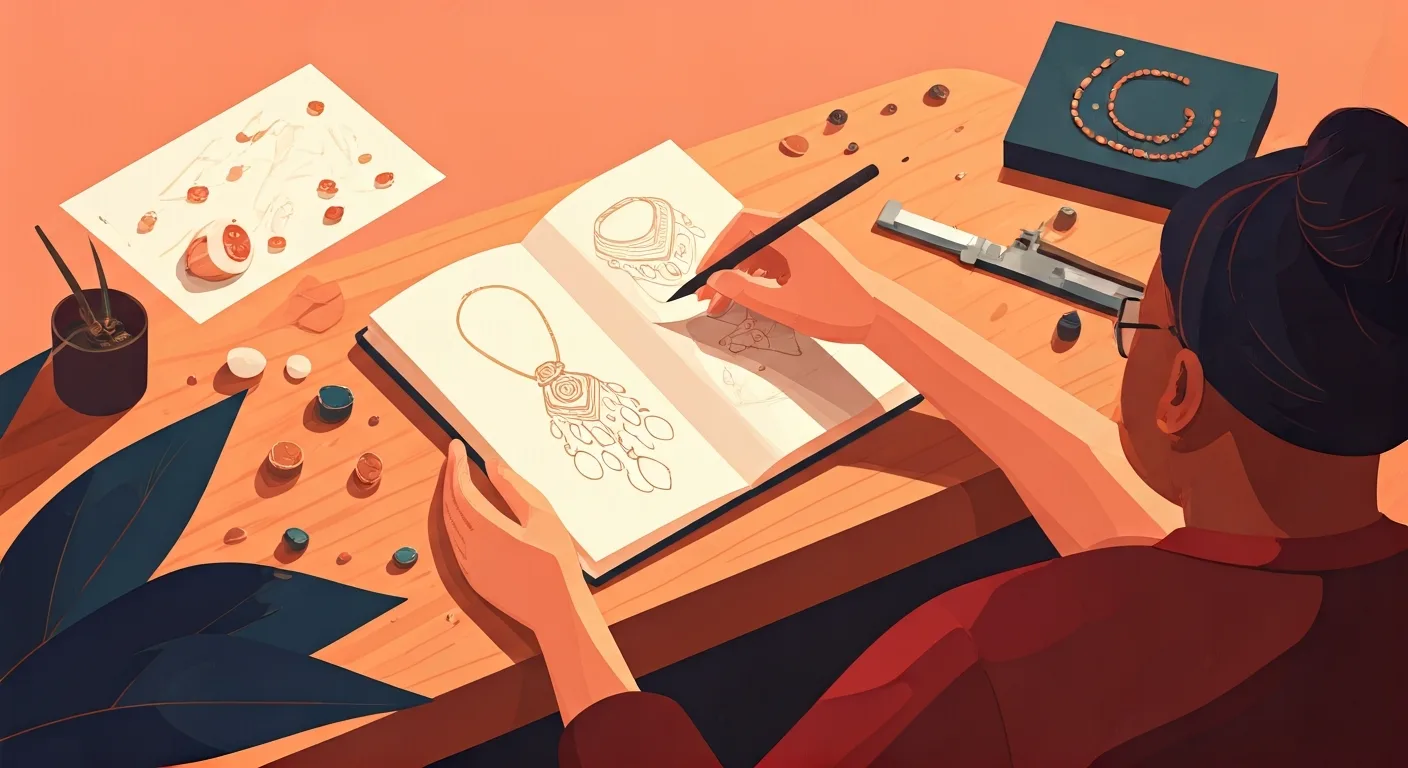
Designs and often handcrafts rings, necklaces, bracelets, and other pieces, sketching concepts, selecting materials, and using techniques like soldering, stone setting, and polishing. Balances artistic expression with wearability and client preferences, translating ideas into tangible, beautiful, and functional adornments.
Creates personal and meaningful objects that celebrate milestones, express identity, and hold sentimental value. Contributes to the preservation of traditional craft techniques while pushing artistic boundaries.
On the job
- Sketching and rendering jewellery designs by hand or using CAD software.
- Selecting appropriate precious metals, gemstones, and other materials.
- Using tools for cutting, filing, soldering, polishing, and stone setting.
- Collaborating with clients to understand their vision and create custom pieces.
- Managing project timelines and material sourcing.
Tools & technology
Average salary
Job outlook
StableDemand is steady. This is an established role with consistent hiring across sectors.
Education & training
Certificate or diploma in jewellery design, metalsmithing, or fine arts. A strong portfolio showcasing technical skill and creativity is essential.
AI impact outlook
Note — this is our current view. AI is moving fast, so we revisit these ratings.
Show how this was assessed Hide the detail
Note — this is our current view. AI is moving fast, so we revisit these ratings.
Show how this was assessed Hide the detailWhy this role received this rating
Core task exposure
high
How much of the role’s important work could AI perform?
AI can generate novel jewellery designs, suggest material combinations, and optimize for manufacturing, highly exposing the conceptual and CAD rendering stages.
End-to-end automation
low
Can AI complete the work without substantial human involvement?
While AI can design and 3D print models, intricate stone setting, complex hand-finishing, and bespoke client specifications often require human precision and artistry, limiting full automation.
Adoption pressure
moderate
How likely are employers to introduce AI into this work?
The luxury goods sector emphasizes craftsmanship, tempering full automation, yet design software and 3D printing are increasingly adopted for efficiency and rapid prototyping.
Human dependence
strong
How much does success depend on human judgement, relationships and accountability?
Success requires artistic vision, tactile skill, understanding the emotional value of custom pieces, and the precision demanded by fine craftsmanship, all highly human attributes.
Protective — a higher rating lowers the overall score.
Role adaptability
strong
How easily can the role evolve as AI takes on more tasks?
The role can adapt by specializing in bespoke high-end pieces, exploring innovative materials, or integrating new technologies like generative design into the craft process.
Shown for context — not part of the score.
What AI may take on
These are the parts of the role most likely to be automated or significantly accelerated.
- Generating novel jewellery designs and variations based on parameters
- Creating 3D models and renderings using CAD software
- Optimizing designs for manufacturing processes and material usage
- Suggesting material and gemstone combinations
- Automating basic repetitive design elements
Where people remain essential
These parts continue to depend heavily on human judgement, relationships and accountability.
- Sketching unique artistic concepts and bringing them to life by hand
- Selecting appropriate precious metals, gemstones, and other materials
- Performing intricate handcrafting techniques like soldering and stone setting
- Collaborating with clients to understand their vision for custom pieces
- Ensuring the wearability, comfort, and aesthetic balance of the final product
- Managing project timelines and material sourcing for bespoke items
How the role may evolve
Blending digital design with artisanal craftsmanship.
Designers will use AI for rapid concept development and prototyping, allowing them to dedicate more time to the intricate manual processes and personalized client interaction that define fine jewellery.
Strengthen your future fit
- Master advanced CAD software and 3D printing for design
- Develop unique handcrafting skills and material expertise
- Enhance client consultation and custom design interpretation
- Explore sustainable and ethically sourced materials
- Focus on creating bespoke, high-value pieces
- Assessment horizon
- 3–7 years
- Confidence
- High
- Last reviewed
- August 2026
- Methodology
- v1.0
This assessment reflects current AI capabilities and expected adoption patterns. Actual impacts will vary by industry, employer and the way each role is performed.
Career pathways
WHERE YOU COULD GO
CURRENT ROLE
Jewellery Designer
Design & Visual Arts
ADJACENT MOVES
STARTING POINTS
Who thrives here
Interest profile
artistic · ARC
People who enjoy combining artistic creativity with precise, hands-on craftsmanship and meticulous attention to detail tend to thrive in this role.
Personality characteristics
Curious
Eager to explore new materials, techniques, and design trends.
Meticulous
Possesses a high degree of precision and attention to detail in crafting intricate pieces.
Artistic
Driven by a strong aesthetic sense and a desire to create beautiful, unique objects.
Client-focused
Able to listen to client needs and translate their vision into a wearable design.
Resilient
Manages the challenges of intricate handwork, potential material waste, and client feedback without undue stress.
Best for
- Individuals who love working with their hands to create beautiful, tangible objects.
- Those who appreciate both artistic expression and technical precision.
- People who enjoy the challenge of turning abstract ideas into highly detailed, finished products.
Watch out for
- Can be physically demanding, requiring fine motor skills and prolonged focus.
- Client expectations can sometimes be challenging to balance with artistic vision or practical constraints.
A week in the life
A representative working week for a Jewellery Designer — where the deep work, meetings, and admin actually land.
Real people. Real results.
Thousands of people
can't be wrong.

Frequently asked questions about Jewellery Designer roles
What does a Jewellery Designer do?
A Jewellery Designer designs and often handcrafts rings, necklaces, bracelets, and other pieces, sketching concepts, selecting materials, and using techniques like soldering, stone setting, and polishing. Balances artistic expression with wearability and client preferences, translating ideas into tangible, beautiful, and functional adornments. Creates personal and meaningful objects that celebrate milestones, express identity, and hold sentimental value. Contributes to the preservation of traditional craft techniques while pushing artistic boundaries.
How much does a Jewellery Designer earn?
A Jewellery Designer earns a median of $65,000 per year in the US, typically ranging from $40,000 to $90,000.
What qualifications do you need to become a Jewellery Designer?
To become a Jewellery Designer, certificate or diploma in jewellery design, metalsmithing, or fine arts. A strong portfolio showcasing technical skill and creativity is essential.
What personality suits a Jewellery Designer?
Jewellery Designer roles tend to suit people who are open and curious — drawn to variety, ideas and new approaches (Openness 90/100) and highly conscientious — precise, organised and strong on follow-through (Conscientiousness 68/100). The traits that matter most in the role are Curious, Meticulous, Artistic and Client-focused. Eager to explore new materials, techniques, and design trends. On interests, Jewellery Designer maps to an ARC Holland Code profile — people who enjoy combining artistic creativity with precise, hands-on craftsmanship and meticulous attention to detail tend to thrive in this role.
Who does a Jewellery Designer role suit?
A Jewellery Designer role is usually a strong fit for these reasons. Strong Artistic and Realistic alignment: the role blends creative vision with precise manual craftsmanship. Requires high conscientiousness for detail-oriented work and project management. Offers opportunities for deep, focused work in a creative workshop environment.
What are the downsides of being a Jewellery Designer?
Jewellery Designer roles come with trade-offs worth weighing up. Can be physically demanding, requiring fine motor skills and prolonged focus. Client expectations can sometimes be challenging to balance with artistic vision or practical constraints.
What is the work environment like for a Jewellery Designer?
Work as a Jewellery Designer is mostly workshop-based with onsite arrangements common, semi-structured — a mix of set processes and self-directed work, a moderate pace and medium exposure to clients or stakeholders. Around 75% of the week is focused deep work.
What skills do you need to be a Jewellery Designer?
Core skills for a Jewellery Designer include Jewellery design, Metalsmithing, Gemstone setting, CAD modelling, Client consultation and Material selection.
How do you become a Jewellery Designer?
Common entry routes into Jewellery Designer roles include Jewellery Apprentice, Metalsmith Assistant and Fine Arts Graduate.
What career progression is there for a Jewellery Designer?
From a Jewellery Designer role, common next steps include Senior Jewellery Designer and Jewellery Business Owner; lateral moves include Product Designer.
What is the job outlook for Jewellery Designer roles?
The outlook for Jewellery Designer roles is currently rated stable. Demand is steady. This is an established role with consistent hiring across sectors.
Will AI replace Jewellery Designer roles?
Traitstack rates automation risk for Jewellery Designer roles at 53 out of 100, which is moderate. Concept generation and CAD rendering are highly exposed to automation, yet the intricate handcraft, material selection, and bespoke client engagement remain human domains. AI is most likely to take on generating novel jewellery designs and variations based on parameters, creating 3d models and renderings using cad software and optimizing designs for manufacturing processes and material usage. Sketching unique artistic concepts and bringing them to life by hand, selecting appropriate precious metals, gemstones, and other materials and performing intricate handcrafting techniques like soldering and stone setting stay with people. Blending digital design with artisanal craftsmanship. That score measures how much of the work could change, not the likelihood the job disappears. It is Traitstack's current view, revisited as AI capability moves.