Haematologist
SOC 29-1216.00 · ESCO 2212 · OSCA 264336
Role snapshot
Overview
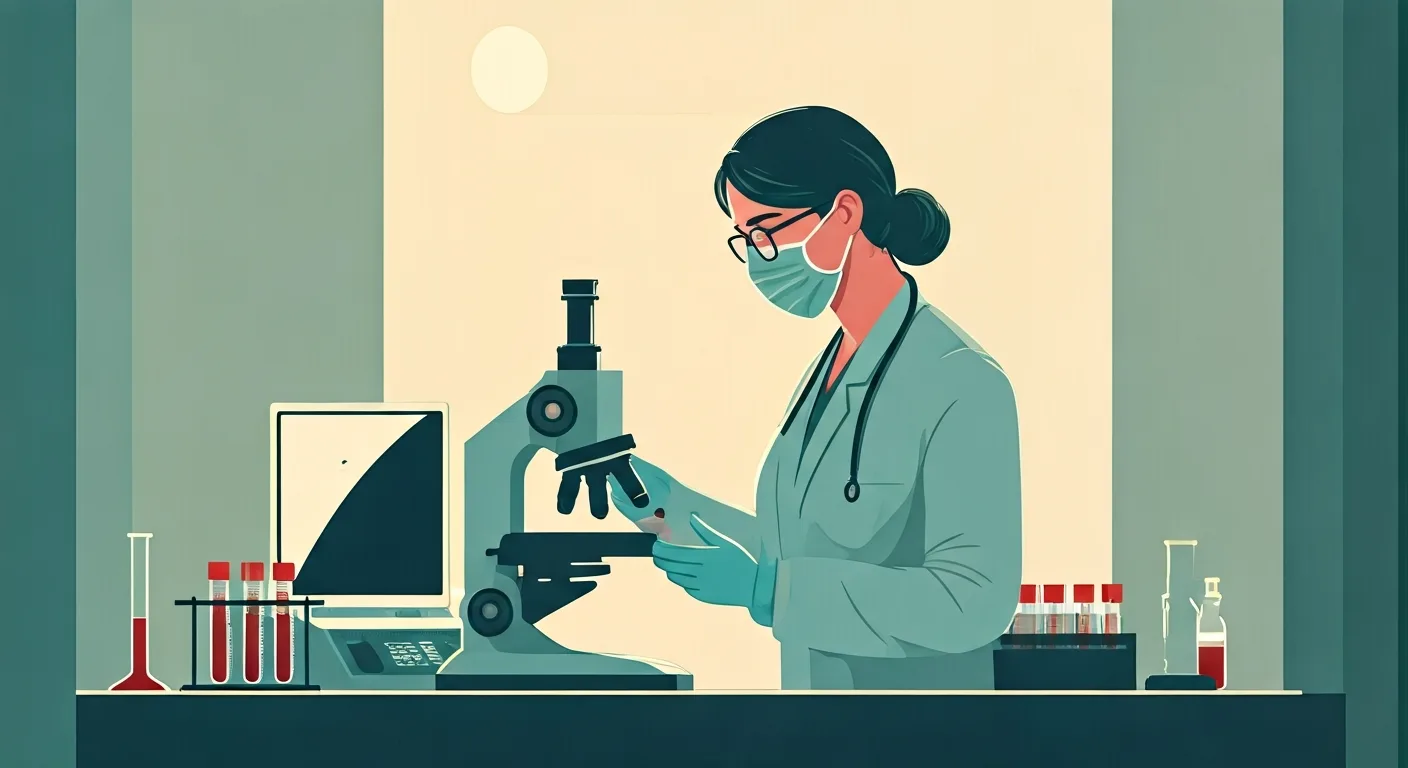
A Haematologist is a medical specialist who diagnoses and treats blood disorders such as anaemia, clotting problems, and various blood cancers like leukaemia and lymphoma. This role involves reviewing blood film microscopy, ordering specialised diagnostic tests, prescribing and managing treatments including chemotherapy and immunotherapy, and overseeing transfusion medicine. They work closely with patients to manage chronic conditions and critical illnesses affecting the blood and bone marrow.
Significantly improves quality of life and survival rates for patients with complex blood disorders and cancers, providing expert diagnostic and therapeutic care for critical and chronic conditions.
On the job
- Diagnose blood disorders using patient history, physical examination, and laboratory results.
- Order and interpret specialised tests such as bone marrow biopsies, genetic tests, and flow cytometry.
- Develop and implement treatment plans, including chemotherapy, targeted therapies, and blood transfusions.
- Manage acute and chronic complications of blood disorders and their treatments.
- Collaborate with multidisciplinary teams, including oncologists, pathologists, and nurses, to provide comprehensive patient care.
Tools & technology
Average salary
Job outlook
GrowingJob growth is expected to be above average over the next five years.
Education & training
Requires a Doctor of Medicine (MD) or Doctor of Osteopathic Medicine (DO) degree, followed by residency training in internal medicine or pediatrics, and a fellowship in hematology/oncology.
AI impact outlook
Note — this is our current view. AI is moving fast, so we revisit these ratings.
Show how this was assessed Hide the detail
Note — this is our current view. AI is moving fast, so we revisit these ratings.
Show how this was assessed Hide the detailWhy this role received this rating
Core task exposure
moderate
How much of the role’s important work could AI perform?
AI excels at interpreting complex lab results, image analysis of blood films, and recommending treatment protocols based on genetic markers.
End-to-end automation
low
Can AI complete the work without substantial human involvement?
Full automation is unlikely due to the need for managing acute complications, communicating sensitive diagnoses, and leading multidisciplinary care teams.
Adoption pressure
high
How likely are employers to introduce AI into this work?
High adoption pressure to improve diagnostic precision and optimize treatment planning for complex blood disorders and cancers.
Human dependence
strong
How much does success depend on human judgement, relationships and accountability?
Success depends on expert interpretation of subtle clinical signs, managing life-threatening conditions, and empathetic communication during severe illnesses.
Protective — a higher rating lowers the overall score.
Role adaptability
strong
How easily can the role evolve as AI takes on more tasks?
Haematology/oncology is highly adaptable, rapidly integrating new diagnostic technologies and therapeutic breakthroughs.
Shown for context — not part of the score.
What AI may take on
These are the parts of the role most likely to be automated or significantly accelerated.
- Automated analysis of blood films and bone marrow biopsies
- Interpreting complex genetic and flow cytometry data for diagnosis
- Suggesting optimal chemotherapy and targeted therapy regimens
- Predicting treatment response and potential side effects from patient data
- Summarizing research literature for novel treatment options
Where people remain essential
These parts continue to depend heavily on human judgement, relationships and accountability.
- Diagnosing rare and complex blood cancers with subtle presentations
- Managing acute and life-threatening complications of blood disorders and treatments
- Communicating sensitive diagnoses and prognoses to patients and families
- Leading multidisciplinary teams in cancer care and transplant services
- Adjusting complex treatment plans based on individual patient response and toxicity
- Building trust and providing emotional support during chronic or terminal illness
How the role may evolve
Targeted therapies and complex case management, powered by advanced analytics.
Haematologists will move towards highly personalized treatment strategies and complex patient management, with AI providing the analytical horsepower for diagnostics and protocol optimization.
Strengthen your future fit
- Proficiency in AI-driven diagnostics for blood cancers and disorders
- Expertise in genomic medicine and personalized treatment strategies
- Developing advanced communication skills for difficult conversations
- Mastering novel targeted therapies and immunotherapies
- Assessment horizon
- 3–7 years
- Confidence
- High
- Last reviewed
- August 2026
- Methodology
- v1.0
This assessment reflects current AI capabilities and expected adoption patterns. Actual impacts will vary by industry, employer and the way each role is performed.
Career pathways
WHERE YOU COULD GO
CURRENT ROLE
Haematologist
Medical & Clinical
ADJACENT MOVES
STARTING POINTS
Who thrives here
Interest profile
investigative · ISR
Individuals who enjoy in-depth investigation and problem-solving (Investigative), thrive in patient interaction and team collaboration (Social), and apply practical, hands-on diagnostic and treatment procedures (Realistic) tend to excel in this role.
Personality characteristics
Inquisitive
Driven to understand complex biological processes and disease mechanisms, constantly seeking new knowledge and diagnostic insights.
Meticulous
Extremely careful and precise in diagnosis, treatment planning, and monitoring to ensure optimal patient outcomes.
Empathetic
Connects with patients and their families, providing compassionate care and support through difficult diagnoses and treatments.
Composed
Maintains calm and effectiveness under pressure, especially when dealing with critical patient situations or complex ethical dilemmas.
Analytical
Applies scientific principles and logical reasoning to interpret complex data, form diagnoses, and devise effective treatment strategies.
Best for
- Individuals passionate about solving medical puzzles and understanding the intricacies of blood biology.
- Doctors who thrive in a high-stakes environment where meticulous attention to detail can save lives.
- Professionals seeking a career with direct patient impact and opportunities for both clinical practice and research.
Watch out for
- Demanding work environment with high patient load and emotionally taxing cases.
- Requires extensive education and ongoing professional development to stay current with medical advancements.
A week in the life
A representative working week for a Haematologist — where the deep work, meetings, and admin actually land.
Real people. Real results.
Thousands of people
can't be wrong.



Frequently asked questions about Haematologist roles
What does a Haematologist do?
A Haematologist a Haematologist is a medical specialist who diagnoses and treats blood disorders such as anaemia, clotting problems, and various blood cancers like leukaemia and lymphoma. This role involves reviewing blood film microscopy, ordering specialised diagnostic tests, prescribing and managing treatments including chemotherapy and immunotherapy, and overseeing transfusion medicine. They work closely with patients to manage chronic conditions and critical illnesses affecting the blood and bone marrow. Significantly improves quality of life and survival rates for patients with complex blood disorders and cancers, providing expert diagnostic and therapeutic care for critical and chronic conditions.
How much does a Haematologist earn?
A Haematologist earns a median of $300,000 per year in the US, typically ranging from $220,000 to $450,000.
What qualifications do you need to become a Haematologist?
To become a Haematologist, requires a Doctor of Medicine (MD) or Doctor of Osteopathic Medicine (DO) degree, followed by residency training in internal medicine or pediatrics, and a fellowship in hematology/oncology. State Medical License (e.g., MD or DO license).
What personality suits a Haematologist?
Haematologist roles tend to suit people who are highly conscientious — precise, organised and strong on follow-through (Conscientiousness 86/100) and open and curious — drawn to variety, ideas and new approaches (Openness 70/100). The traits that matter most in the role are Inquisitive, Meticulous, Empathetic and Composed. Driven to understand complex biological processes and disease mechanisms, constantly seeking new knowledge and diagnostic insights. On interests, Haematologist maps to an ISR Holland Code profile — individuals who enjoy in-depth investigation and problem-solving (Investigative), thrive in patient interaction and team collaboration (Social), and apply practical, hands-on diagnostic and treatment procedures (Realistic) tend to excel in this role.
Who does a Haematologist role suit?
A Haematologist role is usually a strong fit for these reasons. High Investigative affinity for diagnosing complex blood disorders and engaging in medical research. Requires exceptional Conscientiousness for precise medical decision-making and patient care. Significant Social interaction through patient consultations and multidisciplinary team collaboration.
What are the downsides of being a Haematologist?
Haematologist roles come with trade-offs worth weighing up. Demanding work environment with high patient load and emotionally taxing cases. Requires extensive education and ongoing professional development to stay current with medical advancements.
What is the work environment like for a Haematologist?
Work as a Haematologist is mostly clinical-based with onsite arrangements common, semi-structured — a mix of set processes and self-directed work and high exposure to clients or stakeholders. Around 26% of the week is focused deep work.
What skills do you need to be a Haematologist?
Core skills for a Haematologist include Clinical diagnosis and differential reasoning, Interpretation of laboratory and pathology results, Treatment planning and management (chemotherapy, transfusions), Patient communication and empathy and Multidisciplinary team collaboration.
How do you become a Haematologist?
Common entry routes into Haematologist roles include Medical Student, Resident Physician and Fellow Hematology Oncology.
What career progression is there for a Haematologist?
From a Haematologist role, common next steps include Chief of Hematology/Oncology and Medical Director (Oncology Services); lateral moves include Medical Researcher and Oncologist.
What is the job outlook for Haematologist roles?
The outlook for Haematologist roles is currently rated growing. Job growth is expected to be above average over the next five years.
Will AI replace Haematologist roles?
Traitstack rates automation risk for Haematologist roles at 47 out of 100, which is moderate. Diagnostic precision and treatment protocol selection will see significant AI enhancement, freeing haematologists to focus on managing acute complications, communicating complex prognoses, and leading multidisciplinary care. AI is most likely to take on automated analysis of blood films and bone marrow biopsies, interpreting complex genetic and flow cytometry data for diagnosis and suggesting optimal chemotherapy and targeted therapy regimens. Diagnosing rare and complex blood cancers with subtle presentations, managing acute and life-threatening complications of blood disorders and treatments and communicating sensitive diagnoses and prognoses to patients and families stay with people. Targeted therapies and complex case management, powered by advanced analytics. That score measures how much of the work could change, not the likelihood the job disappears. It is Traitstack's current view, revisited as AI capability moves.