Electrician
SOC 47-2111.00 · ESCO 7411
Role snapshot
Overview
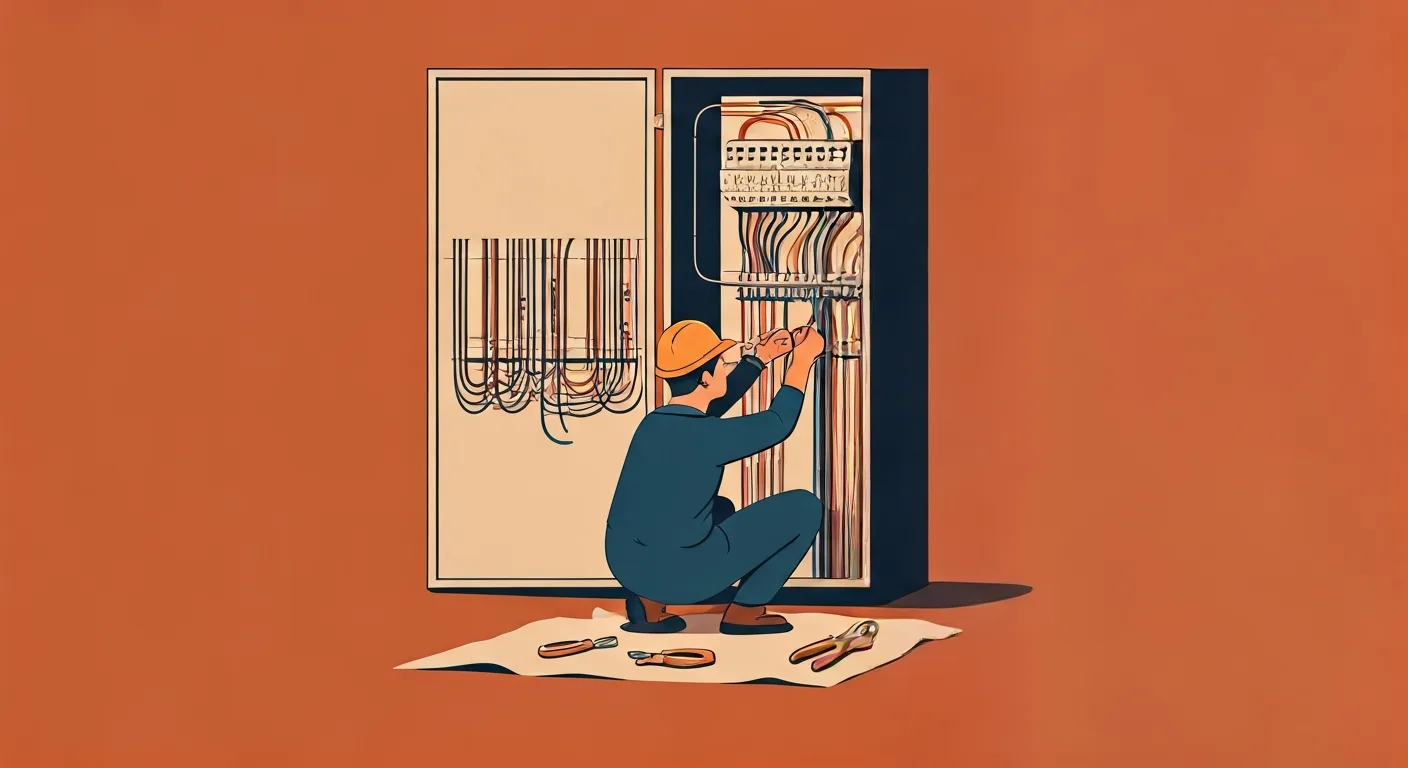
Electricians are skilled tradespeople who specialize in the installation, maintenance, and repair of electrical wiring, outlets, fixtures, and panels in residential, commercial, and industrial settings. Their work involves reading technical blueprints, ensuring compliance with local and national electrical codes, pulling necessary permits, and rigorously adhering to safety protocols to ensure reliable and safe electrical systems.
Ensures safe and functional electrical systems, powering homes, businesses, and infrastructure. Prevents hazards, supports modern living, and contributes to building efficiency and reliability.
On the job
- Install, maintain, and repair electrical wiring, equipment, and fixtures.
- Read blueprints and technical diagrams to determine wiring layouts.
- Inspect electrical systems, equipment, and components to identify hazards, defects, and the need for adjustment or repair.
- Ensure all work is compliant with local and national electrical codes (e.g., NEC).
- Troubleshoot electrical malfunctions using diagnostic tools.
Tools & technology
Average salary
Job outlook
GrowingJob growth is expected to be above average over the next five years.
Education & training
Completion of an apprenticeship program, vocational school training, or associate's degree in electrical technology.
AI impact outlook
Note — this is our current view. AI is moving fast, so we revisit these ratings.
Show how this was assessed Hide the detail
Note — this is our current view. AI is moving fast, so we revisit these ratings.
Show how this was assessed Hide the detailWhy this role received this rating
Core task exposure
low
How much of the role’s important work could AI perform?
AI could assist with code compliance checks, blueprint interpretation, and material ordering.
End-to-end automation
low
Can AI complete the work without substantial human involvement?
Physical installation, complex troubleshooting, and bespoke repairs make end-to-end automation impossible.
Adoption pressure
low
How likely are employers to introduce AI into this work?
High safety regulations, liability, and the bespoke nature of on-site work will slow AI adoption for core tasks.
Human dependence
strong
How much does success depend on human judgement, relationships and accountability?
Success hinges on human judgment for complex problem-solving, safety compliance, and direct client communication.
Protective — a higher rating lowers the overall score.
Role adaptability
low
How easily can the role evolve as AI takes on more tasks?
Electricians constantly adapt to diverse building structures, evolving technologies, and unique client needs.
Shown for context — not part of the score.
What AI may take on
These are the parts of the role most likely to be automated or significantly accelerated.
- Interpreting technical blueprints to identify optimal wiring layouts
- Checking designs against national electrical codes for compliance
- Generating material lists and ordering components for projects
- Predictive maintenance scheduling for electrical systems
- Diagnosing common electrical malfunctions from sensor data
- Creating initial cost estimates and quotes
Where people remain essential
These parts continue to depend heavily on human judgement, relationships and accountability.
- Physical installation and connection of wiring and fixtures
- Diagnosing novel or complex faults in existing systems
- Ensuring rigorous safety protocols on varied job sites
- Responding to unforeseen conditions and adapting solutions
- Direct client communication and problem resolution
- Obtaining and managing necessary permits and inspections
- Accountability for system functionality and safety
How the role may evolve
From interpreting code to applying expertise to novel, physical challenges.
Documentation and compliance checks will be automated, freeing electricians to focus on the intricate, hands-on work and problem-solving in dynamic environments.
Strengthen your future fit
- Advanced troubleshooting and diagnostic skills for complex systems
- Proficiency in smart home and building automation systems
- Strong client communication and problem-solving abilities
- Expertise in renewable energy system integration
- Continuous learning on evolving electrical codes and technologies
- Assessment horizon
- 3–7 years
- Confidence
- High
- Last reviewed
- August 2026
- Methodology
- v1.0
This assessment reflects current AI capabilities and expected adoption patterns. Actual impacts will vary by industry, employer and the way each role is performed.
Career pathways
WHERE YOU COULD GO
CURRENT ROLE
Electrician
Skilled Trades
ADJACENT MOVES
STARTING POINTS
Who thrives here
Interest profile
realistic · RCI
Individuals who enjoy practical, hands-on work, solving technical problems, and adhering to established procedures and safety standards tend to thrive in this role.
Personality characteristics
Detail-oriented
Meticulously follows electrical codes and safety protocols to ensure precise and reliable installations.
Practical Problem-Solver
Enjoys diagnosing and fixing electrical issues, using logical reasoning to find efficient solutions.
Composed Under Pressure
Remains calm and focused when dealing with electrical hazards or urgent repairs.
Reliable
Consistently delivers high-quality work, ensuring safety and functionality in critical systems.
Collaborative
Works effectively with other trades, clients, and team members on complex projects.
Best for
- Individuals who enjoy tangible results from their work and prefer hands-on problem-solving.
- Those who are meticulous, disciplined, and committed to safety and quality standards.
- People seeking a career with strong demand, clear progression paths, and continuous learning opportunities in a technical field.
Watch out for
- The work can be physically demanding and involves working in various weather conditions or confined spaces.
- Requires constant vigilance and adherence to strict safety protocols due to inherent electrical hazards.
- Continuous education and staying updated on evolving electrical codes are essential.
A week in the life
A representative working week for an Electrician — where the deep work, meetings, and admin actually land.
Real people. Real results.
Thousands of people
can't be wrong.


Frequently asked questions about Electrician roles
What does an Electrician do?
An Electrician electricians are skilled tradespeople who specialize in the installation, maintenance, and repair of electrical wiring, outlets, fixtures, and panels in residential, commercial, and industrial settings. Their work involves reading technical blueprints, ensuring compliance with local and national electrical codes, pulling necessary permits, and rigorously adhering to safety protocols to ensure reliable and safe electrical systems. Ensures safe and functional electrical systems, powering homes, businesses, and infrastructure. Prevents hazards, supports modern living, and contributes to building efficiency and reliability.
How much does an Electrician earn?
An Electrician earns a median of $65,000 per year in the US, typically ranging from $45,000 to $90,000.
What qualifications do you need to become an Electrician?
To become an Electrician, completion of an apprenticeship program, vocational school training, or associate's degree in electrical technology. State Electrician License.
What personality suits an Electrician?
Electrician roles tend to suit people who are highly conscientious — precise, organised and strong on follow-through (Conscientiousness 80/100) and steady under pressure — deadlines and setbacks do not rattle them easily (Emotional Stability 75/100). The traits that matter most in the role are Detail-oriented, Practical Problem-Solver, Composed Under Pressure and Reliable. Meticulously follows electrical codes and safety protocols to ensure precise and reliable installations. On interests, Electrician maps to a RCI Holland Code profile — individuals who enjoy practical, hands-on work, solving technical problems, and adhering to established procedures and safety standards tend to thrive in this role.
Who does an Electrician role suit?
An Electrician role is usually a strong fit for these reasons. Strong Realistic (R) affinity, as the role involves extensive hands-on, practical work with tools and equipment. High Conscientiousness (C) is crucial for meticulous adherence to safety codes and precise installations. The Investigative (I) aspect is satisfied through troubleshooting and diagnosing complex electrical issues.
What are the downsides of being an Electrician?
Electrician roles come with trade-offs worth weighing up. The work can be physically demanding and involves working in various weather conditions or confined spaces. Requires constant vigilance and adherence to strict safety protocols due to inherent electrical hazards. Continuous education and staying updated on evolving electrical codes are essential.
What is the work environment like for an Electrician?
Work as an Electrician is mostly mixed-based with onsite arrangements common, semi-structured — a mix of set processes and self-directed work, a moderate pace and medium exposure to clients or stakeholders. Around 10% of the week is focused deep work.
What skills do you need to be an Electrician?
Core skills for an Electrician include Electrical wiring, Blueprint reading, Troubleshooting, Safety protocols, Code compliance and Hand-eye coordination.
How do you become an Electrician?
Common entry routes into Electrician roles include Electrical Apprentice, Electrical Helper and Electrical Trainee.
What career progression is there for an Electrician?
From an Electrician role, common next steps include Master Electrician and Electrical Contractor; lateral moves include Electrical Inspector and Facilities Manager.
What is the job outlook for Electrician roles?
The outlook for Electrician roles is currently rated growing. Job growth is expected to be above average over the next five years.
Will AI replace Electrician roles?
Traitstack rates automation risk for Electrician roles at 21 out of 100, which is low. Planning and compliance checks will be AI-assisted, but electricians will retain the vital roles of physical installation, complex troubleshooting, and ensuring on-site safety. AI is most likely to take on interpreting technical blueprints to identify optimal wiring layouts, checking designs against national electrical codes for compliance and generating material lists and ordering components for projects. Physical installation and connection of wiring and fixtures, diagnosing novel or complex faults in existing systems and ensuring rigorous safety protocols on varied job sites stay with people. From interpreting code to applying expertise to novel, physical challenges. That score measures how much of the work could change, not the likelihood the job disappears. It is Traitstack's current view, revisited as AI capability moves.