Dental Hygienist
SOC 29-1292.00 · ESCO 3251 · OSCA 269131
Role snapshot
Overview
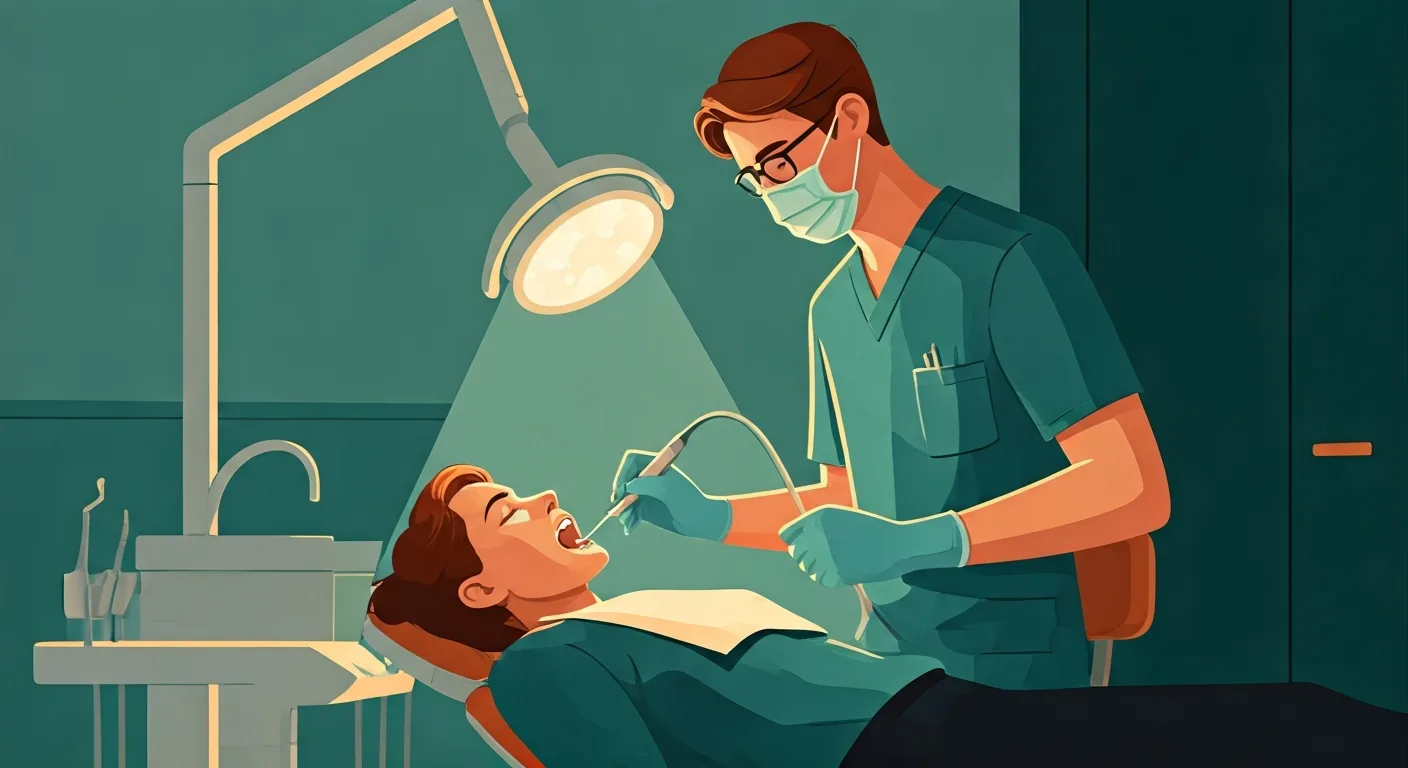
Dental hygienists are essential members of the dental care team, focusing on preventive oral health. They clean teeth, take X-rays, and educate patients on proper oral hygiene techniques during scheduled appointments. Screening for gum disease, applying preventive treatments like sealants and fluoride, and maintaining patient records round out a hands-on clinical day dedicated to promoting overall health.
Directly improves patients' oral health, preventing disease, reducing discomfort, and contributing to overall well-being. Educates and empowers individuals to maintain good hygiene habits for life.
On the job
- Perform comprehensive oral assessments, including medical history review and vital signs
- Remove plaque, calculus, and stains from teeth using manual and ultrasonic instruments
- Take and develop dental X-rays (radiographs) to diagnose oral conditions
- Educate patients on oral hygiene techniques, nutrition, and preventive care
- Apply fluoride and dental sealants to protect teeth from decay
Tools & technology
Average salary
Job outlook
GrowingJob growth is expected to be above average over the next five years.
Education & training
Associate's or Bachelor's degree in dental hygiene is typically required, alongside state licensure.
AI impact outlook
Note — this is our current view. AI is moving fast, so we revisit these ratings.
Show how this was assessed Hide the detail
Note — this is our current view. AI is moving fast, so we revisit these ratings.
Show how this was assessed Hide the detailWhy this role received this rating
Core task exposure
moderate
How much of the role’s important work could AI perform?
Tasks like X-ray processing and initial oral assessments can be augmented by AI, but the physical removal of plaque and calculus remains a highly skilled manual task.
End-to-end automation
low
Can AI complete the work without substantial human involvement?
The precise physical execution of cleaning procedures, real-time assessment of oral health, and personalized patient education prevent end-to-end automation of the role.
Adoption pressure
high
How likely are employers to introduce AI into this work?
Adoption pressure is moderate for diagnostic support and administrative tasks, but lower for the core physical treatment due to the need for human dexterity and judgment, and regulatory hurdles.
Human dependence
strong
How much does success depend on human judgement, relationships and accountability?
Success relies heavily on fine motor skills, tactile feedback, clinical judgment during assessments and cleaning, patient education, empathy, and building trust for preventive care.
Protective — a higher rating lowers the overall score.
Role adaptability
strong
How easily can the role evolve as AI takes on more tasks?
The role is highly adaptable, shifting towards managing AI-assisted diagnostics, advanced preventative treatments, and focusing on complex patient education and counseling rather than solely manual cleaning.
Shown for context — not part of the score.
What AI may take on
These are the parts of the role most likely to be automated or significantly accelerated.
- Pre-analysis and flagging of anomalies in dental X-rays
- Automated scheduling and patient recall systems
- Initial generation of oral health risk assessments based on patient data
- Compiling and presenting patient education materials
- Tracking inventory of supplies and equipment
Where people remain essential
These parts continue to depend heavily on human judgement, relationships and accountability.
- Performing comprehensive oral assessments and diagnosing conditions
- Meticulous removal of plaque, calculus, and stains using manual/ultrasonic instruments
- Providing personalized oral hygiene education and motivational counseling
- Applying fluoride and sealants with precision and care
- Ensuring patient comfort and managing anxiety during procedures
- Interpreting complex diagnostic information for treatment planning
How the role may evolve
Augmented diagnostics. Unchanged human touch and preventative care.
Dental hygienists will increasingly use AI for diagnostic insights and administrative tasks, allowing them to deepen their focus on the highly skilled physical cleaning and individualized patient education critical for preventative care.
Strengthen your future fit
- Mastery of advanced dental instruments and technologies
- Proficiency in AI-assisted diagnostic software
- Enhanced patient communication and motivational counseling
- Ability to develop personalized oral health plans
- Continuous learning in dental science and preventive techniques
- Assessment horizon
- 3–7 years
- Confidence
- Medium
- Last reviewed
- August 2026
- Methodology
- v1.0
This assessment reflects current AI capabilities and expected adoption patterns. Actual impacts will vary by industry, employer and the way each role is performed.
Career pathways
WHERE YOU COULD GO
CURRENT ROLE
Dental Hygienist
Allied Health
ADJACENT MOVES
STARTING POINTS
Who thrives here
Interest profile
social · SRI
Individuals who are drawn to helping and caring for others, enjoy applying practical scientific knowledge, and are curious about health and well-being often thrive as dental hygienists.
Personality characteristics
Detail-oriented
Carefully observes oral conditions and meticulously performs cleanings and procedures.
Empathetic
Connects with patients, understands their concerns, and provides comforting care.
Organized
Manages appointments, instruments, and patient records efficiently and accurately.
Patient Communicator
Clearly explains procedures and oral hygiene instructions to diverse patients.
Calm Under Pressure
Maintains composure during routine and unexpected clinical situations.
Inquisitive
Stays updated on new dental techniques and preventive health research.
Best for
- Individuals who enjoy helping people and promoting health through direct care.
- Those who appreciate a structured work environment with clear protocols and procedures.
- People who are meticulous, patient, and good at explaining complex information simply.
Watch out for
- The role requires sustained focus and precision for repetitive clinical tasks.
- Dealing with anxious or uncooperative patients can be emotionally demanding.
A week in the life
A representative working week for a Dental Hygienist — where the deep work, meetings, and admin actually land.
Real people. Real results.
Thousands of people
can't be wrong.




Frequently asked questions about Dental Hygienist roles
What does a Dental Hygienist do?
A Dental Hygienist dental hygienists are essential members of the dental care team, focusing on preventive oral health. They clean teeth, take X-rays, and educate patients on proper oral hygiene techniques during scheduled appointments. Screening for gum disease, applying preventive treatments like sealants and fluoride, and maintaining patient records round out a hands-on clinical day dedicated to promoting overall health. Directly improves patients' oral health, preventing disease, reducing discomfort, and contributing to overall well-being. Educates and empowers individuals to maintain good hygiene habits for life.
How much does a Dental Hygienist earn?
A Dental Hygienist earns a median of $85,000 per year in the US, typically ranging from $65,000 to $105,000.
What qualifications do you need to become a Dental Hygienist?
To become a Dental Hygienist, associate's or Bachelor's degree in dental hygiene is typically required, alongside state licensure. State Licensure as a Registered Dental Hygienist.
What personality suits a Dental Hygienist?
Dental Hygienist roles tend to suit people who are highly conscientious — precise, organised and strong on follow-through (Conscientiousness 82/100) and warm and cooperative — tuned in to the people around them (Agreeableness 75/100). The traits that matter most in the role are Detail-oriented, Empathetic, Organized and Patient Communicator. Carefully observes oral conditions and meticulously performs cleanings and procedures. On interests, Dental Hygienist maps to a SRI Holland Code profile — individuals who are drawn to helping and caring for others, enjoy applying practical scientific knowledge, and are curious about health and well-being often thrive as dental hygienists.
Who does a Dental Hygienist role suit?
A Dental Hygienist role is usually a strong fit for these reasons. Strong Social (S) affinity as the role is primarily focused on direct patient care and education. High Conscientiousness (C) is crucial for meticulous clinical work and adherence to protocols. Applies practical scientific and technical knowledge in a hands-on clinical setting.
What are the downsides of being a Dental Hygienist?
Dental Hygienist roles come with trade-offs worth weighing up. The role requires sustained focus and precision for repetitive clinical tasks. Dealing with anxious or uncooperative patients can be emotionally demanding.
What is the work environment like for a Dental Hygienist?
Work as a Dental Hygienist is mostly clinical-based with onsite arrangements common, highly structured, with set processes and deadlines, a moderate pace and high exposure to clients or stakeholders. Around 94% of the week is focused deep work.
What skills do you need to be a Dental Hygienist?
Core skills for a Dental Hygienist include Oral prophylaxis, Patient education, Radiography, Periodontal charting and Local anesthesia administration (where permitted).
How do you become a Dental Hygienist?
Common entry routes into Dental Hygienist roles include Dental Assistant and Associate Degree Dental Hygiene Graduate.
What career progression is there for a Dental Hygienist?
From a Dental Hygienist role, common next steps include Lead Dental Hygienist and Dental Hygiene Educator; lateral moves include Dental Practice Manager and Oral Health Consultant.
What is the job outlook for Dental Hygienist roles?
The outlook for Dental Hygienist roles is currently rated growing. Job growth is expected to be above average over the next five years.
Will AI replace Dental Hygienist roles?
Traitstack rates automation risk for Dental Hygienist roles at 46 out of 100, which is moderate. While AI may assist with diagnostic imaging and basic data analysis, the core tactile work of oral cleaning and personalized patient education requires the dental hygienist's skilled hand and personal touch. AI is most likely to take on pre-analysis and flagging of anomalies in dental x-rays, automated scheduling and patient recall systems and initial generation of oral health risk assessments based on patient data. Performing comprehensive oral assessments and diagnosing conditions, meticulous removal of plaque, calculus, and stains using manual/ultrasonic instruments and providing personalized oral hygiene education and motivational counseling stay with people. Augmented diagnostics. Unchanged human touch and preventative care. That score measures how much of the work could change, not the likelihood the job disappears. It is Traitstack's current view, revisited as AI capability moves.