Dental Assistant
SOC 31-9091.00 · ESCO 3251 · OSCA 442331
Role snapshot
Overview
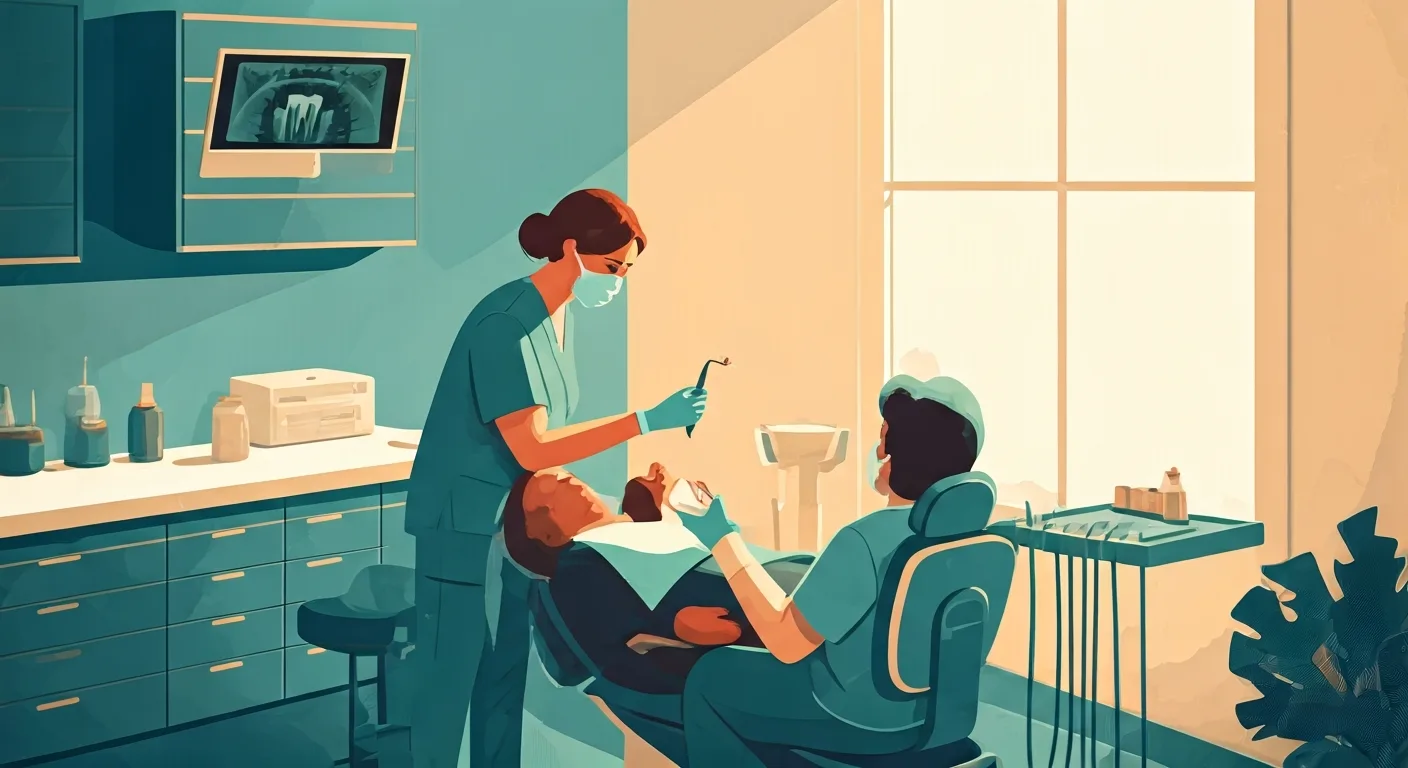
Dental Assistants are integral members of a dental care team, providing essential support to dentists and ensuring a smooth patient experience. They prepare treatment rooms, sterilise instruments, and assist dentists chairside during procedures. Taking X-rays, scheduling appointments, and reassuring nervous patients are all part of a fast-paced clinical day, requiring strong organisational skills and a compassionate approach.
Contributes significantly to efficient dental practice operations, patient comfort, and the delivery of high-quality oral healthcare. They enable dentists to focus on complex procedures by managing preparatory and supportive tasks, directly enhancing patient outcomes.
On the job
- Prepare and sterilise dental instruments and treatment rooms according to strict safety protocols
- Assist dentists chairside during a variety of dental procedures, anticipating needs and passing instruments
- Take and process dental radiographs (X-rays) accurately and safely
- Provide post-operative instructions, oral hygiene education, and comfort to patients
- Manage patient records, schedule appointments, and handle basic billing and administrative tasks
Tools & technology
Average salary
Job outlook
GrowingJob growth is expected to be above average over the next five years.
Education & training
Completion of an accredited dental assisting program or a vocational school program, leading to a certificate or diploma. Some roles may only require on-the-job training.
AI impact outlook
Note — this is our current view. AI is moving fast, so we revisit these ratings.
Show how this was assessed Hide the detail
Note — this is our current view. AI is moving fast, so we revisit these ratings.
Show how this was assessed Hide the detailWhy this role received this rating
Core task exposure
moderate
How much of the role’s important work could AI perform?
Administrative tasks like scheduling and record management, along with basic X-ray processing, are highly exposed to AI automation.
End-to-end automation
low
Can AI complete the work without substantial human involvement?
The hands-on nature of chairside assistance, instrument handling, and direct patient interaction prevents full end-to-end automation of the entire role.
Adoption pressure
high
How likely are employers to introduce AI into this work?
Employers are highly likely to adopt AI for administrative efficiency, scheduling, and potentially image pre-analysis, but less so for direct physical patient support due to risk and cost.
Human dependence
moderate
How much does success depend on human judgement, relationships and accountability?
Success depends heavily on interpersonal skills for patient comfort and education, anticipating dentist's needs in real-time, and meticulous physical assistance during procedures.
Protective — a higher rating lowers the overall score.
Role adaptability
strong
How easily can the role evolve as AI takes on more tasks?
The role can readily adapt by focusing more on advanced patient care, direct assistance, and managing automated systems rather than manual administrative or basic processing tasks.
Shown for context — not part of the score.
What AI may take on
These are the parts of the role most likely to be automated or significantly accelerated.
- Automated scheduling and appointment reminders
- Management of patient records and basic billing queries
- Pre-processing and initial analysis of dental X-rays
- Inventory management for dental supplies and instruments
- Automated tracking of sterilization cycles and compliance
Where people remain essential
These parts continue to depend heavily on human judgement, relationships and accountability.
- Assisting dentists chairside during complex procedures, anticipating needs
- Providing post-operative instructions and personalized oral hygiene education
- Ensuring patient comfort and managing anxiety during treatments
- Meticulous sterilization and preparation of instruments and treatment rooms
- Operating and maintaining specialized dental equipment safely
- Building rapport and trust with patients
How the role may evolve
Less administrative burden. More patient care and chairside support.
The role will evolve to spend less time on routine administrative tasks, leveraging AI for efficiency, and more time on direct patient interaction, specialized chairside assistance, and education.
Strengthen your future fit
- Enhanced interpersonal and communication skills
- Proficiency in advanced dental software and AI-assisted tools
- Strong clinical judgment during chairside assistance
- Advanced patient education and motivational interviewing techniques
- A deep understanding of safety protocols and equipment maintenance
- Assessment horizon
- 3–7 years
- Confidence
- Medium
- Last reviewed
- August 2026
- Methodology
- v1.0
This assessment reflects current AI capabilities and expected adoption patterns. Actual impacts will vary by industry, employer and the way each role is performed.
Career pathways
WHERE YOU COULD GO
CURRENT ROLE
Dental Assistant
Allied Health
ADJACENT MOVES
STARTING POINTS
Who thrives here
Interest profile
conventional · CRS
Individuals who thrive on practical, organised tasks, enjoy working with their hands, and find satisfaction in directly helping and caring for others in a structured, fast-paced clinical environment.
Personality characteristics
Detail-oriented
Meticulous in following sterilisation protocols and assisting procedures, ensuring precision and patient safety.
Compassionate
Naturally empathetic and patient, able to comfort nervous patients and build trust.
Sociable
Comfortable interacting with a diverse range of patients and collaborating closely with the dental team.
Calm under pressure
Maintains composure during busy periods or unexpected clinical situations, contributing to a stable environment.
Methodical
Prefers established procedures and clear guidelines, ensuring consistent and reliable patient care.
Best for
- Individuals who enjoy a structured, hands-on role in a clinical setting.
- Those who are calm, detail-oriented, and thrive on supporting others in a team environment.
- People motivated by direct patient interaction and contributing significantly to healthcare outcomes.
Watch out for
- Can be physically demanding, requiring standing for long periods and repetitive tasks.
- Requires consistent exposure to bodily fluids and strict adherence to infection control protocols.
- Fast-paced environment requires quick thinking and adaptability, with little room for error.
A week in the life
A representative working week for a Dental Assistant — where the deep work, meetings, and admin actually land.
Real people. Real results.
Thousands of people
can't be wrong.




Frequently asked questions about Dental Assistant roles
What does a Dental Assistant do?
A Dental Assistant dental Assistants are integral members of a dental care team, providing essential support to dentists and ensuring a smooth patient experience. They prepare treatment rooms, sterilise instruments, and assist dentists chairside during procedures. Taking X-rays, scheduling appointments, and reassuring nervous patients are all part of a fast-paced clinical day, requiring strong organisational skills and a compassionate approach. Contributes significantly to efficient dental practice operations, patient comfort, and the delivery of high-quality oral healthcare. They enable dentists to focus on complex procedures by managing preparatory and supportive tasks, directly enhancing patient outcomes.
How much does a Dental Assistant earn?
A Dental Assistant earns a median of $45,000 per year in the US, typically ranging from $35,000 to $60,000.
What qualifications do you need to become a Dental Assistant?
To become a Dental Assistant, completion of an accredited dental assisting program or a vocational school program, leading to a certificate or diploma. Some roles may only require on-the-job training. State registration/licensure (varies by state).
What personality suits a Dental Assistant?
Dental Assistant roles tend to suit people who are highly conscientious — precise, organised and strong on follow-through (Conscientiousness 80/100) and warm and cooperative — tuned in to the people around them (Agreeableness 78/100). The traits that matter most in the role are Detail-oriented, Compassionate, Sociable and Calm under pressure. Meticulous in following sterilisation protocols and assisting procedures, ensuring precision and patient safety. On interests, Dental Assistant maps to a CRS Holland Code profile — individuals who thrive on practical, organised tasks, enjoy working with their hands, and find satisfaction in directly helping and caring for others in a structured, fast-paced clinical environment.
Who does a Dental Assistant role suit?
A Dental Assistant role is usually a strong fit for these reasons. Strong Conventional and Realistic alignment: the role requires meticulous adherence to procedures and hands-on practical skills. High Agreeableness and Conscientiousness are key for patient care, clinical accuracy, and team collaboration. Directly contributes to patient well-being and health outcomes, offering a clear sense of purpose.
What are the downsides of being a Dental Assistant?
Dental Assistant roles come with trade-offs worth weighing up. Can be physically demanding, requiring standing for long periods and repetitive tasks. Requires consistent exposure to bodily fluids and strict adherence to infection control protocols. Fast-paced environment requires quick thinking and adaptability, with little room for error.
What is the work environment like for a Dental Assistant?
Work as a Dental Assistant is mostly clinical-based with onsite arrangements common, highly structured, with set processes and deadlines and high exposure to clients or stakeholders. Around 88% of the week is focused deep work.
What skills do you need to be a Dental Assistant?
Core skills for a Dental Assistant include Sterilisation and infection control, Chairside assisting techniques, Dental radiography operation, Patient communication and reassurance, Dental charting and record keeping and Appointment management.
How do you become a Dental Assistant?
Common entry routes into Dental Assistant roles include Dental Assisting Student and Medical Assistant.
What career progression is there for a Dental Assistant?
From a Dental Assistant role, common next steps include Senior Dental Assistant and Dental Hygienist; lateral moves include Dental Office Manager.
What is the job outlook for Dental Assistant roles?
The outlook for Dental Assistant roles is currently rated growing. Job growth is expected to be above average over the next five years.
Will AI replace Dental Assistant roles?
Traitstack rates automation risk for Dental Assistant roles at 52 out of 100, which is moderate. Routine administrative tasks and basic image processing can be streamlined by AI, while physical chairside assistance and direct patient comfort remain firmly human-centric. AI is most likely to take on automated scheduling and appointment reminders, management of patient records and basic billing queries and pre-processing and initial analysis of dental x-rays. Assisting dentists chairside during complex procedures, anticipating needs, providing post-operative instructions and personalized oral hygiene education and ensuring patient comfort and managing anxiety during treatments stay with people. Less administrative burden. More patient care and chairside support. That score measures how much of the work could change, not the likelihood the job disappears. It is Traitstack's current view, revisited as AI capability moves.