Carpenter
SOC 47-2031.00 · ESCO 7115 · OSCA 372132
Role snapshot
Overview
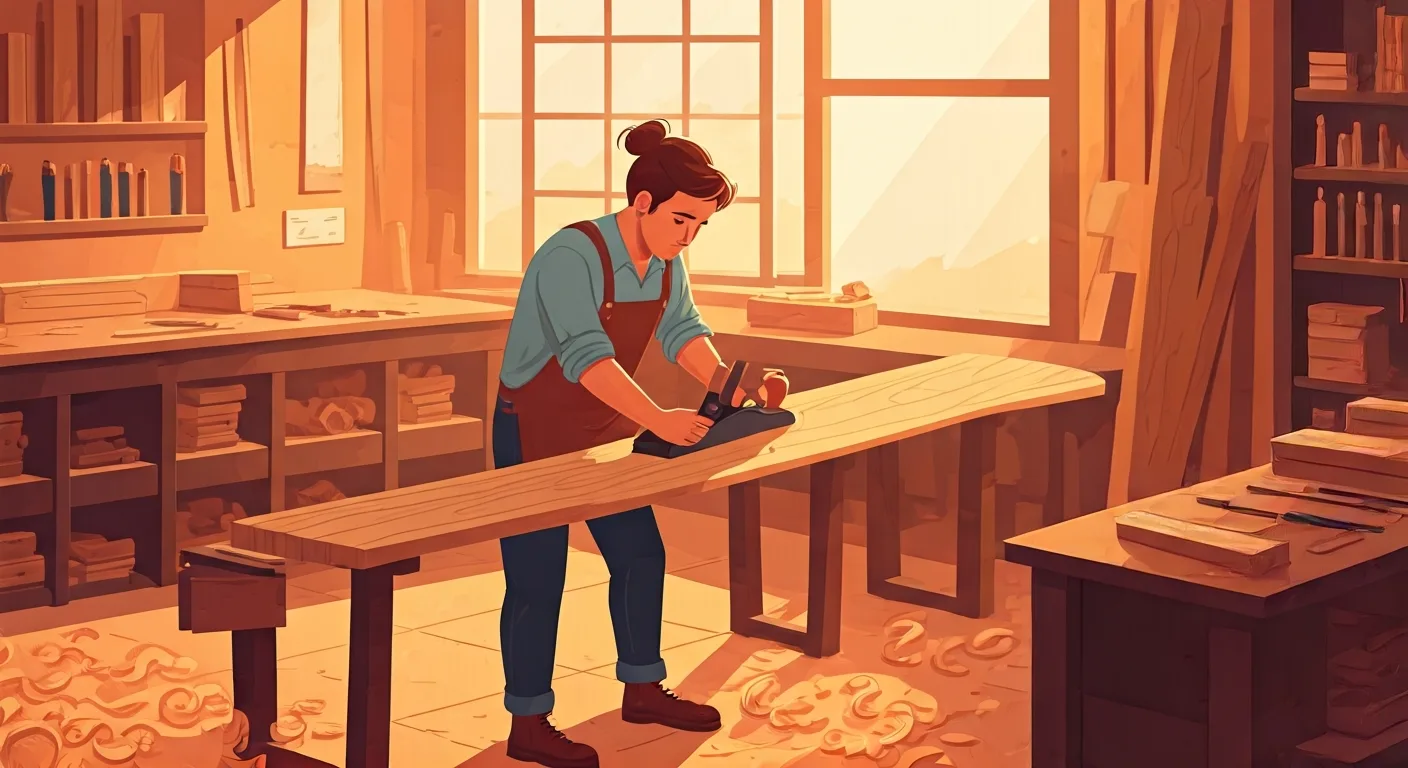
Measures, cuts, and assembles wooden structures and fixtures for buildings, from framing walls and roofs to installing trim and cabinetry. Carpenters read and interpret blueprints, operate a variety of power and hand tools, and ensure all work meets building codes and safety standards. They are essential to both residential and commercial construction, performing tasks from initial structural work to final finishing touches.
Constructs safe, durable, and functional structures, contributing to the development of homes, businesses, and essential infrastructure. Ensures structural integrity, aesthetic quality, and adherence to safety regulations in all building projects.
On the job
- Read and interpret blueprints, drawings, and sketches to determine specifications and calculate material requirements.
- Measure, cut, shape, assemble, and join materials made of wood, wood substitutes, and other building materials.
- Erect and install framework, floor joists, subflooring, wall studs, and roof trusses.
- Install doors, windows, stairs, trim, and cabinetry, ensuring precise fit and finish.
- Inspect and repair damaged wooden structures, ensuring compliance with building codes and safety regulations.
Tools & technology
Average salary
Job outlook
StableDemand is steady. This is an established role with consistent hiring across sectors.
Education & training
Apprenticeship, vocational training, or significant on-the-job experience is typically required. Some roles may benefit from a formal certificate or diploma.
AI impact outlook
Note — this is our current view. AI is moving fast, so we revisit these ratings.
Show how this was assessed Hide the detail
Note — this is our current view. AI is moving fast, so we revisit these ratings.
Show how this was assessed Hide the detailWhy this role received this rating
Core task exposure
low
How much of the role’s important work could AI perform?
AI can analyze blueprints, optimize material cuts for waste reduction, and provide real-time quality checks for structural alignment.
End-to-end automation
low
Can AI complete the work without substantial human involvement?
AI cannot physically measure, cut, shape, or assemble wooden structures on a dynamic construction site without human guidance and physical labor.
Adoption pressure
low
How likely are employers to introduce AI into this work?
While some aspects of planning and pre-fabrication are seeing AI integration, the core on-site physical tasks in construction have slower adoption rates.
Human dependence
strong
How much does success depend on human judgement, relationships and accountability?
Success depends on precise physical execution, problem-solving for unexpected site conditions, ensuring structural integrity, and adhering to safety and building codes.
Protective — a higher rating lowers the overall score.
Role adaptability
moderate
How easily can the role evolve as AI takes on more tasks?
The role can adapt by focusing on complex custom carpentry, managing digital fabrication processes, integrating smart home features, and advanced problem-solving.
Shown for context — not part of the score.
What AI may take on
These are the parts of the role most likely to be automated or significantly accelerated.
- Interpret complex blueprints and generate cut lists
- Optimize material usage to minimize waste in cutting
- Provide real-time structural analysis and code compliance checks
- Generate 3D models for detailed construction planning
- Assist in calculating load requirements for frameworks
Where people remain essential
These parts continue to depend heavily on human judgement, relationships and accountability.
- Measuring, cutting, and shaping wood and other materials by hand and tool
- Erecting and installing framework, floor joists, and roof trusses
- Installing doors, windows, trim, and cabinetry with precise fit and finish
- Inspecting and repairing damaged wooden structures on-site
- Adapting to unique architectural challenges and custom designs
- Operating and maintaining a wide range of power and hand tools
- Ensuring overall building code compliance and safety standards
How the role may evolve
Less on basic cuts, more on complex structural artistry.
Carpenters will increasingly use AI for planning and efficiency, allowing them to dedicate more time to intricate installations, custom craftsmanship, and overseeing overall structural quality.
Strengthen your future fit
- Proficiency in CAD/BIM software for digital designs
- Understanding of AI-driven material optimization techniques
- Specialization in advanced joinery and custom fabrication
- Skills in integrating smart home technologies into structures
- Leadership in managing construction workflows and safety
- Assessment horizon
- 3–7 years
- Confidence
- Medium
- Last reviewed
- August 2026
- Methodology
- v1.0
This assessment reflects current AI capabilities and expected adoption patterns. Actual impacts will vary by industry, employer and the way each role is performed.
Career pathways
WHERE YOU COULD GO
CURRENT ROLE
Carpenter
Skilled Trades
ADJACENT MOVES
STARTING POINTS
Who thrives here
Interest profile
realistic · RCA
Individuals who enjoy hands-on work, practical problem-solving, and building tangible structures will find this role highly rewarding. It requires precision, attention to detail, and a systematic approach to construction.
Personality characteristics
Detail-oriented
Pays close attention to measurements, cuts, and finishes to ensure structural integrity and quality craftsmanship.
Practical
Enjoys working with physical materials, tools, and solving concrete, hands-on construction challenges.
Reliable
Consistently delivers high-quality work, adheres to project timelines, and upholds safety standards on the job site.
Adaptable
Can adjust plans and methods to address unexpected site conditions, material variations, or changes in project scope.
Resilient
Handles the physical demands of the job and challenging weather conditions without undue stress.
Best for
- Individuals who enjoy manual labor, working with tools, and building things from the ground up.
- People who value precision, accuracy, and strict adherence to detailed plans and specifications.
- Those who thrive in a team environment on a job site and can adapt to changing conditions and challenges.
Watch out for
- The work can be physically demanding and often performed outdoors in varying weather conditions.
- Project deadlines can lead to occasional long hours or weekend work to ensure completion.
- Requires constant attention to safety protocols and procedures to prevent injuries on active construction sites.
A week in the life
A representative working week for a Carpenter — where the deep work, meetings, and admin actually land.
Real people. Real results.
Thousands of people
can't be wrong.



Frequently asked questions about Carpenter roles
What does a Carpenter do?
A Carpenter measures, cuts, and assembles wooden structures and fixtures for buildings, from framing walls and roofs to installing trim and cabinetry. Carpenters read and interpret blueprints, operate a variety of power and hand tools, and ensure all work meets building codes and safety standards. They are essential to both residential and commercial construction, performing tasks from initial structural work to final finishing touches. Constructs safe, durable, and functional structures, contributing to the development of homes, businesses, and essential infrastructure. Ensures structural integrity, aesthetic quality, and adherence to safety regulations in all building projects.
How much does a Carpenter earn?
A Carpenter earns a median of $55,000 per year in the US, typically ranging from $40,000 to $75,000.
What qualifications do you need to become a Carpenter?
To become a Carpenter, apprenticeship, vocational training, or significant on-the-job experience is typically required. Some roles may benefit from a formal certificate or diploma. May require licensing or certification depending on the project type, jurisdiction, and specific trade specialisation (e.g., general contractor license).
What personality suits a Carpenter?
Carpenter roles tend to suit people who are highly conscientious — precise, organised and strong on follow-through (Conscientiousness 80/100) and steady under pressure — deadlines and setbacks do not rattle them easily (Emotional Stability 74/100). The traits that matter most in the role are Detail-oriented, Practical, Reliable and Adaptable. Pays close attention to measurements, cuts, and finishes to ensure structural integrity and quality craftsmanship. On interests, Carpenter maps to a RCA Holland Code profile — individuals who enjoy hands-on work, practical problem-solving, and building tangible structures will find this role highly rewarding. It requires precision, attention to detail, and a systematic approach to construction.
Who does a Carpenter role suit?
A Carpenter role is usually a strong fit for these reasons. Strong Realistic (R) alignment: the role is intensely hands-on, requiring physical skill and working with tools. High Conscientiousness (C) is crucial for precision, safety, and strict adherence to building codes and plans. The work involves tangible outcomes, providing a clear sense of accomplishment and visible results.
What are the downsides of being a Carpenter?
Carpenter roles come with trade-offs worth weighing up. The work can be physically demanding and often performed outdoors in varying weather conditions. Project deadlines can lead to occasional long hours or weekend work to ensure completion. Requires constant attention to safety protocols and procedures to prevent injuries on active construction sites.
What is the work environment like for a Carpenter?
Work as a Carpenter is mostly mixed-based with onsite arrangements common, semi-structured — a mix of set processes and self-directed work, a moderate pace and medium exposure to clients or stakeholders. Around 69% of the week is focused deep work.
What skills do you need to be a Carpenter?
Core skills for a Carpenter include Blueprint reading, Wood framing, Finish carpentry, Measurement accuracy, Power tool operation and Building code knowledge.
How do you become a Carpenter?
Common entry routes into Carpenter roles include Carpentry Apprentice, Construction Laborer and General Handyman.
What career progression is there for a Carpenter?
From a Carpenter role, common next steps include Construction Foreman and Construction Superintendent; lateral moves include Cabinetmaker and General Contractor.
What is the job outlook for Carpenter roles?
The outlook for Carpenter roles is currently rated stable. Demand is steady. This is an established role with consistent hiring across sectors.
Will AI replace Carpenter roles?
Traitstack rates automation risk for Carpenter roles at 19 out of 100, which is low. While AI can optimize material cuts and interpret complex blueprints, the precise physical assembly and installation of structures and finishes will continue to rely on human skill. AI is most likely to take on interpret complex blueprints and generate cut lists, optimize material usage to minimize waste in cutting and provide real-time structural analysis and code compliance checks. Measuring, cutting, and shaping wood and other materials by hand and tool, erecting and installing framework, floor joists, and roof trusses and installing doors, windows, trim, and cabinetry with precise fit and finish stay with people. Less on basic cuts, more on complex structural artistry. That score measures how much of the work could change, not the likelihood the job disappears. It is Traitstack's current view, revisited as AI capability moves.