Butcher
SOC 51-3021.00 · ESCO 7511 · OSCA 322231
Role snapshot
Overview
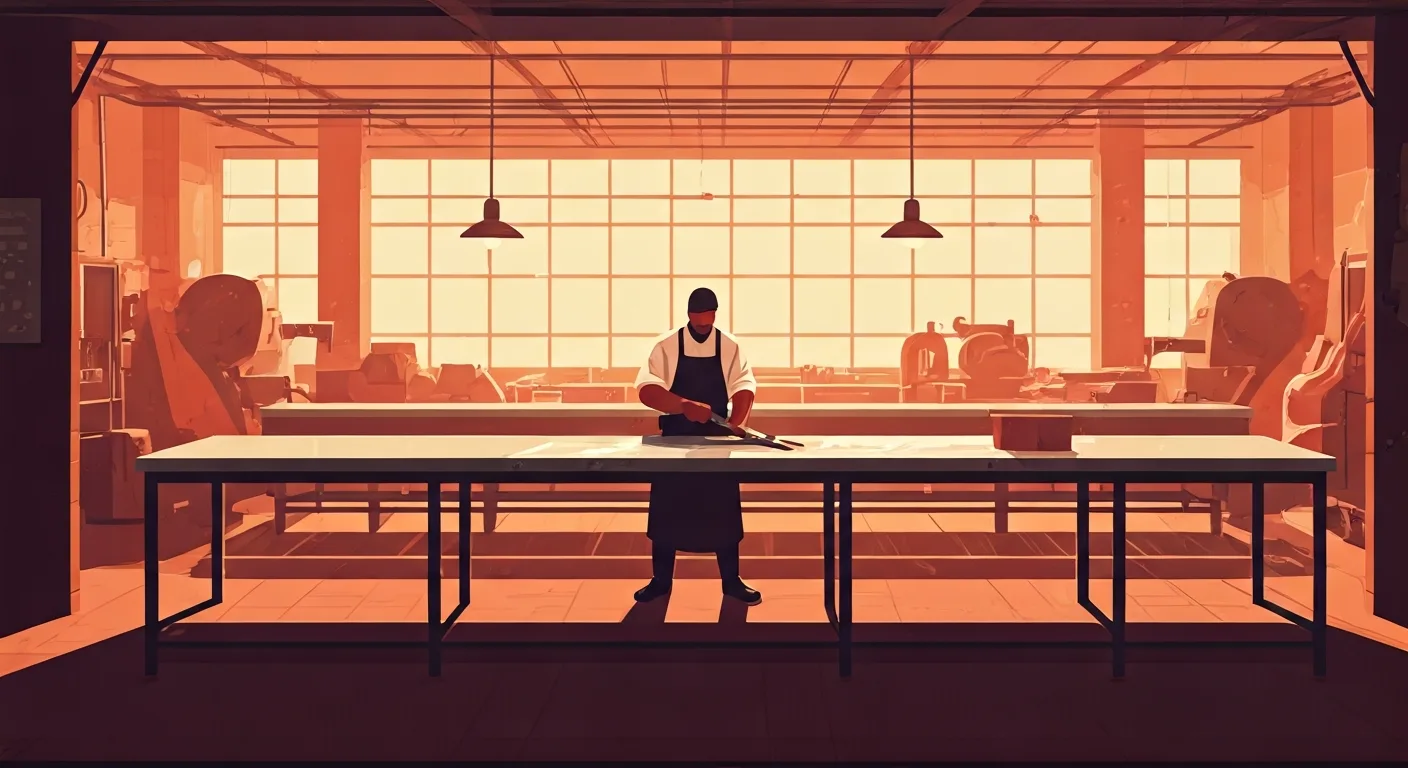
Breaks down animal carcasses into primal and retail cuts using knives, saws, and specialised equipment. Trims, grinds, and packages meat products while maintaining strict hygiene standards and advising customers on cooking methods. Butchers also manage inventory, ensure proper storage, and contribute to the overall presentation and quality of meat products in a retail or processing environment.
Provides fresh, high-quality meat products to consumers, contributing to local food supply and culinary experiences. Ensures food safety and advises customers on optimal preparation.
On the job
- Cut, trim, and bone meat into various cuts (steaks, roasts, chops) according to specifications
- Grind and prepare ground meats, sausages, and other processed meat products
- Maintain strict sanitation and hygiene standards in all work areas and equipment
- Advise customers on meat selection, proper storage, and cooking methods
- Manage meat inventory, including receiving, rotating stock, and preparing orders
Tools & technology
Average salary
Job outlook
StableDemand is steady. This is an established role with consistent hiring across sectors.
Education & training
Vocational training, apprenticeship, or significant on-the-job experience is typically required. Food handler certification is often mandatory.
AI impact outlook
Note — this is our current view. AI is moving fast, so we revisit these ratings.
Show how this was assessed Hide the detail
Note — this is our current view. AI is moving fast, so we revisit these ratings.
Show how this was assessed Hide the detailWhy this role received this rating
Core task exposure
low
How much of the role’s important work could AI perform?
The highly skilled, nuanced manipulation of knives to bone and trim meat, adapting to anatomical variations, is extremely challenging for AI-driven robotics.
End-to-end automation
low
Can AI complete the work without substantial human involvement?
The precise, tactile skill for breaking down carcasses, coupled with customer interaction and advising, creates significant binding constraints against full end-to-end automation.
Adoption pressure
low
How likely are employers to introduce AI into this work?
While large processing plants use capital automation for bulk cutting, the high cost of robotics for fine butchery and the continued value of human craft in retail limit widespread AI adoption.
Human dependence
strong
How much does success depend on human judgement, relationships and accountability?
Success critically depends on highly developed manual dexterity, anatomical knowledge, sensory judgment of meat quality, and essential customer service skills.
Protective — a higher rating lowers the overall score.
Role adaptability
strong
How easily can the role evolve as AI takes on more tasks?
Butchers adapt to new cuts, product innovations, and evolving customer preferences, demonstrating high craft and market responsiveness.
Shown for context — not part of the score.
What AI may take on
These are the parts of the role most likely to be automated or significantly accelerated.
- Optimise cutting patterns to maximise yield from carcasses
- Manage meat inventory and suggest reordering points
- Automate basic grinding and slicing processes
- Identify quality defects in raw meat using computer vision
Where people remain essential
These parts continue to depend heavily on human judgement, relationships and accountability.
- Precisely cut, trim, and bone meat with knives and cleavers
- Adapt cutting techniques to individual animal anatomy variations
- Advise customers on meat selection, cooking methods, and storage
- Maintain strict sanitation and hygiene standards through manual cleaning
- Prepare custom meat products like sausages or marinated cuts
- Evaluate meat freshness and quality through sensory assessment
How the role may evolve
Deepening craft skills for bespoke cuts; automating routine processing.
The butcher's role will likely bifurcate, with routine processing being increasingly automated, while human butchers focus on high-skill, bespoke cuts, customer education, and the artisanal aspects of meat preparation.
Strengthen your future fit
- Advanced knife skills and anatomical knowledge
- Expertise in custom meat preparation and product development
- Customer service and culinary advisory skills
- Strict adherence to food safety and hygiene regulations
- Inventory management and waste reduction strategies
- Assessment horizon
- 3–7 years
- Confidence
- High
- Last reviewed
- August 2026
- Methodology
- v1.0
This assessment reflects current AI capabilities and expected adoption patterns. Actual impacts will vary by industry, employer and the way each role is performed.
Career pathways
WHERE YOU COULD GO
CURRENT ROLE
Butcher
Manufacturing & Production
ADJACENT MOVES
STARTING POINTS
Who thrives here
Interest profile
realistic · RCE
People who enjoy hands-on, practical work with tools and machinery, following established procedures, and engaging with customers on a practical level tend to thrive as butchers.
Personality characteristics
Conscientious
Adheres strictly to food safety protocols, maintains cleanliness, and ensures precision in cutting and preparation.
Agreeable
Works well with colleagues and provides helpful, polite service to customers.
Practical
Focuses on tangible tasks, using tools and techniques to achieve clear, physical results.
Calm under pressure
Maintains composure in a busy environment and when handling sharp equipment, ensuring safety and efficiency.
Service-oriented
Engages with customers to understand their needs and provide advice on meat products.
Best for
- Individuals who enjoy working with their hands and mastering a traditional trade
- Those who value cleanliness, precision, and adherence to safety protocols
- People who like advising customers and providing quality products directly to them
Watch out for
- The role can be physically demanding, requiring standing for long periods and lifting heavy items
- Requires working in cold environments and maintaining strict hygiene standards consistently
- Early morning starts and regular weekend work are common
A week in the life
A representative working week for a Butcher — where the deep work, meetings, and admin actually land.
Real people. Real results.
Thousands of people
can't be wrong.

Frequently asked questions about Butcher roles
What does a Butcher do?
A Butcher breaks down animal carcasses into primal and retail cuts using knives, saws, and specialised equipment. Trims, grinds, and packages meat products while maintaining strict hygiene standards and advising customers on cooking methods. Butchers also manage inventory, ensure proper storage, and contribute to the overall presentation and quality of meat products in a retail or processing environment. Provides fresh, high-quality meat products to consumers, contributing to local food supply and culinary experiences. Ensures food safety and advises customers on optimal preparation.
How much does a Butcher earn?
A Butcher earns a median of $45,000 per year in the US, typically ranging from $35,000 to $58,000.
What qualifications do you need to become a Butcher?
To become a Butcher, vocational training, apprenticeship, or significant on-the-job experience is typically required. Food handler certification is often mandatory.
What personality suits a Butcher?
Butcher roles tend to suit people who are highly conscientious — precise, organised and strong on follow-through (Conscientiousness 80/100) and steady under pressure — deadlines and setbacks do not rattle them easily (Emotional Stability 72/100). The traits that matter most in the role are Conscientious, Agreeable, Practical and Calm under pressure. Adheres strictly to food safety protocols, maintains cleanliness, and ensures precision in cutting and preparation. On interests, Butcher maps to a RCE Holland Code profile — people who enjoy hands-on, practical work with tools and machinery, following established procedures, and engaging with customers on a practical level tend to thrive as butchers.
Who does a Butcher role suit?
A Butcher role is usually a strong fit for these reasons. Strong Realistic (R) alignment, emphasizing practical, hands-on work with tools and materials. High Conventional (C) aspects, involving strict adherence to hygiene, safety, and procedural guidelines. Opportunity for direct customer interaction, advising on products and building relationships.
What are the downsides of being a Butcher?
Butcher roles come with trade-offs worth weighing up. The role can be physically demanding, requiring standing for long periods and lifting heavy items. Requires working in cold environments and maintaining strict hygiene standards consistently. Early morning starts and regular weekend work are common.
What is the work environment like for a Butcher?
Work as a Butcher is mostly retail-based with onsite arrangements common, semi-structured — a mix of set processes and self-directed work, a moderate pace and medium exposure to clients or stakeholders. Around 54% of the week is focused deep work.
What skills do you need to be a Butcher?
Core skills for a Butcher include Meat fabrication, Knife skills, Food safety and hygiene, Customer service, Inventory management and Attention to detail.
How do you become a Butcher?
Common entry routes into Butcher roles include Meat Clerk, Apprentice Butcher and Food Preparation Worker.
What career progression is there for a Butcher?
From a Butcher role, common next steps include Head Butcher and Meat Department Manager; lateral moves include Catering Chef (Meat Focus).
What is the job outlook for Butcher roles?
The outlook for Butcher roles is currently rated stable. Demand is steady. This is an established role with consistent hiring across sectors.
Will AI replace Butcher roles?
Traitstack rates automation risk for Butcher roles at 24 out of 100, which is low. Skilled anatomical breakdown and customer interaction will stay firmly with the human, with AI mainly offering support for cut optimisation and inventory management. AI is most likely to take on optimise cutting patterns to maximise yield from carcasses, manage meat inventory and suggest reordering points and automate basic grinding and slicing processes. Precisely cut, trim, and bone meat with knives and cleavers, adapt cutting techniques to individual animal anatomy variations and advise customers on meat selection, cooking methods, and storage stay with people. Deepening craft skills for bespoke cuts; automating routine processing. That score measures how much of the work could change, not the likelihood the job disappears. It is Traitstack's current view, revisited as AI capability moves.