Watch and Clock Repairer
SOC 49-9064.00 · ESCO 7311 · OSCA 332338
Role snapshot
Overview
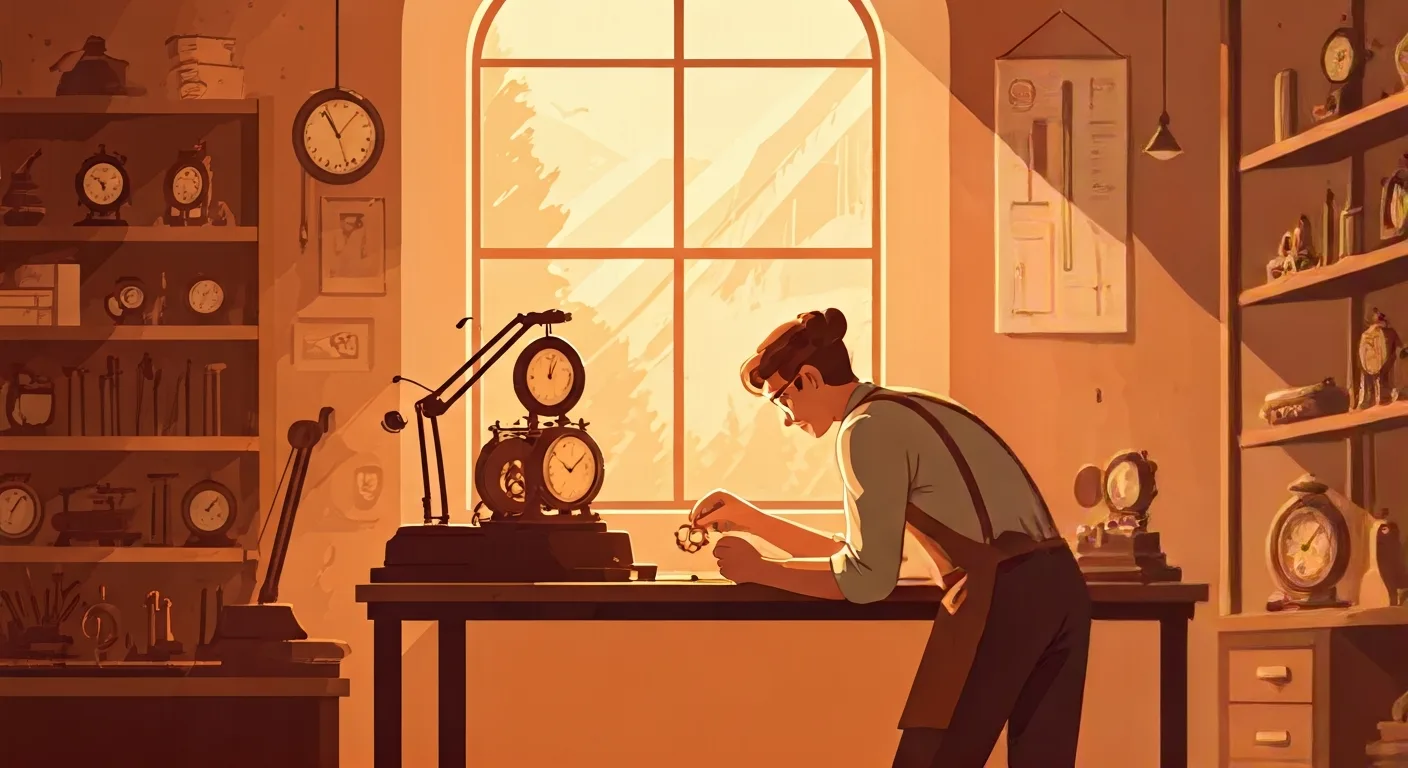
Disassembles, cleans, and repairs mechanical and electronic timepieces, replacing worn parts and adjusting movements using magnification tools and precision instruments. This highly specialized trade requires exceptional manual dexterity, attention to detail, and a deep understanding of intricate mechanisms to restore functionality and accuracy to watches and clocks.
Preserves valuable heirlooms and functional timepieces, ensuring their longevity and accuracy. Maintains the tradition of fine craftsmanship and provides essential services for both antique and modern horological devices.
On the job
- Diagnose malfunctions in mechanical and electronic timepieces using specialized tools.
- Carefully disassemble watches and clocks, cleaning components using ultrasonic cleaners and specialized solutions.
- Replace worn or broken parts, often fabricating custom components or sourcing rare vintage parts.
- Reassemble movements, lubricating gears and pivots, and making precise adjustments to ensure accurate timekeeping.
- Test and regulate finished timepieces to meet performance standards.
Tools & technology
Average salary
Job outlook
StableDemand is steady. This is an established role with consistent hiring across sectors.
Education & training
Specialized training or an apprenticeship in horology is typically required, often culminating in a certificate or diploma.
AI impact outlook
Note — this is our current view. AI is moving fast, so we revisit these ratings.
Show how this was assessed Hide the detail
Note — this is our current view. AI is moving fast, so we revisit these ratings.
Show how this was assessed Hide the detailWhy this role received this rating
Core task exposure
low
How much of the role’s important work could AI perform?
AI's exposure to the core tasks is minimal, mainly limited to potential diagnostic assistance; the intricate physical manipulation and adjustment of tiny components are fundamentally human skills.
End-to-end automation
low
Can AI complete the work without substantial human involvement?
The highly bespoke nature of repairs, coupled with the need for extreme manual dexterity and the fabrication of custom parts, prevents any form of end-to-end automation.
Adoption pressure
low
How likely are employers to introduce AI into this work?
Given the low volume of highly specialized work and the prohibitive cost of developing automation for such intricate and varied tasks, adoption pressure for AI is extremely low.
Human dependence
strong
How much does success depend on human judgement, relationships and accountability?
The success of watch and clock repair is almost entirely dependent on the repairer's exceptional manual dexterity, visual precision, deep mechanical knowledge, and meticulous judgment.
Protective — a higher rating lowers the overall score.
Role adaptability
moderate
How easily can the role evolve as AI takes on more tasks?
The craft adapts through continued learning of new mechanisms and materials, but its fundamental principles of precision, patience, and skilled handwork remain constant.
Shown for context — not part of the score.
What AI may take on
These are the parts of the role most likely to be automated or significantly accelerated.
- Acoustic analysis for identifying subtle mechanical faults in movements.
- Image recognition for identifying rare or vintage parts from databases.
- Digital archiving of historical watch and clock schematics for reference.
- Predictive maintenance scheduling based on component wear patterns.
Where people remain essential
These parts continue to depend heavily on human judgement, relationships and accountability.
- Disassembly and reassembly of extremely delicate, tiny components under magnification.
- Cleaning and lubrication requiring precise manual handling to avoid damage.
- Fabrication or sourcing of custom and rare parts for unique timepieces.
- Fine adjustment and regulation of mechanical movements to ensure accurate timekeeping.
- Diagnosing unique malfunctions in diverse, often antique, timepieces.
- Ensuring the aesthetic integrity and preservation of high-value objects.
How the role may evolve
Mastering micro-mechanics with digital diagnostic support.
Watch and clock repairers will continue their intricate handiwork, potentially using AI for advanced diagnostics and part identification, but their core skills remain irreplaceable.
Strengthen your future fit
- Mastery of micro-mechanical assembly and fine motor control.
- Deep understanding of horological history and diverse mechanisms.
- Proficiency in custom part fabrication and restoration techniques.
- Diagnostic problem-solving for complex and unique issues.
- Careful handling and preservation of delicate, high-value items.
- Assessment horizon
- 3–7 years
- Confidence
- High
- Last reviewed
- August 2026
- Methodology
- v1.0
This assessment reflects current AI capabilities and expected adoption patterns. Actual impacts will vary by industry, employer and the way each role is performed.
Career pathways
WHERE YOU COULD GO
CURRENT ROLE
Watch and Clock Repairer
Skilled Trades
ADJACENT MOVES
STARTING POINTS
Who thrives here
Interest profile
realistic · RCI
Individuals with a strong interest in practical, hands-on tasks, who enjoy detailed, systematic work and solving intricate mechanical problems, are well-suited for this role.
Personality characteristics
Meticulous
Possesses extreme attention to detail and precision, essential for working with tiny components and intricate mechanisms.
Focused
Can maintain intense concentration for long periods on complex, solitary tasks without distraction.
Patient
Demonstrates endurance and calm when facing challenging repairs or repetitive processes.
Systematic
Approaches problems with a logical, step-by-step methodology to diagnose and resolve issues.
Curious
Enjoys understanding how things work and exploring new techniques for repair and restoration.
Best for
- Individuals who enjoy intricate mechanical challenges and restoring complex devices to perfect working order.
- People who thrive in quiet, focused environments where precision and meticulousness are paramount.
- Those with a passion for craftsmanship and preserving traditional skills.
- Candidates who possess exceptional manual dexterity and a keen eye for detail.
Watch out for
- The work can be highly repetitive and requires extreme patience, which may not suit those seeking varied, fast-paced environments.
- Limited social interaction compared to roles requiring extensive teamwork or client-facing engagement.
A week in the life
A representative working week for a Watch and Clock Repairer — where the deep work, meetings, and admin actually land.
Real people. Real results.
Thousands of people
can't be wrong.




Frequently asked questions about Watch and Clock Repairer roles
What does a Watch and Clock Repairer do?
A Watch and Clock Repairer disassembles, cleans, and repairs mechanical and electronic timepieces, replacing worn parts and adjusting movements using magnification tools and precision instruments. This highly specialized trade requires exceptional manual dexterity, attention to detail, and a deep understanding of intricate mechanisms to restore functionality and accuracy to watches and clocks. Preserves valuable heirlooms and functional timepieces, ensuring their longevity and accuracy. Maintains the tradition of fine craftsmanship and provides essential services for both antique and modern horological devices.
How much does a Watch and Clock Repairer earn?
A Watch and Clock Repairer earns a median of $50,000 per year in the US, typically ranging from $35,000 to $75,000.
What qualifications do you need to become a Watch and Clock Repairer?
To become a Watch and Clock Repairer, specialized training or an apprenticeship in horology is typically required, often culminating in a certificate or diploma.
What personality suits a Watch and Clock Repairer?
Watch and Clock Repairer roles tend to suit people who are highly conscientious — precise, organised and strong on follow-through (Conscientiousness 85/100) and reserved — comfortable with long independent focus rather than constant social contact (Extraversion 25/100). The traits that matter most in the role are Meticulous, Focused, Patient and Systematic. Possesses extreme attention to detail and precision, essential for working with tiny components and intricate mechanisms. On interests, Watch and Clock Repairer maps to a RCI Holland Code profile — individuals with a strong interest in practical, hands-on tasks, who enjoy detailed, systematic work and solving intricate mechanical problems, are well-suited for this role.
Who does a Watch and Clock Repairer role suit?
A Watch and Clock Repairer role is usually a strong fit for these reasons. High Realistic (R) and Investigative (I) alignment, rewarding hands-on mechanical work and problem-solving. The role demands exceptional precision and attention to detail, aligning with high conscientiousness. A significant portion of the work involves focused, independent tasks, suitable for those who prefer solitary environments.
What are the downsides of being a Watch and Clock Repairer?
Watch and Clock Repairer roles come with trade-offs worth weighing up. The work can be highly repetitive and requires extreme patience, which may not suit those seeking varied, fast-paced environments. Limited social interaction compared to roles requiring extensive teamwork or client-facing engagement.
What is the work environment like for a Watch and Clock Repairer?
Work as a Watch and Clock Repairer is mostly workshop-based with onsite arrangements common, highly structured, with set processes and deadlines and medium exposure to clients or stakeholders. Around 80% of the week is focused deep work.
What skills do you need to be a Watch and Clock Repairer?
Core skills for a Watch and Clock Repairer include Micro-mechanics, Precision assembly, Diagnostic troubleshooting, Metal working and Component fabrication.
How do you become a Watch and Clock Repairer?
Common entry routes into Watch and Clock Repairer roles include Apprentice Watchmaker, Jewelry Repair Technician and Precision Assembler.
What career progression is there for a Watch and Clock Repairer?
From a Watch and Clock Repairer role, common next steps include Senior Watch and Clock Repairer and Horological Restorer; lateral moves include Jeweler.
What is the job outlook for Watch and Clock Repairer roles?
The outlook for Watch and Clock Repairer roles is currently rated stable. Demand is steady. This is an established role with consistent hiring across sectors.
Will AI replace Watch and Clock Repairer roles?
Traitstack rates automation risk for Watch and Clock Repairer roles at 10 out of 100, which is low. The meticulous manual dexterity, intricate assembly, and deep mechanical understanding required for timepiece repair remain firmly within the human domain, even as AI might offer minor diagnostic support. AI is most likely to take on acoustic analysis for identifying subtle mechanical faults in movements., image recognition for identifying rare or vintage parts from databases. and digital archiving of historical watch and clock schematics for reference.. Disassembly and reassembly of extremely delicate, tiny components under magnification., cleaning and lubrication requiring precise manual handling to avoid damage. and fabrication or sourcing of custom and rare parts for unique timepieces. stay with people. Mastering micro-mechanics with digital diagnostic support. That score measures how much of the work could change, not the likelihood the job disappears. It is Traitstack's current view, revisited as AI capability moves.