Vineyard Worker
SOC 45-2092.00 · ESCO 9211 · OSCA 841142
Role snapshot
Overview
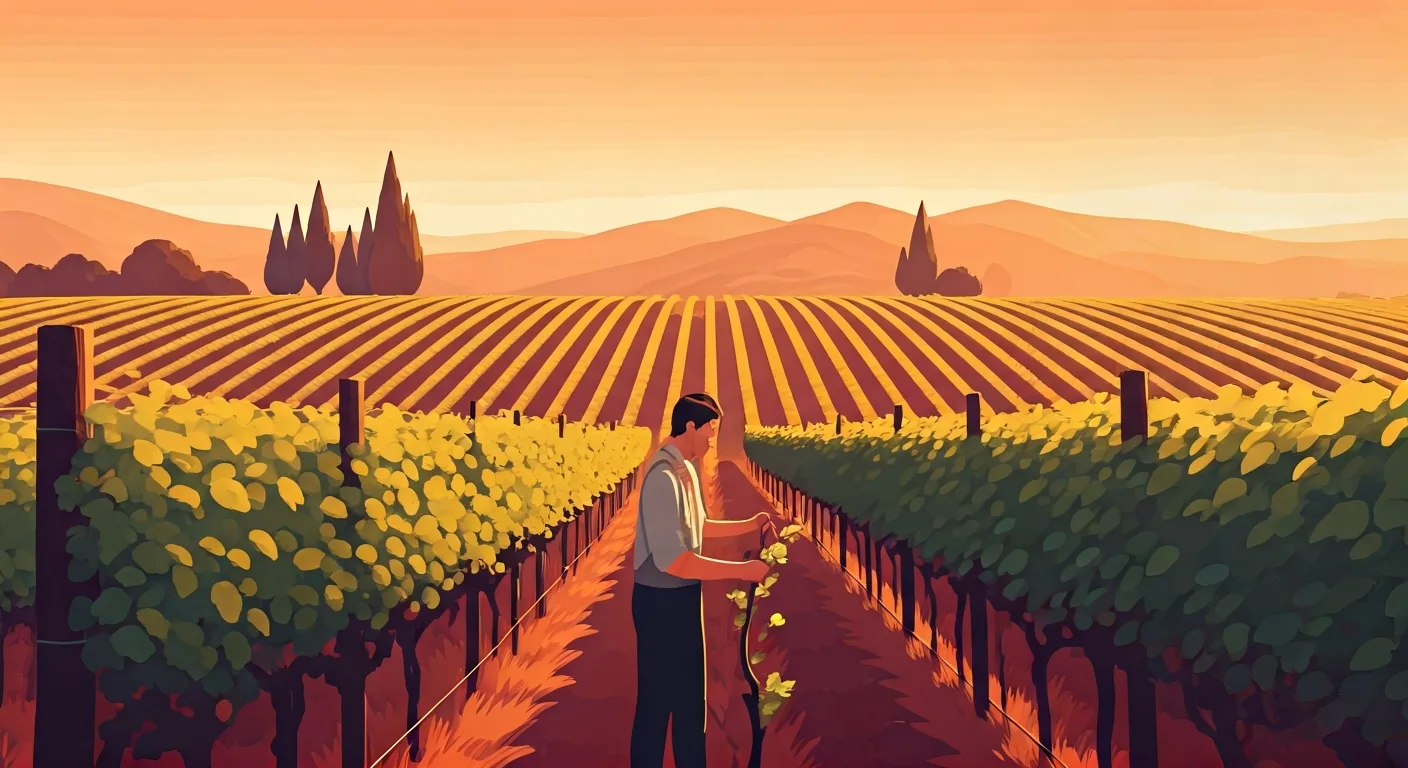
A Vineyard Worker performs essential seasonal tasks to maintain grapevine health and productivity, ensuring high-quality grape yields for winemaking or direct sale. This role involves hands-on agricultural work, including pruning, training vines, managing pests and diseases through spraying, and meticulously harvesting grapes at optimal ripeness, contributing directly to the success of vineyard operations.
Ensures the health and productivity of grapevines, directly contributing to the quality and yield of grapes, which are fundamental to the success of wineries and grape producers.
On the job
- Prune grapevines during dormancy to manage growth and optimize fruit production for the upcoming season.
- Train young vines and maintain established trellising systems to support vine growth and fruit development.
- Apply sprays for pest and disease control, following safety protocols and environmental guidelines.
- Monitor grape ripeness, sugar levels, and acidity to determine the optimal time for harvesting.
- Participate in manual or mechanical harvesting of grapes, ensuring careful handling to preserve fruit quality.
Tools & technology
Average salary
Job outlook
StableDemand is steady. This is an established role with consistent hiring across sectors.
Education & training
High school diploma or equivalent is often preferred, but practical experience in agriculture or farming is frequently more valued than formal credentials.
AI impact outlook
Note — this is our current view. AI is moving fast, so we revisit these ratings.
Show how this was assessed Hide the detail
Note — this is our current view. AI is moving fast, so we revisit these ratings.
Show how this was assessed Hide the detailWhy this role received this rating
Core task exposure
low
How much of the role’s important work could AI perform?
The core physical tasks of pruning, training vines, and manual harvesting require fine motor skills and judgment that are minimally exposed to AI directly.
End-to-end automation
low
Can AI complete the work without substantial human involvement?
Fully automating the intricate physical manipulation required for vine maintenance and grape harvesting is a complex challenge, preventing end-to-end automation.
Adoption pressure
moderate
How likely are employers to introduce AI into this work?
High labor costs provide an incentive, but the technical difficulty of automating delicate vineyard tasks limits widespread adoption of robotics in the short term.
Human dependence
strong
How much does success depend on human judgement, relationships and accountability?
Success relies on human dexterity, careful judgment in pruning, and meticulous handling of grapes to preserve quality for winemaking.
Protective — a higher rating lowers the overall score.
Role adaptability
low
How easily can the role evolve as AI takes on more tasks?
The role's core physical nature is less adaptable, though workers may use new tools or receive AI-guided instructions for tasks like spraying.
Shown for context — not part of the score.
What AI may take on
These are the parts of the role most likely to be automated or significantly accelerated.
- Monitoring grape ripeness and sugar levels through sensors
- Guiding precision spray applications for pest control
- Recording completed tasks and vine health observations
- Providing real-time feedback on pruning accuracy
Where people remain essential
These parts continue to depend heavily on human judgement, relationships and accountability.
- Precisely pruning grapevines by hand
- Training young vines and maintaining trellising systems
- Manually harvesting grapes with care to avoid damage
- Operating vineyard machinery like tractors and sprayers
- Adapting to unique vine conditions and terrain
- Troubleshooting minor equipment or vine issues
How the role may evolve
Maintaining vine health with smart tools.
Vineyard workers will increasingly use AI-guided tools for tasks like spraying and ripeness monitoring, while their expertise in delicate manual vine manipulation remains central.
Strengthen your future fit
- Dexterity and precision in manual vineyard tasks
- Ability to use smart tools and sensor data for guidance
- Understanding of vine health and viticultural practices
- Operation of vineyard machinery
- Adherence to safety protocols and quality standards
- Assessment horizon
- 3–7 years
- Confidence
- Medium
- Last reviewed
- August 2026
- Methodology
- v1.0
This assessment reflects current AI capabilities and expected adoption patterns. Actual impacts will vary by industry, employer and the way each role is performed.
Career pathways
WHERE YOU COULD GO
CURRENT ROLE
Vineyard Worker
Agriculture & Food
ADJACENT MOVES
STARTING POINTS
Who thrives here
Interest profile
realistic · RCE
People who enjoy hands-on outdoor work, following established agricultural practices, and seeing tangible results tend to thrive in this role.
Personality characteristics
Diligent
Pays close attention to detail in pruning and vine care to ensure plant health and grape quality.
Practical
Enjoys working with tools and equipment to perform physical tasks outdoors and solve hands-on problems.
Patient
Understands that agricultural work requires waiting for natural cycles and adapting to environmental changes.
Observant
Notices subtle signs of plant stress, pests, or disease to take timely and appropriate action.
Reliable
Consistently performs seasonal tasks on schedule, understanding their critical impact on the harvest.
Best for
- Individuals who enjoy working independently or in small teams in an outdoor, natural environment.
- Those who find satisfaction in cultivating plants and contributing to agricultural production.
- People who appreciate the cyclical nature of farming and the tangible results of their labor.
Watch out for
- Physically demanding work, often exposed to various weather conditions and requiring stamina.
- Seasonal peaks, such as harvest, can involve long and irregular hours, including occasional weekend work.
A week in the life
A representative working week for a Vineyard Worker — where the deep work, meetings, and admin actually land.
Real people. Real results.
Thousands of people
can't be wrong.





Frequently asked questions about Vineyard Worker roles
What does a Vineyard Worker do?
A Vineyard Worker a Vineyard Worker performs essential seasonal tasks to maintain grapevine health and productivity, ensuring high-quality grape yields for winemaking or direct sale. This role involves hands-on agricultural work, including pruning, training vines, managing pests and diseases through spraying, and meticulously harvesting grapes at optimal ripeness, contributing directly to the success of vineyard operations. Ensures the health and productivity of grapevines, directly contributing to the quality and yield of grapes, which are fundamental to the success of wineries and grape producers.
How much does a Vineyard Worker earn?
A Vineyard Worker earns a median of $35,000 per year in the US, typically ranging from $28,000 to $45,000.
What qualifications do you need to become a Vineyard Worker?
To become a Vineyard Worker, high school diploma or equivalent is often preferred, but practical experience in agriculture or farming is frequently more valued than formal credentials.
What personality suits a Vineyard Worker?
Vineyard Worker roles tend to suit people who are highly conscientious — precise, organised and strong on follow-through (Conscientiousness 70/100) and steady under pressure — deadlines and setbacks do not rattle them easily (Emotional Stability 65/100). The traits that matter most in the role are Diligent, Practical, Patient and Observant. Pays close attention to detail in pruning and vine care to ensure plant health and grape quality. On interests, Vineyard Worker maps to a RCE Holland Code profile — people who enjoy hands-on outdoor work, following established agricultural practices, and seeing tangible results tend to thrive in this role.
Who does a Vineyard Worker role suit?
A Vineyard Worker role is usually a strong fit for these reasons. High Realistic (R) affinity: the role is hands-on, practical, and primarily performed outdoors. Strong Conventional (C) affinity: involves following established agricultural practices and seasonal schedules. Requires conscientiousness: attention to detail in vine care directly impacts product quality and yield.
What are the downsides of being a Vineyard Worker?
Vineyard Worker roles come with trade-offs worth weighing up. Physically demanding work, often exposed to various weather conditions and requiring stamina. Seasonal peaks, such as harvest, can involve long and irregular hours, including occasional weekend work.
What is the work environment like for a Vineyard Worker?
Work as a Vineyard Worker is mostly outdoors-based with onsite arrangements common, structured, with clear processes, a moderate pace and low exposure to clients or stakeholders. Around 77% of the week is focused deep work.
What skills do you need to be a Vineyard Worker?
Core skills for a Vineyard Worker include Vine pruning techniques, Grapevine training and trellising, Pest and disease identification, Harvesting and grape handling and Agricultural equipment operation.
How do you become a Vineyard Worker?
Common entry routes into Vineyard Worker roles include Farm Worker, Agricultural Laborer and General Laborer.
What career progression is there for a Vineyard Worker?
From a Vineyard Worker role, common next steps include Vineyard Supervisor and Viticulturist; lateral moves include Agricultural Technician.
What is the job outlook for Vineyard Worker roles?
The outlook for Vineyard Worker roles is currently rated stable. Demand is steady. This is an established role with consistent hiring across sectors.
Will AI replace Vineyard Worker roles?
Traitstack rates automation risk for Vineyard Worker roles at 27 out of 100, which is low. The intricate manual tasks of pruning and training vines endure, even as AI assists with ripeness monitoring and precision spraying recommendations. AI is most likely to take on monitoring grape ripeness and sugar levels through sensors, guiding precision spray applications for pest control and recording completed tasks and vine health observations. Precisely pruning grapevines by hand, training young vines and maintaining trellising systems and manually harvesting grapes with care to avoid damage stay with people. Maintaining vine health with smart tools. That score measures how much of the work could change, not the likelihood the job disappears. It is Traitstack's current view, revisited as AI capability moves.