Vegetable Picker
SOC 45-2092.00 · ESCO 9211 · OSCA 841141
Role snapshot
Overview
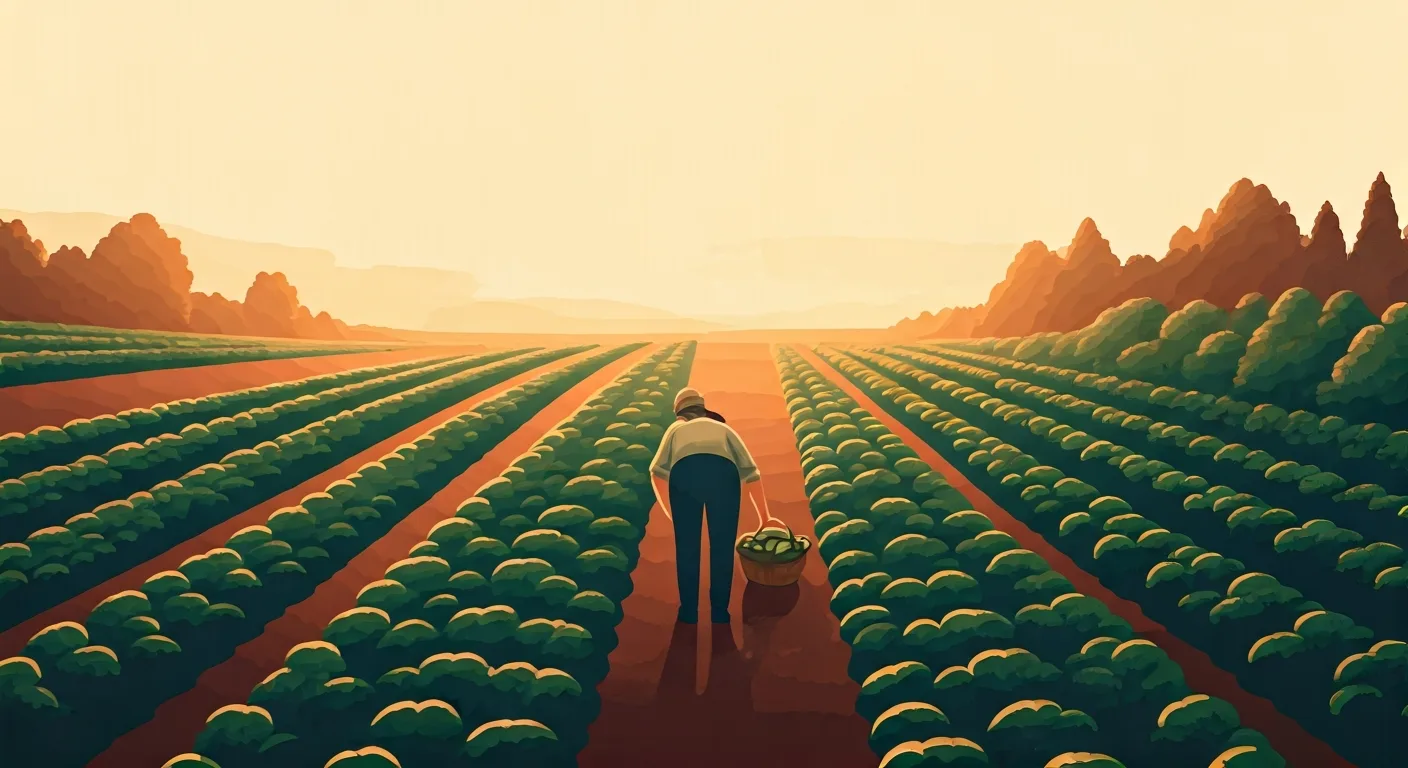
Harvests various vegetables from agricultural fields or controlled environments like greenhouses. This includes identifying ripe produce, carefully picking by hand, and performing initial quality checks such as sorting by size and removing damaged items. Workers are also responsible for loading harvested produce into crates or containers for transport to packing facilities or direct processing.
Ensures fresh, high-quality vegetables are efficiently harvested and made available for consumption, supporting the food supply chain and public health.
On the job
- Identify and select ripe vegetables ready for harvest based on quality standards.
- Pick vegetables by hand, using appropriate techniques to avoid damage to the produce.
- Perform initial sorting of harvested items by size, quality, and type directly in the field.
- Load filled containers of vegetables onto carts, pallets, or transport vehicles.
- Adhere to strict safety protocols and hygiene standards in the field or greenhouse.
Tools & technology
Average salary
Job outlook
StableDemand is steady. This is an established role with consistent hiring across sectors.
Education & training
No formal education required, though some employers may prefer a high school diploma or equivalent.
AI impact outlook
Note — this is our current view. AI is moving fast, so we revisit these ratings.
Show how this was assessed Hide the detail
Note — this is our current view. AI is moving fast, so we revisit these ratings.
Show how this was assessed Hide the detailWhy this role received this rating
Core task exposure
low
How much of the role’s important work could AI perform?
While AI vision systems can identify ripe produce, the physical act of careful picking and initial sorting remains a hands-on, low-exposure task.
End-to-end automation
low
Can AI complete the work without substantial human involvement?
Automating the entire process of identifying, picking, and handling delicate vegetables without damage is currently beyond full end-to-end AI capabilities.
Adoption pressure
moderate
How likely are employers to introduce AI into this work?
High labor costs provide a strong incentive for automation, but the technical challenges of robotic dexterity for soft produce limit rapid, widespread adoption.
Human dependence
moderate
How much does success depend on human judgement, relationships and accountability?
Success relies on human dexterity, visual judgment for quality, and the careful handling required to avoid bruising or damaging delicate produce.
Protective — a higher rating lowers the overall score.
Role adaptability
low
How easily can the role evolve as AI takes on more tasks?
The core task of physical picking is not highly adaptable, though workers may interact with new tools for guidance or quality control.
Shown for context — not part of the score.
What AI may take on
These are the parts of the role most likely to be automated or significantly accelerated.
- Identifying ripe vegetables via computer vision
- Assessing quality based on visual parameters
- Guiding pickers to optimal harvesting spots
- Recording harvested quantities and locations
Where people remain essential
These parts continue to depend heavily on human judgement, relationships and accountability.
- Physically picking vegetables by hand with care
- Performing initial tactile quality checks
- Sorting produce by size and removing damaged items
- Loading containers onto transport vehicles
- Adapting to varied crop conditions and terrains
- Maintaining hygiene and safety protocols
How the role may evolve
A shift from picking to human-machine collaboration.
Vegetable pickers will increasingly work alongside AI-guided systems that identify optimal produce, allowing them to focus their dexterity on the complex task of gentle harvesting.
Strengthen your future fit
- Dexterity and fine motor skills for delicate handling
- Visual acuity for quality assessment
- Adaptability to new picking tools and systems
- Understanding of quality specifications
- Adherence to food safety and hygiene standards
- Assessment horizon
- 3–7 years
- Confidence
- Medium
- Last reviewed
- August 2026
- Methodology
- v1.0
This assessment reflects current AI capabilities and expected adoption patterns. Actual impacts will vary by industry, employer and the way each role is performed.
Career pathways
WHERE YOU COULD GO
CURRENT ROLE
Vegetable Picker
Agriculture & Food
ADJACENT MOVES
STARTING POINTS
Who thrives here
Interest profile
realistic · RCE
Individuals who enjoy hands-on, practical tasks, working outdoors, and following established procedures to achieve tangible results often thrive in this role.
Personality characteristics
Practical
Prefers hands-on tasks and tangible outcomes over abstract or theoretical concepts.
Diligent
Consistently follows harvesting protocols and maintains work standards, even in repetitive tasks.
Cooperative
Works well with others in a team setting to achieve daily quotas and shared goals.
Resilient
Maintains focus and productivity despite challenging weather conditions or physically demanding work.
Efficient
Focuses on getting tasks done effectively and on time without extensive social interaction.
Best for
- Individuals who enjoy working outdoors and engaging in physical, hands-on tasks.
- Those who prefer clear tasks and measurable outcomes in a structured environment.
- People who appreciate contributing directly to food production and the agricultural sector.
Watch out for
- The work can be physically demanding, repetitive, and requires sustained effort.
- Exposure to various weather conditions (heat, cold, rain) is common and expected.
A week in the life
A representative working week for a Vegetable Picker — where the deep work, meetings, and admin actually land.
Real people. Real results.
Thousands of people
can't be wrong.





Frequently asked questions about Vegetable Picker roles
What does a Vegetable Picker do?
A Vegetable Picker harvests various vegetables from agricultural fields or controlled environments like greenhouses. This includes identifying ripe produce, carefully picking by hand, and performing initial quality checks such as sorting by size and removing damaged items. Workers are also responsible for loading harvested produce into crates or containers for transport to packing facilities or direct processing. Ensures fresh, high-quality vegetables are efficiently harvested and made available for consumption, supporting the food supply chain and public health.
How much does a Vegetable Picker earn?
A Vegetable Picker earns a median of $30,000 per year in the US, typically ranging from $25,000 to $35,000.
What qualifications do you need to become a Vegetable Picker?
To become a Vegetable Picker, no formal education required, though some employers may prefer a high school diploma or equivalent.
What personality suits a Vegetable Picker?
Vegetable Picker roles tend to suit people who are practical and grounded — happier with proven methods than experimentation (Openness 35/100). The traits that matter most in the role are Practical, Diligent, Cooperative and Resilient. Prefers hands-on tasks and tangible outcomes over abstract or theoretical concepts. On interests, Vegetable Picker maps to a RCE Holland Code profile — individuals who enjoy hands-on, practical tasks, working outdoors, and following established procedures to achieve tangible results often thrive in this role.
Who does a Vegetable Picker role suit?
A Vegetable Picker role is usually a strong fit for these reasons. Strong Realistic (R) affinity for hands-on, outdoor work with tangible results. High Conventional (C) aspect in following precise sorting and harvesting guidelines. Requires physical stamina and a preference for active work environments.
What are the downsides of being a Vegetable Picker?
Vegetable Picker roles come with trade-offs worth weighing up. The work can be physically demanding, repetitive, and requires sustained effort. Exposure to various weather conditions (heat, cold, rain) is common and expected.
What is the work environment like for a Vegetable Picker?
Work as a Vegetable Picker is mostly outdoors-based with onsite arrangements common, highly structured, with set processes and deadlines and low exposure to clients or stakeholders. Around 80% of the week is focused deep work.
What skills do you need to be a Vegetable Picker?
Core skills for a Vegetable Picker include Manual dexterity, Attention to detail (quality control), Physical stamina and endurance, Ability to follow instructions and Basic knowledge of crop ripeness.
How do you become a Vegetable Picker?
Common entry routes into Vegetable Picker roles include Seasonal Agricultural Worker and General Laborer.
What career progression is there for a Vegetable Picker?
From a Vegetable Picker role, common next steps include Farm Supervisor; lateral moves include Packhouse Operative.
What is the job outlook for Vegetable Picker roles?
The outlook for Vegetable Picker roles is currently rated stable. Demand is steady. This is an established role with consistent hiring across sectors.
Will AI replace Vegetable Picker roles?
Traitstack rates automation risk for Vegetable Picker roles at 32 out of 100, which is low. While AI excels at visual identification of ripeness, the physical dexterity and careful handling required for soft produce remain human strengths. AI is most likely to take on identifying ripe vegetables via computer vision, assessing quality based on visual parameters and guiding pickers to optimal harvesting spots. Physically picking vegetables by hand with care, performing initial tactile quality checks and sorting produce by size and removing damaged items stay with people. A shift from picking to human-machine collaboration. That score measures how much of the work could change, not the likelihood the job disappears. It is Traitstack's current view, revisited as AI capability moves.