Plumbing Inspector
SOC 47-4011.00 · ESCO 3359 · OSCA 312233
Role snapshot
Overview
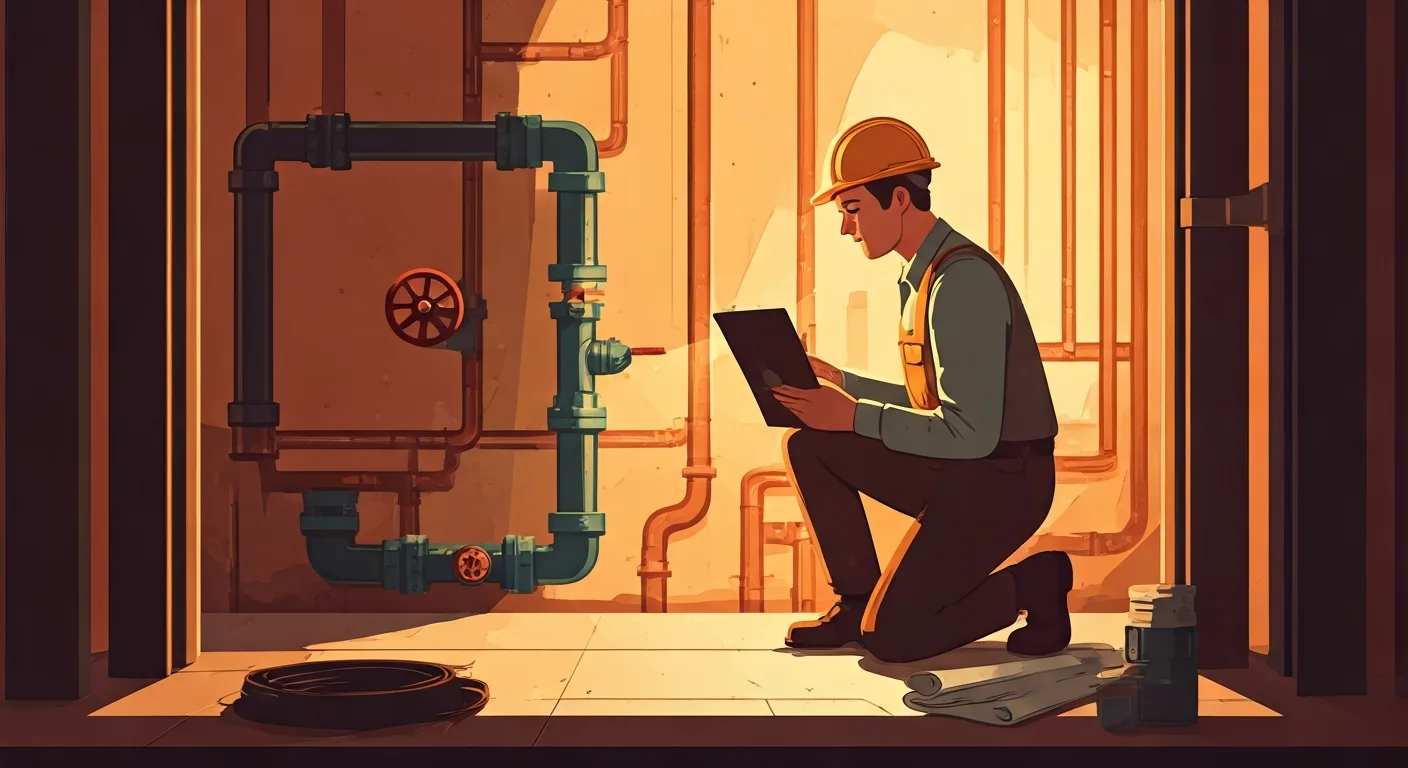
Inspects plumbing installations in residential and commercial buildings to ensure they comply with local, state, and national regulations and safety standards. This involves reviewing blueprints, conducting on-site checks at various construction phases, identifying faults, testing pressure systems, and issuing compliance certificates or notices of non-compliance. Plumbing inspectors play a crucial role in public health and safety by ensuring proper installation and functionality of water supply, drainage, and waste disposal systems.
Ensures public health and safety by verifying plumbing systems are installed correctly, preventing water contamination, structural damage, and other hazards. Upholds building codes and standards, contributing to safe and sustainable infrastructure.
On the job
- Conduct on-site inspections of new and existing plumbing systems during various construction phases.
- Review blueprints, plans, and specifications for compliance with plumbing codes and ordinances.
- Perform pressure tests on water and drainage systems to detect leaks or defects.
- Issue permits, compliance certificates, or violation notices, and follow up on corrective actions.
- Provide technical assistance and guidance to plumbers, contractors, and property owners on code requirements.
Tools & technology
Average salary
Job outlook
StableDemand is steady. This is an established role with consistent hiring across sectors.
Education & training
Completion of a plumbing apprenticeship program, journeyman plumber license, and specialized training in plumbing codes and inspection is typically required.
AI impact outlook
Note — this is our current view. AI is moving fast, so we revisit these ratings.
Show how this was assessed Hide the detail
Note — this is our current view. AI is moving fast, so we revisit these ratings.
Show how this was assessed Hide the detailWhy this role received this rating
Core task exposure
moderate
How much of the role’s important work could AI perform?
AI can automate blueprint review and some on-site fault detection, but hands-on inspection and technical guidance remain significantly human.
End-to-end automation
low
Can AI complete the work without substantial human involvement?
Human judgment is critical for interpreting codes in complex scenarios, ensuring safety, and providing final authorization, preventing full automation.
Adoption pressure
high
How likely are employers to introduce AI into this work?
Governments are motivated by efficiency and consistency but must balance this with public safety concerns and the need for human accountability.
Human dependence
strong
How much does success depend on human judgement, relationships and accountability?
High human dependence arises from the need for expert judgment, interpretation of complex codes, and direct interaction with skilled tradespeople.
Protective — a higher rating lowers the overall score.
Role adaptability
moderate
How easily can the role evolve as AI takes on more tasks?
Inspectors must continually update their knowledge with evolving plumbing codes, new technologies, and construction practices.
Shown for context — not part of the score.
What AI may take on
These are the parts of the role most likely to be automated or significantly accelerated.
- Reviewing plumbing blueprints for code compliance
- Automated analysis of pressure test data for leaks
- Identifying common installation faults via computer vision
- Generating routine inspection reports and notices
Where people remain essential
These parts continue to depend heavily on human judgement, relationships and accountability.
- Conducting physical on-site inspections in complex environments
- Interpreting ambiguous code requirements for unique installations
- Providing expert technical guidance to plumbers and contractors
- Exercising final judgment for issuing compliance certificates
- Investigating and resolving complex plumbing failures
- Ensuring public safety through personal accountability
How the role may evolve
Blueprint checks by AI; site safety confirmed by humans.
Inspectors will leverage AI for initial code checks and data analysis, enabling them to focus on complex on-site verification, problem-solving, and expert consultation.
Strengthen your future fit
- Mastering advanced plumbing code interpretation
- Utilizing AI tools for blueprint and data analysis
- Developing strong communication skills for technical guidance
- Enhancing problem-solving for novel installation challenges
- Maintaining rigorous ethical standards in safety certification
- Assessment horizon
- 3–7 years
- Confidence
- Medium
- Last reviewed
- August 2026
- Methodology
- v1.0
This assessment reflects current AI capabilities and expected adoption patterns. Actual impacts will vary by industry, employer and the way each role is performed.
Career pathways
WHERE YOU COULD GO
CURRENT ROLE
Plumbing Inspector
Government & Policy
ADJACENT MOVES
STARTING POINTS
Who thrives here
Interest profile
realistic · RCI
People who enjoy practical, hands-on work, detailed analysis of systems, and ensuring compliance with established standards often thrive as plumbing inspectors.
Personality characteristics
Conscientious
Meticulous about details and ensuring all regulations are strictly followed.
Stable
Remains calm and objective when dealing with contractors or property owners regarding non-compliance.
Analytical
Enjoys dissecting problems and interpreting complex plumbing codes to find specific solutions.
Practical
Prefers hands-on work and seeing tangible results from thorough inspections.
Methodical
Follows established procedures and documentation requirements precisely to maintain standards.
Communicative
Clearly explains code requirements and inspection findings to diverse stakeholders, even when delivering bad news.
Best for
- Individuals who are detail-oriented, enjoy practical problem-solving, and have a strong sense of responsibility for public safety.
- Those who thrive in roles that require precise application of rules and standards to ensure compliance.
- People comfortable with regular on-site work, travel between locations, and communicating technical information clearly.
Watch out for
- Frequent interactions with contractors and property owners may involve conflict or resistance to findings.
- The work is highly structured by codes and regulations, offering limited scope for creative or abstract problem-solving.
- Requires continuous learning and adaptation to updated plumbing codes and construction methods.
A week in the life
A representative working week for a Plumbing Inspector — where the deep work, meetings, and admin actually land.
Real people. Real results.
Thousands of people
can't be wrong.



Frequently asked questions about Plumbing Inspector roles
What does a Plumbing Inspector do?
A Plumbing Inspector inspects plumbing installations in residential and commercial buildings to ensure they comply with local, state, and national regulations and safety standards. This involves reviewing blueprints, conducting on-site checks at various construction phases, identifying faults, testing pressure systems, and issuing compliance certificates or notices of non-compliance. Plumbing inspectors play a crucial role in public health and safety by ensuring proper installation and functionality of water supply, drainage, and waste disposal systems. Ensures public health and safety by verifying plumbing systems are installed correctly, preventing water contamination, structural damage, and other hazards. Upholds building codes and standards, contributing to safe and sustainable infrastructure.
How much does a Plumbing Inspector earn?
A Plumbing Inspector earns a median of $75,000 per year in the US, typically ranging from $55,000 to $95,000.
What qualifications do you need to become a Plumbing Inspector?
To become a Plumbing Inspector, completion of a plumbing apprenticeship program, journeyman plumber license, and specialized training in plumbing codes and inspection is typically required. State or local plumbing inspector certification.
What personality suits a Plumbing Inspector?
Plumbing Inspector roles tend to suit people who are highly conscientious — precise, organised and strong on follow-through (Conscientiousness 82/100) and steady under pressure — deadlines and setbacks do not rattle them easily (Emotional Stability 75/100). The traits that matter most in the role are Conscientious, Stable, Analytical and Practical. Meticulous about details and ensuring all regulations are strictly followed. On interests, Plumbing Inspector maps to a RCI Holland Code profile — people who enjoy practical, hands-on work, detailed analysis of systems, and ensuring compliance with established standards often thrive as plumbing inspectors.
Who does a Plumbing Inspector role suit?
A Plumbing Inspector role is usually a strong fit for these reasons. Strong Realistic affinity: the role involves hands-on inspection of physical plumbing systems and problem-solving. High Conscientiousness: success requires meticulous attention to detail and strict adherence to codes and regulations. The work involves regular field presence and direct application of technical knowledge to ensure public safety.
What are the downsides of being a Plumbing Inspector?
Plumbing Inspector roles come with trade-offs worth weighing up. Frequent interactions with contractors and property owners may involve conflict or resistance to findings. The work is highly structured by codes and regulations, offering limited scope for creative or abstract problem-solving. Requires continuous learning and adaptation to updated plumbing codes and construction methods.
What is the work environment like for a Plumbing Inspector?
Work as a Plumbing Inspector is mostly field-based with onsite arrangements common, semi-structured — a mix of set processes and self-directed work, a moderate pace and high exposure to clients or stakeholders. Around 13% of the week is focused deep work.
What skills do you need to be a Plumbing Inspector?
Core skills for a Plumbing Inspector include Plumbing code interpretation, Technical inspection, Problem-solving, Communication and Documentation.
How do you become a Plumbing Inspector?
Common entry routes into Plumbing Inspector roles include Journeyman Plumber, Apprentice Plumber and Construction Trades Worker.
What career progression is there for a Plumbing Inspector?
From a Plumbing Inspector role, common next steps include Senior Plumbing Inspector and Chief Building Official; lateral moves include Building Code Enforcement Officer and Plumbing Contractor.
What is the job outlook for Plumbing Inspector roles?
The outlook for Plumbing Inspector roles is currently rated stable. Demand is steady. This is an established role with consistent hiring across sectors.
Will AI replace Plumbing Inspector roles?
Traitstack rates automation risk for Plumbing Inspector roles at 50 out of 100, which is moderate. AI will aid in code review and initial fault detection, but human expertise is critical for on-site judgment, complex problem-solving, and final safety certification. AI is most likely to take on reviewing plumbing blueprints for code compliance, automated analysis of pressure test data for leaks and identifying common installation faults via computer vision. Conducting physical on-site inspections in complex environments, interpreting ambiguous code requirements for unique installations and providing expert technical guidance to plumbers and contractors stay with people. Blueprint checks by AI; site safety confirmed by humans. That score measures how much of the work could change, not the likelihood the job disappears. It is Traitstack's current view, revisited as AI capability moves.