Photographer
SOC 27-4021.00 · ESCO 3431 · OSCA 391331
Role snapshot
Overview
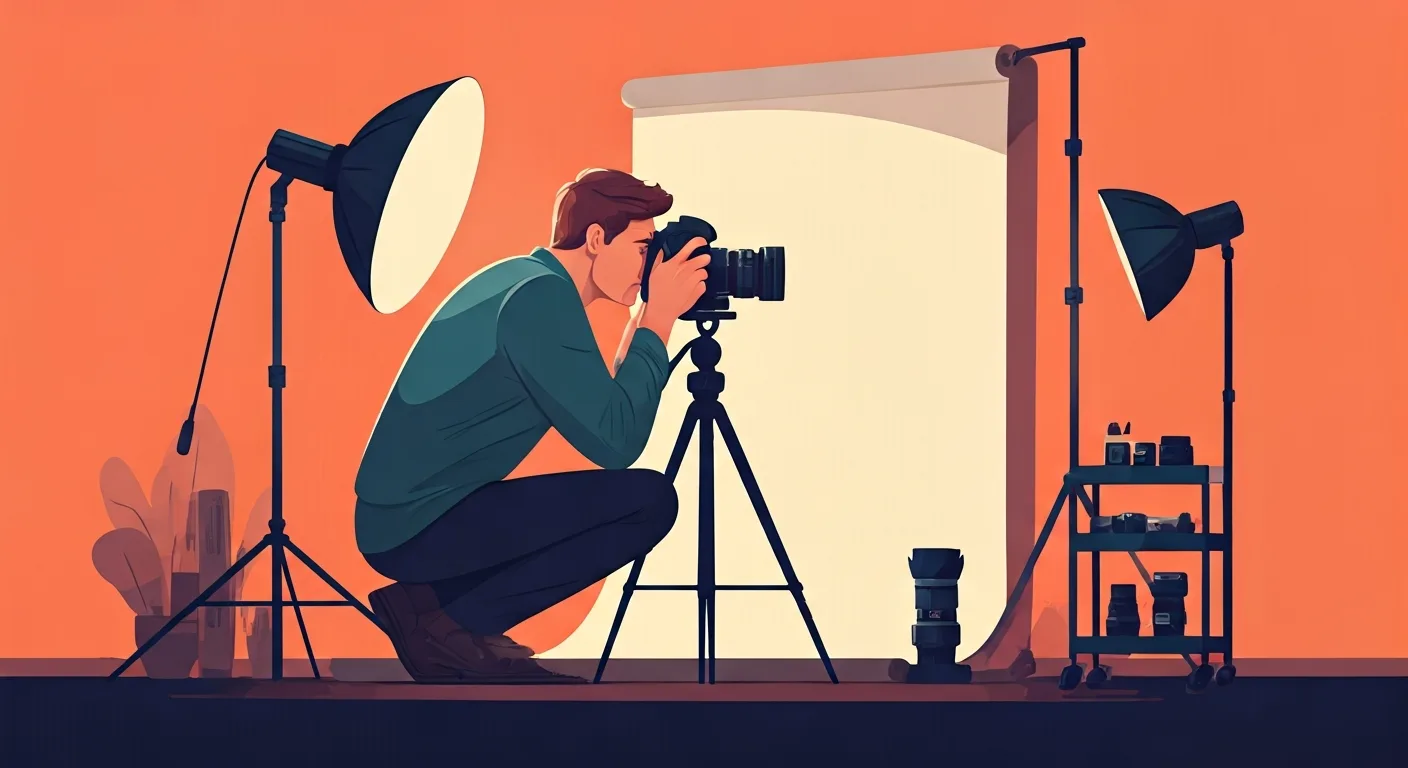
Captures images for commercial, editorial, artistic, or personal purposes using digital and film cameras. This involves planning compositions, adjusting lighting and exposure, directing subjects, and editing photos in post-production to achieve the desired visual narrative and aesthetic.
Creates lasting visual records, tells stories, enhances brand identities, and preserves memories, influencing perception and evoking emotion through imagery.
On the job
- Plan and conceptualize photo shoots based on client briefs or artistic vision
- Set up and adjust cameras, lighting equipment, and props to achieve desired effects
- Direct and pose subjects, models, or products to capture compelling images
- Edit and retouch photographs using specialized software to enhance quality and style
- Manage digital assets, archive photos, and deliver final images to clients or publications
Tools & technology
Average salary
Job outlook
StableDemand is steady. This is an established role with consistent hiring across sectors.
Education & training
Formal training in photography or visual arts, often supplemented by practical experience and a strong portfolio.
AI impact outlook
Note — this is our current view. AI is moving fast, so we revisit these ratings.
Show how this was assessed Hide the detail
Note — this is our current view. AI is moving fast, so we revisit these ratings.
Show how this was assessed Hide the detailWhy this role received this rating
Core task exposure
high
How much of the role’s important work could AI perform?
Image generation, ideation, editing, retouching, and asset management are highly exposed, while on-set direction and physical camera/lighting adjustments are less so.
End-to-end automation
moderate
Can AI complete the work without substantial human involvement?
AI can generate sophisticated images and process photos, but it cannot fully conceptualize unique shoots, direct human subjects effectively, or physically manage complex on-location setups.
Adoption pressure
high
How likely are employers to introduce AI into this work?
There is strong employer incentive to use AI for rapid image generation, post-production efficiency, and asset management within commercial photography workflows.
Human dependence
moderate
How much does success depend on human judgement, relationships and accountability?
Success depends on creative vision, the ability to direct and build rapport with subjects, and nuanced interpretation of client briefs and emotions for compelling visuals.
Protective — a higher rating lowers the overall score.
Role adaptability
strong
How easily can the role evolve as AI takes on more tasks?
The role can adapt by focusing on unique conceptualization, complex human interaction, and specializing in areas where AI struggles to replicate authenticity.
Shown for context — not part of the score.
What AI may take on
These are the parts of the role most likely to be automated or significantly accelerated.
- Generate initial visual concepts and mood boards
- Automate image editing and retouching tasks
- Enhance image quality and resolve minor imperfections
- Manage and tag digital assets for easy retrieval
- Suggest optimal camera settings and lighting setups
Where people remain essential
These parts continue to depend heavily on human judgement, relationships and accountability.
- Develop unique creative visions and narratives for shoots
- Direct and pose human subjects to evoke specific emotions
- Build rapport with subjects and clients during sessions
- Set up and adjust complex lighting equipment on location
- Make real-time decisions on camera angles and composition
- Interpret nuanced client feedback for final image selection
How the role may evolve
Less time on retouching, more on conceptualizing and authentic human connection.
Photographers will transition from purely technical execution to a stronger focus on creative direction, human interaction, and delivering unique, story-driven visuals that AI cannot replicate.
Strengthen your future fit
- Master advanced conceptualization and storytelling
- Cultivate exceptional interpersonal and direction skills
- Develop expertise in ethical AI image manipulation
- Specialize in niche human-centric or documentary photography
- Build a strong personal brand and artistic vision
- Assessment horizon
- 3–7 years
- Confidence
- High
- Last reviewed
- August 2026
- Methodology
- v1.0
This assessment reflects current AI capabilities and expected adoption patterns. Actual impacts will vary by industry, employer and the way each role is performed.
Career pathways
WHERE YOU COULD GO
CURRENT ROLE
Photographer
Design & Visual Arts
ADJACENT MOVES
STARTING POINTS
Who thrives here
Interest profile
artistic · RAC
People who enjoy hands-on technical work with equipment, expressing creativity through visual mediums, and meticulously organizing their work tend to thrive in this role.
Personality characteristics
Imaginative
Possesses a strong ability to visualize concepts and create unique, compelling compositions.
Detailed
Attends to fine details in lighting, focus, composition, and post-production to ensure high-quality results.
Engaging
Comfortable directing subjects, building rapport, and interacting with clients to understand their vision.
Cooperative
Works effectively with clients, models, and assistants, incorporating feedback and collaborating on projects.
Resilient
Handles challenges like difficult lighting, uncooperative subjects, or client revisions without becoming overly stressed.
Best for
- Individuals who are passionate about visual storytelling and creating impactful imagery.
- Those who enjoy a mix of technical challenge, artistic expression, and direct client interaction.
- People who are self-driven and comfortable managing their own projects and workflows.
Watch out for
- Irregular hours and weekend work can be common, especially for event or portrait photography.
- The role often requires self-employment and business acumen, which may not suit everyone.
A week in the life
A representative working week for a Photographer — where the deep work, meetings, and admin actually land.
Real people. Real results.
Thousands of people
can't be wrong.
Frequently asked questions about Photographer roles
What does a Photographer do?
A Photographer captures images for commercial, editorial, artistic, or personal purposes using digital and film cameras. This involves planning compositions, adjusting lighting and exposure, directing subjects, and editing photos in post-production to achieve the desired visual narrative and aesthetic. Creates lasting visual records, tells stories, enhances brand identities, and preserves memories, influencing perception and evoking emotion through imagery.
How much does a Photographer earn?
A Photographer earns a median of $60,000 per year in the US, typically ranging from $40,000 to $95,000.
What qualifications do you need to become a Photographer?
To become a Photographer, formal training in photography or visual arts, often supplemented by practical experience and a strong portfolio.
What personality suits a Photographer?
Photographer roles tend to suit people who are open and curious — drawn to variety, ideas and new approaches (Openness 90/100). The traits that matter most in the role are Imaginative, Detailed, Engaging and Cooperative. Possesses a strong ability to visualize concepts and create unique, compelling compositions. On interests, Photographer maps to a RAC Holland Code profile — people who enjoy hands-on technical work with equipment, expressing creativity through visual mediums, and meticulously organizing their work tend to thrive in this role.
Who does a Photographer role suit?
A Photographer role is usually a strong fit for these reasons. Strong Realistic and Artistic alignment: the role demands both technical mastery of equipment and creative vision for composition and storytelling. A significant portion of the week involves hands-on shooting and detailed post-production work. High stakeholder exposure allows for direct interaction with clients and subjects, fulfilling social interests.
What are the downsides of being a Photographer?
Photographer roles come with trade-offs worth weighing up. Irregular hours and weekend work can be common, especially for event or portrait photography. The role often requires self-employment and business acumen, which may not suit everyone.
What is the work environment like for a Photographer?
Work as a Photographer is mostly mixed-based with onsite arrangements common, largely self-directed, with little imposed structure, a moderate pace and high exposure to clients or stakeholders. Around 44% of the week is focused deep work.
What skills do you need to be a Photographer?
Core skills for a Photographer include Photography techniques, Composition and framing, Lighting design, Photo editing and retouching, Client communication and Digital asset management.
How do you become a Photographer?
Common entry routes into Photographer roles include Photography Assistant, Junior Photographer and Visual Artist.
What career progression is there for a Photographer?
From a Photographer role, common next steps include Senior Photographer, Photography Director and Art Director; lateral moves include Videographer and Visual Merchandiser.
What is the job outlook for Photographer roles?
The outlook for Photographer roles is currently rated stable. Demand is steady. This is an established role with consistent hiring across sectors.
Will AI replace Photographer roles?
Traitstack rates automation risk for Photographer roles at 64 out of 100, which is strong. AI increasingly handles image generation and post-production, allowing photographers to concentrate on creative direction, building rapport with subjects, and capturing authentic human moments. AI is most likely to take on generate initial visual concepts and mood boards, automate image editing and retouching tasks and enhance image quality and resolve minor imperfections. Develop unique creative visions and narratives for shoots, direct and pose human subjects to evoke specific emotions and build rapport with subjects and clients during sessions stay with people. Less time on retouching, more on conceptualizing and authentic human connection. That score measures how much of the work could change, not the likelihood the job disappears. It is Traitstack's current view, revisited as AI capability moves.