Oral Health Therapist or Dental Therapist
SOC 29-1292.00 · ESCO 3251 · OSCA 269133
Role snapshot
Overview
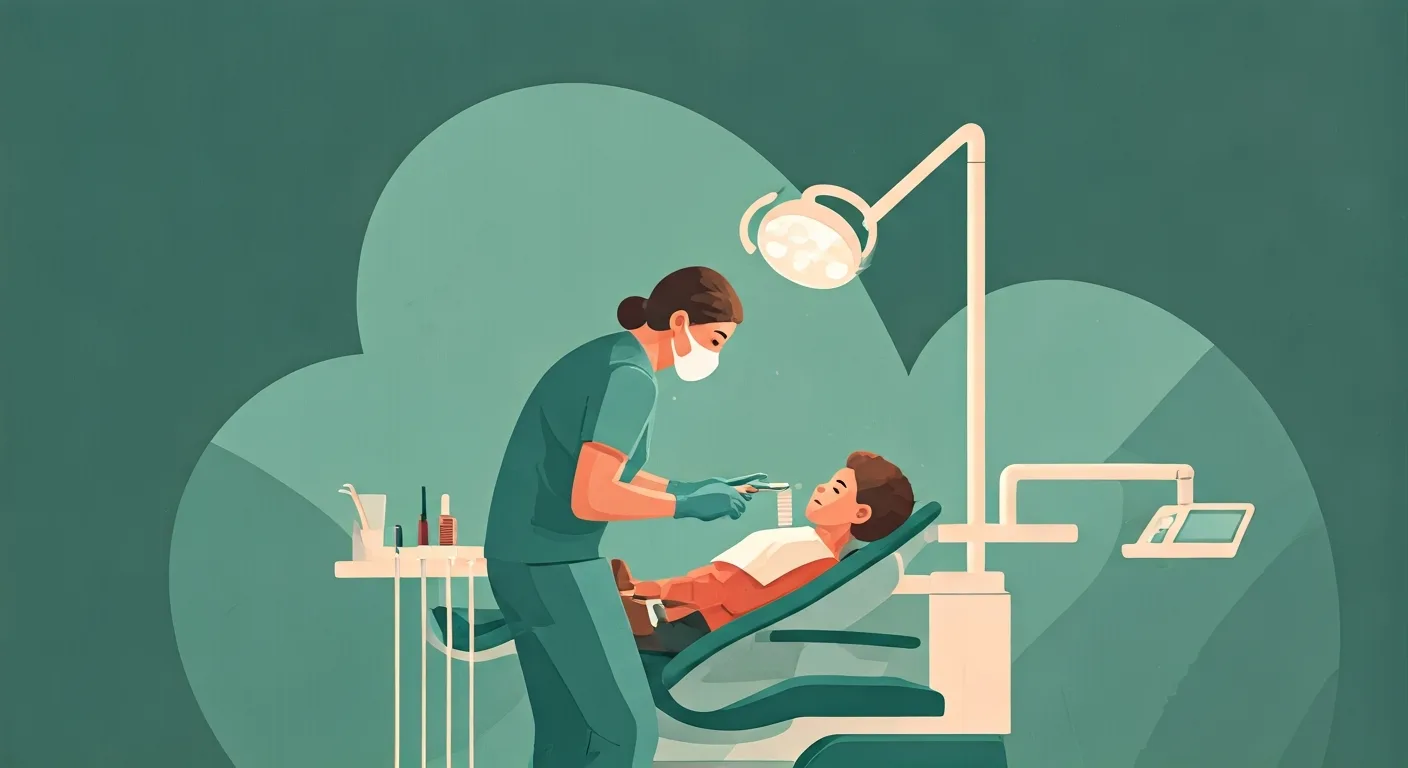
Oral Health Therapists and Dental Therapists provide comprehensive preventive and restorative dental care, primarily focusing on children and adolescents. This includes performing fillings, applying fluoride treatments, and delivering vital oral health education. They examine teeth, gums, and oral tissues, take and interpret X-rays, and actively promote good brushing techniques and healthy dietary habits to prevent dental disease.
Improves community oral health by providing accessible, high-quality preventive and basic restorative dental care, especially for younger populations, reducing the incidence of dental disease and promoting lifelong healthy habits.
On the job
- Perform dental examinations, including oral cancer screenings and taking X-rays
- Provide routine dental cleanings, fluoride applications, and dental sealants
- Administer local anesthesia and perform simple tooth extractions
- Place and restore fillings for primary and permanent teeth
- Educate patients and their families on proper oral hygiene techniques and dietary choices
Tools & technology
Average salary
Job outlook
GrowingJob growth is expected to be above average over the next five years.
Education & training
Typically requires an associate's degree, diploma, or bachelor's degree in dental hygiene or oral health therapy.
AI impact outlook
Note — this is our current view. AI is moving fast, so we revisit these ratings.
Show how this was assessed Hide the detail
Note — this is our current view. AI is moving fast, so we revisit these ratings.
Show how this was assessed Hide the detailWhy this role received this rating
Core task exposure
low
How much of the role’s important work could AI perform?
AI exposure is limited to diagnostic imaging interpretation and charting, as core tasks involve highly manual and invasive clinical procedures.
End-to-end automation
low
Can AI complete the work without substantial human involvement?
The necessity of physical examinations, invasive procedures like extractions and fillings, and direct patient education prevents unaided workflow automation.
Adoption pressure
moderate
How likely are employers to introduce AI into this work?
Adoption pressure is moderate due to the direct clinical care, patient trust, and regulatory requirements, limiting AI's role to assistive functions.
Human dependence
strong
How much does success depend on human judgement, relationships and accountability?
Success is critically dependent on clinical judgment, manual dexterity for dental procedures, empathy, pain management, and legal accountability for patient outcomes.
Protective — a higher rating lowers the overall score.
Role adaptability
strong
How easily can the role evolve as AI takes on more tasks?
The role can adapt by integrating new dental technologies and AI-assisted diagnostics, enhancing its focus on complex patient care and education.
Shown for context — not part of the score.
What AI may take on
These are the parts of the role most likely to be automated or significantly accelerated.
- Assisting with X-ray interpretation for caries detection
- Streamlining patient charting and treatment planning documentation
- Providing digital educational content for oral hygiene
- Analyzing patient data to predict future oral health risks
Where people remain essential
These parts continue to depend heavily on human judgement, relationships and accountability.
- Performing dental examinations and oral cancer screenings
- Administering local anesthesia and performing extractions
- Placing and restoring fillings for primary and permanent teeth
- Providing routine dental cleanings and fluoride applications
- Educating patients and families on proper oral hygiene
- Ensuring patient comfort and managing pain during procedures
- Bearing legal and ethical accountability for patient care
How the role may evolve
From manual diagnostics to enhanced clinical focus.
AI will handle much of the preliminary diagnostic analysis and administrative tasks, allowing therapists to intensify their focus on hands-on clinical procedures, complex treatment planning, and personalized patient education.
Strengthen your future fit
- Advanced clinical dexterity and procedural skills
- Proficiency in interpreting AI-assisted diagnostics
- Exceptional patient communication and education abilities
- Strong problem-solving for diverse oral health issues
- Adaptability to new dental materials and techniques
- Assessment horizon
- 3–7 years
- Confidence
- High
- Last reviewed
- August 2026
- Methodology
- v1.0
This assessment reflects current AI capabilities and expected adoption patterns. Actual impacts will vary by industry, employer and the way each role is performed.
Career pathways
WHERE YOU COULD GO
CURRENT ROLE
Oral Health Therapist or Dental Therapist
Allied Health
ADJACENT MOVES
STARTING POINTS
Who thrives here
Interest profile
social · SRI
Individuals who are highly social and enjoy helping others directly, are realistic in their hands-on approach to problem-solving, and have an investigative curiosity for diagnostics and treatment will find this role fulfilling.
Personality characteristics
Meticulous
Exhibits extreme attention to detail and precision in dental procedures and patient records.
Empathetic
Shows genuine care and understanding for patients, especially children, making them feel comfortable and heard.
Communicative
Effectively explains complex dental concepts and procedures to patients and their families in an understandable way.
Practical
Enjoys hands-on work, using instruments and applying technical skills to achieve tangible results in patient care.
Calm under pressure
Maintains composure and professionalism when dealing with anxious patients or unexpected clinical challenges.
Best for
- Individuals who thrive in a clinical setting and enjoy a mix of direct patient care and technical procedures.
- Those passionate about preventive health and educating others on healthy habits.
- People who are meticulous, patient, and good communicators.
Watch out for
- Requires high levels of concentration and precision for extended periods, which can be mentally demanding.
- Frequent exposure to bodily fluids and infectious agents, necessitating strict adherence to safety protocols.
A week in the life
A representative working week for an Oral Health Therapist or Dental Therapist — where the deep work, meetings, and admin actually land.
Real people. Real results.
Thousands of people
can't be wrong.





Frequently asked questions about Oral Health Therapist or Dental Therapist roles
What does an Oral Health Therapist or Dental Therapist do?
An Oral Health Therapist or Dental Therapist oral Health Therapists and Dental Therapists provide comprehensive preventive and restorative dental care, primarily focusing on children and adolescents. This includes performing fillings, applying fluoride treatments, and delivering vital oral health education. They examine teeth, gums, and oral tissues, take and interpret X-rays, and actively promote good brushing techniques and healthy dietary habits to prevent dental disease. Improves community oral health by providing accessible, high-quality preventive and basic restorative dental care, especially for younger populations, reducing the incidence of dental disease and promoting lifelong healthy habits.
How much does an Oral Health Therapist or Dental Therapist earn?
An Oral Health Therapist or Dental Therapist earns a median of $95,000 per year in the US, typically ranging from $75,000 to $115,000.
What qualifications do you need to become an Oral Health Therapist or Dental Therapist?
To become an Oral Health Therapist or Dental Therapist, typically requires an associate's degree, diploma, or bachelor's degree in dental hygiene or oral health therapy. State licensure as an Oral Health Therapist or Dental Hygienist is mandatory.
What personality suits an Oral Health Therapist or Dental Therapist?
Oral Health Therapist or Dental Therapist roles tend to suit people who are highly conscientious — precise, organised and strong on follow-through (Conscientiousness 80/100) and warm and cooperative — tuned in to the people around them (Agreeableness 78/100). The traits that matter most in the role are Meticulous, Empathetic, Communicative and Practical. Exhibits extreme attention to detail and precision in dental procedures and patient records. On interests, Oral Health Therapist or Dental Therapist maps to a SRI Holland Code profile — individuals who are highly social and enjoy helping others directly, are realistic in their hands-on approach to problem-solving, and have an investigative curiosity for diagnostics and treatment will find this role fulfilling.
Who does an Oral Health Therapist or Dental Therapist role suit?
An Oral Health Therapist or Dental Therapist role is usually a strong fit for these reasons. High Social (S) affinity, as the role is centered on direct patient interaction, care, and education. Strong Realistic (R) component, requiring precise manual dexterity and the use of specialized dental instruments. Opportunities for Investigative (I) work through diagnostics, X-ray interpretation, and problem-solving in treatment planning.
What are the downsides of being an Oral Health Therapist or Dental Therapist?
Oral Health Therapist or Dental Therapist roles come with trade-offs worth weighing up. Requires high levels of concentration and precision for extended periods, which can be mentally demanding. Frequent exposure to bodily fluids and infectious agents, necessitating strict adherence to safety protocols.
What is the work environment like for an Oral Health Therapist or Dental Therapist?
Work as an Oral Health Therapist or Dental Therapist is mostly clinical-based with onsite arrangements common, semi-structured — a mix of set processes and self-directed work, a moderate pace and high exposure to clients or stakeholders. Around 12% of the week is focused deep work.
What skills do you need to be an Oral Health Therapist or Dental Therapist?
Core skills for an Oral Health Therapist or Dental Therapist include Patient assessment, Preventive dentistry, Restorative procedures, Oral health education, Radiography and Local anesthesia administration.
How do you become an Oral Health Therapist or Dental Therapist?
Common entry routes into Oral Health Therapist or Dental Therapist roles include Dental Assistant, Dental Hygienist Intern and Community Health Worker.
What career progression is there for an Oral Health Therapist or Dental Therapist?
From an Oral Health Therapist or Dental Therapist role, common next steps include Senior Oral Health Therapist, Dental Practice Manager and Dental Educator; lateral moves include Public Health Dental Program Coordinator.
What is the job outlook for Oral Health Therapist or Dental Therapist roles?
The outlook for Oral Health Therapist or Dental Therapist roles is currently rated growing. Job growth is expected to be above average over the next five years.
Will AI replace Oral Health Therapist or Dental Therapist roles?
Traitstack rates automation risk for Oral Health Therapist or Dental Therapist roles at 24 out of 100, which is low. While AI can assist with diagnostic imaging and charting, the core invasive procedures, manual dexterity, and direct patient interaction essential for this role remain firmly human. AI is most likely to take on assisting with x-ray interpretation for caries detection, streamlining patient charting and treatment planning documentation and providing digital educational content for oral hygiene. Performing dental examinations and oral cancer screenings, administering local anesthesia and performing extractions and placing and restoring fillings for primary and permanent teeth stay with people. From manual diagnostics to enhanced clinical focus. That score measures how much of the work could change, not the likelihood the job disappears. It is Traitstack's current view, revisited as AI capability moves.