Community Health Worker
SOC 21-1094.00 · ESCO 2635 · OSCA 231931
Role snapshot
Overview
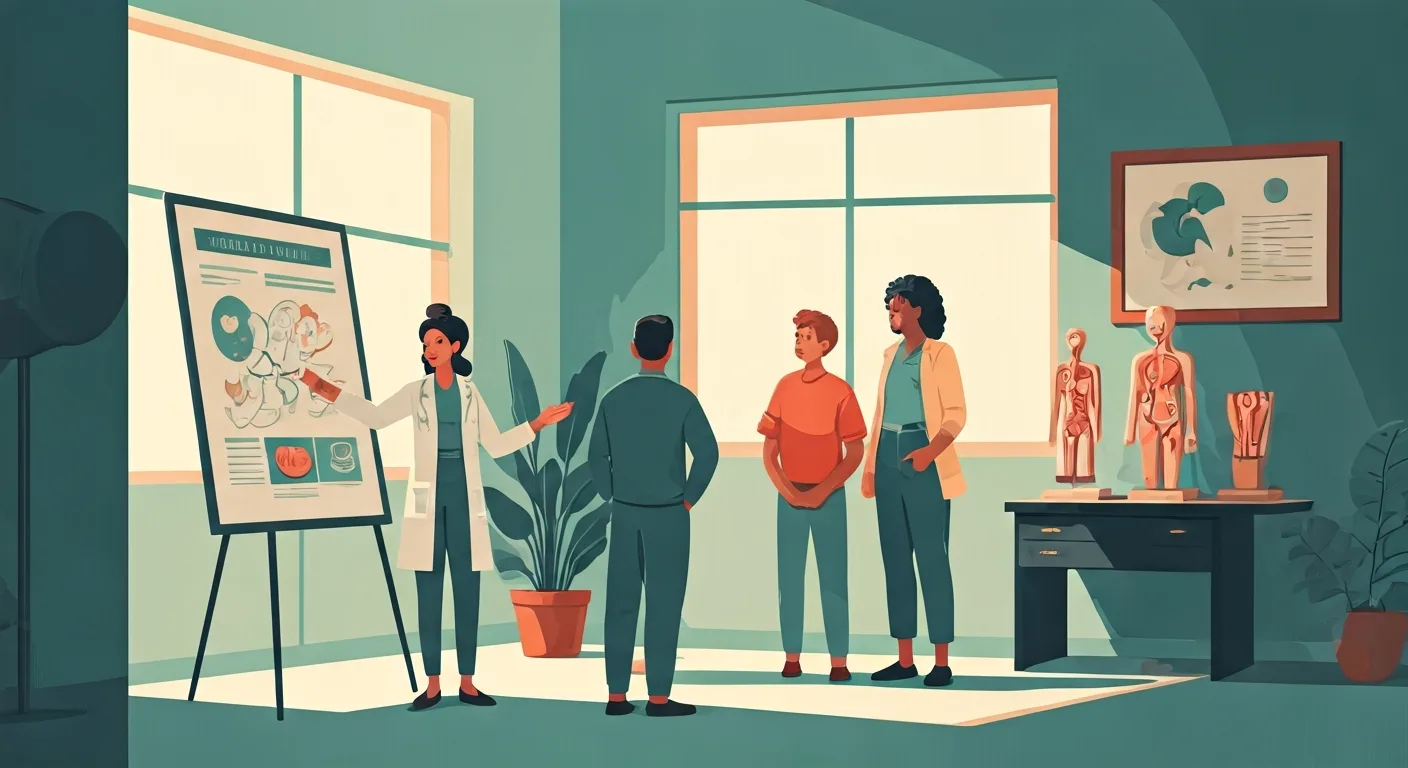
Community Health Workers are frontline public health professionals who serve as a vital link between health services and the community. They visit neighbourhoods, clinics, and homes to connect people with essential health services, run screening programmes, and educate families about nutrition and disease prevention. Building trust within underserved communities is central to their impact, as they empower individuals to make informed health decisions and navigate complex healthcare systems.
Improves health outcomes and access to care for underserved populations, reduces health disparities, and builds community capacity for health and wellness.
On the job
- Conduct outreach to community members to identify health needs and provide information on available resources
- Educate individuals and groups on various health topics, including chronic disease management, nutrition, and preventive care
- Assist clients in navigating healthcare systems, scheduling appointments, and accessing transportation or financial aid
- Provide culturally sensitive support and advocacy to help individuals overcome barriers to health
- Collect and report data on community health needs and programme effectiveness

Tools & technology
Average salary
Job outlook
GrowingJob growth is expected to be above average over the next five years.
Education & training
High school diploma or GED with specialized training or certification, or an associate's degree in community health, social work, or a related field.
AI impact outlook
Note — this is our current view. AI is moving fast, so we revisit these ratings.
Show how this was assessed Hide the detail
Note — this is our current view. AI is moving fast, so we revisit these ratings.
Show how this was assessed Hide the detailWhy this role received this rating
Core task exposure
high
How much of the role’s important work could AI perform?
Information delivery, resource matching, basic education, and data collection are highly susceptible to AI assistance and automation in this role.
End-to-end automation
moderate
Can AI complete the work without substantial human involvement?
While individual information-based workflows can be significantly automated, the critical last-mile trust-building, advocacy, and nuanced cultural support require human intervention.
Adoption pressure
high
How likely are employers to introduce AI into this work?
Public sector organizations will readily adopt AI tools to enhance efficiency in resource navigation and client information management, given clear return on investment.
Human dependence
strong
How much does success depend on human judgement, relationships and accountability?
Success heavily relies on building trusted relationships, offering empathetic support, and providing culturally sensitive advocacy, which AI cannot replicate.
Protective — a higher rating lowers the overall score.
Role adaptability
strong
How easily can the role evolve as AI takes on more tasks?
The role can adapt by focusing on more complex cases, deep advocacy, and situations requiring profound human connection, leveraging AI for administrative tasks.
Shown for context — not part of the score.
What AI may take on
These are the parts of the role most likely to be automated or significantly accelerated.
- Providing information on available health resources
- Assisting with appointment scheduling and navigation
- Collecting and reporting basic program data
- Drafting initial educational materials
- Identifying community health needs from data
Where people remain essential
These parts continue to depend heavily on human judgement, relationships and accountability.
- Building and maintaining community trust
- Providing culturally sensitive support and advocacy
- Navigating complex individual barriers to health
- Engaging underserved populations face-to-face
- Responding to nuanced emotional or social cues
- Mediating between clients and healthcare systems
How the role may evolve
Less administrative burden, more direct human connection.
The role will shift from routine information provision to focusing on high-touch support, complex problem-solving, and strengthening community relationships.
Strengthen your future fit
- Develop advanced interpersonal and active listening skills
- Become proficient in leveraging AI tools for resource discovery
- Specialize in complex case navigation and systemic advocacy
- Enhance cultural competency and empathy in diverse settings
- Assessment horizon
- 3–7 years
- Confidence
- High
- Last reviewed
- August 2026
- Methodology
- v1.0
This assessment reflects current AI capabilities and expected adoption patterns. Actual impacts will vary by industry, employer and the way each role is performed.
Career pathways
WHERE YOU COULD GO
CURRENT ROLE
Community Health Worker
Public Health
ADJACENT MOVES
STARTING POINTS
Who thrives here
Interest profile
social · SEI
People who enjoy helping others, engaging with diverse communities, and assessing needs to provide effective support tend to thrive in this role. It combines a strong social orientation with practical, hands-on outreach and an investigative approach to problem-solving.
Personality characteristics
Engaging
Comfortable initiating conversations and building rapport with diverse individuals and groups in the community.
Empathetic
Deeply understands and shares the feelings of others, fostering trust and providing compassionate support.
Reliable
Diligent in follow-up, managing cases, and ensuring clients receive the resources they need.
Culturally Adaptable
Open to learning about and respecting different cultures, beliefs, and practices to provide inclusive care.
Resilient
Maintains composure and effectiveness when faced with challenging client situations or community obstacles.
Best for
- Individuals passionate about health equity and community empowerment
- Those who thrive in dynamic, people-centric roles with a strong sense of purpose
- Professionals who enjoy problem-solving and connecting people to vital resources
Watch out for
- The role requires frequent travel within the community, often involving varied environments
- Occasional weekend work may be required for community events or outreach programmes
- Dealing with sensitive health issues and challenging social determinants of health can be emotionally demanding
A week in the life
A representative working week for a Community Health Worker — where the deep work, meetings, and admin actually land.
Real people. Real results.
Thousands of people
can't be wrong.




Frequently asked questions about Community Health Worker roles
What does a Community Health Worker do?
A Community Health Worker community Health Workers are frontline public health professionals who serve as a vital link between health services and the community. They visit neighbourhoods, clinics, and homes to connect people with essential health services, run screening programmes, and educate families about nutrition and disease prevention. Building trust within underserved communities is central to their impact, as they empower individuals to make informed health decisions and navigate complex healthcare systems. Improves health outcomes and access to care for underserved populations, reduces health disparities, and builds community capacity for health and wellness.
How much does a Community Health Worker earn?
A Community Health Worker earns a median of $52,000 per year in the US, typically ranging from $38,000 to $68,000.
What qualifications do you need to become a Community Health Worker?
To become a Community Health Worker, high school diploma or GED with specialized training or certification, or an associate's degree in community health, social work, or a related field.
What personality suits a Community Health Worker?
Community Health Worker roles tend to suit people who are warm and cooperative — tuned in to the people around them (Agreeableness 80/100) and outgoing — energised by people, visibility and quick social contact (Extraversion 72/100). The traits that matter most in the role are Engaging, Empathetic, Reliable and Culturally Adaptable. Comfortable initiating conversations and building rapport with diverse individuals and groups in the community. On interests, Community Health Worker maps to a SEI Holland Code profile — people who enjoy helping others, engaging with diverse communities, and assessing needs to provide effective support tend to thrive in this role. It combines a strong social orientation with practical, hands-on outreach and an investigative approach to problem-solving.
Who does a Community Health Worker role suit?
A Community Health Worker role is usually a strong fit for these reasons. High Social (S) and Enterprising (E) alignment, perfect for community engagement and advocacy roles. Opportunity for direct, hands-on impact in improving community health outcomes. Regular interaction with diverse individuals and groups, building strong interpersonal skills.
What are the downsides of being a Community Health Worker?
Community Health Worker roles come with trade-offs worth weighing up. The role requires frequent travel within the community, often involving varied environments. Occasional weekend work may be required for community events or outreach programmes. Dealing with sensitive health issues and challenging social determinants of health can be emotionally demanding.
What is the work environment like for a Community Health Worker?
Work as a Community Health Worker is mostly mixed-based with hybrid arrangements common, semi-structured — a mix of set processes and self-directed work, a moderate pace and high exposure to clients or stakeholders. Around 25% of the week is focused deep work.
What skills do you need to be a Community Health Worker?
Core skills for a Community Health Worker include Health education, Active listening, Cultural competence, Resource navigation, Interpersonal communication and Advocacy.
How do you become a Community Health Worker?
Common entry routes into Community Health Worker roles include Entry Level Healthcare Assistant, Volunteer Health Advocate and Community Support Worker.
What career progression is there for a Community Health Worker?
From a Community Health Worker role, common next steps include Senior Community Health Worker, Health Education Specialist and Public Health Program Coordinator; lateral moves include Social Worker.
What is the job outlook for Community Health Worker roles?
The outlook for Community Health Worker roles is currently rated growing. Job growth is expected to be above average over the next five years.
Will AI replace Community Health Worker roles?
Traitstack rates automation risk for Community Health Worker roles at 61 out of 100, which is strong. AI is poised to streamline information delivery and resource matching, allowing human community health workers to deepen their focus on trust-building and advocacy. AI is most likely to take on providing information on available health resources, assisting with appointment scheduling and navigation and collecting and reporting basic program data. Building and maintaining community trust, providing culturally sensitive support and advocacy and navigating complex individual barriers to health stay with people. Less administrative burden, more direct human connection. That score measures how much of the work could change, not the likelihood the job disappears. It is Traitstack's current view, revisited as AI capability moves.