Optical Dispenser
SOC 29-2081.00 · ESCO 3254 · OSCA 442431
Role snapshot
Overview
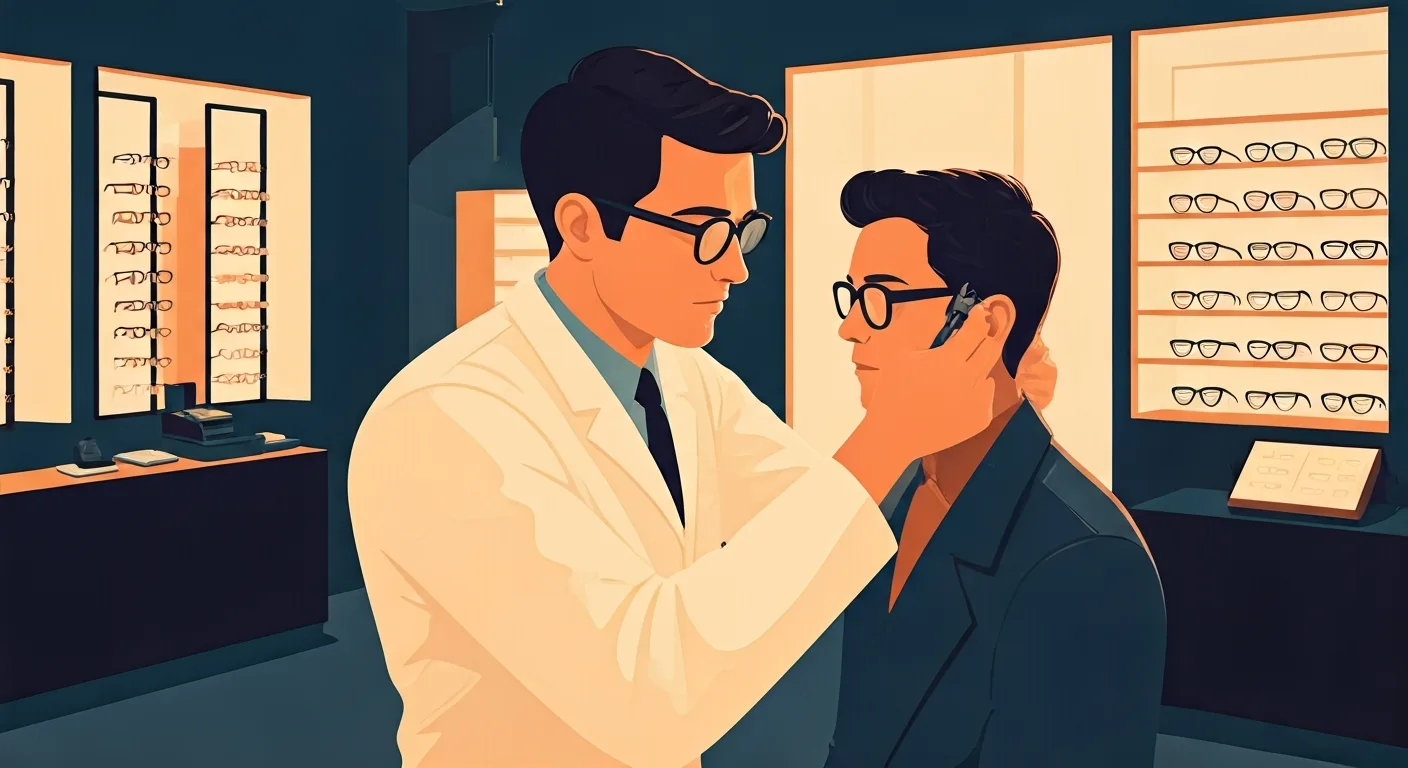
Optical dispensers interpret prescriptions from optometrists and ophthalmologists, assist customers in selecting appropriate eyeglass frames and lenses, and ensure proper fit and adjustment of eyewear. They also educate patients on lens options, contact lens care, and general eye health, providing a crucial link between eye care professionals and patients.
Helps individuals achieve clear vision and comfortable eyewear, significantly improving their quality of life and ability to perform daily tasks.
On the job
- Interpret optical prescriptions and recommend appropriate lens types and treatments.
- Assist customers in selecting frames that suit their face shape, lifestyle, and budget.
- Take precise measurements for fitting eyeglasses and contact lenses.
- Adjust and repair eyewear to ensure comfort, proper vision, and durability.
- Educate patients on the proper use, care, and maintenance of eyeglasses and contact lenses.
Tools & technology
Average salary
Job outlook
StableDemand is steady. This is an established role with consistent hiring across sectors.
Education & training
Completion of a certificate or associate's degree program in ophthalmic dispensing, or relevant on-the-job training and certification.
AI impact outlook
Note — this is our current view. AI is moving fast, so we revisit these ratings.
Show how this was assessed Hide the detail
Note — this is our current view. AI is moving fast, so we revisit these ratings.
Show how this was assessed Hide the detailWhy this role received this rating
Core task exposure
moderate
How much of the role’s important work could AI perform?
AI can assist with frame selection suggestions and prescription interpretation, but the physical fitting, adjustment, and personalized aesthetic advice require human interaction.
End-to-end automation
low
Can AI complete the work without substantial human involvement?
The necessity of physical adjustments, empathetic customer interaction, and ensuring comfort and vision quality prevents fully automated dispensing workflows.
Adoption pressure
moderate
How likely are employers to introduce AI into this work?
Adoption pressure is moderate, as retail environments seek efficiency, but customer trust and personalized service demand human involvement for eyewear sales and fitting.
Human dependence
strong
How much does success depend on human judgement, relationships and accountability?
Success relies heavily on aesthetic judgment, precise manual dexterity for frame adjustments, empathetic customer service, and the ability to educate patients effectively.
Protective — a higher rating lowers the overall score.
Role adaptability
strong
How easily can the role evolve as AI takes on more tasks?
The role can readily adapt by leveraging AI for product recommendations and virtual try-ons, while deepening expertise in complex fittings and personalized client relationships.
Shown for context — not part of the score.
What AI may take on
These are the parts of the role most likely to be automated or significantly accelerated.
- Suggesting frame styles based on facial features and preferences
- Automating initial prescription interpretation and lens option presentation
- Providing virtual try-on experiences for eyewear
- Managing inventory and ordering systems efficiently
Where people remain essential
These parts continue to depend heavily on human judgement, relationships and accountability.
- Assisting customers in person with frame selection and aesthetic advice
- Precisely fitting and adjusting eyewear to individual faces
- Educating patients on lens options, care, and maintenance
- Performing minor repairs and troubleshooting eyewear issues
- Building rapport and trust through personalized customer service
How the role may evolve
From prescriptive sales to personalized fitting and advice.
Dispensing will evolve from a more transactional role to one focused on leveraging AI tools for product discovery, allowing dispensers to dedicate more time to intricate physical adjustments and high-touch customer relationships.
Strengthen your future fit
- Advanced communication and sales skills
- Expertise in complex eyewear adjustments and repairs
- Understanding of AI-driven recommendation systems
- Deep knowledge of lens technologies and materials
- Problem-solving for unique patient visual needs
- Assessment horizon
- 3–7 years
- Confidence
- High
- Last reviewed
- August 2026
- Methodology
- v1.0
This assessment reflects current AI capabilities and expected adoption patterns. Actual impacts will vary by industry, employer and the way each role is performed.
Career pathways
WHERE YOU COULD GO
CURRENT ROLE
Optical Dispenser
Allied Health
ADJACENT MOVES
STARTING POINTS
Who thrives here
Interest profile
conventional · CRE
Individuals who enjoy working with precision tools, following established procedures, and directly helping people with practical solutions for their vision needs often thrive in this role.
Personality characteristics
Detail-oriented
Ensures prescriptions are accurately filled and eyewear is precisely fitted for optimal vision and comfort.
Patient
Takes the time to explain lens options, fit frames, and teach contact lens care to diverse individuals.
Practical
Enjoys working with tools and hands-on tasks like adjusting frames and making minor repairs.
Communicative
Comfortably interacts with patients, understanding their needs and clearly explaining solutions.
Calm under pressure
Handles customer concerns or difficult adjustments with a steady demeanor.
Best for
- Individuals who enjoy helping others directly and seeing the immediate positive impact of their work.
- Those who appreciate technical precision and working with specialized tools.
- People who thrive in a structured environment with clear procedures and patient interaction.
Watch out for
- Requires meticulous attention to detail; errors can significantly impact a patient's vision.
- Frequent customer interaction demands patience and strong interpersonal skills, sometimes dealing with frustrated individuals.
A week in the life
A representative working week for an Optical Dispenser — where the deep work, meetings, and admin actually land.
Real people. Real results.
Thousands of people
can't be wrong.





Frequently asked questions about Optical Dispenser roles
What does an Optical Dispenser do?
An Optical Dispenser optical dispensers interpret prescriptions from optometrists and ophthalmologists, assist customers in selecting appropriate eyeglass frames and lenses, and ensure proper fit and adjustment of eyewear. They also educate patients on lens options, contact lens care, and general eye health, providing a crucial link between eye care professionals and patients. Helps individuals achieve clear vision and comfortable eyewear, significantly improving their quality of life and ability to perform daily tasks.
How much does an Optical Dispenser earn?
An Optical Dispenser earns a median of $48,000 per year in the US, typically ranging from $35,000 to $65,000.
What qualifications do you need to become an Optical Dispenser?
To become an Optical Dispenser, completion of a certificate or associate's degree program in ophthalmic dispensing, or relevant on-the-job training and certification. State Opticianry License (where applicable).
What personality suits an Optical Dispenser?
Optical Dispenser roles tend to suit people who are highly conscientious — precise, organised and strong on follow-through (Conscientiousness 78/100) and steady under pressure — deadlines and setbacks do not rattle them easily (Emotional Stability 70/100). The traits that matter most in the role are Detail-oriented, Patient, Practical and Communicative. Ensures prescriptions are accurately filled and eyewear is precisely fitted for optimal vision and comfort. On interests, Optical Dispenser maps to a CRE Holland Code profile — individuals who enjoy working with precision tools, following established procedures, and directly helping people with practical solutions for their vision needs often thrive in this role.
Who does an Optical Dispenser role suit?
An Optical Dispenser role is usually a strong fit for these reasons. Strong Conventional and Realistic alignment: the role requires precision, technical skill, and adherence to standards. High Agreeableness: involves direct patient interaction and a service-oriented approach. Conscientiousness: attention to detail is crucial for accurate prescription fulfillment and fitting.
What are the downsides of being an Optical Dispenser?
Optical Dispenser roles come with trade-offs worth weighing up. Requires meticulous attention to detail; errors can significantly impact a patient's vision. Frequent customer interaction demands patience and strong interpersonal skills, sometimes dealing with frustrated individuals.
What is the work environment like for an Optical Dispenser?
Work as an Optical Dispenser is mostly clinical-based with onsite arrangements common, semi-structured — a mix of set processes and self-directed work, a moderate pace and high exposure to clients or stakeholders.
What skills do you need to be an Optical Dispenser?
Core skills for an Optical Dispenser include Optical prescription interpretation, Customer service, Eyewear fitting and adjustment, Product knowledge (frames, lenses, contact lenses) and Communication and patient education.
How do you become an Optical Dispenser?
Common entry routes into Optical Dispenser roles include Retail Sales Associate, Customer Service Representative and Ophthalmic Assistant Trainee.
What career progression is there for an Optical Dispenser?
From an Optical Dispenser role, common next steps include Senior Optical Dispenser and Optician Manager; lateral moves include Ophthalmic Assistant and Eyewear Buyer.
What is the job outlook for Optical Dispenser roles?
The outlook for Optical Dispenser roles is currently rated stable. Demand is steady. This is an established role with consistent hiring across sectors.
Will AI replace Optical Dispenser roles?
Traitstack rates automation risk for Optical Dispenser roles at 40 out of 100, which is low. While AI could enhance frame selection and prescription interpretation, the core human skill in physical fitting, empathetic guidance, and ensuring patient comfort for eyewear remains indispensable. AI is most likely to take on suggesting frame styles based on facial features and preferences, automating initial prescription interpretation and lens option presentation and providing virtual try-on experiences for eyewear. Assisting customers in person with frame selection and aesthetic advice, precisely fitting and adjusting eyewear to individual faces and educating patients on lens options, care, and maintenance stay with people. From prescriptive sales to personalized fitting and advice. That score measures how much of the work could change, not the likelihood the job disappears. It is Traitstack's current view, revisited as AI capability moves.