Mine Surveyor
SOC 17-1022.00 · ESCO 2165 · OSCA 241235
Role snapshot
Overview
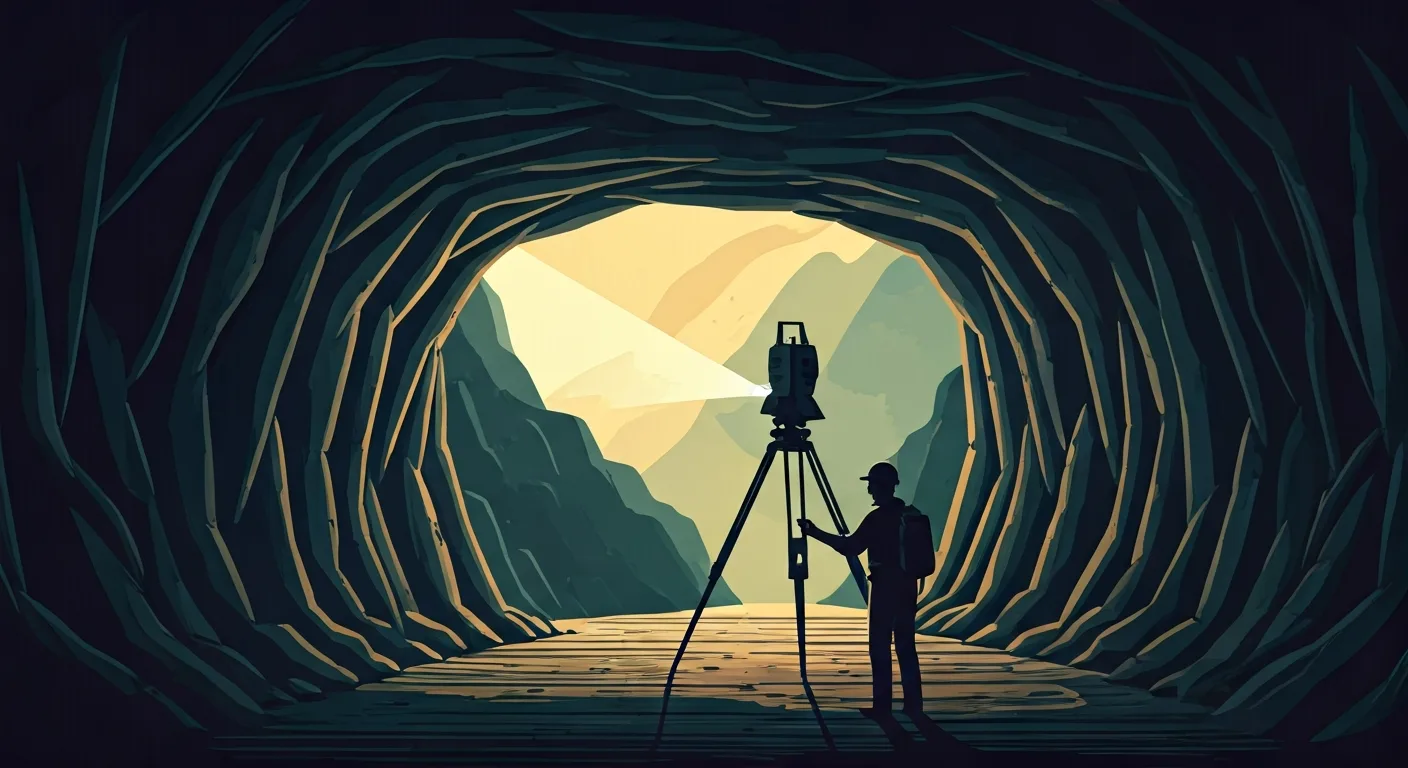
Maps underground and open-cut mine workings, monitoring excavation progress, calculating ore volumes, and ensuring tunnels and pits follow approved designs. Works in challenging conditions underground and processes data that directly affects safety and resource extraction efficiency. This role requires meticulous precision, adherence to safety protocols, and the ability to operate sophisticated surveying equipment in varied environments.
Ensures the safety of mine workers and the structural integrity of mine operations by accurately mapping and monitoring geological formations and excavation progress. Optimizes resource extraction by precisely calculating ore volumes and guiding mining operations according to design specifications.
On the job
- Conduct topographic and underground surveys using total stations, GPS/GNSS, and laser scanning equipment.
- Create and update detailed mine plans, maps, and geological cross-sections using CAD and GIS software.
- Calculate ore reserves, overburden volumes, and track excavation progress against design specifications.
- Monitor ground movement, subsidence, and stability, reporting any deviations or potential hazards.
- Ensure all surveying activities comply with mine safety regulations and environmental standards.
Tools & technology
Average salary
Job outlook
StableDemand is steady. This is an established role with consistent hiring across sectors.
Education & training
A bachelor's degree in surveying, geomatics, or mining engineering is typically required.
AI impact outlook
Note — this is our current view. AI is moving fast, so we revisit these ratings.
Show how this was assessed Hide the detail
Note — this is our current view. AI is moving fast, so we revisit these ratings.
Show how this was assessed Hide the detailWhy this role received this rating
Core task exposure
high
How much of the role’s important work could AI perform?
Data collection using laser scanners and GPS, creating/updating mine plans with CAD/GIS, and calculating ore/overburden volumes are highly exposed to AI and automation.
End-to-end automation
moderate
Can AI complete the work without substantial human involvement?
Interpreting complex ground movement, strategic mine planning input, and ensuring safety compliance under dynamic conditions are not fully automatable.
Adoption pressure
high
How likely are employers to introduce AI into this work?
The direct impact on safety, operational efficiency, and resource extraction makes this a very high-priority area for AI and automation adoption.
Human dependence
moderate
How much does success depend on human judgement, relationships and accountability?
Success critically relies on interpreting complex ground stability issues, providing strategic input to mine planning, and maintaining accountability for safety standards.
Protective — a higher rating lowers the overall score.
Role adaptability
strong
How easily can the role evolve as AI takes on more tasks?
The role can readily adapt by specializing in operating autonomous survey equipment, utilizing advanced data visualization tools, and managing real-time monitoring systems.
Shown for context — not part of the score.
What AI may take on
These are the parts of the role most likely to be automated or significantly accelerated.
- Conducting topographic and underground surveys using autonomous equipment
- Creating and updating detailed mine plans via CAD and GIS software
- Calculating ore reserves and overburden volumes automatically
- Monitoring ground movement and subsidence with real-time sensors
- Generating compliance reports based on survey data
Where people remain essential
These parts continue to depend heavily on human judgement, relationships and accountability.
- Interpreting complex ground movement and stability data
- Providing strategic input to long-term mine design and planning
- Ensuring strict compliance with mine safety regulations and standards
- Troubleshooting complex survey equipment malfunctions
- Validating automated survey data against physical conditions
- Making critical decisions in dynamic underground environments
How the role may evolve
Automating data collection. Human oversight for safety and complex planning.
Mine surveyors will increasingly manage and validate data from autonomous survey systems. Their expertise will pivot to interpreting complex geological movements, ensuring critical safety compliance, and providing strategic insights for mine planning and design.
Strengthen your future fit
- Operating and managing autonomous survey equipment (drones, scanners)
- Proficiency in AI-driven CAD/GIS and mine planning software
- Interpreting advanced ground movement and stability models
- Expertise in mine safety regulations and risk assessment
- Strategic thinking for optimizing mine operations through survey data
- Assessment horizon
- 3–7 years
- Confidence
- High
- Last reviewed
- August 2026
- Methodology
- v1.0
This assessment reflects current AI capabilities and expected adoption patterns. Actual impacts will vary by industry, employer and the way each role is performed.
Career pathways
WHERE YOU COULD GO
CURRENT ROLE
Mine Surveyor
Mining & Resources
ADJACENT MOVES
STARTING POINTS
Who thrives here
Interest profile
conventional · CRI
Individuals who thrive on precise, organized, and hands-on technical work, often involving data analysis and problem-solving in practical, sometimes challenging, environments, tend to excel in this role.
Personality characteristics
Practical
Focuses on tangible details and practical applications, preferring established methods over abstract theories.
Meticulous
Ensures extreme accuracy and precision in all measurements, data collection, and documentation, adhering strictly to protocols.
Independent
Comfortable working alone or in small teams in remote or challenging environments, often with minimal direct supervision.
Cooperative
Works effectively with engineers, geologists, and mine operators, providing essential data and insights while maintaining professional boundaries.
Composed
Maintains calm and focus in high-pressure or potentially hazardous situations underground or on site.
Best for
- Individuals who are highly detail-oriented, enjoy technical challenges, and have a passion for precise measurement and mapping.
- Those who are comfortable working independently and in varied, often rugged, environments.
- Professionals who want to apply their analytical and technical skills to critical infrastructure and resource management.
Watch out for
- Working in challenging and sometimes hazardous conditions, including underground environments and remote sites.
- The high responsibility for accuracy and safety can lead to significant pressure.
- Can involve occasional weekend work or travel to different mine sites.
A week in the life
A representative working week for a Mine Surveyor — where the deep work, meetings, and admin actually land.
Real people. Real results.
Thousands of people
can't be wrong.




Frequently asked questions about Mine Surveyor roles
What does a Mine Surveyor do?
A Mine Surveyor maps underground and open-cut mine workings, monitoring excavation progress, calculating ore volumes, and ensuring tunnels and pits follow approved designs. Works in challenging conditions underground and processes data that directly affects safety and resource extraction efficiency. This role requires meticulous precision, adherence to safety protocols, and the ability to operate sophisticated surveying equipment in varied environments. Ensures the safety of mine workers and the structural integrity of mine operations by accurately mapping and monitoring geological formations and excavation progress. Optimizes resource extraction by precisely calculating ore volumes and guiding mining operations according to design specifications.
How much does a Mine Surveyor earn?
A Mine Surveyor earns a median of $95,000 per year in the US, typically ranging from $70,000 to $130,000.
What qualifications do you need to become a Mine Surveyor?
To become a Mine Surveyor, a bachelor's degree in surveying, geomatics, or mining engineering is typically required. Professional Surveyor (PS) license may be required in some states or for supervisory roles.
What personality suits a Mine Surveyor?
Mine Surveyor roles tend to suit people who are highly conscientious — precise, organised and strong on follow-through (Conscientiousness 85/100) and steady under pressure — deadlines and setbacks do not rattle them easily (Emotional Stability 70/100). The traits that matter most in the role are Practical, Meticulous, Independent and Cooperative. Focuses on tangible details and practical applications, preferring established methods over abstract theories. On interests, Mine Surveyor maps to a CRI Holland Code profile — individuals who thrive on precise, organized, and hands-on technical work, often involving data analysis and problem-solving in practical, sometimes challenging, environments, tend to excel in this role.
Who does a Mine Surveyor role suit?
A Mine Surveyor role is usually a strong fit for these reasons. Strong Conventional and Realistic alignment: the role demands high precision, structured tasks, and hands-on technical work. A significant portion of the week is dedicated to field work and data analysis, appealing to those who enjoy practical problem-solving. Directly contributes to critical safety and operational efficiency, providing a clear sense of purpose and impact.
What are the downsides of being a Mine Surveyor?
Mine Surveyor roles come with trade-offs worth weighing up. Working in challenging and sometimes hazardous conditions, including underground environments and remote sites. The high responsibility for accuracy and safety can lead to significant pressure. Can involve occasional weekend work or travel to different mine sites.
What is the work environment like for a Mine Surveyor?
Work as a Mine Surveyor is mostly mixed-based with onsite arrangements common, semi-structured — a mix of set processes and self-directed work, a moderate pace and medium exposure to clients or stakeholders. Around 36% of the week is focused deep work.
What skills do you need to be a Mine Surveyor?
Core skills for a Mine Surveyor include Land Surveying Techniques, Geospatial Data Analysis, Mine Planning and Design, CAD/GIS Software Proficiency, Mine Safety Regulations and Problem Solving.
How do you become a Mine Surveyor?
Common entry routes into Mine Surveyor roles include Survey Technician, Junior Surveyor and Geomatics Technician.
What career progression is there for a Mine Surveyor?
From a Mine Surveyor role, common next steps include Senior Mine Surveyor and Chief Surveyor; lateral moves include Mine Planning Engineer.
What is the job outlook for Mine Surveyor roles?
The outlook for Mine Surveyor roles is currently rated stable. Demand is steady. This is an established role with consistent hiring across sectors.
Will AI replace Mine Surveyor roles?
Traitstack rates automation risk for Mine Surveyor roles at 61 out of 100, which is strong. Data acquisition and routine plan updates are ripe for AI automation, freeing surveyors to focus on interpreting complex ground movements and ensuring critical safety compliance. AI is most likely to take on conducting topographic and underground surveys using autonomous equipment, creating and updating detailed mine plans via cad and gis software and calculating ore reserves and overburden volumes automatically. Interpreting complex ground movement and stability data, providing strategic input to long-term mine design and planning and ensuring strict compliance with mine safety regulations and standards stay with people. Automating data collection. Human oversight for safety and complex planning. That score measures how much of the work could change, not the likelihood the job disappears. It is Traitstack's current view, revisited as AI capability moves.