Metal Polisher
SOC 51-9199 · ESCO 7224 · OSCA 331935
Role snapshot
Overview
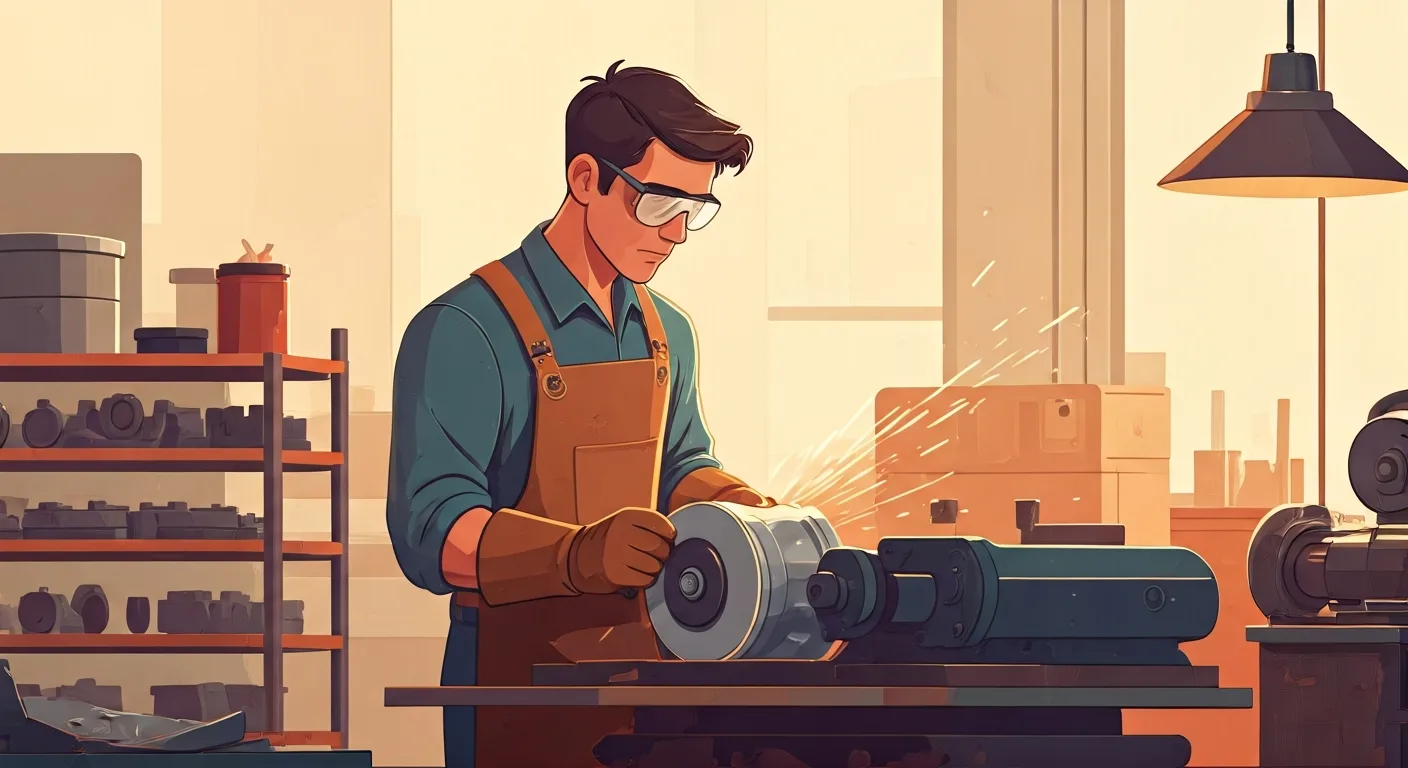
Buffs and polishes metal surfaces to achieve a smooth, mirror-like, or textured finish using hand tools and powered polishing machines. Prepares items for plating, painting, or final sale by removing imperfections and ensuring quality standards are met.
Ensures the aesthetic quality and functional integrity of metal parts, crucial for product appearance, corrosion resistance, and readiness for further processing like plating or painting.
On the job
- Operate and maintain various polishing and buffing machines, such as grinders, belt sanders, and rotary tools.
- Select appropriate abrasives, compounds, and tools for different metal types and desired finishes.
- Inspect finished surfaces for defects, scratches, or inconsistencies, ensuring they meet specified quality standards.
- Clean and degrease metal parts before and after polishing to prepare them for subsequent processes.
- Read and interpret blueprints or work orders to determine precise finishing specifications and requirements.
Tools & technology
Average salary
Job outlook
StableDemand is steady. This is an established role with consistent hiring across sectors.
Education & training
High school diploma or GED, often supplemented by vocational training, an apprenticeship, or on-the-job training.
AI impact outlook
Note — this is our current view. AI is moving fast, so we revisit these ratings.
Show how this was assessed Hide the detail
Note — this is our current view. AI is moving fast, so we revisit these ratings.
Show how this was assessed Hide the detailWhy this role received this rating
Core task exposure
low
How much of the role’s important work could AI perform?
AI could assist with vision-based surface defect detection and recommending optimal abrasive/compound combinations for specific finishes.
End-to-end automation
low
Can AI complete the work without substantial human involvement?
AI cannot operate the machines or perform the tactile feedback required for nuanced polishing without complex, non-existent robotics.
Adoption pressure
low
How likely are employers to introduce AI into this work?
AI's role is supplementary for this predominantly manual task, with limited direct investment compared to the cost of human labor for achieving nuanced finishes.
Human dependence
strong
How much does success depend on human judgement, relationships and accountability?
Success heavily depends on the polisher's judgment, tactile skill, and visual assessment to achieve specific finishes and remove imperfections without damaging the material.
Protective — a higher rating lowers the overall score.
Role adaptability
moderate
How easily can the role evolve as AI takes on more tasks?
Polishers can adapt to new metal alloys, advanced polishing compounds, and specialized tools, maintaining their craft in evolving industries.
Shown for context — not part of the score.
What AI may take on
These are the parts of the role most likely to be automated or significantly accelerated.
- Analyze surface images to identify and classify defects
- Recommend optimal abrasive types and polishing compounds
- Track consistency of finish across batches using vision systems
- Provide data-driven insights into polishing process efficiency
Where people remain essential
These parts continue to depend heavily on human judgement, relationships and accountability.
- Operating and manipulating polishing machines with fine motor control
- Applying the correct pressure and technique based on tactile feedback
- Visually assessing surface quality and progress in real-time
- Troubleshooting unexpected material reactions or inconsistencies
- Ensuring delicate or complex geometries are polished without damage
- Making aesthetic judgments for final finish quality
How the role may evolve
AI helps identify flaws; human hands perfect the finish.
The role will see AI-powered tools assist in quality control and process optimization, allowing polishers to focus their expertise on the intricate, hands-on application of technique and the art of achieving superior finishes.
Strengthen your future fit
- Developing advanced tactile sensitivity and fine motor control
- Mastering a wider range of metal types and finishing techniques
- Utilizing vision-based quality control systems effectively
- Understanding material science for optimal abrasive selection
- Adapting to new health and safety standards for polishing
- Assessment horizon
- 3–7 years
- Confidence
- Medium
- Last reviewed
- August 2026
- Methodology
- v1.0
This assessment reflects current AI capabilities and expected adoption patterns. Actual impacts will vary by industry, employer and the way each role is performed.
Career pathways
WHERE YOU COULD GO
CURRENT ROLE
Metal Polisher
Skilled Trades
ADJACENT MOVES
STARTING POINTS
Who thrives here
Interest profile
realistic · RCI
Individuals who enjoy hands-on work with tools and machinery, prefer structured tasks, and have an interest in understanding how materials behave will find this role engaging.
Personality characteristics
Detail-oriented
Pays close attention to small imperfections and strives for a flawless finish on metal surfaces.
Methodical
Follows established procedures, safety protocols, and quality standards consistently to achieve desired results.
Practical
Enjoys hands-on work with tools and machinery, deriving satisfaction from producing tangible, high-quality physical products.
Focused
Can concentrate on repetitive tasks for extended periods without distraction, maintaining precision throughout.
Resilient
Remains calm and steady, even when encountering challenging materials, unexpected issues, or tight production deadlines.
Best for
- Individuals who enjoy working with metal and specialized equipment to achieve a perfect finish.
- Those who thrive in a workshop setting with clear tasks and a focus on craftsmanship.
- People who value precision, order, and the satisfaction of producing a tangible product.
Watch out for
- Can be physically demanding, involving repetitive motions and standing for long periods.
- Requires consistent attention to detail to avoid errors and ensure safety in a workshop environment.
A week in the life
A representative working week for a Metal Polisher — where the deep work, meetings, and admin actually land.
Real people. Real results.
Thousands of people
can't be wrong.




Frequently asked questions about Metal Polisher roles
What does a Metal Polisher do?
A Metal Polisher buffs and polishes metal surfaces to achieve a smooth, mirror-like, or textured finish using hand tools and powered polishing machines. Prepares items for plating, painting, or final sale by removing imperfections and ensuring quality standards are met. Ensures the aesthetic quality and functional integrity of metal parts, crucial for product appearance, corrosion resistance, and readiness for further processing like plating or painting.
How much does a Metal Polisher earn?
A Metal Polisher earns a median of $45,000 per year in the US, typically ranging from $35,000 to $60,000.
What qualifications do you need to become a Metal Polisher?
To become a Metal Polisher, high school diploma or GED, often supplemented by vocational training, an apprenticeship, or on-the-job training.
What personality suits a Metal Polisher?
Metal Polisher roles tend to suit people who are highly conscientious — precise, organised and strong on follow-through (Conscientiousness 78/100) and steady under pressure — deadlines and setbacks do not rattle them easily (Emotional Stability 75/100). The traits that matter most in the role are Detail-oriented, Methodical, Practical and Focused. Pays close attention to small imperfections and strives for a flawless finish on metal surfaces. On interests, Metal Polisher maps to a RCI Holland Code profile — individuals who enjoy hands-on work with tools and machinery, prefer structured tasks, and have an interest in understanding how materials behave will find this role engaging.
Who does a Metal Polisher role suit?
A Metal Polisher role is usually a strong fit for these reasons. Strong Realistic (R) affinity for hands-on work with tools and specialized machinery. High Conventional (C) aspect aligns with adherence to precise quality standards and established procedures. Opportunity to see tangible results and take pride in creating high-quality, finished products.
What are the downsides of being a Metal Polisher?
Metal Polisher roles come with trade-offs worth weighing up. Can be physically demanding, involving repetitive motions and standing for long periods. Requires consistent attention to detail to avoid errors and ensure safety in a workshop environment.
What is the work environment like for a Metal Polisher?
Work as a Metal Polisher is mostly workshop-based with onsite arrangements common, semi-structured — a mix of set processes and self-directed work, a moderate pace and low exposure to clients or stakeholders. Around 69% of the week is focused deep work.
What skills do you need to be a Metal Polisher?
Core skills for a Metal Polisher include Metal finishing techniques, Machine operation and maintenance, Quality inspection, Attention to detail, Material handling and Blueprint reading.
How do you become a Metal Polisher?
Common entry routes into Metal Polisher roles include Manufacturing Assembler, Machine Operator and General Laborer.
What career progression is there for a Metal Polisher?
From a Metal Polisher role, common next steps include Lead Metal Finisher and Machine Shop Supervisor; lateral moves include Quality Control Inspector (Manufacturing).
What is the job outlook for Metal Polisher roles?
The outlook for Metal Polisher roles is currently rated stable. Demand is steady. This is an established role with consistent hiring across sectors.
Will AI replace Metal Polisher roles?
Traitstack rates automation risk for Metal Polisher roles at 20 out of 100, which is low. While AI may assist with defect detection, the nuanced tactile skill and aesthetic judgment required for achieving specific metal finishes remain a distinctly human craft. AI is most likely to take on analyze surface images to identify and classify defects, recommend optimal abrasive types and polishing compounds and track consistency of finish across batches using vision systems. Operating and manipulating polishing machines with fine motor control, applying the correct pressure and technique based on tactile feedback and visually assessing surface quality and progress in real-time stay with people. AI helps identify flaws; human hands perfect the finish. That score measures how much of the work could change, not the likelihood the job disappears. It is Traitstack's current view, revisited as AI capability moves.