Level Designer
SOC 15-1255.00 · ESCO 2166 · OSCA 273235
Role snapshot
Overview
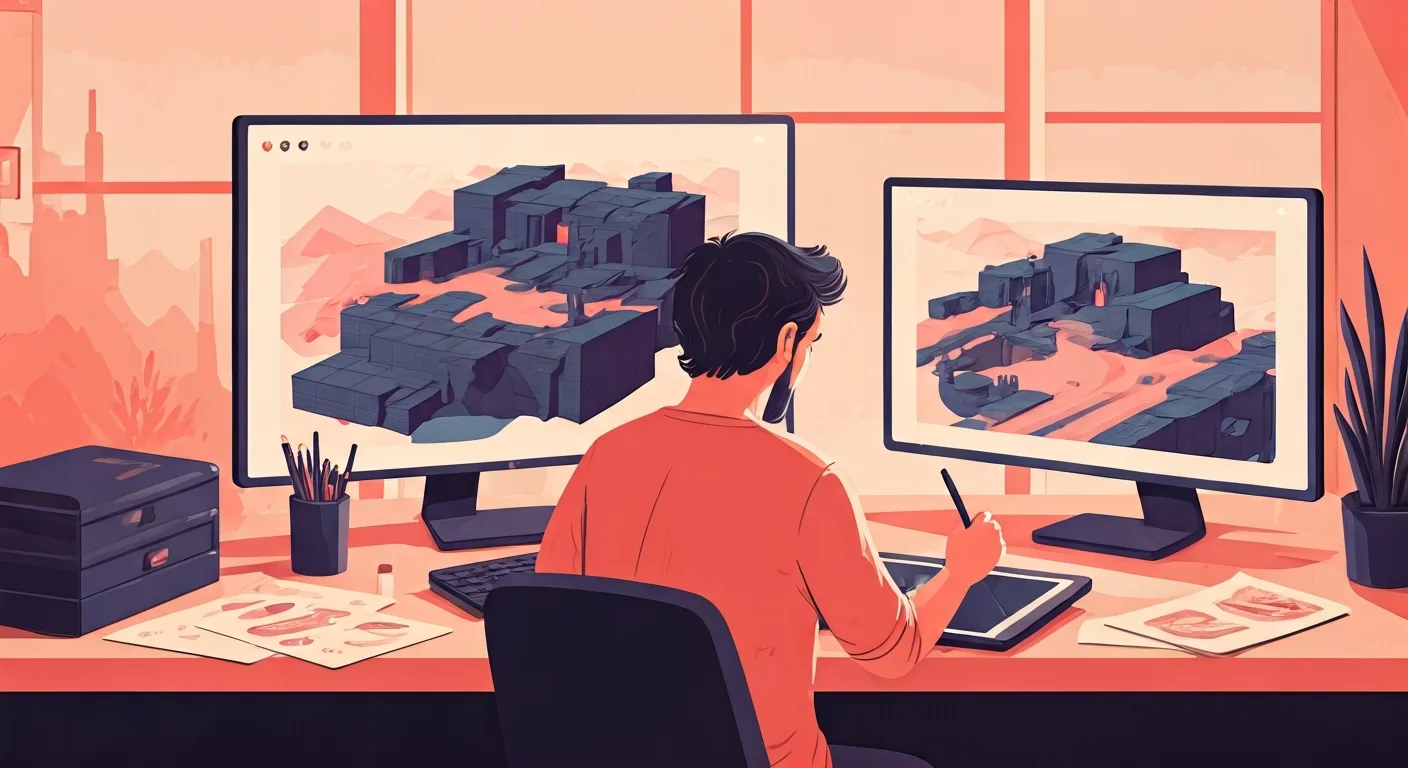
Builds the playable spaces within a video game, placing obstacles, rewards, and paths to create engaging moment-to-moment gameplay. Balances visual storytelling with technical constraints like performance and navigation flow.
Directly shapes the player's experience and enjoyment of a game, influencing pacing, challenge, and immersion through thoughtful spatial design and objective placement.
On the job
- Design and implement playable game levels, including layouts, puzzles, and encounters.
- Collaborate with game designers, artists, and programmers to integrate assets and ensure gameplay mechanics function correctly.
- Iterate on level designs based on playtesting feedback, analytics, and creative direction.
- Optimize levels for performance, ensuring smooth gameplay across target platforms.
- Contribute to the overall game vision and narrative through environmental storytelling.
Tools & technology
Average salary
Job outlook
GrowingJob growth is expected to be above average over the next five years.
Education & training
Bachelor's degree in game design, computer science, architecture, or a related field. A strong portfolio demonstrating level design skills is often more critical than formal credentials.
AI impact outlook
Note — this is our current view. AI is moving fast, so we revisit these ratings.
Show how this was assessed Hide the detail
Note — this is our current view. AI is moving fast, so we revisit these ratings.
Show how this was assessed Hide the detailWhy this role received this rating
Core task exposure
high
How much of the role’s important work could AI perform?
AI is increasingly used for procedural content generation to create levels, puzzles, and environmental assets.
End-to-end automation
moderate
Can AI complete the work without substantial human involvement?
Artistic direction, narrative integration, and subjective balancing for player enjoyment require human creativity and judgment.
Adoption pressure
high
How likely are employers to introduce AI into this work?
The competitive game industry eagerly adopts AI for content creation, iteration speed, and performance optimization.
Human dependence
strong
How much does success depend on human judgement, relationships and accountability?
Success depends on creative vision, understanding player psychology, artistic judgment, and collaboration with diverse creative teams.
Protective — a higher rating lowers the overall score.
Role adaptability
strong
How easily can the role evolve as AI takes on more tasks?
The game industry is highly dynamic, requiring constant adaptation to new engines, tools, and design paradigms.
Shown for context — not part of the score.
What AI may take on
These are the parts of the role most likely to be automated or significantly accelerated.
- Procedurally generate game level layouts and structures
- Place obstacles, rewards, and paths within levels
- Optimize levels for performance across target platforms
- Generate variations of environmental assets and textures
- Automate basic puzzle creation and balancing
Where people remain essential
These parts continue to depend heavily on human judgement, relationships and accountability.
- Designing unique playable spaces with a strong artistic vision
- Integrating narrative and environmental storytelling into levels
- Iterating on level designs based on qualitative playtesting feedback
- Balancing challenge, reward, and player expression for subjective 'fun'
- Collaborating with game designers, artists, and programmers on vision
- Ensuring smooth gameplay flow and engaging moment-to-moment experiences
How the role may evolve
AI generates environments. Human designers define the narrative and player journey.
Level designers will transition from manual asset placement to curating and directing AI-generated environments, focusing their efforts on infusing narrative, ensuring cohesive visual storytelling, and meticulously tuning the player's emotional journey and experience within the game world.
Strengthen your future fit
- Cultivate strong artistic direction and narrative design skills
- Master prompt engineering for procedural content generation
- Develop expertise in player psychology and engagement techniques
- Lead playtesting and feedback interpretation for subjective 'fun'
- Collaborate effectively across creative and technical disciplines
- Assessment horizon
- 3–7 years
- Confidence
- High
- Last reviewed
- August 2026
- Methodology
- v1.0
This assessment reflects current AI capabilities and expected adoption patterns. Actual impacts will vary by industry, employer and the way each role is performed.
Career pathways
WHERE YOU COULD GO
CURRENT ROLE
Level Designer
Product & UX
ADJACENT MOVES
STARTING POINTS
Who thrives here
Interest profile
investigative · IAC
People who enjoy analytical problem-solving, creative spatial design, and structured implementation of gameplay mechanics tend to thrive in this role.
Personality characteristics
Creative Explorer
Eager to experiment with new level concepts, gameplay mechanics, and visual themes.
Detail-Oriented
Methodical in placing game elements, ensuring precise gameplay flow, and optimizing technical performance.
Collaborative
Works effectively with artists, programmers, and other designers to integrate their work into cohesive levels.
Resilient
Handles iterative feedback, technical challenges, and project pressure without significant emotional distress.
Analytical Problem-Solver
Applies logic and systematic thinking to design engaging, functional levels that address specific gameplay goals.
Spatial Thinker
Visualizes and constructs complex 3D environments, player paths, and interactive spaces with a strong sense of scale and navigation.
Best for
- Individuals who love playing and dissecting video games, and want to build those experiences themselves.
- Those who enjoy blending technical skills with artistic vision to create interactive spaces.
- Problem-solvers who thrive on balancing player challenge with intuitive navigation.
Watch out for
- The role can involve intense crunch periods, requiring long hours, especially before major milestones.
- Frequent iteration and feedback loops mean designs are constantly being refined, which can be challenging for those seeking immediate completion.
A week in the life
A representative working week for a Level Designer — where the deep work, meetings, and admin actually land.
Real people. Real results.
Thousands of people
can't be wrong.





Frequently asked questions about Level Designer roles
What does a Level Designer do?
A Level Designer builds the playable spaces within a video game, placing obstacles, rewards, and paths to create engaging moment-to-moment gameplay. Balances visual storytelling with technical constraints like performance and navigation flow. Directly shapes the player's experience and enjoyment of a game, influencing pacing, challenge, and immersion through thoughtful spatial design and objective placement.
How much does a Level Designer earn?
A Level Designer earns a median of $85,000 per year in the US, typically ranging from $60,000 to $120,000.
What qualifications do you need to become a Level Designer?
To become a Level Designer, bachelor's degree in game design, computer science, architecture, or a related field. A strong portfolio demonstrating level design skills is often more critical than formal credentials.
What personality suits a Level Designer?
Level Designer roles tend to suit people who are open and curious — drawn to variety, ideas and new approaches (Openness 85/100) and highly conscientious — precise, organised and strong on follow-through (Conscientiousness 65/100). The traits that matter most in the role are Creative Explorer, Detail-Oriented, Collaborative and Resilient. Eager to experiment with new level concepts, gameplay mechanics, and visual themes. On interests, Level Designer maps to an IAC Holland Code profile — people who enjoy analytical problem-solving, creative spatial design, and structured implementation of gameplay mechanics tend to thrive in this role.
Who does a Level Designer role suit?
A Level Designer role is usually a strong fit for these reasons. Strong Investigative and Artistic alignment: the role demands analytical problem-solving in a creative, visual context. A significant portion of the work involves deep, focused design and implementation, appealing to conscientious individuals. Requires high Conscientiousness to manage complex level structures, detailed asset placement, and technical constraints.
What are the downsides of being a Level Designer?
Level Designer roles come with trade-offs worth weighing up. The role can involve intense crunch periods, requiring long hours, especially before major milestones. Frequent iteration and feedback loops mean designs are constantly being refined, which can be challenging for those seeking immediate completion.
What is the work environment like for a Level Designer?
Work as a Level Designer is mostly office-based with hybrid arrangements common, semi-structured — a mix of set processes and self-directed work and medium exposure to clients or stakeholders. Around 65% of the week is focused deep work.
What skills do you need to be a Level Designer?
Core skills for a Level Designer include Level layout design, Gameplay flow, Environmental storytelling, Blockout prototyping, Game engine proficiency and Spatial reasoning.
How do you become a Level Designer?
Common entry routes into Level Designer roles include Junior Level Designer, Environment Artist and Game Design Intern.
What career progression is there for a Level Designer?
From a Level Designer role, common next steps include Senior Level Designer and Lead Level Designer; lateral moves include Game Designer and Technical Designer.
What is the job outlook for Level Designer roles?
The outlook for Level Designer roles is currently rated growing. Job growth is expected to be above average over the next five years.
Will AI replace Level Designer roles?
Traitstack rates automation risk for Level Designer roles at 66 out of 100, which is strong. Procedural level generation is increasingly AI-driven, yet the artistic direction, narrative integration, and subjective balancing for player enjoyment remain human-centric. AI is most likely to take on procedurally generate game level layouts and structures, place obstacles, rewards, and paths within levels and optimize levels for performance across target platforms. Designing unique playable spaces with a strong artistic vision, integrating narrative and environmental storytelling into levels and iterating on level designs based on qualitative playtesting feedback stay with people. AI generates environments. Human designers define the narrative and player journey. That score measures how much of the work could change, not the likelihood the job disappears. It is Traitstack's current view, revisited as AI capability moves.