Jockey
SOC 27-2021.00 · ESCO 3421 · OSCA 462633
Role snapshot
Overview
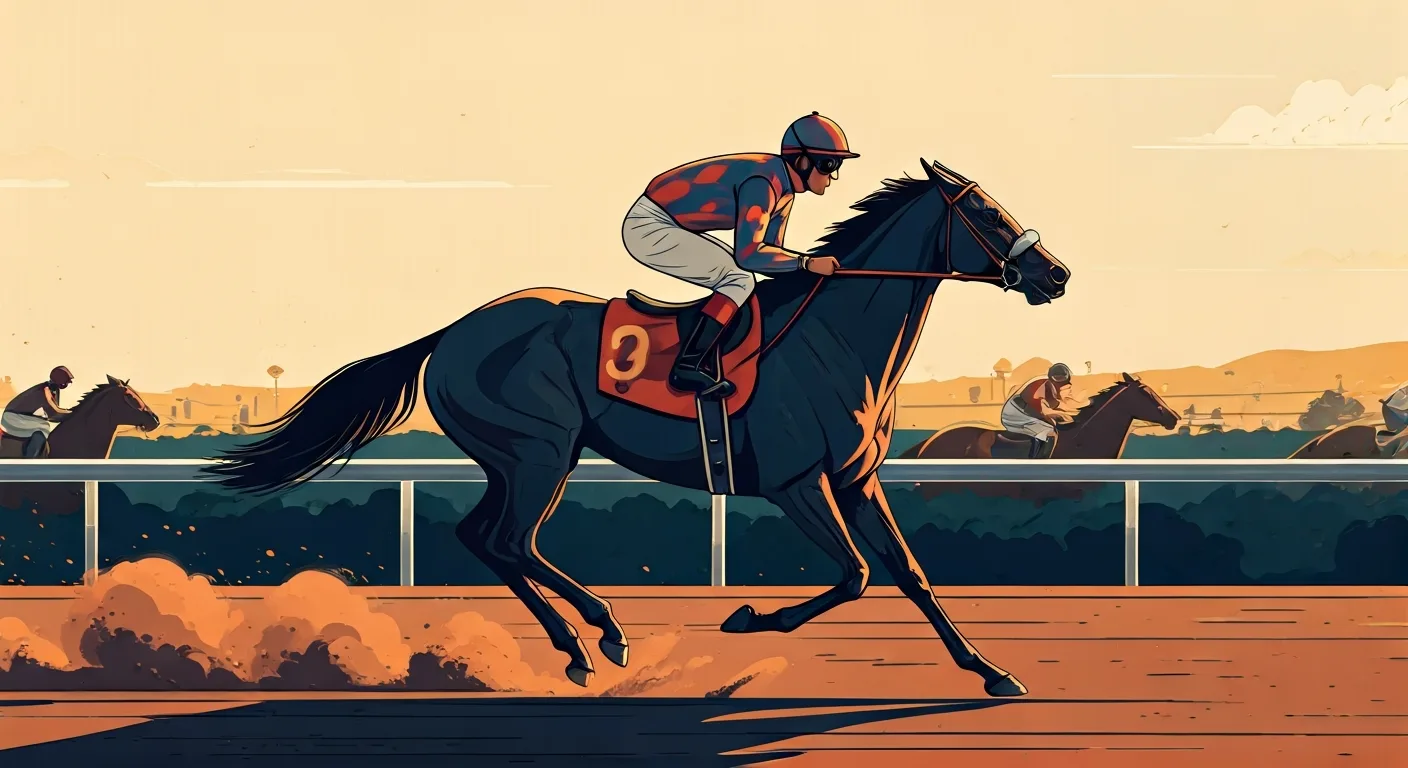
Rides racehorses in competitive events, maintaining strict weight limits, studying race conditions, and working closely with trainers to execute race strategies. Jockeys are professional athletes responsible for guiding horses to achieve optimal performance during races.
Directly influences the outcome of horse races, impacting significant financial stakes for owners, trainers, and bettors, while also contributing to the entertainment and economic value of the equestrian sports industry.
On the job
- Ride racehorses during competitive events, guiding them to optimal performance.
- Maintain strict weight limits through rigorous diet and exercise.
- Study race conditions, analyze competitors, and strategize with trainers and owners.
- Exercise and train horses during morning workouts to assess their fitness and develop rapport.
- Communicate horse's performance, behavior, and physical condition to trainers.
Tools & technology
Average salary
Job outlook
StableDemand is steady. This is an established role with consistent hiring across sectors.
Education & training
Formal apprenticeship with a licensed trainer, completion of a jockey training program, or equivalent practical experience.
AI impact outlook
Note — this is our current view. AI is moving fast, so we revisit these ratings.
Show how this was assessed Hide the detail
Note — this is our current view. AI is moving fast, so we revisit these ratings.
Show how this was assessed Hide the detailWhy this role received this rating
Core task exposure
low
How much of the role’s important work could AI perform?
The physical act of riding a racehorse and interacting with a live animal is extremely difficult for AI to replicate.
End-to-end automation
low
Can AI complete the work without substantial human involvement?
No AI system can independently complete the full workflow of riding a horse in a competitive race from start to finish.
Adoption pressure
low
How likely are employers to introduce AI into this work?
The sport's tradition and the irreducible need for human skill mean adoption pressure for automation is very low in the core task.
Human dependence
strong
How much does success depend on human judgement, relationships and accountability?
Success is overwhelmingly dependent on the jockey's physical skill, intuitive connection with the horse, and real-time judgment in dynamic races.
Protective — a higher rating lowers the overall score.
Role adaptability
low
How easily can the role evolve as AI takes on more tasks?
While strategy and training methods might evolve with data, the fundamental physical and intuitive aspects of riding remain central.
Shown for context — not part of the score.
What AI may take on
These are the parts of the role most likely to be automated or significantly accelerated.
- Analyzing competitor data and race conditions for strategy planning
- Monitoring horse's vitals and performance data during training
- Suggesting optimal training regimens based on historical data
- Providing real-time feedback on race execution metrics
- Generating reports on horse health and behavior trends
Where people remain essential
These parts continue to depend heavily on human judgement, relationships and accountability.
- Physically riding racehorses during competitive events
- Guiding horses with nuanced touch, balance, and communication
- Maintaining strict weight limits through personal discipline
- Developing a deep rapport and understanding with individual horses
- Making split-second tactical decisions during a race
- Communicating subtle observations about horse performance to trainers
- Absorbing the physical risks inherent in horse racing
How the role may evolve
Analytics support the strategy; the physical execution stays on the track.
The role will likely see increased data-driven insights for strategy and training, but the jockey's irreplaceable physical skill, intuition, and animal connection will remain the core.
Strengthen your future fit
- Maintaining elite physical fitness and strict weight management
- Developing advanced horsemanship and riding techniques
- Cultivating strong communication and rapport with horses and trainers
- Learning to interpret and apply data analytics for race strategy
- Enhancing mental fortitude and resilience under pressure
- Assessment horizon
- 3–7 years
- Confidence
- High
- Last reviewed
- August 2026
- Methodology
- v1.0
This assessment reflects current AI capabilities and expected adoption patterns. Actual impacts will vary by industry, employer and the way each role is performed.
Career pathways
WHERE YOU COULD GO
CURRENT ROLE
Jockey
Personal & Professional Services
ADJACENT MOVES
STARTING POINTS
Who thrives here
Interest profile
realistic · RES
Individuals who enjoy physical challenges, competitive environments, and direct engagement with animals and team members tend to find success as a jockey.
Personality characteristics
Disciplined
Able to adhere strictly to training regimens, diet, and weight limits required for competitive racing.
Resilient
Handles the high-pressure environment of racing, physical risks, and potential setbacks with mental toughness.
Competitive
Driven to win and constantly improve performance, both individually and with the horse.
Cooperative
Works effectively with trainers, owners, and stable staff to develop and execute race strategies.
Methodical
Approaches race strategy and horse assessment with careful consideration and planning.
Best for
- Individuals passionate about horses and competitive sports.
- Athletes seeking a career that combines physical prowess with strategic thinking.
- Those who thrive in high-pressure, results-oriented environments.
Watch out for
- Extremely demanding physical requirements and strict weight control can be challenging.
- High risk of injury and constant travel can impact personal life.
- Success is highly dependent on performance and opportunities, leading to potential income variability.
A week in the life
A representative working week for a Jockey — where the deep work, meetings, and admin actually land.
Real people. Real results.
Thousands of people
can't be wrong.





Frequently asked questions about Jockey roles
What does a Jockey do?
A Jockey rides racehorses in competitive events, maintaining strict weight limits, studying race conditions, and working closely with trainers to execute race strategies. Jockeys are professional athletes responsible for guiding horses to achieve optimal performance during races. Directly influences the outcome of horse races, impacting significant financial stakes for owners, trainers, and bettors, while also contributing to the entertainment and economic value of the equestrian sports industry.
How much does a Jockey earn?
A Jockey earns a median of $85,000 per year in the US, typically ranging from $35,000 to $250,000.
What qualifications do you need to become a Jockey?
To become a Jockey, formal apprenticeship with a licensed trainer, completion of a jockey training program, or equivalent practical experience. State racing commission license.
What personality suits a Jockey?
Jockey roles tend to suit people who are highly conscientious — precise, organised and strong on follow-through (Conscientiousness 80/100). The traits that matter most in the role are Disciplined, Resilient, Competitive and Cooperative. Able to adhere strictly to training regimens, diet, and weight limits required for competitive racing. On interests, Jockey maps to a RES Holland Code profile — individuals who enjoy physical challenges, competitive environments, and direct engagement with animals and team members tend to find success as a jockey.
Who does a Jockey role suit?
A Jockey role is usually a strong fit for these reasons. High Realistic affinity due to the intense physical demands and direct engagement with animals. The competitive nature of racing aligns with an Enterprising interest, seeking challenges and rewards. Requires significant Conscientiousness for strict discipline, training, and weight management.
What are the downsides of being a Jockey?
Jockey roles come with trade-offs worth weighing up. Extremely demanding physical requirements and strict weight control can be challenging. High risk of injury and constant travel can impact personal life. Success is highly dependent on performance and opportunities, leading to potential income variability.
What is the work environment like for a Jockey?
Work as a Jockey is mostly outdoors-based with onsite arrangements common, semi-structured — a mix of set processes and self-directed work and high exposure to clients or stakeholders. Around 40% of the week is focused deep work.
What skills do you need to be a Jockey?
Core skills for a Jockey include Equine handling and riding, Race strategy and tactics, Physical fitness and conditioning, Weight management and Communication with trainers and owners.
How do you become a Jockey?
Common entry routes into Jockey roles include Apprentice Jockey, Exercise Rider and Stable Hand.
What career progression is there for a Jockey?
From a Jockey role, common next steps include Racing Trainer; lateral moves include Bloodstock Agent and Racing Official.
What is the job outlook for Jockey roles?
The outlook for Jockey roles is currently rated stable. Demand is steady. This is an established role with consistent hiring across sectors.
Will AI replace Jockey roles?
Traitstack rates automation risk for Jockey roles at 13 out of 100, which is low. AI can assist with race strategy and horse analytics, but the core act of riding and the human-animal bond remain entirely dependent on the jockey's skill. AI is most likely to take on analyzing competitor data and race conditions for strategy planning, monitoring horse's vitals and performance data during training and suggesting optimal training regimens based on historical data. Physically riding racehorses during competitive events, guiding horses with nuanced touch, balance, and communication and maintaining strict weight limits through personal discipline stay with people. Analytics support the strategy; the physical execution stays on the track. That score measures how much of the work could change, not the likelihood the job disappears. It is Traitstack's current view, revisited as AI capability moves.