Gaming Dealer or Croupier
SOC 39-3012.00 · ESCO 4212 · OSCA 471432
Role snapshot
Overview
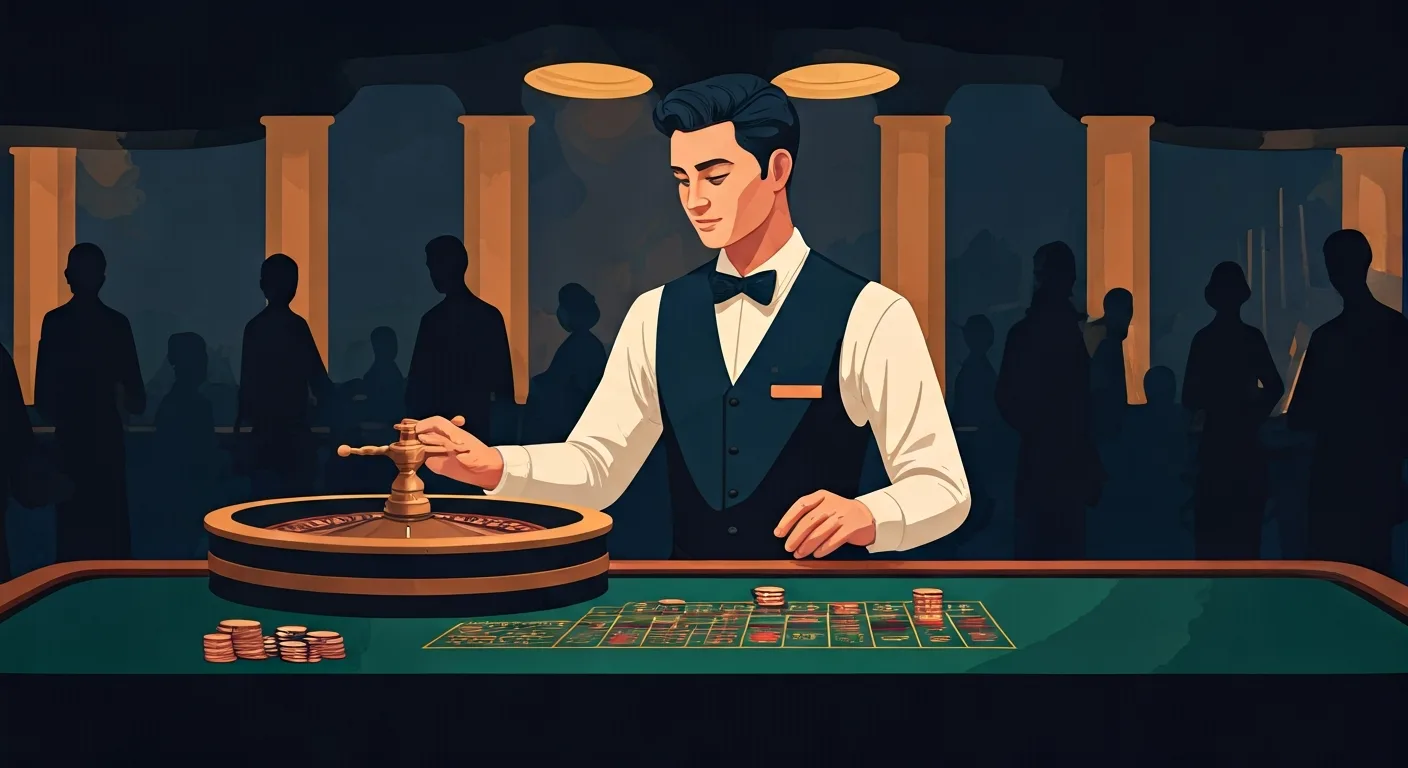
Operates table games such as blackjack, roulette, and poker in casinos, dealing cards, managing bets, and ensuring games run according to house rules. This role requires excellent manual dexterity, mental math skills, and the ability to manage multiple tasks while providing entertaining and fair play to patrons.
Ensures fair and entertaining gaming experiences for patrons, contributing to the casino's revenue and reputation while upholding regulatory standards.
On the job
- Deal cards, spin roulette wheels, or manage other game components according to established rules.
- Collect and pay out bets, calculating odds and payouts accurately and quickly.
- Monitor game play for irregularities, disputes, or suspicious activity and report to pit supervisors.
- Interact with players in a friendly and professional manner, maintaining a positive gaming atmosphere.
- Maintain game security and integrity by following all procedures for handling chips, cards, and cash.
Tools & technology
Average salary
Job outlook
StableDemand is steady. This is an established role with consistent hiring across sectors.
Education & training
High school diploma or equivalent, often supplemented by casino-specific dealer training programs or vocational school certificates.
AI impact outlook
Note — this is our current view. AI is moving fast, so we revisit these ratings.
Show how this was assessed Hide the detail
Note — this is our current view. AI is moving fast, so we revisit these ratings.
Show how this was assessed Hide the detailWhy this role received this rating
Core task exposure
high
How much of the role’s important work could AI perform?
The rapid calculation of odds and payouts, along with tracking game state and rule adherence, could be performed by AI with high accuracy.
End-to-end automation
high
Can AI complete the work without substantial human involvement?
While the entire experience of a live table game requires a human, the underlying mechanics of many games can be automated from start to finish.
Adoption pressure
high
How likely are employers to introduce AI into this work?
The drive for cost efficiency and faster game throughput in casinos ensures a strong likelihood of further automation in game operations.
Human dependence
low
How much does success depend on human judgement, relationships and accountability?
Success hinges significantly on maintaining engaging player interactions, detecting subtle irregularities, and managing game flow with human judgment.
Protective — a higher rating lowers the overall score.
Role adaptability
moderate
How easily can the role evolve as AI takes on more tasks?
This role could adapt by emphasizing entertainment, personalized service for VIPs, or overseeing hybrid human-automated gaming environments.
Shown for context — not part of the score.
What AI may take on
These are the parts of the role most likely to be automated or significantly accelerated.
- Calculating and paying out bets with precision
- Tracking card counts or dice rolls
- Identifying patterns in game play that suggest rule violations
- Managing chip inventory and transactions at the table
- Explaining basic game rules repeatedly
Where people remain essential
These parts continue to depend heavily on human judgement, relationships and accountability.
- Creating an entertaining and social atmosphere for players
- Resolving minor disputes and de-escalating tensions
- Detecting nuanced signs of cheating not caught by sensors
- Building rapport and trust with regular patrons
- Exercising judgment in ambiguous game situations
- Maintaining the integrity and security of physical game components
How the role may evolve
From manual execution to enhanced guest experience and fraud detection.
The role will likely evolve to focus more on direct player engagement and the subtle human aspects of game security, rather than purely mechanical game operation.
Strengthen your future fit
- Advanced customer service and communication techniques
- Expertise in human behavior and pattern recognition for security
- Proficiency with AI-assisted surveillance and game management systems
- Adaptability to hybrid human-automated game environments
- Conflict resolution and de-escalation strategies
- Assessment horizon
- 3–7 years
- Confidence
- High
- Last reviewed
- August 2026
- Methodology
- v1.0
This assessment reflects current AI capabilities and expected adoption patterns. Actual impacts will vary by industry, employer and the way each role is performed.
Career pathways
WHERE YOU COULD GO
CURRENT ROLE
Gaming Dealer or Croupier
Hospitality & Food Service
ADJACENT MOVES
STARTING POINTS
Who thrives here
Interest profile
conventional · CES
Individuals who are highly organized, enjoy following established procedures, are skilled at interacting with people, and possess an energetic approach to work often find satisfaction in this role.
Personality characteristics
Disciplined
Adheres strictly to complex game rules and casino procedures, ensuring fair play and security.
Outgoing
Enjoys interacting with a diverse range of patrons, maintaining a positive and engaging atmosphere.
Calm under pressure
Maintains composure and focus in a fast-paced environment, handling disputes or high-stakes moments gracefully.
Detail-oriented
Carefully monitors game play, bets, and payouts to prevent errors and ensure integrity.
Professional
Treats all players and colleagues with respect, fostering a positive and fair gaming experience.
Best for
- Individuals who thrive in a structured, fast-paced environment with clear rules.
- People who enjoy providing customer service and direct interaction with the public.
- Those with strong mental math abilities and excellent hand-eye coordination.
Watch out for
- The job often involves irregular hours, including nights, weekends, and holidays.
- Dealing with diverse personalities, including potentially difficult or intoxicated patrons, requires resilience and patience.
- The work can be repetitive, requiring consistent focus on rules and procedures.
A week in the life
A representative working week for a Gaming Dealer or Croupier — where the deep work, meetings, and admin actually land.
Real people. Real results.
Thousands of people
can't be wrong.





Frequently asked questions about Gaming Dealer or Croupier roles
What does a Gaming Dealer or Croupier do?
A Gaming Dealer or Croupier operates table games such as blackjack, roulette, and poker in casinos, dealing cards, managing bets, and ensuring games run according to house rules. This role requires excellent manual dexterity, mental math skills, and the ability to manage multiple tasks while providing entertaining and fair play to patrons. Ensures fair and entertaining gaming experiences for patrons, contributing to the casino's revenue and reputation while upholding regulatory standards.
How much does a Gaming Dealer or Croupier earn?
A Gaming Dealer or Croupier earns a median of $50,000 per year in the US, typically ranging from $30,000 to $75,000.
What qualifications do you need to become a Gaming Dealer or Croupier?
To become a Gaming Dealer or Croupier, high school diploma or equivalent, often supplemented by casino-specific dealer training programs or vocational school certificates. Gaming License.
What personality suits a Gaming Dealer or Croupier?
Gaming Dealer or Croupier roles tend to suit people who are highly conscientious — precise, organised and strong on follow-through (Conscientiousness 78/100) and steady under pressure — deadlines and setbacks do not rattle them easily (Emotional Stability 68/100). The traits that matter most in the role are Disciplined, Outgoing, Calm under pressure and Detail-oriented. Adheres strictly to complex game rules and casino procedures, ensuring fair play and security. On interests, Gaming Dealer or Croupier maps to a CES Holland Code profile — individuals who are highly organized, enjoy following established procedures, are skilled at interacting with people, and possess an energetic approach to work often find satisfaction in this role.
Who does a Gaming Dealer or Croupier role suit?
A Gaming Dealer or Croupier role is usually a strong fit for these reasons. The role requires high conscientiousness to strictly follow complex game rules and procedures. Opportunities for social interaction are frequent, appealing to those with an enterprising and social nature. The work environment is highly structured, providing clear guidelines and expectations.
What are the downsides of being a Gaming Dealer or Croupier?
Gaming Dealer or Croupier roles come with trade-offs worth weighing up. The job often involves irregular hours, including nights, weekends, and holidays. Dealing with diverse personalities, including potentially difficult or intoxicated patrons, requires resilience and patience. The work can be repetitive, requiring consistent focus on rules and procedures.
What is the work environment like for a Gaming Dealer or Croupier?
Work as a Gaming Dealer or Croupier is mostly retail-based with onsite arrangements common, highly structured, with set processes and deadlines and high exposure to clients or stakeholders.
What skills do you need to be a Gaming Dealer or Croupier?
Core skills for a Gaming Dealer or Croupier include Manual dexterity, Mental arithmetic, Customer service, Rule adherence and Attention to detail.
How do you become a Gaming Dealer or Croupier?
Common entry routes into Gaming Dealer or Croupier roles include Casino Floor Attendant and Gaming Trainee.
What career progression is there for a Gaming Dealer or Croupier?
From a Gaming Dealer or Croupier role, common next steps include Pit Manager and Casino Shift Manager; lateral moves include Gaming Instructor.
What is the job outlook for Gaming Dealer or Croupier roles?
The outlook for Gaming Dealer or Croupier roles is currently rated stable. Demand is steady. This is an established role with consistent hiring across sectors.
Will AI replace Gaming Dealer or Croupier roles?
Traitstack rates automation risk for Gaming Dealer or Croupier roles at 72 out of 100, which is strong. AI is adept at game mechanics and calculations, but maintaining engaging player interaction and physical game operation remains core to the human dealer's role. AI is most likely to take on calculating and paying out bets with precision, tracking card counts or dice rolls and identifying patterns in game play that suggest rule violations. Creating an entertaining and social atmosphere for players, resolving minor disputes and de-escalating tensions and detecting nuanced signs of cheating not caught by sensors stay with people. From manual execution to enhanced guest experience and fraud detection. That score measures how much of the work could change, not the likelihood the job disappears. It is Traitstack's current view, revisited as AI capability moves.