Game Designer
SOC 15-1255.00 · ESCO 2166 · OSCA 273235
Role snapshot
Overview
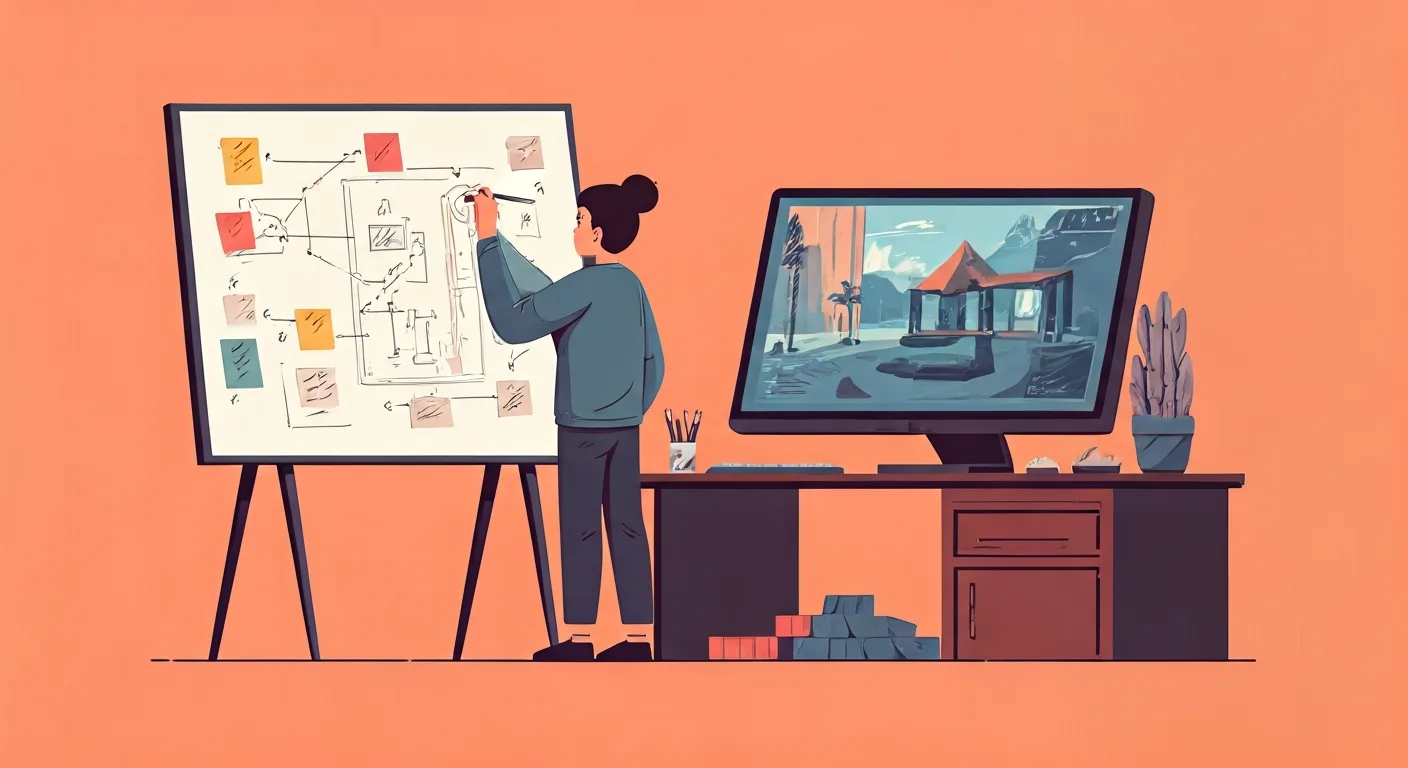
Invents and refines the rules, mechanics, and systems that make a video game fun and engaging. Prototypes ideas, runs playtests, and iterates on feedback to balance challenge, reward, and player expression. This role involves conceptualizing game ideas, documenting design specifications, and collaborating with artists, programmers, and producers to bring interactive experiences to life.
Creates immersive and enjoyable interactive experiences that entertain and challenge players, contributing to the cultural landscape of digital entertainment and shaping how people interact with virtual worlds.
On the job
- Develop game concepts, mechanics, and core gameplay loops
- Write and maintain detailed design documents (GDDs) for features, levels, and systems
- Design and balance game systems such as combat, economy, progression, and player abilities
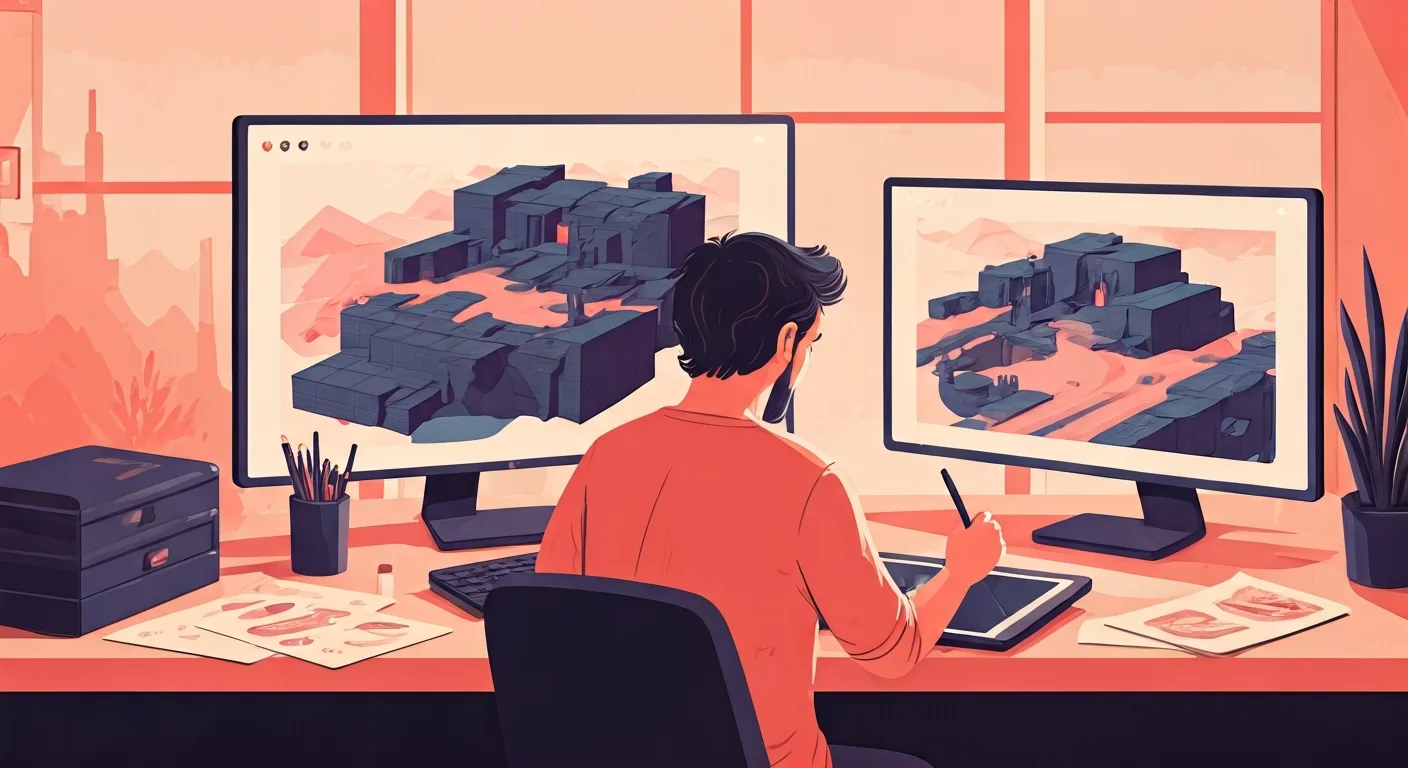
- Prototype new ideas using game engines or scripting tools, and conduct playtests
- Analyze player feedback and telemetry data to iterate on designs and improve player experience
Tools & technology
Average salary
Job outlook
GrowingJob growth is expected to be above average over the next five years.
Education & training
Bachelor's degree in Game Design, Computer Science, Digital Media, or a related field. A strong portfolio demonstrating design skills is often more crucial than specific credentials.
AI impact outlook
Note — this is our current view. AI is moving fast, so we revisit these ratings.
Show how this was assessed Hide the detail
Note — this is our current view. AI is moving fast, so we revisit these ratings.
Show how this was assessed Hide the detailWhy this role received this rating
Core task exposure
high
How much of the role’s important work could AI perform?
AI can significantly assist in drafting design documents, balancing game systems through simulation, and iterating on concepts.
End-to-end automation
moderate
Can AI complete the work without substantial human involvement?
While AI can optimize specific game mechanics or generate content variations, the holistic process of designing a fun and engaging game requires human intervention.
Adoption pressure
high
How likely are employers to introduce AI into this work?
The competitive and innovation-driven nature of the game industry creates high pressure to adopt AI for efficiency in design iteration and optimization.
Human dependence
moderate
How much does success depend on human judgement, relationships and accountability?
Success critically depends on human creativity, understanding of player psychology, and subjective judgment of 'fun' and overall game experience.
Protective — a higher rating lowers the overall score.
Role adaptability
strong
How easily can the role evolve as AI takes on more tasks?
Game designers are accustomed to rapidly evolving tools and technologies, making the role highly adaptable to integrating AI into workflows.
Shown for context — not part of the score.
What AI may take on
These are the parts of the role most likely to be automated or significantly accelerated.
- Drafting detailed game design documents (GDDs) for features and systems
- Balancing complex game systems like combat, economy, and progression through simulations
- Generating variations of game concepts, mechanics, and level layouts
- Analyzing player telemetry data to identify design flaws and opportunities
- Automating routine prototyping tasks within game engines
Where people remain essential
These parts continue to depend heavily on human judgement, relationships and accountability.
- Developing entirely novel game concepts and core gameplay loops
- Interpreting player feedback with empathy to understand subjective enjoyment
- Making high-level creative decisions that define a game's identity and appeal
- Leading cross-functional teams to align on a unified vision
- Iterating on designs based on qualitative playtest insights
- Ensuring the overall emotional impact and narrative cohesion of the game
How the role may evolve
From manual iteration to guiding AI-powered game system optimization.
The role shifts from labor-intensive balancing and documentation to more abstract conceptualization, curating AI outputs, and focusing on the player's emotional journey.
Strengthen your future fit
- Mastering AI tools for design iteration and system balancing
- Developing advanced qualitative analysis skills for player feedback
- Cultivating strong creative vision and conceptual thinking
- Strengthening collaboration and communication with technical and artistic teams
- Learning to effectively 'prompt' and direct generative design systems
- Assessment horizon
- 3–7 years
- Confidence
- High
- Last reviewed
- August 2026
- Methodology
- v1.0
This assessment reflects current AI capabilities and expected adoption patterns. Actual impacts will vary by industry, employer and the way each role is performed.
Career pathways
WHERE YOU COULD GO
CURRENT ROLE
Game Designer
Product & UX
ADJACENT MOVES
STARTING POINTS
Who thrives here
Interest profile
investigative · IAC
People who enjoy analytical problem-solving, creative conceptualization, and systematic organization to build engaging interactive experiences tend to thrive in this role.
Personality characteristics
Imaginative
Possesses a strong imagination and curiosity to explore new ideas and unconventional solutions for game mechanics and narratives.
Analytical
Able to dissect complex systems, identify problems, and devise logical, balanced solutions for gameplay.
Collaborative
Enjoys working closely with diverse teams, sharing ideas, and incorporating feedback to improve game design.
Team-oriented
Values harmony and cooperation within the team, adapting designs to fit collective vision and technical constraints.
Resilient
Can handle constructive criticism, project changes, and the iterative nature of game development without significant stress.
Best for
- Individuals passionate about creating immersive digital experiences and solving complex design puzzles
- Those who enjoy both the creative ideation and the systematic, analytical aspects of game development
- People who can balance artistic vision with technical and market realities
Watch out for
- Projects can have intense crunch periods, occasionally requiring weekend work to meet deadlines
- Requires constant iteration and adaptation based on feedback, which can be challenging for those seeking fixed outcomes
A week in the life
A representative working week for a Game Designer — where the deep work, meetings, and admin actually land.
Real people. Real results.
Thousands of people
can't be wrong.
Frequently asked questions about Game Designer roles
What does a Game Designer do?
A Game Designer invents and refines the rules, mechanics, and systems that make a video game fun and engaging. Prototypes ideas, runs playtests, and iterates on feedback to balance challenge, reward, and player expression. This role involves conceptualizing game ideas, documenting design specifications, and collaborating with artists, programmers, and producers to bring interactive experiences to life. Creates immersive and enjoyable interactive experiences that entertain and challenge players, contributing to the cultural landscape of digital entertainment and shaping how people interact with virtual worlds.
How much does a Game Designer earn?
A Game Designer earns a median of $95,000 per year in the US, typically ranging from $65,000 to $130,000.
What qualifications do you need to become a Game Designer?
To become a Game Designer, bachelor's degree in Game Design, Computer Science, Digital Media, or a related field. A strong portfolio demonstrating design skills is often more crucial than specific credentials.
What personality suits a Game Designer?
Game Designer roles tend to suit people who are open and curious — drawn to variety, ideas and new approaches (Openness 92/100) and outgoing — energised by people, visibility and quick social contact (Extraversion 65/100). The traits that matter most in the role are Imaginative, Analytical, Collaborative and Team-oriented. Possesses a strong imagination and curiosity to explore new ideas and unconventional solutions for game mechanics and narratives. On interests, Game Designer maps to an IAC Holland Code profile — people who enjoy analytical problem-solving, creative conceptualization, and systematic organization to build engaging interactive experiences tend to thrive in this role.
Who does a Game Designer role suit?
A Game Designer role is usually a strong fit for these reasons. Strong Investigative and Artistic alignment: the role requires deep analysis of systems alongside creative conceptualization. A significant portion of the week is dedicated to deep work, including design documentation and prototyping. High team interaction supports those who thrive in collaborative, interdisciplinary environments.
What are the downsides of being a Game Designer?
Game Designer roles come with trade-offs worth weighing up. Projects can have intense crunch periods, occasionally requiring weekend work to meet deadlines. Requires constant iteration and adaptation based on feedback, which can be challenging for those seeking fixed outcomes.
What is the work environment like for a Game Designer?
Work as a Game Designer is mostly office-based with hybrid arrangements common, semi-structured — a mix of set processes and self-directed work, a moderate pace and medium exposure to clients or stakeholders. Around 52% of the week is focused deep work.
What skills do you need to be a Game Designer?
Core skills for a Game Designer include Game mechanics design, System design, Level design, Prototyping, Analytical thinking and Communication.
How do you become a Game Designer?
Common entry routes into Game Designer roles include Junior Game Designer, Quality Assurance Tester and Modder Community Developer.
What career progression is there for a Game Designer?
From a Game Designer role, common next steps include Senior Game Designer, Lead Game Designer and Creative Director; lateral moves include Producer.
What is the job outlook for Game Designer roles?
The outlook for Game Designer roles is currently rated growing. Job growth is expected to be above average over the next five years.
Will AI replace Game Designer roles?
Traitstack rates automation risk for Game Designer roles at 62 out of 100, which is strong. AI can streamline concept iteration and system balancing, but the human designer's creative vision and understanding of player engagement remain central. AI is most likely to take on drafting detailed game design documents (gdds) for features and systems, balancing complex game systems like combat, economy, and progression through simulations and generating variations of game concepts, mechanics, and level layouts. Developing entirely novel game concepts and core gameplay loops, interpreting player feedback with empathy to understand subjective enjoyment and making high-level creative decisions that define a game's identity and appeal stay with people. From manual iteration to guiding AI-powered game system optimization. That score measures how much of the work could change, not the likelihood the job disappears. It is Traitstack's current view, revisited as AI capability moves.